
Disclosure: As an Amazon Associate we earn from qualifying purchases. We may receive a small commission when you buy through links on this page, at no extra cost to you. We only recommend products we genuinely believe offer value to home cooks.
- What Silicone Is Made Of
- Is It Actually Safe? What the Evidence Says
- Heat Limits Matter
- How to Spot Food-Grade vs Cheap Silicone
- Why Cooks Like Silicone Anyway
- Caring for Silicone Utensils
- Frequently Asked Questions
- Silicone vs Other Utensil Materials
- Common Myths About Silicone
- Related Articles
- Related Guides
As an Amazon Associate we earn from qualifying purchases at no extra cost to you.
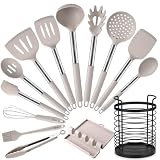


Silicone spatulas, spoons, and turners are everywhere — but are silicone kitchen utensils safe for cooking and for your food? The short answer is yes, food-grade silicone is widely considered safe for normal kitchen use. The longer answer involves heat limits, quality grades, and a few simple habits that keep silicone performing the way it should. This guide breaks down what silicone actually is, what the research says, and how to choose and use it safely.
What Silicone Is Made Of
Kitchen silicone is a synthetic rubber made primarily from silicon (a natural element found in sand) bonded with oxygen, carbon, and hydrogen. It’s chemically stable, flexible, and non-reactive, which is why it’s used not just for utensils but for baby bottle nipples, bakeware, and medical devices. Unlike some plastics, food-grade silicone contains no BPA, BPS, phthalates, or other plasticizers commonly raised as health concerns.
Is It Actually Safe? What the Evidence Says
Food-grade silicone is recognized as safe for food contact by major food-safety authorities. It’s chemically inert at normal cooking temperatures, meaning it doesn’t react with acidic, salty, or fatty foods and doesn’t leach meaningful amounts of anything into your meal. Studies looking at silicone bakeware have found that any migration of compounds into food is extremely low and generally well within safety limits — especially when the silicone is high quality and used within its temperature range. For a broader take on safe materials across your whole utensil drawer, see our guide to the safest kitchen utensils and what to look for.
Heat Limits Matter
This is the most important practical point. Most quality silicone utensils are rated to around 400–450°F (about 200–230°C). Within that range, they’re stable and safe. Problems start when silicone is pushed well past its rating — for example, leaving a spatula resting on a hot pan over high heat for a long time. Signs you’ve exceeded the limit include a faint smell, discoloration, or the surface becoming sticky or gummy.
- Check the manufacturer’s temperature rating before buying.
- Don’t leave silicone tools resting in a screaming-hot pan.
- Keep them away from direct flame or a hot burner element.
- Replace any utensil that has melted, gone sticky, or torn.
How to Spot Food-Grade vs Cheap Silicone
Not all silicone is equal. Lower-quality products can be cut with fillers that reduce heat resistance and durability. A quick at-home test: pinch and twist a flat section of the silicone. Pure, high-grade silicone stays its original color; filler-heavy silicone often shows a white streak where it’s stretched. Beyond that, look for labels like “100% food-grade silicone” or “LFGB/FDA compliant,” and buy from reputable brands. Our roundup of heat-safe, non-scratch silicone utensils focuses on sets that meet those standards.
Why Cooks Like Silicone Anyway
Beyond safety, silicone has real practical advantages that make it a kitchen staple:
- Non-scratch. It won’t damage nonstick coatings or stainless pans.
- Heat-resistant. Handles most stovetop tasks without melting.
- Easy to clean. Most are dishwasher-safe and don’t hold odors the way wood can.
- Flexible. A silicone spatula edge scrapes a bowl or pan clean.
If you’re weighing silicone against other options, our comparison of wood vs silicone vs steel lays out where each material wins.
Caring for Silicone Utensils
Silicone is low-maintenance. Wash by hand or in the dishwasher, and let tools dry fully. If a utensil picks up a greasy film over time, a soak in hot soapy water or a baking-soda paste restores it. Unlike wooden tools, silicone needs no oiling — though if you also own wooden pieces, our guide on cleaning and oiling wooden utensils covers that side of the drawer.
Frequently Asked Questions
Does silicone leach chemicals into food?
Food-grade silicone is chemically inert and leaches only negligible amounts under normal cooking conditions, well within recognized safety limits. Using it within its heat rating keeps migration minimal.
What temperature can silicone handle?
Most quality utensils are rated to roughly 400–450°F. Don’t exceed the manufacturer’s stated limit, and avoid direct flame.
Is silicone BPA-free?
Yes. Silicone contains no BPA, BPS, or phthalates, which is one reason it’s popular for baby and bakeware products.
How can I tell if my silicone is real food-grade?
Pinch and twist a flat part — pure silicone keeps its color, while filler-heavy silicone shows a white streak. Look for FDA/LFGB compliance labels too.
When should I replace a silicone utensil?
Replace it if it melts, becomes sticky or gummy, tears, or develops a persistent odor. A healthy silicone tool stays smooth and flexible.
Used within its heat range and bought food-grade, silicone is one of the safest, most practical materials in the kitchen. To round out your drawer, browse our picks for kitchen gadgets worth buying.
Silicone vs Other Utensil Materials
Silicone isn’t your only option, and knowing where it sits among the alternatives helps you build a balanced drawer. Stainless steel is the most durable and heat-proof but can scratch nonstick pans. Wood is beautiful, gentle, and naturally antimicrobial, but it needs oiling and can’t go in the dishwasher. Nylon is cheap but has a lower heat tolerance than good silicone and can melt more easily. Silicone lands in a sweet spot: non-scratch like wood, easy-clean like steel, and flexible in a way neither can match. Many cooks keep a mix — silicone for nonstick pans, steel for high-heat searing, and wood for stirring. Our full breakdown of wood vs silicone vs steel goes deeper on the trade-offs.
Common Myths About Silicone
- “Silicone is just plastic.” Not quite — it’s a silicon-based synthetic rubber, far more heat-stable than typical food plastics and free of BPA and phthalates.
- “It melts easily.” Quality food-grade silicone tolerates normal stovetop heat; problems come from cheap, filler-heavy products or leaving tools in a scorching pan.
- “It absorbs odors and stains forever.” A soak in hot soapy water or a baking-soda paste lifts most odors and grease; persistent issues usually mean low-grade silicone.
Buying from reputable brands and within the stated heat rating sidesteps nearly every common complaint. For vetted options, see our picks for heat-safe, non-scratch silicone utensils and our broader guide to the safest kitchen utensils.


Write Your Review
No reviews yet. Be the first to share your experience!