
- Top Pick: 5-in-1 Wireless Electric Vegetable Chopper, Multi-Function Food Processor
- Best Value: Ourokhome Manual Food Processor Vegetable Chopper, Portable Hand Pull String Garlic Mincer Onion Cutter for Veggies, Ginger, Fruits, Nuts, Herbs, etc., 500ml, Grey
- Premium Choice: Ziweaye Manual Food Processor Vegetable Chopper, Portable Hand Pull String Garlic Mincer Onion Cutter for Veggies, Ginger, Fruits, Nuts, Herbs, etc., 500ml,(Gray-green)
Disclosure: As an Amazon Associate we earn from qualifying purchases. We may receive a small commission when you buy through links on this page, at no extra cost to you. We only recommend products we genuinely believe offer value to home cooks.
As an Amazon Associate we earn from qualifying purchases at no extra cost to you.
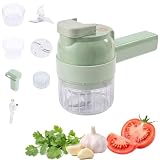





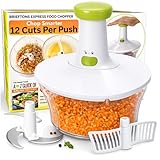

When you are tired of crying over a cutting board and slowly mincing onions by hand, a chopper starts to look very appealing. But the first decision is the big one: manual vs electric vegetable chopper. Both promise faster prep and more even pieces, yet they suit very different cooks and kitchens. This guide compares the two on speed, control, cleanup, noise, and cost so you can decide which one belongs in your drawer before you buy.
How Each Type Works
A manual chopper relies on your muscle. The most common designs use a pull cord that spins a set of blades, or a spring-loaded plunger you press to drive a blade down through the food. You load a chamber, pump or pull, and the blades dice whatever is inside. There is no motor and no power cord.
An electric chopper is essentially a small food processor. A motor spins the blade at high speed when you press a button or push down on the lid. Because the motor does the work, electric models can power through tougher or larger loads with no effort from you. If you want to see how either style fits into a fast prep routine, our roundup of the best vegetable choppers for fast prep covers popular options in both categories.
Speed and Effort
For raw speed on a big batch, electric wins. Press a button and a bowl of onions becomes diced in seconds, and you can run several batches without tiring. This makes electric models the better pick for meal preppers, large families, or anyone who chops in volume.
Manual choppers are surprisingly quick for small jobs, but they ask for physical effort. Hard vegetables like carrots or sweet potatoes can take several firm pumps, which is tiring if you are processing a lot. For a single onion or a handful of herbs, though, a manual chopper is often faster overall because there is nothing to plug in.
Control and Consistency
Control is where manual choppers shine. Because you decide how many pulls or pumps to give, you can stop at a coarse chop or keep going for a fine dice. Electric models move so fast that it is easy to overshoot and turn vegetables into a watery puree if you are not careful with short pulses.
- Manual: excellent control, easy to get a chunky, even dice.
- Electric: fast but can over-process; use short bursts.
- Both: give more even pieces than chopping by hand, which helps food cook evenly.
Cleanup, Noise, and Storage
Manual choppers usually have fewer parts and no motor housing, so they rinse clean quickly and many are dishwasher-safe. They are also quiet and compact, which matters in a small kitchen or an apartment with thin walls.
Electric choppers have more components, including a motor base that cannot be submerged, so cleanup takes a little longer. They are louder and take up more counter or cabinet space. If storage is tight, our advice on organizing a small kitchen with smart gadgets and on organizing kitchen drawers like a pro can help you make room for whichever you choose.
Cost and Durability
Manual choppers are generally cheaper to buy and have no motor to burn out, so a well-made one can last for years. The main wear points are the blade and the pull mechanism. Electric choppers cost more upfront and carry the small risk of motor failure over time, but a quality unit handles heavy use that would wear out your arm on a manual model.
Whichever you pick, blade material affects longevity. Look for stainless steel blades that resist rust, and treat them with the same care you would give other safe kitchen utensils. Avoid leaving any chopper soaking, and dry the blades fully before storing.
Which Should You Buy?
Choose a manual chopper if you cook for one or two people, value control and quiet operation, have limited storage, or want the lowest price. Choose an electric chopper if you prep in large batches, dislike physical effort, or frequently chop tough vegetables. Many cooks who already own a sharp chef’s knife find a manual chopper is all the extra help they need, while batch cooks lean electric. If you are still building your core kit, see our list of essential kitchen tools to decide where a chopper fits among your priorities.
Getting the Best Results From Either Chopper
No matter which type you own, a few habits dramatically improve your results. Cut your vegetables into roughly even chunks before loading the chamber so the blades meet uniform pieces and produce a consistent dice. Overfilling is the most common mistake: a packed chamber prevents food from circulating, so the bottom turns to mush while the top stays whole. Work in smaller batches for cleaner, more even cuts.
Pulse rather than run continuously, especially with watery vegetables like tomatoes and zucchini. Short bursts let you check the texture and stop before the food liquefies. Keep the blades sharp, since a dull blade crushes and bruises produce instead of slicing it. Finally, dry your vegetables before chopping where you can; excess surface water pools in the chamber and dilutes the texture. These small adjustments make even an inexpensive chopper perform like a much pricier one, and they apply equally to manual and electric designs.
Frequently Asked Questions
Is a manual or electric vegetable chopper better for onions?
Both handle onions well and spare your eyes, since the food stays enclosed. A manual chopper gives you more control to avoid over-processing a soft onion into liquid, while an electric model is faster if you dice onions in bulk.
Can a vegetable chopper replace a chef’s knife?
Not entirely. A chopper excels at dicing and mincing uniform pieces, but a knife is still essential for slicing, trimming, and anything that needs precision. Think of a chopper as a time-saver for repetitive dicing, not a full replacement.
Are electric choppers hard to clean?
They take a bit more effort than manual models because the motor base cannot be submerged. The bowl, blade, and lid are usually removable and often dishwasher-safe, but you must wipe the base by hand to protect the motor.
Do manual choppers work on hard vegetables?
Yes, but they require more effort. Dense vegetables like carrots and potatoes may need several firm pumps or pulls. Cutting them into smaller chunks before loading the chamber makes the job easier and protects the blades.
How long do vegetable choppers last?
A quality manual chopper can last many years since there is no motor to fail, as long as you keep the blades sharp and rust-free. Electric models depend on motor quality, so buying a reputable brand and not overloading it helps it last.






Write Your Review
No reviews yet. Be the first to share your experience!