
Disclosure: As an Amazon Associate we earn from qualifying purchases. We may receive a small commission when you buy through links on this page, at no extra cost to you. We only recommend products we genuinely believe offer value to home cooks.
- Empty It and Assess the Plumbing
- Declutter and Group Like With Like
- Choose Organizers That Fit Around Pipes
- Use the Cabinet Doors and Vertical Space
- Add a Liner and Smart Touches
- Keep It Tidy and Leak-Free
- Frequently Asked Questions
- Step-by-Step Under-Sink Setup
- What Not to Store Under the Sink
- Maintaining Your Under-Sink Cabinet
- Related Articles
- Related Guides
As an Amazon Associate we earn from qualifying purchases at no extra cost to you.




The under-sink cabinet is one of the most awkward, neglected spaces in any kitchen — a dark cave full of half-empty bottles, looping pipes, and mystery sponges. This guide on how to organize under the kitchen sink shows you how to clear it out, work around the plumbing, choose the right organizers, and keep it functional. Done right, it becomes prime storage for cleaning gear, trash supplies, and more.
Empty It and Assess the Plumbing
Start by taking everything out and wiping down the cabinet floor (this is also a good moment to check for leaks or water damage). Then look at what you’re working around: the P-trap, the water shut-off valves, and any garbage-disposal or filter unit. Those fixed obstacles dictate your layout, so plan storage that fits beside and around them rather than fighting them.
Declutter and Group Like With Like
Under-sink clutter is usually duplicates and dried-out products. Toss empty bottles, consolidate three half-used sprays into one, and recycle the rest. Then group what’s left into clear categories:
- Surface and glass cleaners
- Dish soap, sponges, and brushes
- Trash bags and liners
- Rubber gloves and microfiber cloths
- Specialty cleaners (oven, stainless, etc.)
Grouping first tells you exactly how many bins and how much height you need.
Choose Organizers That Fit Around Pipes
This is where the right gear makes all the difference. Look for:
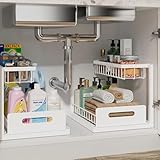
- Two-tier pull-out drawers that slide out so you can reach the back without kneeling.
- U-shaped or under-shelf organizers designed to nest around the central pipe.
- Tension rods mounted across the cabinet to hang spray bottles by their triggers.
- Caddies and bins to corral loose items and carry them around the house.
- Over-the-door racks on the cabinet doors for sponges, gloves, and small bottles.
Our roundup of the best under-sink organizers for the kitchen covers pull-out and tiered options sized for this exact space.
Use the Cabinet Doors and Vertical Space
The insides of the cabinet doors are free real estate. Mount a small rack or adhesive caddy to hold a roll of trash bags, a scrub brush, or rubber gloves. Above the pipes, a tension rod turns dead air into a hanging bar for spray bottles, which also keeps the cabinet floor clearer for bins.
Add a Liner and Smart Touches
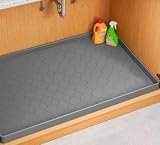
A washable cabinet liner or a cut-to-fit silicone mat protects the wood from drips and makes spills easy to wipe up — important under a sink where leaks happen. Other smart additions: a small puck light or battery LED strip to see into the back, a tiny trash or recycling bin for quick access, and a lazy Susan for round bottles so nothing gets stranded in a corner.
Keep It Tidy and Leak-Free
Once organized, maintenance is easy: return items to their bins, glance for leaks whenever you grab something, and re-sort every few months. Because everything lives in a removable bin, a future plumbing repair won’t mean emptying the whole cabinet by hand. The same bin-and-zone logic applies to the rest of your storage — see our tips on organizing kitchen drawers and, if space is tight overall, space-saving kitchen gadgets.
Frequently Asked Questions
How do I organize under the sink around the pipes?
Use U-shaped or two-tier pull-out organizers built to nest around the P-trap, and a tension rod above the pipes to hang spray bottles.
What should I store under the kitchen sink?
Cleaning supplies, dish soap, sponges, trash bags, gloves, and cloths. Keep food and small appliances elsewhere, since the area can get damp.
How do I protect the cabinet from leaks?
Lay down a washable liner or silicone mat, store items in removable bins, and check for drips regularly so a slow leak doesn’t go unnoticed.
What’s the best organizer for this space?
A two-tier pull-out drawer is the most popular because it brings the back of the cabinet to you. Tension rods and door racks add cheap extra storage.
How do I make it easier to see?
Add a battery-powered puck light or LED strip inside the cabinet — the under-sink area is dark, and light makes everything easier to find.
Clear it, work around the plumbing, and use bins plus vertical space — the under-sink cabinet can hold far more than it looks. For more storage upgrades, browse our under-sink organizer picks and full kitchen gadgets list.
Step-by-Step Under-Sink Setup
- Empty and clean. Remove everything, wipe the base, and check for leaks or soft spots.
- Lay a liner. A washable mat or silicone liner protects against drips and makes future spills easy to wipe.
- Place the big organizer first. Slide in a two-tier pull-out or U-shaped unit that fits around the P-trap.
- Hang spray bottles. Run a tension rod across the cabinet and hook bottles by their triggers.
- Use the doors. Mount a rack or caddy inside each door for sponges, gloves, and a roll of bags.
- Add light. Stick a battery puck light or LED strip up top so you can see the back.
Working in that order means the bulkiest item goes in first and the small accessories fill the gaps around it.
What Not to Store Under the Sink
The under-sink cabinet gets warm, dark, and occasionally damp, so a few things don’t belong there. Skip storing food, paper towels in bulk (they wick moisture), and anything that would be ruined by a slow leak. If you have small children or pets, keep cleaning chemicals in a bin with a child lock or move the harshest products higher up. Reserve the space for the cleaning and trash supplies that genuinely belong near the sink. The same removable-bin approach makes the rest of your kitchen easier to maintain — see our tips on organizing kitchen drawers.
Maintaining Your Under-Sink Cabinet
Once the cabinet is set up, keeping it that way takes almost no effort. Return each bottle and bin to its spot after use, and whenever you reach under the sink, take a two-second glance at the pipes and base for any sign of moisture — catching a slow leak early saves the cabinet floor and everything in it. Every few months, pull the bins out, wipe the liner, and consolidate any cleaners that have multiplied. Because everything lives in removable caddies, a future plumbing repair is painless: lift out the bins, fix the pipe, slide them back. This bin-and-zone discipline is the same approach that keeps the rest of the kitchen tidy, from drawers to gadget storage. Keep the products you reach for daily — dish soap, a spray cleaner, a sponge — at the very front, and stash backups behind them.







Write Your Review
No reviews yet. Be the first to share your experience!