
Disclosure: As an Amazon Associate we earn from qualifying purchases. We may receive a small commission when you buy through links on this page, at no extra cost to you. We only recommend products we genuinely believe offer value to home cooks.
- Use Tablespoons to Build Any Cup
- The Common-Object Method
- Use a Kitchen Scale Instead
- Liquid Measuring Workarounds
- Dry Ingredient Tips
- When Estimating Is Fine and When It Is Not
- Measuring Specific Ingredients Without Cups
- Keeping Estimates Consistent
- Frequently Asked Questions
- Why It Pays to Own Measuring Tools Anyway
- Related Articles
- Related Guides
As an Amazon Associate we earn from qualifying purchases at no extra cost to you. Product prices and availability are accurate as of the date shown and are subject to change.


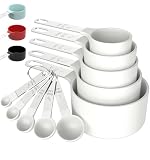


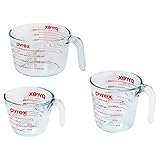
It happens to everyone: you start a recipe and realize your measuring cups are dirty, lost, or were never in the drawer to begin with. The good news is that learning how to measure without measuring cups is easier than you think. With a few household references and some simple math, you can measure almost any ingredient accurately enough for a successful dish. This guide covers the most reliable workarounds.
Use Tablespoons to Build Any Cup
The most accurate cup-free method uses measuring spoons, which most kitchens have even when cups go missing. Since 1 cup equals 16 tablespoons, you can reconstruct any cup amount by counting tablespoons:
- 1 cup = 16 tablespoons
- 3/4 cup = 12 tablespoons
- 1/2 cup = 8 tablespoons
- 1/3 cup = about 5 tablespoons
- 1/4 cup = 4 tablespoons
This is the same logic behind our guide on measuring 3/4 cup, and it works for both dry and liquid ingredients. Level each spoon for dry goods and fill to the rim for liquids.
The Common-Object Method
When you have no measuring tools at all, everyday objects give surprisingly useful references. A standard coffee mug typically holds close to one cup, so a level mug approximates a cup of flour or liquid. A cupped adult hand holds roughly 1/4 to 1/3 cup of a dry ingredient. The tip of your thumb to the first knuckle is about one tablespoon. These are estimates, but for forgiving recipes like soups and stews, they are close enough.
Use a Kitchen Scale Instead
The single most accurate way to measure without cups is by weight. If you own a digital scale, you can skip volume entirely and weigh ingredients in grams. This is actually more precise than cups, because it removes packing and leveling errors. Our guide on converting cups to grams provides the common conversions so you can translate any recipe into weights and never need a cup again.
Liquid Measuring Workarounds
For liquids, lean on the fact that a standard tablespoon is 15 ml and a teaspoon is 5 ml. Eight ounces (one cup) equals about 237 ml, so a known-size glass or bottle can serve as a reference. Many disposable water bottles are 500 ml, which is just over two cups. Pouring half a 500 ml bottle gives you roughly one cup, a handy trick when cooking away from home.
Dry Ingredient Tips
Dry ingredients are trickier because density varies. Flour, for example, can be packed or aerated, which is exactly why we recommend reading our dry vs liquid measuring cups guide. When estimating without tools, spoon dry ingredients loosely rather than scooping and packing, and slightly under-measure leavening agents and salt, since too much is harder to fix than too little. You can always taste and adjust.
When Estimating Is Fine and When It Is Not
Cooking is forgiving; baking is not. For sauces, soups, sautes, and stews, the workarounds above are perfectly adequate. For cakes, breads, and pastries, where ratios determine texture, do your best to use the tablespoon method or a scale rather than rough object references. Understanding this distinction, and the roles of cups versus spoons, is the key to knowing when precision truly matters.
Measuring Specific Ingredients Without Cups
Some ingredients have handy real-world references that make cup-free measuring easier. A standard stick of US butter is 1/2 cup, marked in tablespoons on the wrapper, so butter rarely needs a cup at all. An average large egg is about 1/4 cup of liquid, useful when a recipe calls for a partial egg. A heaped handful of pasta is a rough single serving. For rice, the ratio matters more than the exact cup, so measure rice and water with the same container to keep the proportion correct even if you do not know the precise volume. These ingredient-specific shortcuts often beat generic estimates because they rely on packaging that is already standardized.
Keeping Estimates Consistent
The secret to cooking well without measuring cups is consistency rather than perfection. Whatever reference you choose, a particular mug, a specific glass, or your own cupped hand, use the same one throughout the recipe so the ratios stay balanced. A cake made with a slightly large cup of flour can still succeed if the sugar and liquid are measured with the same generous cup, because the proportions hold. Problems arise when you mix a generous cup of one ingredient with a stingy cup of another. Pick your reference, stick with it, and taste as you go. For the cleanest long-term fix, invest in a scale and consult our cups-to-grams guide so you never depend on estimates again.
Frequently Asked Questions
How can I measure a cup without a measuring cup?
Use 16 level tablespoons, a standard coffee mug filled to the top, or weigh about 240 grams of water. Tablespoons and a scale are the most accurate options.
How many tablespoons are in a half cup?
There are 8 tablespoons in a half cup, which makes spoons a reliable substitute when cups are unavailable.
Can I use a regular spoon to measure?
Everyday spoons vary in size and are not precise. Use a labeled measuring spoon set if possible, since a dinner spoon can hold significantly more or less than a true tablespoon.
What household item equals one cup?
A standard coffee mug is often close to one cup, and half of a 500 ml water bottle is roughly one cup. These are estimates suitable for cooking rather than precise baking.
Is weighing better than measuring by volume?
Yes. Weighing in grams eliminates packing and leveling errors and is the most accurate method, especially for baking.
Why It Pays to Own Measuring Tools Anyway
These workarounds are genuinely useful in a pinch, but they are stopgaps rather than replacements. A basic set of measuring cups and spoons is inexpensive, takes up little space, and removes the guesswork that estimation always introduces. If you bake regularly, a digital scale is the single best upgrade you can make, since it is more accurate than any cup and faster than counting tablespoons. Think of the methods in this guide as a safety net for the moments your tools are unavailable, while building a small, reliable measuring kit for everyday use. Knowing both, how to measure with proper tools and how to improvise without them, makes you confident in any kitchen, including ones that are not your own.
For more practical kitchen know-how, explore our Gadget Guides and our Prep Gadgets collection of tools that make measuring effortless.

Write Your Review
No reviews yet. Be the first to share your experience!