
- Top Pick: YouCopia DrawerFit® Sliding Drawer Bin, Expandable and Adjustable Kitchen Storage Organizer, Speckled White
- Best Value: PAKETA 4 Pack Expandable Pull Out Cabinet Organizer,21" Deep
- Premium Choice: Mustorn 2 Pack Pull Out Cabinet Organizer, Slide Out Drawers for Cabinets, Peel and Stick, Heavy Duty Shelves for Kitchen, Cupboard, Pantry, Bathroom (16.5"D*11.8"W*3.94"H-Black)
Disclosure: As an Amazon Associate we earn from qualifying purchases. We may receive a small commission when you buy through links on this page, at no extra cost to you. We only recommend products we genuinely believe offer value to home cooks.
- Start by Emptying and Sorting
- Zone Your Drawers by Function
- Use Dividers and Inserts
- Place Items Strategically Inside Each Drawer
- Tame the Junk Drawer
- Keep It Organized Long-Term
- Frequently Asked Questions
- Tools and Inserts Worth Buying
- A Quick Drawer-by-Drawer Plan
- Habits That Keep Drawers Organized
- Related Articles
- Related Guides
As an Amazon Associate we earn from qualifying purchases at no extra cost to you.


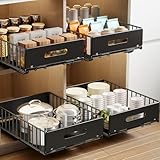




A well-organized drawer turns cooking from a scavenger hunt into a smooth routine. If you’ve ever rummaged through a tangle of spatulas to find a single whisk, this guide on how to organize kitchen drawers is for you. We’ll cover a simple decluttering method, how to zone your drawers by function, the dividers and inserts that actually work, and how to keep everything tidy long-term.
Start by Emptying and Sorting
You can’t organize a drawer that’s still full. Pull everything out, wipe down the empty drawer, and sort the contents into three piles: keep, relocate, and toss. Be honest — duplicate peelers, bent measuring spoons, and gadgets you haven’t touched in a year are just stealing space. Group the “keep” items by type so you can see how much of each category you actually have.
Zone Your Drawers by Function
The pros assign every drawer a job and place it near where the task happens. A few proven zones:
- Cooking utensils — spatulas, spoons, ladles, tongs — next to the stove.
- Prep tools — peelers, knives, graters, measuring cups — near your main cutting area.
- Baking — measuring spoons, whisks, spatulas, piping tips — by the counter you bake on.
- Cutlery — everyday forks, knives, spoons — close to the dishwasher or plates.
- Junk/odds and ends — give it one defined drawer, not five.
Storing tools where you use them is the biggest single upgrade most kitchens can make.
Use Dividers and Inserts
Loose utensils slide and tangle every time you open the drawer. Dividers stop that. Your main options:
- Expandable bamboo or plastic dividers — adjust to your drawer width and create clean lanes.
- Modular trays — drop-in bins you can rearrange as your needs change.
- Cutlery trays — angled slots for forks, knives, and spoons.
- Drawer liners — non-slip mats that keep trays and tools from sliding.
For specific product picks, see our roundups of the best kitchen drawer organizers and utensil organizers for drawers and counters. Measure your drawer’s interior — width, depth, and height — before buying so inserts fit without gaps.
Place Items Strategically Inside Each Drawer
Within a drawer, put the things you reach for most toward the front, and lay long tools (whisks, ladles, tongs) front-to-back rather than side-to-side so the drawer can close. Stand small items upright in a bin if they get lost lying flat. Keep a little empty space — a drawer crammed to capacity is the one that jams.
Tame the Junk Drawer
Every kitchen has one, and that’s fine — just contain it. Use a few small bins or a divided tray to separate batteries, twist ties, takeout menus, and tape. Once each category has a home, the drawer stops becoming a dumping ground. Review it every couple of months and toss what’s expired or broken.
Keep It Organized Long-Term
Organization only sticks if it’s easy to maintain. Return tools to their assigned spot as you unload the dishwasher, do a quick five-minute reset weekly, and resist buying single-use gadgets you don’t have room for. If your counters are also cluttered, moving rarely used tools to a crock can free up drawer space — see our picks for utensil holders and crocks. And if storage under the sink is part of your problem, the best under-sink organizers guide tackles that zone.
Frequently Asked Questions
What’s the best way to organize a utensil drawer?
Declutter first, then use adjustable dividers to create lanes by tool type, placing the most-used items at the front and long tools running front-to-back.
How do I choose drawer dividers that fit?
Measure the drawer’s interior width, depth, and height. Expandable dividers suit odd sizes; modular trays suit standard drawers. Always check the height clears the cabinet frame.
Should utensils go in a drawer or a counter crock?
Keep your daily-use tools in a counter crock for quick reach and use drawers for everything else. It frees drawer space and speeds up cooking.
How do I stop a junk drawer from taking over?
Give it small bins so every category has a spot, and do a quick declutter every couple of months.
How often should I reorganize?
A five-minute weekly reset keeps things in place; a full re-sort every few months catches creeping clutter.
Zone it, divide it, and reset it weekly — that’s how pros keep drawers usable. For more space-saving ideas, see our full list of kitchen gadgets worth buying.
Tools and Inserts Worth Buying
A handful of inexpensive products do most of the heavy lifting when organizing drawers. Expandable bamboo dividers adapt to almost any drawer width and look clean. Modular drawer bins let you reconfigure as your needs change. Angled cutlery trays keep forks, knives, and spoons separated, and non-slip liners stop everything from sliding when you open and close the drawer. For deep drawers, peg systems hold plates and bowls upright. Match the insert to the job rather than buying a one-size kit — our roundups of the best kitchen drawer organizers and utensil organizers for drawers and counters compare the formats side by side.
A Quick Drawer-by-Drawer Plan
- The utensil drawer: divide into lanes by tool type, daily-use items at the front.
- The cutlery drawer: an angled tray sized to your flatware set.
- The baking drawer: nest measuring spoons and cups, corral whisks and spatulas in a bin.
- The wrap drawer: upright dividers so foil, parchment, and bags stand on end.
- The junk drawer: small bins for batteries, tools, ties, and chargers.
Tackling one drawer at a time keeps the project from feeling overwhelming and lets you finish each in a single sitting. If counter clutter is also an issue, moving daily tools to a crock frees a whole drawer.
Habits That Keep Drawers Organized
The hardest part of organization isn’t setting it up — it’s keeping it that way. A few small habits make the difference. Put tools back in their assigned lane as you empty the dishwasher rather than dropping them in any open slot. Do a quick “drawer reset” once a week, taking thirty seconds per drawer to straighten what drifted. Adopt a one-in-one-out rule: when a new gadget comes in, an unused one goes out, so drawers never creep back toward chaos. Finally, store tools where you actually use them — a peeler near the cutting board, a whisk near the mixing bowls — so putting things away feels natural instead of like a chore. With these habits, the system you build today still works months from now, and the occasional deep re-sort takes minutes instead of an afternoon. For counter overflow, a utensil crock keeps daily tools handy without eating drawer space.

Write Your Review
No reviews yet. Be the first to share your experience!