
Disclosure: As an Amazon Associate we earn from qualifying purchases. We may receive a small commission when you buy through links on this page, at no extra cost to you. We only recommend products we genuinely believe offer value to home cooks.
- What 3/4 Cup Actually Equals
- Method 1: Use the 1/4-Cup Scoop Three Times
- Method 2: Combine the 1/2-Cup and 1/4-Cup
- Method 3: Measure 12 Tablespoons
- Liquid vs Dry Ingredients
- If You Have No Measuring Cups at All
- Common Mistakes That Throw Off 3/4 Cup
- A Quick Reference You Can Memorize
- Frequently Asked Questions
- Related Articles
- Related Guides
As an Amazon Associate we earn from qualifying purchases at no extra cost to you.
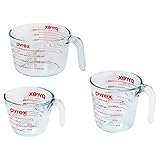


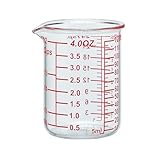
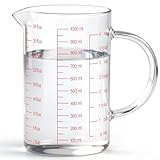


Knowing how to measure 3/4 cup accurately is one of those small kitchen skills that quietly determines whether a recipe succeeds or flops. Three-quarters of a cup shows up constantly in baking and cooking, yet many dry measuring cup sets do not include a dedicated 3/4-cup scoop. This guide walks you through every reliable way to land on exactly 3/4 cup using the measuring cups and spoons you already own, plus the math that makes it foolproof.
What 3/4 Cup Actually Equals
Before measuring, it helps to know the equivalents. A standard US cup is 8 fluid ounces, so 3/4 cup equals 6 fluid ounces. In tablespoons, 3/4 cup is exactly 12 tablespoons, because one cup contains 16 tablespoons (16 × 0.75 = 12). In teaspoons, that is 36 teaspoons. In milliliters, 3/4 cup is roughly 177 ml. Keeping these numbers in mind means you can always reconstruct 3/4 cup even when the exact scoop is missing.
- 3/4 cup = 6 fluid ounces
- 3/4 cup = 12 tablespoons
- 3/4 cup = 36 teaspoons
- 3/4 cup ≈ 177 milliliters
Method 1: Use the 1/4-Cup Scoop Three Times
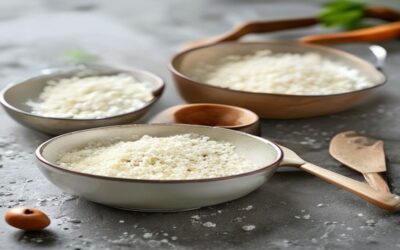
The simplest approach is to fill your 1/4-cup measure three times, because 1/4 + 1/4 + 1/4 = 3/4. This is the cleanest method for dry ingredients like flour, sugar, or oats. Spoon the ingredient loosely into the cup rather than scooping straight from the bag, then level the top with the flat back of a knife. Repeat three times into your mixing bowl. Avoid packing flour unless the recipe specifically calls for it, since packed flour can add 20 percent or more weight.
Method 2: Combine the 1/2-Cup and 1/4-Cup
If you would rather not scoop three times, fill the 1/2-cup measure once and add one 1/4-cup measure (1/2 + 1/4 = 3/4). This is faster and reduces the chance of miscounting. It works equally well for dry and semi-solid ingredients such as softened butter or peanut butter, where you want to minimize the number of times you press the ingredient into a cup.
Method 3: Measure 12 Tablespoons
When you only have measuring spoons on hand, 12 level tablespoons gives you a precise 3/4 cup. This is the most accurate method for sticky or small-volume ingredients like honey, syrup, or grated cheese, where a large cup leaves residue behind. Level each tablespoon for consistency. If your set includes a tablespoon labeled in milliliters, twelve 15 ml spoons equal 180 ml, which is close enough for almost any recipe.
Liquid vs Dry Ingredients
For liquids, use a clear liquid measuring cup with a spout and pour to the 3/4-cup line, checking at eye level on a flat surface. The reason matters: liquid and dry cups are calibrated differently, which we cover in detail in our guide to dry vs liquid measuring cups. For dry ingredients, always use nested dry cups and level the top. Mixing up the two cup types is one of the most common reasons a measured 3/4 cup comes out wrong.
If You Have No Measuring Cups at All
You can still hit 3/4 cup using common references. A standard coffee mug is often close to one cup, so filling it three-quarters of the way gives a rough estimate. For a more reliable workaround when your tools go missing, see our full guide on how to measure without measuring cups, which covers spoon counts, container references, and the weight method. For serious baking, converting to grams with a scale, as explained in converting measuring cups to grams, removes guesswork entirely.
Common Mistakes That Throw Off 3/4 Cup
Even experienced cooks slip up on this amount, usually in predictable ways. The first mistake is scooping flour directly from the bag, which compresses it and packs 15 to 20 percent more than a spooned-and-leveled cup. The second is eyeballing the level instead of sweeping it flat, leaving a rounded heap that adds up across three quarter-cup scoops. A third is using the wrong cup type, pouring a liquid into nested dry cups where you cannot see the line clearly. The fourth is losing count when filling the 1/4-cup three times; placing each scoop into the bowl and counting aloud prevents a double or missed fill. Finally, people forget that wet ingredients cling to the cup, so scraping the cup fully into the bowl matters for sticky items like honey or yogurt.
A Quick Reference You Can Memorize
To make 3/4 cup second nature, anchor on a single fact: three quarter-cups, or one half plus one quarter, always equals three-quarters. From there, the tablespoon equivalent of 12 covers you when only spoons are available, and 6 fluid ounces covers liquids. Many cooks keep a small chart inside a cabinet door listing 1/4, 1/3, 1/2, and 3/4 cup in tablespoons and milliliters. After a few weeks the conversions become automatic and you stop reaching for the chart entirely. This same memorization habit underpins every measuring task in the kitchen, from doubling a recipe to halving it on the fly.
Frequently Asked Questions
Is 3/4 cup the same as 6 ounces?
Yes, in terms of fluid ounces. Three-quarters of a cup equals 6 fluid ounces. For dry ingredients measured by weight, however, 3/4 cup will weigh a different number of ounces depending on the ingredient’s density.
How many tablespoons make 3/4 cup?
Exactly 12 level tablespoons make 3/4 cup, since a full cup is 16 tablespoons.
Can I use two 1/3 cups for 3/4 cup?
No. Two 1/3-cup measures equal 2/3 cup, which is less than 3/4 cup. The cleanest combinations are three 1/4 cups or one 1/2 cup plus one 1/4 cup.
How do I measure 3/4 cup of butter?
One stick of US butter is 1/2 cup, so 3/4 cup is one and a half sticks. Most butter wrappers are marked in tablespoons, and 12 tablespoons equals 3/4 cup.
Why doesn’t my cup set include a 3/4 cup?
Most sets include 1/4, 1/3, 1/2, and 1 cup because those can be combined to reach nearly any common amount, including 3/4 cup, without an extra piece.
Want to keep building your measuring confidence? Browse more in our Gadget Guides and Prep Gadgets sections, and learn the broader names of common kitchen utensils so your toolkit is always ready.

Write Your Review
No reviews yet. Be the first to share your experience!