
- Top Pick: Cutting board organizers (1.0 and 0.6 inch wide slots), cutting board organizer, cutting board storage, biscuit sheets, bakeware organizers for cabinets…
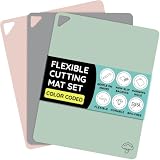
- Best Value: Goodluck 5 Pieces Flexible Cutting Boards, BPA Free Plastic Cutting Boards for Kitchen, Non Slip Cutting Mat for Meat and Vegetables
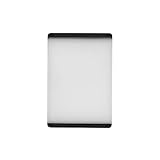
- Premium Choice: FARBERWARE Large Cutting Board, Dishwasher- Safe Plastic Chopping Board for Kitchen with Easy Grip Handle, 11in by 14in, White
Disclosure: As an Amazon Associate we earn from qualifying purchases. We may receive a small commission when you buy through links on this page, at no extra cost to you. We only recommend products we genuinely believe offer value to home cooks.
- Why Storage Matters for Cutting Boards
- Vertical Storage (The Best Option)
- Drawer and Cabinet Storage
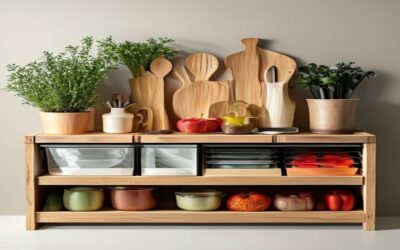
- Wall and Hanging Storage
- Organizing Multiple Boards
- Keep Boards Dry Before Storing
- Frequently Asked Questions
- Matching Storage to Your Kitchen
- Hygiene and Cross-Contamination Tips
- Caring for Boards So They Last
- Related Articles
- Related Guides
As an Amazon Associate we earn from qualifying purchases at no extra cost to you.




Cutting boards are bulky, awkward, and prone to going moldy if stored damp — which is why so many end up leaning in a messy stack against the backsplash. This guide on how to store cutting boards covers the smartest storage methods (vertical, drawer, wall, and cabinet), how to keep boards dry and hygienic, and how to organize multiple boards so the one you want is always easy to grab.
Why Storage Matters for Cutting Boards
How you store a board affects how long it lasts. Boards stored flat or stacked while still damp trap moisture between them, which warps wood and breeds mold and bacteria. The golden rule is to store boards so air circulates around them and they can finish drying — vertical, upright storage does this best. Keeping boards dry is the storage half of good board care; the maintenance half is covered in our guide on cleaning and oiling wooden kitchen tools.
Vertical Storage (The Best Option)
Standing boards on edge is the gold standard because it saves space and lets both faces dry. Options include:
- Countertop board racks — slotted holders that keep two to five boards upright and separated.
- Cabinet door racks — mounted inside a cabinet door to hold boards and baking sheets on edge.
- Tension-rod dividers — vertical rods inside a deep cabinet that create slots for boards and trays.
- Built-in vertical cabinet — the narrow cabinet beside the oven, fitted with dividers, is ideal.
Vertical storage also makes boards easy to grab one-handed instead of unstacking a pile.
Drawer and Cabinet Storage
If counter and wall space is limited, a deep drawer or a low cabinet works — just store boards on edge using dividers rather than flat in a stack. Adjustable dividers (the same kind used for pans and lids) create upright slots. If you must lay boards flat, store only fully dry boards and leave a little air space. Our roundup of kitchen drawer organizers includes dividers that double for board storage.
Wall and Hanging Storage
Boards with a handle or hanging hole can hang from a wall hook, rail, or pegboard. This keeps them fully exposed to air (great for drying), turns an attractive wood board into a bit of decor, and frees cabinet space entirely. Mount the hook into a stud or use a heavy-duty anchor, since end-grain boards can be heavy.
Organizing Multiple Boards
Most cooks own several boards for good reason — separating raw meat, produce, and bread prevents cross-contamination. Store them so the right board is obvious:
- Keep the everyday board in the most accessible slot.
- Group by use (a color-coded set for meat vs veg helps).
- Store the largest, heaviest board at the back or bottom.
- Don’t overcrowd the rack — leave room to slide each board in and out.
If your counters are crowded with tools as well as boards, a crock can clear space — see our picks for utensil holders and crocks.
Keep Boards Dry Before Storing
No storage method beats mold if you put a wet board away. Always towel-dry a board and let it air-dry upright for a bit before storing it. For wooden boards especially, a dry, oiled surface resists water and lasts for years — see our full routine on how to clean and oil wooden tools, which uses the same seasoning approach a cutting board needs.
Frequently Asked Questions
What’s the best way to store cutting boards?
Vertically, on edge, in a slotted rack or divided cabinet so air reaches both faces and they finish drying. This saves space and keeps boards hygienic.
Can I store cutting boards flat?
You can, but only fully dry boards with air space between them. Stacking damp boards traps moisture and invites warping and mold, so upright is better.
How do I store boards in a small kitchen?
Use a cabinet-door rack, a narrow vertical cabinet, or wall hooks for handled boards. Vertical storage uses the least footprint.
Should wooden and plastic boards be stored differently?
Both do best stored upright and dry. Wooden boards additionally need regular oiling, while plastic boards just need to dry fully before storage.
How many cutting boards do I really need?
At least two or three — separate boards for raw meat, produce, and bread reduce cross-contamination. Store them so the right one is easy to reach.
Store them upright, keep them dry, and give each board an easy-to-reach slot — your boards (and your counters) will thank you. For more organizing ideas, see our drawer organizer picks and full kitchen gadgets guide.
Matching Storage to Your Kitchen
The best storage method depends on your space and how many boards you own. If you have open counter space, a slotted countertop rack is the easiest grab-and-go solution. If counters are crowded, a cabinet-door rack or a tension-rod divider inside a cabinet hides boards while keeping them upright. Renters and small-kitchen cooks often do best with wall hooks for handled boards, since they use zero counter or cabinet space. Whatever you choose, the non-negotiable is air flow — boards need to breathe to dry, so avoid sealed, stacked storage. Our guide to space-saving kitchen gadgets has more ideas for squeezing storage out of a tight kitchen.
Hygiene and Cross-Contamination Tips
- Use separate boards (or a color-coded set) for raw meat, produce, and bread.
- Let boards dry fully before storing to prevent mold.
- Don’t store a freshly washed board flat against another wet board.
- Sanitize plastic boards periodically; deep-clean and re-oil wooden ones.
- Replace any board with deep, unsealable grooves where bacteria can hide.
Pairing smart storage with good cleaning habits is what keeps boards safe to use for years. For the cleaning side of the equation, our guide on cleaning and oiling wooden tools walks through the full routine, and our material comparison helps you decide which boards to keep in rotation.
Caring for Boards So They Last
Smart storage and good care work together. A board stored upright dries fast, but it still needs the right cleaning routine to stay safe and good-looking. Wash by hand with warm soapy water after each use, dry both faces, and let it finish drying on edge before it goes back in the rack. Wooden boards benefit from regular oiling — a dry, oiled surface repels water and resists the cracking that ends a board’s life, and the routine is the same one we cover in our guide on cleaning and oiling wooden tools. Plastic boards just need a periodic sanitize and full drying. Treat storage and care as one system, and a quality board — wooden or plastic — easily lasts many years. If you’re shopping for storage gear, the same drawer organizers used for pans double nicely as upright board dividers.



Write Your Review
No reviews yet. Be the first to share your experience!