
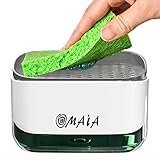
- Top Pick: OMAIA 2-in-1 Dish Soap Dispenser with Sponge Holder – Smart Kitchen Gadget – Sink Countertop Organizer
- Best Value: Kitchen Tools and Gadgets Set 5 Pieces, Cooking Essentials, Black
- Premium Choice: Kitchen Gadgets Set 6 Pieces, Space Saving Cooking Tools Kitchen Accessories-Garlic Grinder, Cheese Grater, Vegetable Peeler, Pizza Cutter, Herb Stripper, Bottle Opener, Gadgets Gift Set (Black)
Disclosure: As an Amazon Associate we earn from qualifying purchases. We may receive a small commission when you buy through links on this page, at no extra cost to you. We only recommend products we genuinely believe offer value to home cooks.
- Declutter Ruthlessly First
- Go Vertical
- Maximize Cabinet and Drawer Interiors
- Use the Under-Sink and Corner Dead Zones
- Keep Counters Clear
- Choose Compact, Multi-Use Gadgets
- Frequently Asked Questions
- Smart Layout Tricks for Tight Spaces
- Compact Gadgets That Earn Their Space
- Make Every Surface Multitask
- Maintain the System
- Related Articles
- Related Guides
As an Amazon Associate we earn from qualifying purchases at no extra cost to you.


A small kitchen can still be a joy to cook in — you just have to be deliberate about every inch. This guide on how to organize a small kitchen focuses on the space-saving gadgets and habits that punch above their weight: going vertical, using the backs of doors, choosing tools that multitask, and keeping counters clear. With a few smart moves, even a galley or apartment kitchen feels open and efficient.
Declutter Ruthlessly First
In a small kitchen, every item you don’t truly need is taking space from one you do. Pull out duplicate tools, single-use gadgets you never reach for, and chipped or mismatched pieces. The goal isn’t an empty kitchen — it’s a curated one where everything earns its spot. Multitaskers beat unitaskers here: a good chef’s knife and a single vegetable chopper can replace a drawer of specialty slicers.
Go Vertical
Small kitchens are usually short on counter and cabinet space but have unused wall and vertical height. Reclaim it:
- Wall rails and hooks for hanging utensils, mugs, and pot holders.
- Magnetic knife strips to free up a knife block’s footprint.
- Shelf risers inside cabinets to double your stacking height.
- Over-the-door racks for foil, wraps, and cleaning supplies.
- A pegboard for a fully customizable hanging wall.
Lifting items off the counter and into the air is the fastest way to make a cramped kitchen breathe.
Maximize Cabinet and Drawer Interiors
The space inside your cabinets is often half-wasted. Add stackable shelf inserts, pull-out bins, lazy Susans for corner cabinets, and tiered organizers so nothing gets buried at the back. In drawers, dividers keep small tools from tangling — our guide on kitchen drawer organizers covers the inserts that work best, and the utensil organizers roundup helps with the busiest drawer of all.
Use the Under-Sink and Corner Dead Zones
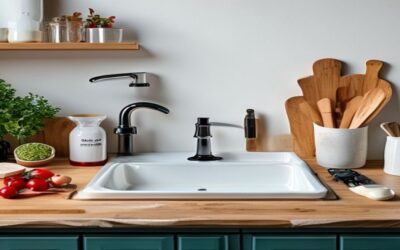
Awkward spots hold more than you think. Under the sink, tiered or pull-out organizers work around the plumbing — see the best under-sink organizers for the kitchen. Corner cabinets benefit from a lazy Susan, and the narrow gap beside the fridge or stove can fit a slim rolling cart for spices or canned goods.
Keep Counters Clear
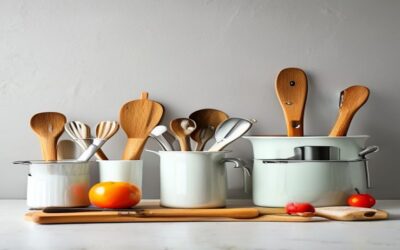
Open counter space makes a small kitchen feel bigger and gives you room to actually cook. Store daily-use tools upright in a single crock instead of scattered across the surface — our picks for utensil holders and crocks keep tongs, spoons, and spatulas within reach without the clutter. Move appliances you use weekly (not daily) into a cabinet, and resist the urge to leave mail, keys, and gadgets on the counter.
Choose Compact, Multi-Use Gadgets
When space is tight, every gadget should pull double duty or fold away. Nesting measuring cups and mixing bowls, collapsible colanders and silicone strainers, and stackable storage containers all save room. A handheld spiralizer stores in a drawer instead of taking counter space like a bulky machine. Prioritize tools that nest, collapse, or hang.
Frequently Asked Questions
How do I make a small kitchen feel bigger?
Clear the counters, go vertical with wall storage, and choose compact multi-use tools. Open surfaces and uncluttered sightlines do most of the visual work.
What’s the best storage upgrade for a tiny kitchen?
Vertical storage — wall rails, hooks, magnetic strips, and shelf risers — because it uses space you’re otherwise wasting.
How do I organize a small kitchen with no drawers?
Lean on wall-mounted rails, over-the-door racks, a pegboard, and counter crocks to give every tool a home without drawer space.
Are multi-use gadgets really worth it?
In a small kitchen, yes. One tool that does three jobs frees the space three single-use gadgets would occupy.
How do I use the space under the sink?
Use tiered or pull-out organizers designed to fit around the plumbing, keeping frequently used cleaning supplies in front.
Edit hard, build up instead of out, and keep counters clear — small kitchens reward discipline. For more compact tools, see our list of kitchen gadgets worth buying.
Smart Layout Tricks for Tight Spaces
Beyond storage gear, how you arrange a small kitchen affects how big it feels. Keep the most-used zone — your prep area between the sink and stove — completely clear so you have room to work. Store items at the point of first use: coffee gear by the kettle, cooking tools by the range, prep tools by the cutting area. This “point of use” approach means fewer steps and less stuff competing for the same counter. In a galley kitchen, dedicate one side to wet tasks (sink, dish drying) and the other to dry prep and cooking, so traffic flows naturally.
Compact Gadgets That Earn Their Space
- Nesting bowl and measuring sets that collapse into one footprint.
- Collapsible colanders and silicone strainers that flatten for storage.
- Stackable, modular food containers with matching lids.
- A handheld spiralizer or vegetable chopper instead of a bulky countertop machine.
- Magnetic or rail-mounted tool storage to keep counters clear.
The test for any new gadget in a small kitchen: does it nest, collapse, hang, or replace two other tools? If not, it probably doesn’t earn the space. For more compact picks, see our list of kitchen gadgets worth buying.
Make Every Surface Multitask
In a small kitchen, surfaces should do more than one job. A sturdy cutting board laid over the sink turns it into extra prep space. A rolling cart can be prep station, storage, and serving trolley in one, then tuck away when not needed. The inside of cabinet doors holds racks for lids, wraps, and measuring spoons. Even the wall above the counter becomes storage with a rail or pegboard. Thinking in terms of “what else can this surface do” unlocks capacity you didn’t know you had.
Maintain the System
Small kitchens punish clutter fast, so a daily reset matters more here than anywhere. Clear and wipe counters each night, return tools to their hooks and crocks, and resist letting the “drop zone” by the door spread onto the counter. A weekly five-minute edit — pulling anything that’s migrated to the wrong spot — keeps the whole kitchen feeling open. For organizing the drawers within that small footprint, our guide to drawer organizers and utensil organizers covers inserts sized for tight spaces.


Write Your Review
No reviews yet. Be the first to share your experience!