
Disclosure: As an Amazon Associate we earn from qualifying purchases. We may receive a small commission when you buy through links on this page, at no extra cost to you. We only recommend products we genuinely believe offer value to home cooks.

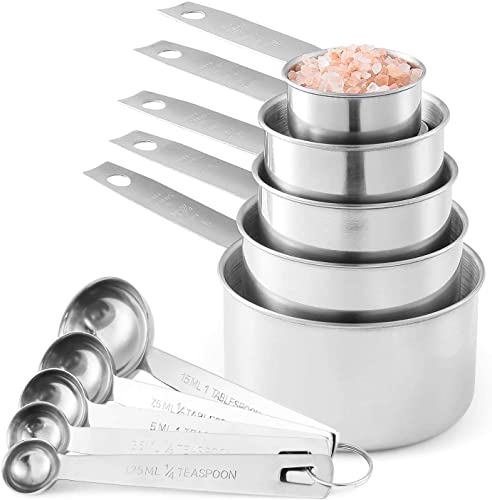
If you have ever followed a recipe written for a different country, you have run into grams instead of cups. Learning how to convert measuring cups to grams unlocks a world of recipes and, more importantly, makes your baking dramatically more consistent. Because cups measure volume and grams measure weight, the conversion depends on the ingredient. This guide explains the why and gives you the most useful conversions to keep on hand.
Why You Cannot Use One Universal Number
The most important concept is that one cup is not a fixed number of grams. A cup of flour weighs far less than a cup of sugar, because the two have different densities. Volume tells you how much space something occupies; weight tells you how much matter is there. This is the same reason we caution against treating all cups alike in our guide to dry vs liquid measuring cups. To convert accurately, you need the density of the specific ingredient.
Common Dry Ingredient Conversions
Here are widely used approximate conversions for one US cup of common baking ingredients:
- All-purpose flour: about 120–125 grams
- Granulated sugar: about 200 grams
- Brown sugar (packed): about 220 grams
- Powdered sugar: about 120 grams
- Rolled oats: about 90 grams
- Cocoa powder: about 100 grams
Notice how much these vary. This is exactly why measuring 3/4 cup of flour and 3/4 cup of sugar produce very different weights, a nuance that builds on our guide to measuring 3/4 cup.
Liquid Conversions Are Simpler
Water and water-like liquids are the easy case, because their density is close to 1 gram per milliliter. One cup of water is about 237 ml, which is roughly 237 grams. Milk is very close, around 240 grams per cup. Oil is lighter, about 215 grams per cup, while honey is much heavier, around 340 grams per cup, due to its density. For pourable ingredients, weighing is faster and cleaner than fussing with a liquid cup.
The Best Tool: A Digital Scale
The single most reliable way to use grams is a digital kitchen scale. Place your bowl on the scale, press tare to zero it, and add the ingredient until you reach the target weight. This method removes the packing and leveling errors that plague volume measurement, and it is the standard professional bakers use. If you do not own a scale yet, our guide on measuring without measuring cups covers volume-based fallbacks in the meantime.
How to Convert a Whole Recipe
To convert a cup-based recipe to grams, multiply each ingredient’s cup amount by its grams-per-cup value. For example, 2 cups of flour at 120 grams per cup is 240 grams. For fractional amounts, the math scales directly: 3/4 cup of sugar at 200 grams per cup is 150 grams. Keep a small conversion chart taped inside a cabinet, and over time you will memorize the ingredients you use most. This habit pairs naturally with understanding the relationship between cups and spoons.
Tips for Accuracy
Conversions are approximate because brands and humidity affect density, so treat the numbers above as reliable starting points rather than absolutes. Spoon flour into the cup before weighing comparisons, never pack it unless specified, and always tare your scale between ingredients. For the highest accuracy, weigh directly and skip volume entirely. These small habits, explored across our Gadget Guides, make every bake more repeatable.
Spoon-to-Gram Conversions
Grams are not just for cups; smaller amounts convert too, which is handy for spices, leavening, and salt. As rough guides, one tablespoon of flour is about 8 grams, one tablespoon of sugar is about 12 grams, one teaspoon of salt is about 6 grams, and one teaspoon of baking powder is about 4 grams. These small conversions are especially useful when scaling a recipe up or down, because multiplying grams is far more reliable than juggling fractional spoons. If you bake bread, weighing yeast and salt to the gram produces noticeably more consistent loaves than measuring by spoon, where a slightly heaped teaspoon can shift the result. This builds directly on understanding the relationship between cups and spoons.
Why Bakers Prefer Weight
There is a reason nearly every professional and published bakery recipe lists grams. Volume measurement introduces variability at every step: how you scoop, how humid the day is, how settled the flour is in the bag. Weight eliminates all of it. Two bakers following the same gram-based recipe in different kitchens will get far more similar results than two bakers using cups. For everyday cooking the difference is negligible, but for cakes, cookies, and bread, where structure depends on precise ratios, grams are transformative. If you take one habit from this guide, let it be weighing your flour, the ingredient most prone to volume error and the one that most affects texture.
Frequently Asked Questions
How many grams is one cup?
It depends on the ingredient. One cup of flour is about 120–125 grams, one cup of sugar is about 200 grams, and one cup of water is about 237 grams.
Why is a cup of flour fewer grams than a cup of sugar?
Flour is less dense than sugar, so the same volume weighs less. Density differences are exactly why volume-to-weight conversions vary by ingredient.
Is converting to grams more accurate than using cups?
Yes. Weighing in grams eliminates packing and leveling errors, making it the most accurate method, especially important for baking.
How do I convert cups to grams without a chart?
For water-like liquids, one cup is roughly 237 grams. For dry ingredients, you need the specific density, so a quick chart or a kitchen scale is the most dependable approach.
Do I need a special scale?
Any digital kitchen scale that measures in grams and has a tare function works well. You do not need an expensive model for accurate results.
Handling International Recipes
One of the biggest payoffs of mastering gram conversions is access to recipes from around the world, many of which use metric measurements by default. European, Australian, and most professional recipes list ingredients by weight, and once you are comfortable with grams you can follow them without translation. Be aware of a few regional quirks: an Australian tablespoon is 20 ml rather than the 15 ml standard elsewhere, and “cup” sizes vary slightly between countries. When a recipe gives both grams and cups, trust the grams, since they are exact while the cup figure is a rounded convenience. With a scale and the conversions in this guide, the entire global library of baking opens up to you.
Ready to bake with confidence? Explore more in our Gadget Guides and browse measuring tools in our Prep Gadgets collection.
Top picks from this guide
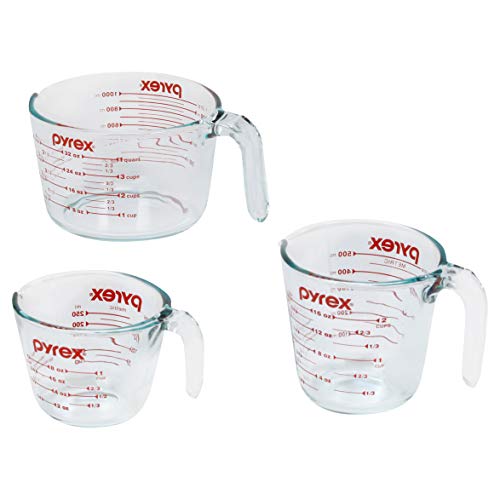 PyrexPyrex Essentials (3-Pack) Glass Measuring Cups Set (1, 2 &…$26 \xc2\xb7 99/100
 TILUCKTILUCK Stainless Steel Measuring Cups & Spoons Set, Cups and…$16 \xc2\xb7 98/100OXOOXO Good Grips Angled Measuring Cup with Measurement Markings, 2…$13 \xc2\xb7 98/100
 OXOOXO Good Grips 4-Cup Angled Measuring Cup$14 \xc2\xb7 97/100

Write Your Review
No reviews yet. Be the first to share your experience!