
Disclosure: As an Amazon Associate we earn from qualifying purchases. We may receive a small commission when you buy through links on this page, at no extra cost to you. We only recommend products we genuinely believe offer value to home cooks.
- They Hold the Same Volume
- How Dry Measuring Cups Work
- How Liquid Measuring Cups Work
- Why Using the Wrong One Causes Errors
- When the Difference Matters Most
- Do You Need Both?
- How to Use Each Cup Correctly
- What the Pros Do
- Frequently Asked Questions
- A Simple Test to Remember the Difference
- Related Articles
- Related Guides
As an Amazon Associate we earn from qualifying purchases at no extra cost to you.
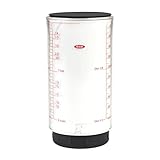


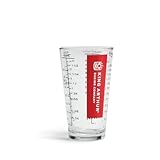

They both say “1 cup,” so why are there two completely different tools? The answer to the dry vs liquid measuring cups question is one of the most useful things a home cook can learn. Although both hold the same volume, their shapes are designed for different jobs, and swapping them introduces small errors that add up, especially in baking. This guide explains the difference and shows you exactly when to use each.
They Hold the Same Volume
First, clear up the biggest myth: one cup of volume is one cup, whether the tool is labeled dry or liquid. A dry 1-cup measure and a liquid 1-cup measure both hold 8 fluid ounces. The difference is not capacity, it is design, and that design is built around how you fill and read each one.
How Dry Measuring Cups Work
Dry measuring cups come in a nested set, usually 1/4, 1/3, 1/2, and 1 cup. They are designed to be filled to the very top and then leveled off with a straight edge. Because the rim is the measurement line, you can sweep away excess for a precise, repeatable amount. This makes them ideal for flour, sugar, oats, rice, and other solids. The combinations in these sets also let you build amounts like 3/4 cup, as shown in our guide to measuring 3/4 cup.
How Liquid Measuring Cups Work
Liquid measuring cups are usually a single clear container with graduated lines and a pouring spout. They are filled to a printed line rather than to the rim, leaving headroom so liquid does not spill when you carry or pour it. You read the measurement at eye level, looking at the bottom of the curved surface (the meniscus). This design is perfect for water, milk, broth, oil, and other pourable ingredients.
Why Using the Wrong One Causes Errors
If you measure flour in a liquid cup, you cannot level it properly, so you tend to overfill, adding too much flour and producing dense, dry results. If you measure water in a dry cup, you must fill it to the brim, which almost guarantees a spill or an under-pour as you move it. Neither error is huge on its own, but baking is sensitive, and several small errors compound. This is the same reason we stress tool choice in our guide to measuring cups vs spoons.
When the Difference Matters Most
For everyday cooking like soups and stews, the difference is minor; a slightly generous cup of broth rarely matters. For baking, it matters a great deal, because ratios of flour, liquid, and leavening determine texture. When precision is critical, weighing ingredients sidesteps the entire dry-versus-liquid issue. Our guide on converting cups to grams explains how a scale gives identical results every time, regardless of cup type.
Do You Need Both?
For accurate baking, yes, owning both is worth it, and neither is expensive. If you can only have one type, choose based on what you cook: bakers should prioritize a good set of dry cups, while soup-and-sauce cooks lean on a liquid cup. In a pinch, you can convert liquid amounts to tablespoons and use spoons, a trick covered in our guide to measuring without measuring cups.
How to Use Each Cup Correctly
Technique matters as much as owning the right tool. For dry cups, spoon the ingredient into the cup until it mounds above the rim, then sweep a straight edge across the top in one smooth motion to level it. Never dip the cup into the bag and never tap it on the counter, both of which settle and compact the contents. For liquid cups, set the cup on a level surface, pour slowly to the desired line, and crouch so your eye is level with the marking. Reading from above makes liquids look higher than they are, leading to under-pours. These two habits, leveling dry and eye-leveling liquid, account for most of the accuracy difference between the cups.
What the Pros Do
Professional kitchens and serious bakers often sidestep the dry-versus-liquid debate altogether by weighing everything. A scale does not care whether an ingredient is solid or liquid; 200 grams is 200 grams. This is why published bakery recipes almost always list weights, and why our guide on converting cups to grams is worth bookmarking. That said, cups remain faster and more intuitive for everyday cooking, so the practical approach is to keep both cup types for daily use and reach for a scale when a recipe demands precision. Understanding the roles of cups and spoons together completes the picture.
Frequently Asked Questions
Can I use a liquid measuring cup for dry ingredients?
You can in an emergency, but it is less accurate because you cannot level the top. Spoon the ingredient in gently and do not pack it, accepting a small margin of error.
Is 1 cup dry the same as 1 cup liquid?
Yes, in volume. Both equal 8 fluid ounces. The tools differ only in shape and how you fill and read them.
How do I read a liquid measuring cup correctly?
Place it on a flat surface and read at eye level, lining up the liquid’s bottom curve with the printed line. Reading from above causes over-pouring.
Why are dry cups sold in sets but liquid cups are single?
Dry cups must be filled to the rim, so each size needs its own cup. Liquid cups use printed lines, letting one container measure many amounts.
Does this matter for cooking or just baking?
It matters most for baking, where precise ratios affect texture. For general cooking, small differences are usually forgiving.
A Simple Test to Remember the Difference
If you ever forget which cup to grab, ask one question: can I level this ingredient with a knife? If yes, it is dry, and you want nested dry cups. If it pours, it is liquid, and you want the clear cup with the spout. This single test resolves nearly every situation at the counter. The edge cases, like sticky honey or thick yogurt, can go either way, but for those a tablespoon count or a scale is usually cleaner anyway. Internalizing this quick check means you will never again pour milk into a dry cup and watch it slosh, or try to level flour in a spouted liquid cup where you cannot see the rim clearly.
For more measuring confidence, browse our Gadget Guides and learn the names of every common kitchen utensil so you always grab the right tool.

Write Your Review
No reviews yet. Be the first to share your experience!