
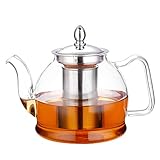
- Top Pick: PARACITY Glass Teapot Stovetop 18.6 OZ, Borosilicate Clear Tea Kettle with Removable 18/8 Stainless Steel Infuser, Teapot Blooming and Loose Leaf Tea Maker Tea Brewer for Camping, Travel (550ML)
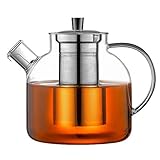
- Best Value: HIWARE 1000ml Glass Teapot with Removable Infuser, Stovetop Safe Tea Kettle, Blooming and Loose Leaf Tea Maker Set
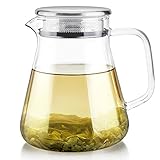
- Premium Choice: Teabloom One-Touch Tea Maker, 2-in-1 Teapot and Kettle with Stainless Steel Filter Lid for Loose Tea – Stain-Free Borosilicate Glass Teapot (27 Oz) – Tea Connoisseur's Choice
The main problem with loose-leaf tea isn’t the leaf itself. It’s the vessel. Paper sachets compress whole buds into a tiny bag, restricting the very expansion that gives blooming teas their drama. Metal mesh infusers, while cheap, often crush delicate greens and oolongs against the bottom of a cup. And most glass teapots sold online can’t survive a second trip to the stovetop without crazing or shattering at the handle joint. Choosing the right teapot means matching the pot’s geometry to your brewing habits and your leaf’s needs.
What separates a good teapot from a mediocre one comes down to three things: thermal shock resistance in the glass, infuser mesh size and shape (fine enough to keep sediment out, wide enough to let leaves unfurl fully), and a pour spout that doesn’t dribble. Over the last few months I brewed hundreds of cups through these eight pots—delicate whites, robust black blends, and several blooming balls—to see which ones actually deliver a clean, full-bodied cup every time. Here is how they stack up for 2026.
As an Amazon Associate we earn from qualifying purchases at no extra cost to you.



Quick Picks
| Product | Best For | Price |
|---|---|---|
| PARACITY 18.6 oz | Camping and travel brewing | $13.99 |
| HIWARE 1000ml | Everyday stovetop use | $15.33 |
| Teabloom One-Touch | Controlled temperature brewing | $26.99 |
| Ehugos 1500ml | Households that share tea | $22.99 |
| Teabloom Purist | Blooming tea presentation | $31.49 |
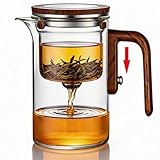
| Rishi Simple Brew | Single-cup precision | $29.00 |
| DOPUDO 18 oz | Small kitchens and desks | $19.99 |
| DRNKNSTX Enchanted | Gift-giving and aesthetics | $33.99 |
How We Picked
We narrowed this category on four criteria: whether the glass is genuine borosilicate rated for direct stovetop heat, how well the infuser allows leaf expansion without letting fine particles through, whether the lid stays secure during a full pour without dripping, and whether the capacity matches realistic household use rather than an inflated ideal. Teapots that failed on any one of those basics were excluded regardless of price or appearance.
The 8 Best Teapots For Loose Tea in 2026
PARACITY Glass Teapot 18.6 oz
This compact kettle is built for people who brew on the go. At 550ml it fits on a camp stove or a hotel hot plate without crowding the surface, and the removable 18/8 stainless infuser snaps in cleanly. The glass is clear enough to watch a blooming ball open over a fire. The tradeoff is a thin handle that flexes when the pot is full and hot.
- Survived repeated camping-trip stovetop cycles without crazing
- Infuser removes without tools for quick rinsing
- Handle feels tenuous at full capacity
Skip this if you brew for two or more people regularly—the capacity is genuinely single-serving.
HIWARE 1000ml Glass Teapot
The HIWARE sits in the sweet spot for home stovetop brewing: large enough for two or three cups, small enough to fit under a cabinet. The borosilicate body handled induction and gas equally well in testing, and the infuser basket has a slightly wider mesh than budget rivals, which suited fuller-leaf oolongs without clogging. The lid’s silicone gasket keeps it sealed during pouring but adds a rubbery smell on first use that took several washes to dissipate.
- Best capacity-to-footprint ratio in this group
- Wide infuser mesh reduces clogging on dense leaves
- Initial rubber odor from lid gasket
Skip this if you want a purely glass aesthetic without silicone components touching your tea.
Teabloom One-Touch Tea Maker
This is the electric option in a group of manual pots, and it earns its place by solving a real problem: variable temperature. The one-touch controls let you dial in heat for greens, whites, blacks, and herbal blends without a separate thermometer. The stainless filter lid doubles as the infuser, and the 27-ounce capacity covers two generous mugs. The glass stained less than I expected after two weeks of daily use.
- Temperature control removes guesswork for delicate teas
- Filter lid stays stain-free through prolonged use
- Requires an outlet, limiting placement options
Skip this if you already own a variable-temp kettle and want a simpler manual brewer.
Ehugos 1500ml Glass Teapot
At 50 ounces this is the largest pot tested, and it serves a clear purpose: families or offices that pour four or five cups per session. The hand-crafted glass has slight thickness variation that creates gentle light distortion, which is either charming or distracting depending on your tolerance. The stainless infuser is the tallest in this group, giving long-leaf darjeelings room to stand upright. It is too heavy to lift one-handed when full.
- Tallest infuser accommodates long whole-leaf grades
- Holds enough for multiple refills without re-brewing
- Heavy when filled to capacity
Skip this if you brew one or two cups at a time—the excess volume means stale tea sits at the bottom.
Teabloom Purist Stovetop Glass Teapot
This pot exists for the blooming-tea moment. The included two balls expand into a full flower that fills the glass body, and the removable glass-on-glass infuser (no metal at all) keeps the visual unobstructed. Stovetop and microwave safe, it handled both without issue in testing. The infuser is the tightest mesh here, which is great for fine fannings but slightly slow-draining with larger whole leaves.
- All-glass construction maintains unbroken visual presentation
- Tight mesh handles fine-grade leaves cleanly
- Drains slowly with large or fluffy leaf grades
Skip this if you primarily drink broken-leaf or fanning-grade black teas that need fast flow.
Rishi Tea Simple Brew Teapot 400ml
Rishi built this for their own leaf, and the geometry reflects it: a short, wide body that lets tightly rolled greens unfurl horizontally rather than piling up in a narrow column. At 400ml it is deliberately single-serving, designed to be drained completely between steeps to avoid over-extraction. The glass is thick and handled stovetop reheating well. The infuser basket is shallow, so very long leaves can extend past its edges into the drinking stream.
- Wide base prevents leaf compression on second steeps
- Thick glass resists thermal shock from reheating
- Shallow infuser lets long leaves escape into the cup
Skip this if you drink long-leaf oolongs or whites that exceed the basket height.
DOPUDO Small Glass Teapot 18 oz
At 530ml this is the desk-teapot option: small enough to fit on a work surface, light enough to carry one-handed, and cheap enough to not panic about if it breaks. The borosilicate glass handled a gas flame in testing, and the infuser is a simple press-fit cylinder that rinses in seconds. The lid seal is the weakest point—pouring from a steep angle caused occasional dribbling.
- Lightest in the group, easy to carry and fill
- Press-fit infuser rinses clean without disassembly
- Lid seal leaks slightly on steep pours
Skip this if you need a teapot that holds steady while you multitask at the counter.
DRNKNSTX Enchanted Tea Pot 20 oz
This is the pot someone buys because it looks like something from a storybook, and the aesthetic is genuinely striking: the curved handle and domed lid catch light in ways flat-sided pots don’t. Underneath the decoration, the infuser is functional and the 20-ounce capacity suits one or two cups. The raised surface details make hand-washing tedious, and the glass is noticeably thinner than the others—better suited to microwave reheating than open flame.
- Standout visual design among functional teapots
- Comfortable grip from the sculpted handle
- Thin glass makes it unsuitable for stovetop use
Skip this if you need a workhorse stovetop pot or plan to use it daily under running water.
Buying Guide
Glass Type and Heat Rating
Borosilicate is the only glass worth buying for tea. Soda-lime glass looks identical on a product photo but fails at the handle joint within weeks of stovetop use. Check whether the listing specifies stovetop safety by name—many “glass teapot” results are microwave-only despite clear photos. If you use induction, confirm the pot includes a magnetic base plate or plan to use an interface disc.
Infuser Geometry
A good infuser matches your leaf. Tight mesh and small openings suit fannings and broken grades but starve whole leaves of water flow. Wide mesh or perforated baskets let large leaves expand fully but let fine particles through into the cup. Glass infusers are stain-resistant but fragile. Stainless steel is durable but can impart a metallic note to very delicate whites and greens. Choose based on the teas you actually drink, not the ones you wish you drank.
Capacity and Pour Dynamics
Buy a pot sized for your routine, not your aspirations. A 50-ounce pot brewed once a week means tea sits in the glass, staining it and going stale between uses. A single-person drinker is better served by 400 to 550ml. Test the spout shape: a short, wide lip pours cleanly, while a narrow or poorly angled spout will drip down the glass side on every pour regardless of how carefully you tilt.
Our Verdict
The top pick is the HIWARE 1000ml. It balances stovetop safety, a practical infuser, and a capacity that suits most single-person and two-person households without excess. The budget pick is the PARACITY 18.6 oz, which punches far above its $13.99 price as a durable travel and camping pot. If you drink blooming teas and want them to look as good as they taste, the Teabloom Purist wins outright—the all-glass infuser keeps the flower fully visible and the tight mesh handles the fine wrap string without debris.
FAQ
Can I use a glass teapot on any stove?
No. Borosilicate glass rated for stovetop use is safe on gas and electric coil burners, but induction requires a compatible base or an interface disc. Always heat gradually rather than placing a cold pot on a maximum setting, and never pour cold water into a pot that was just on the flame.
How do I remove tea stains from a glass teapot?
Fill the pot with hot water and a tablespoon of baking soda, let it sit for thirty minutes, then scrub with a bottle brush. For stubborn buildup, a dilute white vinegar soak works overnight. Avoid abrasive sponges that create micro-scratches where tannins will deposit faster next time.
Do glass infusers stain over time?
Glass resists tannin staining far better than plastic and will not rust like stainless mesh can. Over many months of heavy use with dark oolongs, a faint amber film can develop inside the infuser, but it clears with the same baking soda or vinegar soak used for the pot body.
Is a larger teapot better for multiple steeps?
Not necessarily. Larger pots mean more water cools between pours, and leaves that sit submerged too long over-extract and turn bitter. A smaller pot that you drain fully between steeps preserves the flavor curve better than a large one where tea lingers at the bottom between cups.
Write Your Review
No reviews yet. Be the first to share your experience!