
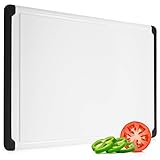
Quick answer: Our top pick in 2026 is the Thin plastic cutting board — our #1 rated choice. See the full ranked comparison, alternatives and buying advice below.
The Short Answer
Yes—expensive end grain cutting boards are worth it if you cook frequently, want a stable, long-lasting work surface, and will maintain it properly. If you mainly prepare occasional meals, need something dishwasher-safe, or are shopping strictly for the lowest upfront cost, the premium is usually not justified.
For most home cooks, “expensive” means roughly $100 to $300 or more for a large, well-made board. However, the category is broad. Some attractive end grain boards cost about $50 to $80, including a Large Walnut Wood Cutting Board listed at $69.99 and the Ironwood Gourmet Board Chefs Charleston End Grain at $56.80. Those prices are not automatically bargains or rip-offs; construction, wood species, dimensions, glue quality, finish, and quality control matter more than the label.
As an Amazon Associate we earn from qualifying purchases at no extra cost to you. Product prices and availability are accurate as of the date shown and are subject to change.


What You Actually Get
End grain refers to the orientation of the wood fibers. Instead of cutting across the long sides of the grain, as you do on a typical edge-grain or face-grain board, the knife lands on the exposed ends of the fibers. This creates the familiar checkerboard or brick-like appearance.
A good end grain board generally gives you a thick, stable work surface that is comfortable for repeated chopping. Many are between 1.5 and 3 inches thick and measure approximately 16 by 12 inches to 24 by 18 inches. Larger boards provide more room for separating chopped ingredients, but they can weigh 12 to 25 pounds, making them less convenient to move or clean in a sink.
The real value is not that end grain makes a knife invincible. It does not. The fibers can close slightly around shallow cuts, so the surface may show fewer prominent knife marks over time than a softer, thin face-grain board. A thick board also resists sliding, warping, and flexing better than a lightweight board—provided it was properly dried, glued, and finished.
Price can reflect better materials and craftsmanship, but it can also reflect branding or decorative details. Walnut is attractive and relatively gentle on knife edges, while maple is usually lighter in color and often very durable. Cherry is warm-toned and moderately hard. Rubberwood and acacia can offer good value, although their construction and moisture stability vary considerably from board to board.
Pros
- Excellent stability: A thick board with rubber feet or enough weight is less likely to skid while you chop. Thicknesses of 2 inches or more generally feel substantially more solid than thin boards.
- Good knife feel: Quality hardwood end grain tends to feel firm without being as harsh on a knife edge as glass, stone, ceramic, or some very hard synthetic surfaces.
- Long service life: A board that is cleaned correctly and periodically oiled can last for many years. Deep scratches and grooves can often be sanded out instead of requiring replacement.
- More usable workspace: A 20-by-15-inch board gives you room to chop vegetables while keeping raw ingredients or scraps separate. This is one of the most practical reasons to buy a larger board.
- Resists visible wear: The end-grain pattern disguises small knife marks better than a plain, pale surface. It develops character rather than immediately looking scratched.
- Premium presentation: A handsome walnut, maple, or mixed-wood board can serve as a serving board for bread, cheese, or appetizers, making it more useful than a single-purpose kitchen tool.
- Repairable construction: Unlike a warped plastic board that may be difficult to restore, a solid wood board can sometimes be professionally flattened or refinished.
Cons
- Higher price: A dependable end grain board can cost $80 to $200, while a basic plastic board may cost $10 to $30. Decorative premium boards can exceed $300 without providing proportional cooking benefits.
- Maintenance is mandatory: Wash it by hand, dry it promptly, and apply food-safe mineral oil when the surface looks dry. Depending on use and climate, that may mean every few weeks at first and every one to three months later.
- Never dishwasher-safe: Prolonged heat and water can cause cracking, cupping, open glue joints, or severe warping. A board that does not fit comfortably in your sink is especially inconvenient.
- Heavy and bulky: A thick 18-by-24-inch board may weigh 15 pounds or more. That is useful for stability but frustrating if you must lift it into storage after every meal.
- Quality is inconsistent: Gaps between blocks, uneven feet, rough edges, excessive glue lines, and a strong chemical odor are warning signs. A beautiful pattern does not guarantee sound construction.
- It can still harbor odors if neglected: Wood is not self-cleaning. Raw meat juices, onion odors, and moisture must be removed promptly with hot soapy water and thorough drying.
- Some features are mostly cosmetic: Juice grooves, contrasting wood strips, handles, and elaborate patterns may raise the price while reducing the flat cutting area you actually use.
Who Should Buy It
Buy an expensive end grain board if you cook most days, regularly chop dense vegetables or meat, and want one primary board rather than several disposable-feeling options. It is especially appealing to home cooks who value a stable surface, enjoy caring for kitchen tools, and have enough counter or cabinet space.
It also makes sense for someone replacing a succession of cheap boards. Paying $120 for a carefully made 18-by-14-inch board may be reasonable if it remains useful for a decade, whereas replacing $25 boards every year can become more expensive and less satisfying. Look for a flat surface, smooth edges, secure feet, tight joints, and a thickness of at least 1.5 inches. If you want maximum stability, 2 inches is a practical target.
Who Should Skip It
Skip the premium if you want to put your cutting board in the dishwasher, have limited counter space, or dislike routine maintenance. A large end grain board is also a poor fit for a small apartment kitchen if you cannot comfortably lift, wash, and store it.
It is not the best choice as your only board if you prepare raw chicken often and want the easiest sanitation routine. A dishwasher-safe plastic board is simpler to clean and can be replaced when it becomes heavily scarred. Many households do best with both: wood for produce, bread, and general prep, plus a separate plastic board for raw meat.
Cheaper Alternatives
| Option | Cost | Trade-off |
|---|---|---|
| Thin plastic cutting board | $10–$30 | Inexpensive and dishwasher-safe, but slides more easily, shows knife scars quickly, and may flex under pressure. |
| Thick plastic cutting board | $25–$70 | More stable and easier to sanitize than wood, but can be harder on knife edges and usually looks worn sooner. |
| Bamboo board | $20–$60 | Often hard, affordable, and moisture-resistant, but may feel harsher under a knife and is frequently sold in thinner formats. |
| Face-grain hardwood board | $35–$100 | Attractive and often lighter than end grain, but generally more prone to visible scratches and movement when thin. |
| Budget end grain board | $50–$90 | Can deliver much of the feel for less money, but inspect for uneven blocks, poor finishing, loose feet, and warping. |
| Premium end grain board | $100–$300+ | Typically thicker, heavier, and better finished, but the extra cost may be mostly aesthetic once basic construction quality is met. |
For value shoppers, the $50 to $80 range can be compelling. The $69.99 walnut board and $56.80 Ironwood Gourmet option are examples of boards positioned below the premium category’s higher prices. Before buying, verify the actual dimensions, thickness, wood species, return policy, and whether the board arrives flat. A low price is less attractive if the usable cutting area is small or the board requires immediate repair.
FAQ
Are end grain cutting boards better for knives?
They are generally a knife-friendly choice, especially compared with glass, stone, or ceramic. End grain may reduce the sensation of chopping on a hard, unforgiving surface, but sharpness still depends mainly on your knife steel, cutting technique, and sharpening routine. No wood board eliminates dulling.
How much should I spend on an end grain cutting board?
For most home kitchens, $60 to $150 is a sensible range. Around $50 to $80 can buy a functional board with attractive wood and adequate thickness. Spending $150 to $300 may get you better finishing, more consistent construction, larger dimensions, or custom details. Above $300, carefully evaluate whether you are paying for craftsmanship you will appreciate or decoration you do not need.
What size end grain cutting board is best?
A board around 18 by 14 inches is a versatile starting point for everyday cooking. Choose approximately 20 by 15 inches or larger if you regularly cook for several people and have the counter space. Allow at least 2 inches of clearance around the board when possible, and confirm that its weight will not make hand-washing impractical.
How do you care for an expensive wood cutting board?
Wash it by hand with hot water and dish soap, wipe away standing moisture, and let it dry upright or on its edge. Do not soak it or put it in the dishwasher. Apply plain food-safe mineral oil when the wood looks pale or feels dry, then use a board conditioner containing beeswax if desired. Sanding is appropriate for deeper grooves, but severe cracks, separated joints, or persistent warping usually mean replacement or professional repair.
Ready to decide? Our #1 pick for 2026 is the Thin plastic cutting board.
Live price & availability on Amazon.





Write Your Review
No reviews yet. Be the first to share your experience!