
In 2026, a good food dehydrator is one of the simplest ways to make healthy snacks at home without added sugar, excess sodium, or preservatives. With precise low-temperature drying you can turn fresh produce, herbs, and lean meats into shelf-stable apple chips, kale crisps, fruit leathers, trail mix, and beef jerky that keep for weeks and pack easily for work, school, or hiking.
- Watch: How to Choose a Food Dehydrator for Healthy Snacks — Video Review
- 1. Capacity and Tray Space: How Much Do You Really Need?
- 2. Airflow Design and Temperature Control
- 3. Materials, Safety, and Ease of Cleaning
- 4. Footprint, Noise, and Energy Use
- 5. Match the Machine to Your Snack Goals
- Tips
- Frequently Asked Questions
- Conclusion
- Related Articles
- Related Guides
This guide breaks down how to choose the right machine for your kitchen, household size, and snack habits. You will learn what capacity, airflow design, temperature control, materials, and footprint actually mean in daily use, so you can pick a model that dries evenly, cleans up quickly, and fits your counter and budget.
As an Amazon Associate we earn from qualifying purchases at no extra cost to you.




⚡ Save on Your Next PC — Amazon Prime
Prime members get fast free shipping on the systems above, plus early access to Prime Day & Black Friday PC deals. New members get a 30-day free trial.
Watch: How to Choose a Food Dehydrator for Healthy Snacks — Video Review
1. Capacity and Tray Space: How Much Do You Really Need?
Capacity is measured by number of trays and total drying area in square feet, and it directly affects batch size and drying time. Overcrowding trays blocks airflow and adds hours to every batch, so choose space for how you actually snack.
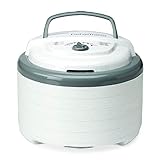
- 1-2 people or occasional snacks: A compact 5-tray stackable model such as the FOHERE 5 BPA-Free Tray Dehydrator with 11.42-inch trays or the Small Food Dehydrator Dryer is efficient for 1-2 pounds of sliced fruit or a single batch of kale chips. Stackable trays also let you add or remove layers to match the load.
- Families and meal preppers: Look for 5 to 6 stainless steel trays and 3 to 6.5 sq ft of space. The Cosori 5-Tray model offers about 3.1 sq ft for 2-3 pounds per batch, while the Cosori 6-Tray expands to 6.5 sq ft, letting you dry jerky on two trays and fruit on four without flavor transfer.
- Large batches or expandable systems: A unit like the NESCO FD-75A Snackmaster Pro allows expansion up to 12 trays with add-on trays, which is useful if you process garden harvests or make jerky in 4-5 pound batches.
2. Airflow Design and Temperature Control
Even drying depends on consistent, 360-degree airflow and accurate temperature. Two common layouts behave differently on the counter.
- Stackable vertical flow (top or bottom fan): Found on most compact models such as the FOHERE and the Small Food Dehydrator Dryer. These are space-saving and affordable, but you may need to rotate trays halfway through for very moist foods like pineapple or jerky. Look for a 95°F to 158°F range that covers herbs, yogurt, and meats.
- Rear-mounted horizontal flow: Used in box-style dehydrators like the Cosori 5-Tray and 6-Tray and the NESCO FD-75A. A rear fan pushes air evenly across each tray so you rarely need to rotate, and results are more uniform for mixed loads.
- What to check: Choose a model with adjustable thermostat in 5-10 degree increments, a timer up to 24-48 hours with auto shutoff, and a clear temperature guide on the unit. For reference, herbs dry best at 95-105°F, fruit and vegetables at 125-135°F, and jerky at 155-165°F per USDA guidance.
3. Materials, Safety, and Ease of Cleaning
Materials affect durability, food safety, and how quickly you can clean up after sticky foods like mango or teriyaki jerky.
- Tray material: BPA-free plastic trays like those on the FOHERE 5-Tray are lightweight and dishwasher-safe, while stainless steel trays on the Cosori models and NESCO FD-75A resist staining, do not warp, and are better for acidic foods and frequent high-heat use.
- Trays vs. sheets: Mesh screens are essential for small items like herbs and blueberries; solid fruit-roll sheets are needed for leathers and purees. Check that both are included or available as accessories.
- Housing and safety: Look for food-grade, BPA-free construction, overheat protection, and a transparent door or lid so you can monitor progress without opening and losing heat. Removable, dishwasher-safe trays cut cleaning time from 15 minutes to under 3 minutes.
4. Footprint, Noise, and Energy Use
Dehydrators run for 4 to 12 hours per batch, so real-world livability matters as much as specs.
- Counter space: Stackable round models measure about 13 to 14 inches in diameter and store vertically in a cabinet. Box-style models like the Cosori 6-Tray are wider at roughly 13.5 x 17 inches but offer a flat top you can use for prep. Measure your counter depth and cabinet clearance first.
- Noise: Expect 45 to 55 dB, similar to a microwave fan. Rear-fan stainless models tend to run quieter over long overnight runs than small vertical-fan units at full power.
- Energy: Most home dehydrators use 350 to 600 watts. At $0.15 per kWh, an 8-hour run at 400W costs about $0.48. A precise thermostat and timer prevent over-drying and save energy, especially for 10-hour jerky or tomato batches.
5. Match the Machine to Your Snack Goals
The best dehydrator is the one that fits the snacks you will actually make each week.
- For fruit chips, vegetable crisps, and herbs: Any 5-tray model with 95-135°F control works well. The Small Food Dehydrator Dryer and FOHERE 5-Tray are efficient and easy to store if you make 1-2 trays at a time.
- For fruit leathers, yogurt bark, and mixed batches: Choose a rear-fan model with fruit-roll sheets and mesh screens. The Cosori 5-Tray provides consistent results for families without taking over the kitchen.
- For jerky, pet treats, and high-volume prepping: Prioritize 6+ trays, 6+ sq ft, and 155-165°F with a 24+ hour timer. The Cosori 6-Tray and the expandable NESCO FD-75A Snackmaster Pro handle thicker cuts and larger loads without needing to rotate trays.
Tips
- Slice uniformly to 1/8 to 1/4 inch thick with a mandoline for even drying. Thicker slices can add 2-4 hours and leave moist centers that spoil faster.
- Pat jerky and marinated vegetables dry and space pieces 1/2 inch apart with no overlap. Leave tray centers open on stackable models to improve vertical airflow.
- Condition dried fruit before storing: place cooled fruit loosely in a glass jar for 4-7 days, shaking daily, to equalize remaining moisture before vacuum sealing.
- Store in airtight containers in a cool, dark place. Most fruit and veggie chips keep 2-4 weeks at room temperature, 2-3 months refrigerated, and 6-12 months vacuum-sealed or frozen. Always refrigerate jerky unless it is vacuum-sealed with cure.
Frequently Asked Questions
What temperature should I use for different snacks?
Use 95-105°F for herbs and edible flowers for 2-4 hours, 125-135°F for most fruits and vegetables for 6-12 hours, and 145-165°F for jerky and pet treats for 4-8 hours. Preheat to 145°F+ for the first hour when making jerky from poultry or game, then finish at 155-160°F until internal texture is dry and leathery with no soft spots.
Do I need to rotate trays during drying?
With horizontal rear-fan models like the Cosori dehydrators and the NESCO FD-75A, you typically do not need to rotate. With vertical stackable models, rotating top to bottom once halfway through helps when drying high-moisture foods or full loads, reducing edge-overdrying by 15-25%.
How do I know when snacks are done?
Fruit should be pliable and leathery with no visible moisture when torn; vegetables should be crisp and snap; jerky should bend and crack but not break, with no moist interior. Let samples cool for 5 minutes before testing, as warm snacks feel softer than they are at room temperature.
Is stainless steel worth it over BPA-free plastic?
Both are food-safe when labeled BPA-free. Stainless steel trays are more durable, resist odors and staining from tomato or curry, and clean more thoroughly in the dishwasher. BPA-free plastic trays are lighter, more affordable, and fine for lighter use of fruit and herbs a few times per month.
Conclusion
Choose by batch size and drying style: a compact 5-tray stackable model for small, occasional batches, a 5-tray stainless steel box for balanced family use, or a 6-tray or expandable system for frequent jerky and large harvests. Prioritize adjustable temperature from 95°F to 165°F, a reliable timer with auto shutoff, and trays that are easy to clean. With the right fit, you will get even, safe results and a steady supply of healthy snacks without waste or guesswork.


Write Your Review
No reviews yet. Be the first to share your experience!