
- Top Pick: SANMEIHO 6 Inch Chef Knife for Small Hands, Japanese High Carbon Steel
- Best Value: Mercer Culinary M20606 Genesis 6-Inch Chef's Knife, Black
- Premium Choice: Sunnecko 5.5 Inch Small Chef Knife – Ultra Sharp 12-15 Degree Edge Kitchen Knife for Meat Vegetable Cutting Japanese Style with Sheath, High Carbon Stainless Steel Blade, Cooking Father Day Gift
The Short Answer
For most people with small hands, a 5.5- to 6-inch chef knife is the best starting point. This size provides enough blade length for onions, carrots, herbs, meat, and other everyday ingredients without feeling oversized or difficult to control. A 6-inch blade is generally the most versatile choice; a 5.5-inch knife can feel more nimble if you have especially short fingers, limited grip strength, or prefer precise cutting.
Look beyond blade length. The handle should be slim enough for your fingers to wrap around comfortably, and the knife should feel balanced rather than front-heavy. A total length of approximately 10.5 to 12 inches and a weight of roughly 4.5 to 7 ounces suits many smaller-handed cooks. Heavier knives can still work, but they may cause fatigue during extended prep.
As an Amazon Associate we earn from qualifying purchases at no extra cost to you. Product prices and availability are accurate as of the date shown and are subject to change.

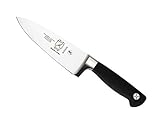


For a first purchase in 2026, choose a 6-inch chef knife with a comfortable handle, a blade height that does not feel bulky, and an edge that is easy to maintain. A shorter knife is not automatically safer or better; correct fit and control matter more than the number printed on the packaging.
Standard Sizes
Chef knives are usually described by blade length, measured from the heel near the handle to the tip. Overall length includes the handle. The dimensions below are common size categories rather than strict industry standards, so individual models may vary.
| Chef knife size | Blade length | Blade length in cm | Typical overall length | Typical weight | Best suited to |
|---|---|---|---|---|---|
| 5 inches | 5 in | 12.7 cm | 9.5–10.5 in (24.1–26.7 cm) | 3.5–5.5 oz (99–156 g) | Very small hands, detail work, light prep |
| 5.5 inches | 5.5 in | 14 cm | 10–11 in (25.4–27.9 cm) | 4–6.5 oz (113–184 g) | Small hands and compact cutting boards |
| 6 inches | 6 in | 15.2 cm | 10.5–12 in (26.7–30.5 cm) | 4.5–7.5 oz (128–213 g) | Most everyday kitchen tasks |
| 7 inches | 7 in | 17.8 cm | 11.5–13 in (29.2–33 cm) | 5.5–9 oz (156–255 g) | More cutting surface and larger ingredients |
| 8 inches | 8 in | 20.3 cm | 13–15 in (33–38.1 cm) | 6.5–11 oz (184–312 g) | High-volume prep and larger hands |
A 6-inch knife is often preferable to a 5-inch model because it offers a more useful cutting surface while remaining compact. The extra inch gives you room to make longer slicing motions and keeps your knuckles farther from the cutting board. However, a 5.5-inch blade may be easier to turn, lift, and guide if a full-size chef knife feels unwieldy.
Examples in this compact category include the 6-inch SANMEIHO Chef Knife, listed at about $19.99, and the Mercer Culinary M20606 Genesis 6-Inch Chef’s Knife, commonly priced around $40. The Sunnecko Small Chef Knife has a 5.5-inch blade and is often listed near $27.99. These examples illustrate the range available, but handle comfort and construction should guide the decision more than price alone. The Matsato Chef Knife, commonly priced around $35.99, is another compact-style option to compare for handle shape and balance.
How to Measure Your Space
Your hand size is useful, but the space around your cutting board also affects the right knife length. Use these steps before buying:
- Measure your cutting board. Record the usable cutting area, not the board’s outside rim. A board smaller than 12 by 16 inches often feels less crowded with a 5.5- or 6-inch knife.
- Check your counter clearance. Place a ruler diagonally across the board and confirm that a knife’s blade and handle will not run into a wall, backsplash, appliance, or sink.
- Measure your hand. Measure from the tip of your middle finger to the first crease of your wrist. A hand length under about 6.75 inches often feels more comfortable with a 5.5- or 6-inch chef knife, although personal preference matters.
- Measure handle circumference if possible. Wrap a flexible tape around your current knife handle or a similarly sized object. Many smaller-handed cooks prefer a handle circumference of approximately 3.25 to 4 inches, depending on shape.
- Check your grip. Hold the knife with your thumb and index finger near the blade heel, using a light pinch grip. Your fingers should not feel stretched, cramped, or forced against the handle.
- Test the balance. With the knife held at the bolster or heel, it should not immediately pull your wrist downward. A neutral or slightly handle-heavy balance can feel easier to control for small hands.
By Room or Use Case
Everyday meal preparation
A 6-inch chef knife is the strongest all-purpose choice for small hands. It can chop onions, slice peppers, mince garlic, trim chicken, and portion boneless meat without requiring the sweeping motions of an 8-inch knife. Choose a blade around 1.5 to 2 inches tall if you want a little knuckle clearance without excessive bulk.
Small kitchens and compact cutting boards
Choose a 5.5- or 6-inch knife when counter space is limited. A shorter blade is easier to maneuver near a sink or appliance and takes up less room in a knife block or drawer. A protective sheath is useful if storage space is tight, provided the knife is clean and dry before covering it.
Vegetables, herbs, and detail work
A 5- or 5.5-inch chef knife can be excellent for shallots, herbs, strawberries, mushrooms, and other small ingredients. Its shorter edge responds quickly to changes in direction. If you use a rocking motion, make sure the blade has enough curve; some compact knives are flatter and better suited to a push-cutting motion.
Meat and larger ingredients
A 6-inch knife is adequate for boneless chicken breasts, steaks, cooked roasts, and most vegetables. If you regularly cut large squash, melons, cabbage, or whole roasts, a 7-inch knife may be more efficient even with small hands. In that situation, prioritize a lighter construction and a secure handle rather than moving immediately to an 8-inch model.
Limited grip strength or wrist comfort
Look for a knife weighing about 4 to 6 ounces, with a handle that is neither extremely thin nor oversized. A shorter blade reduces leverage and can feel less tiring. Avoid using a blunt knife: more force is required to push a dull edge through food, which can make even a well-sized knife uncomfortable.
Common Sizing Mistakes
- Choosing by blade length alone: A 6-inch blade can still feel large if the handle is thick, the blade is tall, or the knife is heavily weighted toward the tip.
- Assuming shorter always means easier: A 5-inch knife may require more strokes and may not provide enough knuckle clearance. If your grip feels cramped, move up to 5.5 or 6 inches.
- Ignoring the handle shape: A rounded, narrow handle may suit small hands better than a broad rectangular handle, even when both knives have identical blade lengths.
- Buying the lightest knife available: Extremely light knives can feel unstable or require more pressure. Aim for controlled balance, not the lowest possible weight.
- Using a paring knife for everything: A 3- to 4-inch paring knife is useful for detail work but lacks the blade length and knuckle clearance needed for routine chopping.
- Forgetting storage and board size: A knife that fits your hand may still be inconvenient if the blade extends beyond your board or cannot be stored safely.
FAQ
Is a 6-inch chef knife good for small hands?
Yes. A 6-inch chef knife is usually the best balance of control, cutting capacity, and comfort for small hands. It is long enough for everyday ingredients while remaining easier to guide than a standard 8-inch model. If your hands are particularly small or you prefer very precise work, try a 5.5-inch knife.
What is the best chef knife size for a woman with small hands?
Hand size, grip preference, and strength matter more than gender. Most smaller-handed cooks should compare 5.5- and 6-inch knives. Focus on a manageable handle circumference, moderate weight, and a balance point that does not pull the blade forward.
Is a 5-inch or 6-inch chef knife better?
A 5-inch knife is better for compact boards, detail work, and cooks who find longer blades intimidating. A 6-inch knife is more versatile and offers better clearance for chopping. For one primary chef knife, choose 6 inches unless you have already found that shorter blades feel noticeably more comfortable.
Can small hands use an 8-inch chef knife?
Yes, but it may require more wrist movement and counter space. An 8-inch knife can work if it is light, well balanced, and comfortable in your grip. For most small-handed cooks, however, a 6- or 7-inch model is easier to control for daily preparation.
Ready to decide? Our #1 pick for 2026 is the 5 inches.
Live price & availability on Amazon.





Write Your Review
No reviews yet. Be the first to share your experience!