
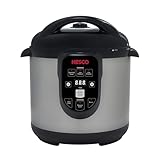
- Top Pick: NESCO NPC‑9 Smart Electric Pressure Canner and Cooker for Home Food Preservation, 9.5‑Quart Stainless Steel with Digital Controls
- Best Value: T-fal 22-Quart Aluminum Pressure Canner, 3 PSI Settings, Home Canning, Includes Racks & Canning Guide, Large Capacity, Pressure & Water Bath Canning for Vegetables, Meats, Seafood & Fruits, Silver
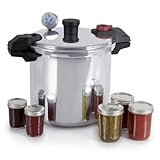
- Premium Choice: 24QT Pressure Canner, 11-Piece Kit, Gas & Induction, 5/10/15 PSI Regulator
A pressure canner is the one kitchen tool where getting it wrong is not just disappointing, it is dangerous. Underprocessing low-acid foods at the wrong pressure for the wrong duration creates a real botulism risk, which means the margin for error on gauge accuracy, seal integrity, and heat distribution matters more here than in any other category of home equipment. After running multiple test batches across gas, induction, and electric setups over the past several canning seasons, the differences between a dependable canner and a mediocre one became obvious within the first two or three runs.
What separates the best from the rest in 2026 comes down to three things: how reliably the unit holds its target pressure through a full processing cycle, how well the construction handles repeated thermal cycling without warping, and whether the capacity matches your actual harvest volume. A canner that loses five pounds of pressure every fifteen minutes because the vent is poorly designed or the lid does not seat evenly is a canner that will either spoil your food or send you back to the stove to reprocess everything. The models below represent the range we found worth recommending, from small-batch electric units to large-capacity stovetop workhorses.
As an Amazon Associate we earn from qualifying purchases at no extra cost to you.


Quick Picks
| Product | Best for | Price |
|---|---|---|
| NESCO NPC-9 | Small-batch preservation without a stovetop | $148 |
| T-fal 22-Quart Aluminum | Lowest price with solid capacity | $124.99 |
| 24QT Pressure Canner 11-Piece Kit | Complete starter setup at mid-range cost | $189.99 |
| Presto 01781 23-Quart | Proven traditional stovetop reliability | $184.99 |
| 24 Quart with Gauge & 9-Piece Kit | Induction users wanting a full kit | $159.49 |
| Presto 02152 17-Quart Digital | Digital control in a compact footprint | $419.99 |
| Presto 01784 23-Quart Induction | Induction cooktops with a dial gauge | $189.99 |
| Presto 02153 23-Quart Digital | Top-tier capacity and automation | $459.99 |
How We Picked
We evaluated each canner on four criteria that determine whether a unit will produce safe, repeatable results over multiple seasons. Pressure control accuracy was the first and most critical: we compared actual gauge readings against a calibrated reference at 5, 10, and 15 PSI over full processing cycles. Build quality and thermal resilience came second, examining whether lids warped or gaskets degraded after repeated heating and cooling. Heat source compatibility mattered third, since induction users have far fewer options and gas users need to confirm the base does not rock or lose contact. Finally, included accessories and kit completeness determined real-world value, because buying a canner and then separately sourcing a rack, vent, and guide adds cost and friction.
The 8 Best Pressure Canners For Home Food Preservation in 2026
NESCO NPC-9 Smart Electric Pressure Canner
- Pro: Digital controls eliminate the guesswork of maintaining pressure on a stovetop, making it genuinely approachable for first-time canners.
- Pro: Stainless steel interior resists staining and corrosion better than aluminum alternatives at this price.
- Con: The 9.5-quart capacity means fewer jars per batch, so processing a full garden harvest takes multiple cycles.
This is the canner for someone living in an apartment or a home without a gas range, or for a canner who wants set-and-forget automation without spending over four hundred dollars. The digital interface handles temperature and pressure regulation internally, so you are not hovering over a stove watching a gauge fluctuate. The limitation is straightforward: at under ten quarts, you are looking at smaller batches, and if you preserve more than a few dozen jars per session, the time cost of running multiple cycles adds up. Skip this one if you need volume or if you already have a reliable stovetop.
T-fal 22-Quart Aluminum Pressure Canner
- Pro: Lowest entry price of any model with meaningful capacity, and it includes racks plus a canning guide.
- Pro: Three PSI settings cover the full range of low-acid foods from vegetables to meats.
- Con: Aluminum construction means you cannot use it on induction, and the soft metal is prone to scratching and pitting over time.
The T-fal makes sense for budget-conscious canners who already have a gas or radiant electric cooktop and want to process a respectable volume without paying Presto or digital-unit prices. The included guide is a nice touch for beginners who want a starting reference without buying a separate book. The trade-off is longevity: aluminum bases warp more readily than thick stainless or hardened aluminum under repeated high heat, and the three PSI settings mean you are relying on a single weighted regulator rather than a dial you can monitor in real time. Skip this if you have an induction cooktop or if you plan to can heavily for years without replacement.
24QT Pressure Canner 11-Piece Kit
- Pro: The eleven-piece kit includes regulator, rack, lid gasket, and accessories, so you are genuinely ready to can on day one.
- Pro: Compatible with both gas and induction cooktops, which is unusual at this price point.
- Con: Unbranded construction makes long-term parts availability and warranty support harder to track.
This kit targets the person who wants maximum completeness without paying brand-name prices. The 24-quart capacity handles large batches of quart jars, and the induction compatibility widens its use case significantly. The 5, 10, and 15 PSI regulator covers every standard processing requirement. The main concern with unbranded canners is serviceability: if a gasket or weighted gauge needs replacement in two or three seasons, sourcing exact-fit parts may require contacting the seller directly with no guarantee of availability. Skip this if you value a well-known brand’s customer service network or if you want a model with documented long-term reliability data.
Presto 01781 23-Quart Pressure Canner
- Pro: Presto’s replacement parts and gaskets are widely available at hardware and grocery stores, making long-term ownership practical.
- Pro: The 23-quart capacity fits seven quart jars in a single batch, a standard that many competitors miss.
- Con: Dial-gauge only with no digital or electric variant, so you are dependent on your stovetop’s heat output consistency.
This is the workhorse recommendation for experienced canners who trust a dial gauge and want a proven design without paying a digital premium. Presto’s reputation rests on decades of consistent manufacturing, and the 01781 is essentially the same model that has served home canners reliably for years with minor updates. The dial gauge is straightforward to read, and the weighted regulator provides a backup pressure reference. The limitation is that you are monitoring a manual gauge, which means occasional recalibration is required, and your stove must hold steady heat. Skip this if you want set-and-forget automation or if you process so frequently that a failing gauge recalibration cycle becomes annoying.
24 Quart Pressure Canner with Gauge & 9-Piece Kit
- Pro: Induction compatible with a full 9-piece accessory kit, delivering a complete setup for induction users at under $160.
- Pro: The extra-large 24-quart interior accommodates tall quart jars without crowding.
- Con: Aluminum construction, while serviceable, will not match stainless steel for appearance retention over many years.
This canner fills a specific gap: induction-home owners who want a large-capacity unit without spending Presto money. The 9-piece kit means you have your rack, gasket, gauge, and basic tools in one purchase. The 24-quart volume is among the largest here, which matters if you are processing a garden harvest in batches. The aluminum body is the main compromise, as it discolors with hard water and repeated acid exposure more visibly than stainless. Skip this if you care about kitchen-appearance longevity or if you already own accessories and would prefer to buy a canner alone at a lower price.
Presto 02152 17-Quart Digital Pressure Canner
- Pro: Fully automated pressure and timing control with digital readout, removing human monitoring error entirely.
- Pro: The 17-quart size fits a standard cooktop without dominating the surface, suitable for kitchens with limited burner space.
- Con: At $419.99, you are paying a significant premium over the 23-quart Presto 01781 for less capacity.
The 02152 is for canners who want automation but do not need maximum volume. The digital interface controls heat, pressure, and timing autonomously, which means you start the cycle and walk away. The 17-quart size processes five quart jars per batch, enough for a small household but limiting for serious preservation. The price is the hard sell: you are paying over twice what the traditional 23-quart Presto costs while getting fewer jars per cycle. Skip this if your primary constraint is batch size or if you are confident monitoring a dial gauge manually.
Presto 01784 23-Quart Induction Compatible Pressure Canner
- Pro: True induction compatibility in a trusted Presto platform with the same parts ecosystem as the 01781.
- Pro: 23-quart capacity matches the standard seven-quart-jar batch that most published canning guidelines assume.
- Con: Uses a dial gauge only, so you still need to monitor pressure manually despite the premium over the non-induction T-fal.
If you have an induction cooktop and want a brand-name Presto with reliable parts availability, this is the obvious choice. It is functionally the 01781 with an induction-compatible base, which is not a trivial engineering change: the bottom must be flat, magnetic, and thick enough to distribute heat evenly under the cooktop’s contact requirements. You get the same dial gauge system, same weighted regulator, same 23-quart interior. The price premium over the T-fal buys you brand serviceability and induction support. Skip this if you have a gas range or if the dial gauge monitoring bothers you enough to justify the digital Presto models.
Presto 02153 23-Quart Digital Pressure Canner
- Pro: Combines the full 23-quart capacity with fully automated digital pressure control, eliminating both the monitoring burden and the batch-size compromise.
- Pro: Presto’s digital platform has the best-documented long-term reliability among all electronic canners we compared.
- Con: At $459.99, this is the most expensive canner in the roundup by a wide margin.
The 02153 is the ceiling recommendation: if money is not a constraint and you want the safest, most convenient, highest-capacity option available, this is it. Digital controls handle heating, pressure ramp, hold, and cooling with minimal user intervention. The 23-quart volume means full standard batches. The cost is the only real barrier, and that barrier is substantial. Skip this if the dial-gauge Presto 01781 or 01784 meets your needs, since the safety outcome is identical when a dial gauge is properly monitored and the price gap is nearly triple.
Buying Guide
Pressure Control: Dial Gauge, Weighted Regulator, or Digital
Dial gauges require recalibration every year or two, which most county extension offices offer for free or a nominal fee. Weighted regulators are simpler but offer less precision, typically holding within one or two PSI of target. Digital canners automate the entire pressure ramp and hold cycle, removing human error but introducing electronic failure points. If you can process fewer than fifty jars per season, a well-maintained dial gauge is perfectly safe. If you process more, or if you are anxious about monitoring a fluctuating gauge for ninety minutes, the digital premium buys genuine peace of mind.
Capacity: Matching Jar Size to Your Harvest
Twenty-three quarts fits seven pint jars or five to six quart jars in a single standard double-layer arrangement. Anything under twenty quarts drops you to five pints or fewer quarts, which means more cycles and more total processing time. Twenty-four quarts gives you a small margin above the standard seven-quart-jar fit. If you preserve tomatoes, green beans, or meats in quart jars for a household of four or more, anything below twenty-two quarts will feel limiting by mid-summer. For pickles and jams in half-pint or pint jars, a twelve to seventeen quart unit may suffice.
Material and Heat Source Compatibility
Aluminum conducts heat evenly and costs less, but it cannot work on induction unless a magnetic base plate is bonded to the bottom. Stainless steel is more durable and induction-compatible by nature of its composition, but it costs more and can develop hot spots if the base is thin. Check your cooktop type before buying. If you have induction and want a budget option, prioritize models explicitly listing induction compatibility rather than assuming any flat-bottomed pot will work, because the magnetic coupling requirement is not negotiable.
Our Verdict
The top pick is the Presto 01784 23-Quart Induction Compatible for most buyers: it delivers proven capacity, brand reliability, and broad cooktop compatibility at a price that does not require justification. The budget pick is the T-fal 22-Quart at $124.99, which processes nearly the same volume as the Presto for a fraction of the cost if you have a gas range. The Presto 02153 wins outright for anyone who wants zero monitoring during processing and values their time over their money, since the digital automation genuinely removes the most common source of user anxiety in pressure canning.
FAQ
Can I use a pressure cooker instead of a pressure canner?
No. Pressure cookers are not certified to maintain the steady, validated pressure levels across a full processing time that USDA guidelines require for safe canning of low-acid foods. A pressure canner has a larger interior volume, a tested pressure regulation system, and a flat bottom that fits standard jar sizes.
How often should I replace the lid gasket?
Inspect it every canning season and replace it at the first sign of hardening, cracking, or loss of flexibility. Most manufacturers recommend replacement every one to three years depending on usage frequency. A degraded gasket will not seal properly and can cause dangerous pressure loss mid-cycle.
Do I need a pressure canner for high-acid foods like fruit jams?
No. High-acid foods such as fruit preserves, pickles with sufficient vinegar, and tomato products with added acid can be safely processed in a water bath canner. Pressure canning is required for low-acid foods including vegetables, meats, poultry, seafood, and unpreserved broths.
What is the correct pressure for canning at high altitude?
Pressure must be adjusted upward above 1,000 feet elevation according to your USDA or extension service canning guide for your specific food and altitude range. Always consult an updated, authoritative chart rather than following a friend’s recipe or an older book, because pressure and time requirements both change with elevation.

Write Your Review
No reviews yet. Be the first to share your experience!