
A carbon steel chef knife can take an exceptionally sharp edge, but it also demands more care than many stainless-steel knives. Sharpen it at the wrong angle, use excessive pressure, or leave it wet after rinsing, and you can create a weak bevel, a large burr, scratches, or even rust spots. Overusing a honing rod can also remove metal unevenly when the blade only needs a light alignment.
The reliable approach is simple: clean the knife, use a properly prepared whetstone, maintain a consistent angle, raise and remove a small burr, then dry and protect the carbon steel. The method below works for most double-bevel carbon steel chef knives, including common 8- to 10-inch blades. If your knife is single-bevel, unusually hard, or valuable, use the manufacturer’s sharpening instructions instead.
As an Amazon Associate we earn from qualifying purchases at no extra cost to you. Product prices and availability are accurate as of the date shown and are subject to change.
Quick answer: Our top pick in 2026 is the Whetstone, about 1,000 grit — our #1 rated choice. See the full ranked comparison, alternatives and buying advice below.
What You Need
| Item | Why | Optional? |
|---|---|---|
| Whetstone, about 1,000 grit | Repairs a dull edge and establishes the bevel. Choose a stone roughly 8 x 2 x 1 inches or larger for a chef knife. | No |
| Fine finishing stone, about 3,000 to 6,000 grit | Refines and polishes the edge after sharpening. A 1,000/6,000 combination stone saves space and money. | Yes, but recommended |
| Non-slip stone holder or damp kitchen towel | Keeps the stone stable. A holder is safer; a folded towel can work on a sturdy counter. | No |
| Water container and spray bottle | Keeps a water stone lubricated and prevents its surface from drying during sharpening. | No |
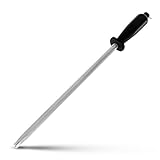
| 12-Inch Knife Sharpening Rod, Fine Carbon Honing Steel, Black Handle, about $14.99 | Useful for lightly realigning an edge between stone sharpenings. It is not a substitute for a whetstone. | Yes |
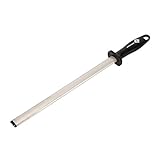
| Kota Japan 12 in. Diamond Carbon Steel Professional Knife Sharpener Rod, about $18.98 | A diamond-coated rod can remove a small amount of steel and refresh a slightly dull edge, but it requires a very light touch. | Yes |
| Clean towel and food-safe mineral oil | Dries the blade and helps protect exposed carbon steel from moisture and rust. | Mineral oil is optional but useful |
Expect to spend about $20 to $60 for a dependable combination whetstone, or approximately $30 to $100 for separate medium and finishing stones. Avoid pull-through sharpeners unless the knife’s maker specifically approves one; their fixed carbide angles can remove too much carbon steel.
Step-by-Step
1. Identify the edge and clean the knife (2 minutes)
Confirm that the knife has two beveled sides. Hold the blade under a bright light and inspect the cutting edge. A shiny strip, chips, or visible flat spots indicates that the edge needs sharpening rather than simple honing.
Wash the blade with mild dish soap and warm water, then dry it immediately. Do not sharpen a greasy or dirty knife. Carbon steel naturally develops a gray or blue patina; that color is not automatically rust. Orange or rough brown spots should be removed before sharpening.
2. Prepare and secure the stone (5 to 15 minutes)
Follow the stone manufacturer’s instructions. Many water stones need to be submerged for about 5 to 10 minutes, while splash-and-go stones need only a few spoonfuls of water on the surface. Do not soak an oil stone in water.
Place the stone lengthwise on a holder or on a damp, folded towel. It must not rock or slide. Set up enough room to move the full chef-knife blade across the stone without hitting a wall, sink, or nearby utensil.
3. Choose a consistent sharpening angle (1 minute)
For most carbon steel chef knives, use approximately 15 to 20 degrees per side. A 15-degree angle creates a very keen edge but is less forgiving; 20 degrees is sturdier for general cooking and cutting dense foods. When in doubt, begin near 17 degrees per side.
To estimate the angle, hold the spine about 3/16 to 1/4 inch above a stone for a typical 2- to 3-millimeter-thick chef knife. The exact height varies with blade width, so consistency matters more than perfect measurement. Keep your wrist locked and support the blade with the fingers of your free hand.
4. Sharpen the first side on the medium stone (5 to 10 minutes)
Place the heel of the blade on the stone with the edge facing away from you. Maintain the chosen angle and push the knife forward and slightly across the stone, as if you were trying to shave off a thin layer. Use the same motion from heel to tip, lifting the handle gradually as you reach the curved tip.
Use light to moderate pressure: roughly the weight of your hand, not your entire arm. Make 5 to 10 strokes in one section, then move along the blade until the whole edge has been treated. Keep the stone wet and wipe away muddy slurry only if it becomes too thick to see your work.
Check for a burr by carefully sliding a fingertip from the spine toward the edge, never along the edge. You should feel a fine, consistent wire on the opposite side from heel to tip. If the burr is missing in one area, continue there rather than pressing harder everywhere.
5. Repeat on the opposite side (5 to 10 minutes)
Turn the knife over and sharpen the second bevel at the same angle. Match the number of strokes and pressure as closely as possible. Work until a small burr forms along the first side. A large, ragged burr means the pressure or number of strokes is excessive; it is better to create a tiny burr than to fold over a large one.
6. Refine the edge on a finer stone (3 to 6 minutes)
Wet the 3,000- to 6,000-grit stone according to its instructions. Repeat the same heel-to-tip motion on each side, now using lighter pressure. Start with about 5 strokes per side, then alternate one stroke per side for 10 to 20 passes.
The goal is to reduce the burr, not create another large one. If the knife is used for everyday chopping, a finish around 3,000 to 4,000 grit often offers a useful balance of sharpness and bite. A 6,000-grit finish can feel smoother for precise slicing but may be less grippy on tomato skins or fibrous foods.
7. Deburr, rinse, and test (2 to 3 minutes)
Make several extremely light alternating passes on the finishing stone. You can also make two or three gentle edge-trailing strokes per side, keeping the angle unchanged. Rinse the knife and inspect the edge under good light. It should look continuous rather than shiny and flat.
Test on a sheet of paper or a ripe tomato. The knife should begin the cut without force. Do not test sharpness by dragging a finger across the edge.
8. Dry and protect the carbon steel (2 minutes)
Rinse away abrasive residue, dry the entire blade immediately, and pay attention to the area near the handle. If the knife will be stored for more than a day or two, apply a very thin film of food-safe mineral oil with a clean cloth. Remove any visible excess before putting the knife away.
Mistakes to Avoid
- Using a dry or unstable stone: A dry surface cuts poorly, while movement makes it difficult to hold a safe angle.
- Changing angles mid-stroke: This produces a rounded bevel instead of a clean, durable edge.
- Pressing too hard: Heavy pressure creates deep scratches, excessive burrs, and unnecessary metal loss.
- Sharpening only the middle: Work the heel, belly, and tip separately so the entire edge is renewed.
- Confusing honing with sharpening: A fine steel can realign a slightly bent edge, but it cannot replace missing metal.
- Using a diamond rod aggressively: Diamond surfaces cut quickly. Use very light pressure and only a few passes.
- Leaving carbon steel wet: Even a few minutes of moisture can cause orange rust, especially near the bolster.
- Cutting hard materials: Bones, frozen food, glass, ceramic plates, and twisting cuts can chip or roll the edge.
How Often
Sharpen when the knife stops cutting cleanly, not according to a rigid calendar. For a home cook using a chef knife several times per week, a full stone sharpening may be needed every 1 to 3 months. Frequent cooks may need it every 2 to 6 weeks, while occasional users may go 3 to 6 months.
Use a fine honing steel every few cooking sessions if the edge feels slightly misaligned but is not truly dull. Make 2 to 4 light passes per side at the knife’s existing angle. A diamond rod should be used less often, perhaps every 1 to 3 months, because it removes metal rather than merely realigning the edge.
When to Call a Pro or Replace
Consult a professional sharpener if the blade has deep chips, a bent tip, a warped edge, loose handle hardware, or valuable hand-forged construction. Professional service commonly costs about $10 to $30 for a standard chef knife, with repairs or premium work costing more. Ask whether the service uses water stones or controlled belts and whether it can preserve the knife’s original profile.
Replace the knife when the blade has become dangerously thin, the spine has been sharpened into an uneven wedge, the edge repeatedly chips despite proper use, or the handle cannot be secured. A small patina is not a reason to replace a carbon steel knife; structural damage is.
FAQ
Can I sharpen carbon steel with a honing rod?
Yes, but a honing rod is best for maintenance. A fine steel can realign a slightly rolled edge, while a diamond rod can refresh a mildly dull one. Neither is ideal for a very dull knife, deep chips, or a visibly flattened bevel. Use a whetstone for those problems.
Should I use oil or water on the sharpening stone?
Use the lubricant specified for that stone. Water stones use water, oil stones use honing oil, and some diamond plates use water or can be used dry. Do not switch lubricants casually, because oil can clog a water stone and may affect how its surface cuts.
What angle is best for a carbon steel chef knife?
Start with 15 to 20 degrees per side. Choose about 15 to 17 degrees for delicate slicing and about 18 to 20 degrees for a more durable everyday edge. A consistent angle is more important than chasing a precise number.
How do I prevent rust after sharpening?
Rinse off abrasive residue, dry the blade immediately, and never leave it soaking in a sink or dish rack. Wipe on a thin coat of food-safe mineral oil for storage. Keep the knife in a dry block, sheath, or magnetic strip where the blade is protected from standing moisture.
Ready to decide? Our #1 pick for 2026 is the Whetstone, about 1,000 grit.
Live price & availability on Amazon.





Write Your Review
No reviews yet. Be the first to share your experience!