
Walking down the appliance aisle or browsing online storefronts reveals an overwhelming sea of blenders promising velvety green smoothies and perfectly crushed ice in seconds. With countless models boasting confusing metric jargon, finding the right tool for your morning routine often feels like a guessing game. However, cutting through the marketing noise requires looking past vanity metrics and focusing on how you actually prep your ingredients and structure your daily routine.
Whether you are blending frozen acai bowls, fibrous kale, or dense protein powders, the right machine makes the difference between a smooth sip and an unpalatable, pulpy chore. By understanding the core mechanics that drive actual performance, you can invest in a device that fits your culinary habits and lasts for years without burning out. This guide breaks down the essential specifications, common pitfalls, and practical features that truly matter when shopping for a smoothie blender.
As an Amazon Associate we earn from qualifying purchases at no extra cost to you.
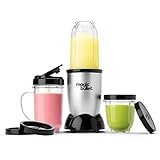
Motor Power and Peak Wattage Realities
When evaluating blender motors, manufacturers love to highlight massive peak wattage numbers on the box. However, peak wattage only represents the split-second surge of power the motor can achieve before settling down. What truly matters for smoothies is continuous torque and sustained horsepower. A motor rated for a lower continuous wattage with a well-engineered cooling fan will often outperform a cheap motor with inflated peak numbers that tends to overheat when grinding frozen fruit.
If your daily recipes rely heavily on frozen ingredients, ice cubes, and raw nuts, look for machines with higher horsepower ratings that can maintain blade speed under heavy loads. If you primarily blend soft fruits, yogurt, and liquids, a mid-range motor will handle the task easily without requiring a heavy-duty commercial footprint on your kitchen counter.
Jar Material and Design Geometry
The shape of your blender jar is just as important as the motor driving it. Cylindrical jars often allow ingredients to spin in a monotonous circle without pulling them down into the blades, leaving you constantly stopping to poke at unblended pockets with a tamper. Look for jars featuring an asymmetrical, tapered, or square design that forces ingredients back down toward the blade assembly to create a powerful, continuous vortex.
When it comes to materials, you generally have a choice between durable glass and lightweight, impact-resistant Tritan plastic. Glass feels substantial and resists staining or scratching over time, but it adds significant weight to the appliance, making it harder to lift and pour. Tritan plastic is shatterproof, lightweight, and entirely BPA-free, making it the preferred choice for busy households or anyone who frequently removes the jar while wet.
Blade Construction and Placement
A common misconception is that a blender relies on razor-sharp blades to slice through food like a food processor. In reality, high-performance smoothie blenders rely on brute force and high-speed impact to pulverize cell walls, combined with the vortex action of the jar. The blades are usually duller to the touch, designed to hammer ingredients rather than slice them.
Examine the blade assembly configuration before purchasing. Blenders featuring multiple prongs angled in different directions—upward, outward, and downward—create multi-level circulation that ensures no chunks of spinach or fruit escape the cycle. Stainless steel is the industry standard here, as it resists corrosion from acidic citrus fruits and handles the constant friction of ice without dulling prematurely.
Controls: Manual Dials Versus Preset Programs
Modern blenders offer everything from minimalist single-switch toggles to complex digital control panels loaded with automated programs. Variable speed dials give you granular, tactile control over the blending process, allowing you to ramp up speeds slowly to prevent splattering or pulse chunky ingredients to the exact consistency you prefer.
Preset smoothie programs, on the other hand, offer walk-away convenience. These programs automatically cycle through varying speeds and pauses, ramping up to high gear to pulverize ingredients and shutting off automatically when the cycle finishes. While not strictly necessary, presets remove the guesswork if you prefer a hands-off approach while you pack your lunch or prep coffee.
Sizing and Countertop Footprint
Capacity needs depend entirely on whether you are blending for a crowd or preparing a single serving on your way out the door. Large 64-ounce pitchers are fantastic for family batches, multi-person meal prepping, or whipping up large quantities of post-workout shakes. However, trying to blend a single cup of smoothie in a massive pitcher often results in ingredients getting stuck underneath the blades.
Many modern systems solve this dilemma by offering interchangeable blade bases that accommodate personal single-serve cups alongside the main pitcher. Before buying, also measure the vertical clearance between your kitchen countertops and upper cabinets. High-capacity blenders with tall pitchers can easily fail to fit underneath standard cabinetry, forcing you to store the container separately.
Cleaning and Maintenance Factors
Even the highest-performing blender loses its appeal if cleaning it requires a frustrating ten-minute disassembly process. Look for models with smooth, wipeable control panels that do not trap sticky fruit residue inside deep crevices or tactile buttons. Removable blade bases make deep cleaning much easier, though many modern pitchers can clean themselves simply by running a drop of dish soap and warm water on high speed for thirty seconds.
Dishwasher safety is another important consideration. While plastic jars and lids are often rated for top-rack dishwasher use, high heat drying cycles can warp seals or cloud clear plastic over time. Hand washing immediately after use remains the best way to extend the lifespan of your pitcher and keep your equipment running smoothly.
When to Invest in a Premium Model
Premium blenders carry a hefty price tag, often costing as much as a high-end espresso machine. Deciding whether to splurge depends entirely on frequency and ingredient density. If you make a daily smoothie packed with fibrous greens, frozen fruit, and seeds, a budget blender will likely burn out its motor within a year or two, requiring a costly replacement.
Investing in a top-tier machine means buying into robust motor warranties, superior blending consistency, and heavy-duty durability designed to last a decade or more. If you only blend soft ingredients once a week, a mid-range model will serve you wonderfully without breaking the bank.
Related Guides
To explore specific brand breakdowns, testing methodologies, and top-performing picks currently available, take a look at our comprehensive roundup of the Best Blenders for Smoothies in 2026: Compared and Ranked to find the right match for your kitchen setup.
FAQ
Do I need a tamper tool for smoothies?
A tamper is extremely useful when blending thick mixtures like frozen fruit bowls or dense smoothies because it allows you to push ingredients down toward the blades safely without removing the lid. If you mostly make liquid-heavy recipes, you can get by just fine without one.
Why does my smoothie separate into layers after blending?
Layer separation usually happens when the ingredients are not blended completely enough to break down the cellular walls, or if too much liquid was used relative to solid fruits. Running the blender on high speed for a full sixty seconds usually fixes this issue by incorporating microscopic air bubbles that stabilize the texture.
Are glass blender jars better than plastic ones?
Glass jars are scratch-resistant, do not absorb odors, and look pristine over time, but they are heavy and can shatter if dropped. Tritan plastic jars are shatterproof, lightweight, and safer to handle during busy morning routines, though they can develop minor scratches after years of heavy use.
Can regular blenders crush ice safely?
High-performance blenders handle ice effortlessly, but lower-wattage models often struggle and can damage their drive sockets if forced to crush dry ice cubes without liquid. Always add a splash of liquid or use pulse mode to help circulate ice cubes toward the blades safely.
Write Your Review
No reviews yet. Be the first to share your experience!