
Our Short List of 3
All 3 Picks at a Glance
| Product | Specs | Action |
|---|---|---|
 First Alert SA320CN Dual-Sensor Smoke and Fire Alarm | Check price on Amazon | |
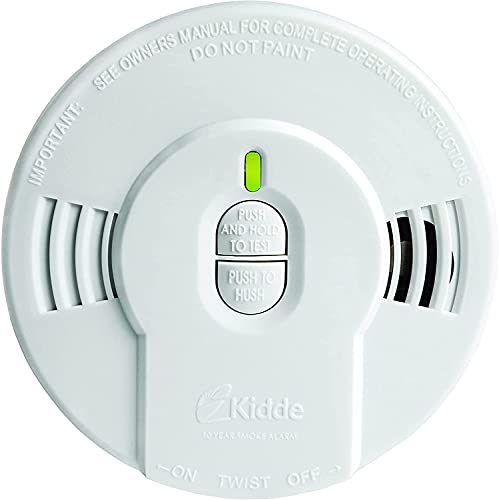 Kidde i9010 10-Year Battery Smoke Alarm | Check price on Amazon | |
 Kidde P3010H Photoelectric Smoke Alarm with Safety Light | Check price on Amazon |
The best smoke detectors for kitchen use protect the room where most home fires start without sounding every time dinner steams or toast browns. Kitchens are the hardest room in the house for a smoke alarm, because cooking smoke, steam from a kettle, and heat from an oven all look like trouble to a sensitive sensor. The right detector balances early warning with a sensible hush feature, so it stays on the ceiling instead of ending up in a drawer with the battery removed.
This guide compares four smoke detectors suited to kitchen use, from a dual-sensor alarm that watches for both fast flaming fires and slow smoldering fires, to a sealed-battery photoelectric alarm with a built-in safety light, to a six-pack of compact alarms that covers the whole home. Each pick is a complete smoke detector, not a sensor module or an accessory, and each one is judged on sensor type, false-alarm control, battery life, ease of installation, and how it behaves in a real kitchen.
Whether you need one alarm for a small kitchen or a set for the kitchen, hallway, and bedrooms, the notes below will help you match a detector to your home, your wiring, and your tolerance for cooking-related chirps. Place the alarm correctly, keep the hush button in mind, and the right detector will be clear.
How to Choose
Sensor Type: Photoelectric, Ionization, or Dual
Photoelectric sensors watch for visible smoke particles from slow, smoldering fires, and they are generally less prone to nuisance alarms from cooking. Ionization sensors detect the invisible particles from fast, flaming fires, and they react sooner to a grease fire. A dual-sensor alarm combines both technologies and covers the widest range of fire types. For a kitchen, a photoelectric or dual-sensor alarm is the sensible default, because it gives early warning for smoldering fires while staying calmer around normal cooking.
Placement Near the Kitchen
Placement matters as much as the sensor. Fire safety guidance recommends keeping a smoke alarm at least 10 feet from cooking appliances, and never mounting one directly above a stove. The best spot is usually on the ceiling of the hallway or room next to the kitchen, or on the kitchen ceiling as far from the cooker as the room allows. A wall-mounted alarm should sit high, near the ceiling, because smoke rises. Check the instructions that come with your alarm for its exact placement rules.
Hush or Silence Button
A hush button is almost essential in a kitchen. It quiets a nuisance alarm for several minutes while cooking smoke clears, then automatically re-arms the detector. Look for a large, easy-to-press button you can reach without a chair, and check how long the hush period lasts. An alarm without a hush feature is a poor choice for kitchen use, because the temptation to remove the battery becomes too strong.
Power Source and Battery Life
Battery-powered alarms install anywhere with a couple of screws and no wiring, which suits most kitchens. Sealed 10-year lithium batteries remove the yearly battery-change chore and stop the low-battery chirp that wakes households at night. Replaceable-battery models cost less up front but need a fresh battery on schedule. Hardwired alarms with battery backup suit new builds and renovations, but they need mains wiring. Match the power type to your home and your willingness to maintain it.
Interconnect and Smart Alerts
Interconnected alarms sound together, so a fire in the kitchen wakes everyone in the bedrooms. Wireless interconnect links battery alarms without new wiring, while hardwired interconnect suits homes that already have linked alarms. Smart alarms add phone alerts and voice warnings, which help when nobody is home or when a hearing-impaired household member needs a visual cue. Decide whether you want a standalone alarm or part of a linked system before you buy.
Combination Smoke and Carbon Monoxide
Some alarms add a carbon monoxide sensor, which matters if the kitchen has a gas cooker, a gas boiler nearby, or an attached garage. A combination alarm covers two hazards in one unit, but it costs more and the carbon monoxide sensor has its own lifespan. If your kitchen already has a separate carbon monoxide alarm, a smoke-only detector is enough. If it does not, a combination unit is worth considering.
Size, Sound, and Maintenance
A smoke alarm should be loud enough to wake a sleeping household, with a clear test button and a visible indicator light. Compact alarms suit small kitchens and low ceilings, while larger units may carry extra features such as a safety light. Plan to test the alarm monthly with its test button, vacuum dust from the sensor openings twice a year, and replace the whole unit at the end of its stated life, usually 10 years from manufacture.
Top Picks
First Alert SA320CN Dual-Sensor Smoke and Fire Alarm
The First Alert SA320CN is a dual-sensor smoke alarm that pairs an ionization sensor with a photoelectric sensor, so it watches for fast flaming fires and slow smoldering fires in a single unit. That dual coverage is the main reason to choose it for a kitchen, where a grease fire and a smoldering tea towel present very different kinds of smoke. The alarm runs on a replaceable 9-volt battery, installs with the included mounting bracket, and carries an 85-decibel alarm tone.
A large silence button quiets nuisance alarms from cooking smoke, and the alarm re-arms itself once the air clears. The slim round housing sits neatly on a ceiling, and the unit includes a test button for the monthly check. Because it uses a standard replaceable battery, it suits households that already keep spare batteries and do not mind a yearly change.
This pick suits cooks who want the broadest detection coverage in one affordable alarm and who are happy to swap a battery on schedule. It is the only dual-sensor pick in this guide, and that breadth of coverage is its defining strength. The main caveat is the replaceable battery: set a reminder to change it, and note the low-battery chirp promptly, because a dead battery leaves the kitchen unprotected.
Kidde i9010 10-Year Battery Smoke Alarm
The Kidde i9010 is a battery-powered ionization smoke alarm with a sealed 10-year lithium battery, so it never needs a battery change during its working life. The sealed battery also means no midnight low-battery chirp and no temptation to borrow the battery for another device. A Hush button quiets nuisance alarms, and a memory feature marks whether the alarm sounded while the household was away.
Ionization sensing reacts quickly to fast flaming fires, which makes this alarm a strong match for a kitchen where a pan fire is the likeliest emergency. The alarm activates automatically when twisted into its mounting bracket, so it cannot sit on a shelf switched off, and an LED indicator shows its status at a glance. Installation needs only a couple of screws, with no wiring involved.
This pick suits households that want fit-and-forget protection with no battery chores for a decade. It is the simplest alarm in this guide to live with, and the sealed battery is its biggest practical advantage. The main caveat is the sensor type: ionization alarms can be more sensitive to cooking smoke than photoelectric models, so place it at least 10 feet from the cooker and use the Hush button when a meal sets it off.
Kidde P3010H Photoelectric Smoke Alarm with Safety Light
The Kidde P3010H is a photoelectric smoke alarm with a sealed 10-year battery and a built-in safety light, which flashes to alert household members who may not hear the alarm. Photoelectric sensing detects visible smoke from smoldering fires and is generally calmer around cooking steam than ionization sensing, which makes it a natural fit for a kitchen. The sealed lithium battery lasts the life of the alarm, and a Hush button quiets nuisance alarms.
The safety light is the standout feature: it adds a visual warning that helps hearing-impaired household members, children, and anyone wearing ear protection while cooking. The alarm also carries an end-of-life warning, so you know when the 10-year lifespan is up and the unit needs replacing. Mounting uses a standard bracket, and the unit activates when twisted into place.
This pick suits households with a hearing-impaired member, or anyone who wants the calmest sensor type for a kitchen combined with a visual alert. It is the most kitchen-friendly sensor in this guide, and the safety light adds genuine value beyond the alarm tone. The main caveat is that photoelectric sensing reacts more slowly to fast flaming fires than ionization, so pair it with a dual-sensor or ionization alarm elsewhere in the home for balanced coverage.
X-Sense XS01 Mini Smoke Alarm, 6-Pack
The X-Sense XS01 is a compact photoelectric smoke alarm with a 10-year battery, sold here as a six-pack that covers the kitchen, hallway, living room, and bedrooms in one purchase. The mini housing is smaller than a standard alarm, which suits low ceilings and small kitchens where a bulky unit looks out of place. Each unit has a silence button, an LED indicator, and a test button, and the photoelectric sensor keeps cooking-related nuisance alarms to a minimum.
Buying six at once also makes it easy to place alarms consistently through the home, so a kitchen fire triggers awareness in the bedrooms too, even without wireless interconnect. The 10-year battery means no battery changes across the set, and the compact size makes each unit simple to mount with the included hardware. The alarms work independently, so each one sounds only when its own sensor detects smoke.
This pick suits households that need several alarms at once and want one consistent model throughout the home. It is the best value pick in this guide by coverage, and the compact photoelectric design suits kitchens well. The main caveat is that the six units do not interconnect, so a fire in the kitchen will not set off the bedroom alarms, and buyers who need only one alarm will have five spares.
Comparison Table
| Detector | Sensor Type | Power | Battery Life | Hush Button | Interconnect | Standout Feature |
|---|---|---|---|---|---|---|
| First Alert SA320CN | Dual: ionization + photoelectric | Replaceable 9-volt battery | Battery change on schedule | Yes | No | Dual-sensor coverage |
| Kidde i9010 | Ionization | Sealed lithium battery | 10 years | Yes, with memory | No | No battery changes |
| Kidde P3010H | Photoelectric | Sealed lithium battery | 10 years | Yes | No | Safety light for hearing-impaired |
| X-Sense XS01, 6-Pack | Photoelectric | Sealed lithium battery | 10 years | Yes | No | Six alarms for whole-home coverage |
Which One Is Right for You?
Choose the First Alert SA320CN if you want the broadest detection in a single alarm and you are comfortable changing a battery on schedule. Its dual sensors cover both flaming and smoldering fires, which is the most complete protection for a kitchen in this guide.
Choose the Kidde i9010 if you want a fit-and-forget alarm with no battery chores. Its sealed 10-year battery and quick reaction to flaming fires make it a strong, low-maintenance choice, provided you place it well away from the cooker.
Choose the Kidde P3010H if anyone in the household has hearing difficulty, or if cooking steam sets off your current alarm too often. Its photoelectric sensor and flashing safety light are the most kitchen-friendly combination here.
Choose the X-Sense XS01 six-pack if you need alarms for several rooms and want one consistent, compact, photoelectric model everywhere. It is the practical choice for a whole-home refresh, with the understanding that the units sound independently.
Frequently Asked Questions
Where should a smoke detector go in a kitchen?
Mount it on the ceiling as far from the cooker as the room allows, and at least 10 feet from cooking appliances where possible. Never place it directly above a stove, and avoid spots right next to a kettle or toaster, where steam causes nuisance alarms. A hallway ceiling just outside the kitchen is often the best compromise.
Is photoelectric or ionization better for a kitchen?
Photoelectric alarms are usually better for kitchens, because they detect visible smoke from smoldering fires and are less easily set off by cooking steam. Ionization alarms react faster to fast flaming fires, such as a pan fire. A dual-sensor alarm covers both, and many households pair a photoelectric alarm in the kitchen with ionization or dual-sensor alarms elsewhere.
How often should a kitchen smoke detector be replaced?
Most smoke alarms last 10 years from the date of manufacture, and many models sound an end-of-life warning when that time arrives. Replace the whole unit at that point rather than just the battery, because the sensor itself degrades. Check the manufacture date printed on the back of your alarm.
Can one smoke detector cover the kitchen and the hallway?
One well-placed alarm can cover a small kitchen and an adjoining hallway, but larger homes need more. Fire safety guidance recommends an alarm in every bedroom, outside each sleeping area, and on every level of the home, with the kitchen covered by its own alarm or one just outside it.
Disclosure: As an Amazon Associate, we may earn from qualifying purchases.






Write Your Review
No reviews yet. Be the first to share your experience!