
Our Short List of 3

- Best for: Cooks who prep vegetables daily and want a Japanese-made nakiri with a D-shaped grip.
- Brand: Shun
- Model: DM0728, from the listing name and model information
- Blade length: 6.5 inches
- Blade material: VG-MAX core with Damascus cladding, as named in listing data

- Best for: Learners who want a 165 mm Japanese nakiri focused on function over decoration.
- Brand: Tojiro
- Model: F-502, as named in the listing title
- Blade length: 6.5 inches (165 mm)
- Product type: Nakiri

- Best for: Cooks who want a 7-inch vegetable knife with a seamless, easy-wipe handle.
- Brand: Global
- Model: G-5, as named in the listing title
- Blade length: 7 inches
- Product type: Vegetable knife, nakiri shape
All 4 Picks at a Glance
| Product | Specs | Action |
|---|---|---|
| Shun Classic 6.5-Inch Nakiri Knife |
| Check price on Amazon |
| Tojiro DP 6.5-Inch Nakiri F-502 |
| Check price on Amazon |
| Global G-5 7-Inch Vegetable Knife |
| Check price on Amazon |
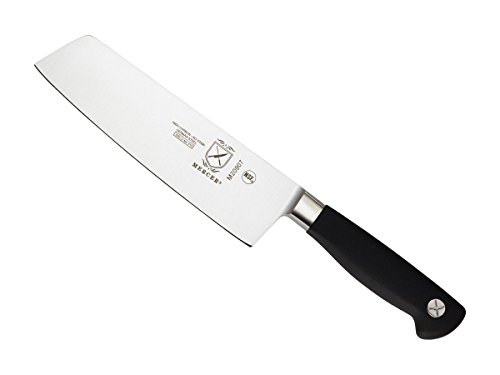 Mercer Culinary Genesis 7-Inch Nakiri Vegetable Knife |
| Check price on Amazon |
Buying a nakiri is not really about adding another knife to a drawer. The real decision is whether a flat, tall, rectangular blade will change how you work through vegetables, and which version of that shape fits your hands, your board, and your willingness to look after a thin edge. A blade that feels nimble on cucumbers can feel awkward on a large squash, and a handle that suits a pinch grip can crowd someone who holds further back.
This guide is for home cooks who prep produce most nights, for cooks moving from a chef knife to a dedicated vegetable knife, and for gift buyers who want a Japanese shape without guessing. Every pick below was chosen from its name and specifications on its Amazon product page, so blade length, steel, and handle details can be checked directly against the listing before you order.
Quick Picks
As an Amazon Associate we earn from qualifying purchases.
| Product | Best for | Key spec from title |
|---|---|---|
| Shun Classic 6.5-Inch Nakiri Knife | Cooks who want a Japanese-made Damascus vegetable knife | 6.5-inch nakiri |
| Tojiro DP 6.5-Inch Nakiri F-502 | Buyers who want a 165 mm Japanese nakiri in a plainer format | 6.5-inch (165 mm) nakiri |
| Global G-5 7-Inch Vegetable Knife | Cooks who prefer a longer, all-metal handle design | 7-inch vegetable knife |
| Mercer Culinary Genesis 7-Inch Nakiri Vegetable Knife | First-time nakiri buyers and culinary students | 7-inch nakiri vegetable knife |
How to Choose
Start With Blade Length and How Much Produce You Cut
Most nakiri blades in this guide sit at either 6.5 inches or 7 inches, and that half inch matters more than it sounds. A 6.5-inch blade, such as the Shun Classic or the Tojiro DP at 165 mm, covers onions, carrots, peppers, and a halved cabbage without feeling unwieldy on a medium board. A 7-inch blade, such as the Global G-5 or the Mercer Culinary Genesis, gives extra length for long eggplants, leeks laid flat, and wide squash halves. Measure your usual board first. If the diagonal working space is tight, the shorter blade will feel calmer, while cooks with a large board and big weekly prep sessions will usually use the extra length.
Match the Steel to Your Sharpening Habits
Steel decides how the edge behaves between sharpening sessions and how forgiving the knife feels when it meets a hard stem or a stray seed. The Shun Classic listing names a VG-MAX core with Damascus cladding, a combination aimed at edge retention in a thin vegetable blade. The Tojiro DP is a long-running Japanese line built around a VG-10 core format, while the Global G-5 listing names CROMOVA 18 stainless steel. The Mercer Culinary Genesis takes a different route with forged German steel, which generally suits cooks who sharpen more often and want a sturdier feel. None of these is automatically better. Pick the steel that matches whether you own a whetstone, use a guided system, or send knives out for sharpening.
Check the Handle Shape Against Your Grip
Handle design is where nakiri listings diverge quietly, and it affects control more than blade decoration does. The Shun Classic uses a D-shaped handle, a profile shaped for one hand orientation that many pinch-grip cooks find locked in and secure. The Global G-5 uses an all-metal handle with a dimpled surface, which gives a very different, seamless feel and wipes clean easily. The Mercer Culinary Genesis uses a Santoprene handle, a soft-grip material common on working kitchen knives where wet hands are normal. The Tojiro keeps a more conventional Western-style handle profile. Hold your current knife, note where your fingers sit, and choose the shape that mirrors that grip rather than the one that simply looks most traditional in a photo.
Be Honest About Washing, Storage, and Edge Care
A thin, flat edge rewards careful storage and punishes casual habits. Loose drawer storage lets the edge strike other tools, and a dishwasher cycle exposes both blade and handle to heat, movement, and detergent that listings for Japanese knives routinely warn against in their care guidance. Before buying, confirm you have a magnetic strip, a blade guard, or an in-drawer tray that keeps the full length covered. Also think about board material, because glass and stone surfaces shorten edge life quickly. Wood and quality synthetic boards are kinder partners for a nakiri. If nobody in the household will hand wash and dry a knife after use, a tougher, simpler pick such as the Mercer Culinary option will fit daily life better than a fine Damascus blade.
The 4 Best Options
Shun Classic 6.5-Inch Nakiri Knife
- Best for: Cooks who prep vegetables daily and want a Japanese-made nakiri with a D-shaped grip.
- Brand: Shun
- Model: DM0728, from the listing name and model information
- Blade length: 6.5 inches
- Blade material: VG-MAX core with Damascus cladding, as named in listing data
Cooks who prep vegetables daily and want a Japanese-made nakiri with a D-shaped grip.
Confirm the D-shaped handle orientation suits your dominant hand and grip before ordering, and plan hand washing and covered storage for the thin edge.
For cooks who want the clearest expression of the Japanese vegetable knife idea, the Shun Classic is the reference point in this group. Its 6.5-inch length suits everyday produce work without overwhelming a standard board, and the flat profile supports straight up-and-down chopping where the whole edge meets the board. The Damascus-clad construction and D-shaped handle will appeal to cooks who use a pinch grip and who enjoy a knife that feels deliberate rather than utilitarian. It also makes a considered gift, because the listing presents it as a handcrafted Japanese knife rather than a generic vegetable cleaver.
Tojiro DP 6.5-Inch Nakiri F-502
- Best for: Learners who want a 165 mm Japanese nakiri focused on function over decoration.
- Brand: Tojiro
- Model: F-502, as named in the listing title
- Blade length: 6.5 inches (165 mm)
- Product type: Nakiri
Learners who want a 165 mm Japanese nakiri focused on function over decoration.
Check the exact handle and weight details on the listing, because this plainer format will feel different from a D-shaped or all-metal handle.
The Tojiro DP suits buyers who like the discipline of a Japanese nakiri but prefer a plainer, work-focused presentation. At 6.5 inches, listed as 165 mm, it matches the Shun on working length while taking a more understated route in finish and handle styling. That makes it a sensible step for cooks upgrading from a basic knife set who want to learn push cutting and straight chopping on a blade made for the task. Because the profile is fully flat, it also helps expose technique habits quickly: incomplete cuts at the heel of an onion or accordion-cut carrots show up straight away, which many learners actually value.
Global G-5 7-Inch Vegetable Knife
- Best for: Cooks who want a 7-inch vegetable knife with a seamless, easy-wipe handle.
- Brand: Global
- Model: G-5, as named in the listing title
- Blade length: 7 inches
- Product type: Vegetable knife, nakiri shape
Cooks who want a 7-inch vegetable knife with a seamless, easy-wipe handle.
An all-metal handle feels slicker to some users when hands are wet, so check the listing photos and handle description carefully against your grip.
Choose the Global G-5 when a longer blade and a seamless metal handle sound more practical than a traditional wood-style grip. The 7-inch length gives extra reach across wide produce, which helps when you break down cabbage heads, slice long cucumbers on a bias, or work through a pile of greens where the tall blade can also gather cut pieces. Global presents this model as a vegetable knife in the nakiri shape, and its one-piece look appeals to cooks who dislike seams where a blade meets a separate handle. The balance point and feel will differ from the other picks, so grip preference matters a lot here.
Mercer Culinary Genesis 7-Inch Nakiri Vegetable Knife
- Best for: First-time nakiri buyers who want a 7-inch blade with a secure soft grip.
- Brand: Mercer Culinary
- Model: M20907, Genesis line
- Blade length: 7 inches
- Product type: Nakiri vegetable knife
First-time nakiri buyers who want a 7-inch blade with a secure soft grip.
Verify whether you are viewing the Genesis version or another Mercer Culinary nakiri variant on the listing, because the brand sells more than one nakiri line.
The Mercer Culinary Genesis is the practical entry point in this set. Its 7-inch blade gives beginners the full nakiri outline to learn on, while the forged construction and soft-grip handle reflect a working-kitchen design brief rather than a display piece brief. Culinary students and busy home cooks often prefer this kind of handle when hands move between sink, board, and stove, because the grip stays secure during repetitive prep. It is also the pick to consider when several people share one kitchen and a knife will be used by different hands across the week, since the handle shape is neutral and the overall format is easy to understand at a glance.
Which One Fits Your Situation
You Prep a Bag of Vegetables Almost Every Night
Regular produce prep rewards the Shun Classic or the Tojiro DP, because the 6.5-inch length stays manageable through repetitive chopping and the flat edge keeps cuts even. Choose the Shun if the D-shaped handle and Damascus finish appeal to you. Choose the Tojiro if you would rather keep the format plain and focus on technique, board habits, and learning how a true nakiri profile behaves on onions, carrots, and leafy greens.
You Regularly Break Down Cabbage, Squash, and Melon-Sized Produce
Bigger produce makes a case for the 7-inch models. The Global G-5 gives length plus a seamless handle that wipes clean between tasks, while the Mercer Culinary Genesis gives the same working length with a softer grip for longer sessions. Think about board size before deciding, because a longer blade on a small board can feel crowded at the tip and heel, cancelling the advantage you bought it for.
Several People Share the Kitchen and the Knives
Shared kitchens need a handle and care routine everyone will actually follow. The Mercer Culinary Genesis fits that reality best, with its neutral soft-grip handle and work-oriented design. Agree on hand washing, drying, and covered storage before it arrives, because even a practical nakiri has a thin, straight edge that suffers when it is tossed into a drawer or left wet beside the sink after dinner.
You Are Buying a Gift for Someone Who Cooks
A gift buyer should match the knife to the recipient, not to a generic idea of Japanese cutlery. The Shun Classic reads as the special-occasion choice in this group, with its handcrafted Japanese presentation and Damascus cladding. The Global G-5 suits someone who likes modern, one-piece design. If you do not know the recipient’s grip or sharpening habits at all, ask discreetly or choose the more neutral Mercer Culinary format rather than guessing on a D-shaped handle.
Common Mistakes
- Treating a nakiri like a heavy cleaver and using it on bone, frozen food, or hard rinds it was never shaped to handle.
- Buying the longest blade available without measuring the cutting board, then struggling with crowded, unsafe strokes.
- Ignoring handle orientation and grip style, especially on a D-shaped handle that will not suit every hand equally.
- Storing the knife loose in a drawer where the straight edge strikes spoons, peelers, and other blades.
- Assuming a nakiri replaces every other knife, when a pointed tip is still better for coring, trimming, and detail work.
Frequently Asked Questions
Is a nakiri the same thing as a vegetable cleaver?
No. A nakiri looks rectangular like a small cleaver, yet the blade is much thinner and the edge is flat for slicing and chopping vegetables. A heavy cleaver is built for force through tougher material. Using a nakiri for cleaver jobs risks chipping the edge, so keep each tool inside the work its listing describes.
Can a nakiri replace a chef knife for all kitchen work?
For produce-heavy cooking it can handle most daily prep, but it has no pointed tip for coring tomatoes, trimming strawberries, or working around joints. Most cooks keep a chef knife or a paring knife alongside it. Think of a nakiri as a specialist that makes vegetable work faster and neater, not as a complete one-knife answer.
Should I choose a 6.5-inch or a 7-inch nakiri?
Pick 6.5 inches if your board is modest and most produce is onion, carrot, and pepper sized. Pick 7 inches if you often cut cabbage, squash, or long vegetables and you have board space to use the length. Your hand size and stroke style matter too, so compare the listing dimensions with a knife you already control well.
How should a nakiri be stored and washed?
Hand wash it, dry it promptly, and store the edge covered on a magnetic strip, in a guard, or in a tray that prevents contact with other tools. Avoid loose drawer storage and avoid leaving the blade wet in the sink. Those two habits protect both the thin edge and anyone reaching into the drawer or the wash water later.


Write Your Review
No reviews yet. Be the first to share your experience!