
Our Short List of 3

- Brand: Meguiar’s
- Model: G17216
- Size: 15.2 fl oz
- Abrasive type: Micro-abrasive technology

- Brand: Meguiar’s
- Model: M10508
- Size: 8 oz
- Cut level: Removes 1200-grit or finer sanding marks

- Brand: Turtle Wax
- Model: 50935
- Size: 7 oz
- Product type: Scratch remover
All 5 Picks at a Glance
| Product | Specs | Action |
|---|---|---|
| Meguiar’s Ultimate Compound, 15.2 Oz |
| Check price on Amazon |
| Meguiar’s Mirror Glaze M105 Ultra-Cut Compound, 8 Oz |
| Check price on Amazon |
| Turtle Wax Scratch Repair & Renew, 7 Oz |
| Check price on Amazon |
 SONAX CutMax Cutting Compound, 1 L |
| Check price on Amazon |
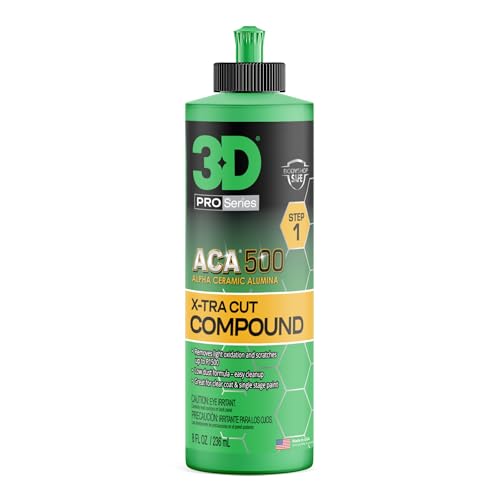 3D ACA 500 X-Tra Cut Compound, 8 Oz |
| Check price on Amazon |
A scratch that catches a fingernail has usually cut through the clear coat layer where a light polish can no longer reach. That is the territory of a cutting compound: an abrasive liquid or paste with enough bite to level the paint around a defect until the defect itself disappears from view. Choosing the best cutting compound for deep scratches comes down to how aggressive the abrasive is, whether the formula is built for hand work or for a machine polisher, and how much refining the surface will need afterward.
The five compounds below span that range. At one end sit professional heavy-cut formulas that erase sanding marks left by wet sanding; at the other sit forgiving consumer compounds and scratch removers that trade raw cutting power for ease of use by hand. Every entry is a true cutting compound or a dedicated scratch remover published for heavy paint defects, and every specification is stated exactly as the maker publishes it.
Disclosure: As an Amazon Associate, we earn from qualifying purchases made through links on this page, at no extra cost to you.
What a Cutting Compound Can and Cannot Fix
Compounding works by removing a thin layer of clear coat so the edges of a scratch are brought down to the depth of the scratch itself. Defects that live entirely inside the clear coat — deep swirl clusters, heavy oxidation, bird etching, water spot mineral marks, and sanding haze from wet sanding — respond well. A scratch that has broken through the clear coat into the color layer or down to primer cannot be leveled away, because there is not enough clear coat left around it to remove. On those, a compound can soften the edges and improve the look, but the groove will remain visible and touch-up paint is the realistic repair.
That limit shapes the whole category. The most aggressive compounds publish the finest sanding grade they can erase, which gives a practical yardstick: a formula rated for coarse sanding marks can also handle the deepest clear-coat scratches, while a milder rubbing compound is aimed at defects a machine polish would struggle with but that fall short of full sanding work.
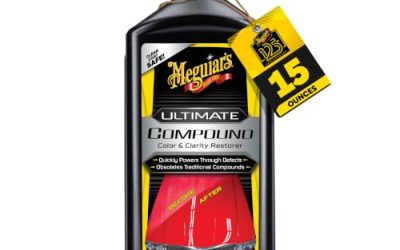
Meguiar’s Ultimate Compound, 15.2 Oz
- Brand: Meguiar’s
- Model: G17216
- Size: 15.2 fl oz
- Abrasive type: Micro-abrasive technology
Meguiar’s positions Ultimate Compound as its strongest consumer-grade correction liquid, built on the micro-abrasive technology from its professional line. The published purpose is the removal of scratches, swirl marks, oxidation, and water spots while restoring color and clarity, and the maker states it is safe and effective on all glossy paints and clear coats. It can be applied by hand with a foam or microfiber applicator, or worked with a dual-action polisher for larger panels.
For deep scratches on a daily driver, this is the natural starting point in the group. The abrasive cuts quickly for a consumer product, yet the formula is designed to finish down cleanly in a single step, so a panel often needs only a wax or sealant afterward rather than a second refining polish. The 15.2-ounce bottle is the standard single size, and the liquid consistency spreads evenly, which helps beginners keep the work area controlled while they learn how much pressure a defect actually needs.
Meguiar’s Mirror Glaze M105 Ultra-Cut Compound, 8 Oz
- Brand: Meguiar’s
- Model: M10508
- Size: 8 oz
- Cut level: Removes 1200-grit or finer sanding marks
M105 is the professional counterpart to the consumer compound above, sold under the Mirror Glaze line for body shop and detailing trade use. Meguiar’s publishes it as an ultra-cut compound that removes scratches, heavy swirls, holograms, acid rain marks, and other severe defects, and the maker states it removes 1200-grit or finer sanding marks. That sanding grade figure places it a clear step above consumer rubbing compounds in cutting strength.
The formula uses super micro-abrasive technology, which the maker describes as cutting fast while still leaving a high-gloss finish for a compound of this strength. It is published for use by hand, with a dual-action polisher, or with a rotary buffer, and for both factory and refinished paint. The 8-ounce bottle is the small trade size; because the cut is strong, a little product covers a panel section, and most users follow it with a finishing polish on dark colors where compound haze shows most.
Turtle Wax Scratch Repair & Renew, 7 Oz
- Brand: Turtle Wax
- Model: 50935
- Size: 7 oz
- Product type: Scratch remover
Scratch Repair & Renew takes a different approach from the two compounds above: it is a dedicated scratch remover published for light to heavy scratches rather than a general correction compound. Turtle Wax states the formula repairs scratches, swirl marks, paint transfer, headlight oxidation, and water spots, then seals in the restored paint for gloss. It is published as safe for all paint colors, and the 7-ounce bottle is sized for spot work rather than whole-car correction.
This is the pick in the group aimed squarely at hand application on individual defects — a key scrape on a door edge, paint transfer from a parking lot rub, or a cluster of deep marks around a door handle. Because it is applied by hand with a cloth or foam applicator, the cut is gentler than a machine compound, so a genuinely deep clear-coat scratch may take several applications worked in straight lines. The trade-off is control: there is little risk of the haze or heat build-up that a rotary machine can create in untrained hands.
SONAX CutMax Cutting Compound, 1 L
- Brand: SONAX
- Model: 246300
- Size: 1 L (33.8 fl oz)
- Product line: PROFILINE
CutMax is the heavy hitter of the SONAX PROFILINE range, published for paint correction work that removes deep scratches, sanding marks, and oxidation. The listing describes a high-performance abrasive formula for professional-grade results, and the bottle is a full liter — a workshop size intended for machine work across many panels rather than a single repair. SONAX publishes the formula as silicone-free, which matters in body shop environments where silicone contamination can interfere with fresh paint.
In practice this is the compound in the group for paint that has been wet sanded or for older finishes with severe, widespread defects. The aggressive cut levels sanding haze and deep clear-coat damage quickly with a rotary or dual-action machine, and the trade-off is that a refining polish step afterward is a normal part of the process rather than an optional extra. For a single scratch on one panel the liter bottle is more than most owners need; for a full correction on a neglected vehicle it is the economical format in the lineup.
3D ACA 500 X-Tra Cut Compound, 8 Oz
- Brand: 3D
- Model: 500OZ8
- Size: 8 oz
- Cut level: Cuts P100 grit or finer sanding marks
ACA 500 is 3D’s first-step extra-cut compound, and its published sanding figure is the most aggressive in this group: the listing states it cuts P100 grit or finer sanding marks. The abrasive is Alpha Ceramic Alumina, which 3D describes as leveling demanding clear coats and single-stage paint at high speed with low heat build-up. The maker publishes the formula as body shop safe and low dusting, and the 3D line describes ACA 500 as optimized to work with wool pads, where the pad fibers and the ceramic abrasive cut together.
That combination — the coarsest published cut level here plus a wool-pad focus — makes ACA 500 the specialist tool for the deepest work in this roundup: fresh sanding marks after a repair, severe oxidation on single-stage paint, and deep scratches on hard modern clear coats that stall milder compounds. It is strictly a first step. The surface it leaves behind needs a finer compound or polish to restore full gloss, and the small 8-ounce bottle is portioned for focused correction work rather than whole vehicles.
Buying Guide: Matching Cut Strength to the Defect
Start with the least aggressive option that can do the job. Compounding removes clear coat permanently, and modern clear coats are thin. A scratch that disappears under a consumer compound never needed a professional heavy-cut paste, and every unnecessary pass with a coarse formula shortens the life of the finish. Work up in strength only when a milder product leaves the defect unchanged after two or three proper applications.
Use the published sanding grade as the cut yardstick. Makers of professional compounds state the finest sanding marks the formula can erase — 1200-grit for the M105 above, P100 for the ACA 500. A higher grit number means a finer scratch pattern, so a compound rated for finer marks is the milder tool. Deep clear-coat scratches sit well within what a 1200-grit-rated compound handles; sanding-grade work after wet sanding is where the coarsest formulas earn their place.
Match the product to the tool you own. Hand-applied scratch removers and consumer compounds are formulated to cut at the slow speed and low heat of hand work. Professional pastes assume a machine: a dual-action polisher is the forgiving middle ground, spreading cut over a wide pad with an oscillating motion, while a rotary buffer cuts fastest and demands the most care near edges and body lines, where paint is thinnest.
Plan the steps after the compound. A heavy-cut pass often leaves a faint haze called compounding swirls, visible mainly on dark colors in direct light. A finishing polish removes it, and a wax or sealant then protects the freshly leveled surface. One-step consumer compounds are published to finish cleanly enough to skip the polish on lighter colors, which is their main convenience advantage.
Test in a hidden spot first. A small area low on a bumper or inside a door jamb shows how a given paint responds — some finishes are soft and cut quickly, others are hard and need more passes. Confirm the result there before committing to a full panel, and keep the pad and panel clean as you work, because a single grain of trapped grit dragged under a pad can add the very scratches being removed.
Frequently Asked Questions
Can a cutting compound remove a scratch that catches a fingernail?
Sometimes. The fingernail test is a rough guide rather than a rule: a scratch that catches a nail is deep, but if it still sits inside the clear coat, an aggressive compound can level the surrounding surface down to it. If the scratch has reached the color layer or primer, compounding can only soften its appearance, and touch-up paint is the actual repair.
What is the difference between a cutting compound and a polish?
Cut strength. A compound carries a heavier abrasive load and is made to remove defects — deep scratches, oxidation, sanding marks. A polish carries a much finer abrasive and is made to refine the surface a compound leaves behind, restoring gloss. In a full correction the compound goes first and the polish follows; using polish alone on a deep scratch rarely makes progress.
Do I need a machine polisher to use these products?
Not always. The scratch remover and the consumer compound in this roundup are published for hand application, and they handle individual defects well with a foam applicator and patience. The professional compounds are formulated for machine work and will feel slow and uneven by hand; a dual-action polisher is the practical minimum for them and for any whole-panel job.
Will compounding damage my paint if I overdo it?
It can. Compounding removes clear coat a little at a time, and working one spot too long — especially with a rotary buffer or on an edge, where the coating is thinnest — can cut through to the color layer. Work in short passes, check the defect after each one, mask off edges and trim, and stop as soon as the scratch is gone rather than chasing a perfect panel in a single session.
Conclusion
For most owners facing one deep scratch or a tired panel, the consumer compound from Meguiar’s is the balanced first move: strong published cut, hand or machine use, and a finish that often needs no second step. The M105 and the two professional pastes from SONAX and 3D serve heavier work — sanding marks, severe oxidation, and the deepest clear-coat damage — with a follow-up polish as part of the process. The Turtle Wax remover covers the other end of the scale, spot repairs by hand where control matters more than speed. Pick by the defect in front of you, start milder than you think you need, and let the published cut level tell you when to step up.


Write Your Review
No reviews yet. Be the first to share your experience!