
Skinning an elk is a bigger job than skinning a deer in every way that matters to a knife. The hide is thicker, the animal is heavier to move and hold, and the work often happens on the ground, in the cold, with gloves on and daylight fading. The real decision is not simply which blade is sharpest. It is whether you want a fixed edge you maintain yourself, a replaceable blade you swap when elk hide dulls it, or a kit that covers skinning, gutting, and caping in one case.

This guide is for elk hunters who process their own animals in the field, backcountry hunters counting every ounce in a kill kit, and camp cooks who break down quarters at home after the hunt. Every pick below is a genuine skinning tool chosen from the name and specifications on its Amazon product page, including two replaceable-blade designs built specifically because elk hide is hard on edges.
Quick Picks
As an Amazon Associate we earn from qualifying purchases.
| Product | Best for | Key spec from title |
|---|---|---|
| Havalon Piranta-Edge Skinning Knife | Hunters who want a fresh edge mid-animal without sharpening | 60A replaceable blades, nylon holster included |
| OUTDOOR EDGE RazorPro Double Blade Hunting Knife | Skinning plus a separate gutting blade and folding saw | Replaceable RazorSafe skinning edge with gutting blade |
| OUTDOOR EDGE WildLite 6-Piece Game Processing Set | One case that covers the whole elk, field to freezer | Gut hook skinner, caping knife, and boning knife set |
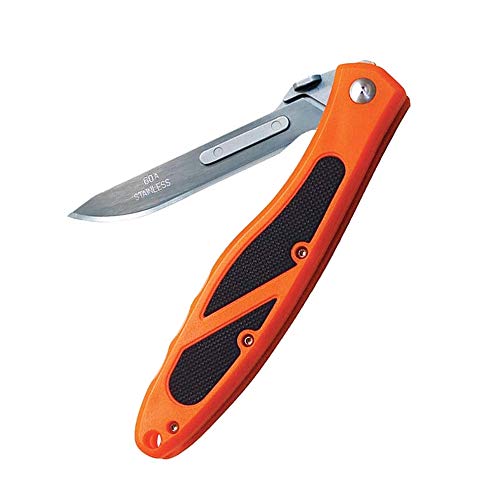
| Havalon Piranta-Edge Skinning Knife, Stainless Handle Version | A slimmer, easy-clean handle for pack carry | 60A replaceable blades, ABS handle |
How to Choose
Decide Between a Maintained Edge and a Replaceable Edge
Elk hide, hair, and grit dull a conventional blade faster than most hunters expect, and stopping to sharpen on a mountainside is rarely appealing. Replaceable-blade knives such as the Havalon and Outdoor Edge designs in this guide solve that problem by letting you swap in a fresh edge in seconds. The trade-off is that the thin blades are made for slicing, not prying or twisting, and you must carry spares. A fixed blade you sharpen yourself has no ongoing blade supply to manage and tolerates rougher use, but its edge will need attention partway through a big animal. Pick the system honestly, based on whether you would rather carry spare blades or a sharpener.
Match Blade Size to Elk, Not to Deer
Short blades give control for caping and detail work around the legs and head, but skinning the broad back and sides of an elk rewards a blade with enough edge and belly to make long, sweeping strokes. The replaceable blades in this guide run around 2.75 to 3.5 inches, which keeps them precise, while the fixed skinner in the WildLite set uses a gut hook profile shaped for opening and skinning large game. Think about how you actually skin: hunters who hang an elk and pull hide in camp can work comfortably with a shorter, precise blade, while ground work on a whole animal favors the set with a dedicated gut hook skinner.
Prioritize Grip and Visibility in Field Conditions
You will use this knife with cold hands, bloody gloves, and fading light. Rubberized, textured handles matter more here than they do in a kitchen, because a skinner that rotates in a wet grip is a safety problem, not an inconvenience. Blaze orange handles, used on the Outdoor Edge picks and one Havalon version below, exist for a practical reason: a knife set down in grass, leaves, or snow during field work is easy to lose, and a lost knife can also be stepped on. If you hunt in low light or thick cover, treat handle visibility as a real feature, not a cosmetic one.
Plan the Whole Job, Not Just the Skinning
Skinning is one stage of getting an elk from the field to the freezer. Opening the animal, caping for a mount, separating quarters, and later boning all ask slightly different things of a blade. A single folding skinner is the lightest way to cover the skinning stage, and it pairs well with a separate fixed blade for heavier work. A processing set like the WildLite covers skinning, caping, and boning in one case, which suits hunters who process at camp or at home. Decide which stages your knife purchase needs to cover before choosing between a single folder and a kit.
The 4 Best Options
Havalon Piranta-Edge Skinning Knife
The Piranta-Edge is the replaceable-blade idea in its most focused form: a folding handle that takes scalpel-style 60A stainless blades, supplied with a dozen spares and a nylon holster. For elk, the appeal is simple. When the edge starts to drag halfway through the hide, you fit a fresh blade and keep working at full sharpness instead of finishing the animal with a tired edge. The blaze orange military-grade polymer handle is easy to spot when set down, and the open design rinses clean after messy work.
Specs
- Brand: Havalon
- Model number: XTC-60AEDGE
- Blade length: 2.75 inches
- Blade type: 60A replaceable, stainless steel
- Handle material: Military-grade polymer
- Included components: 12 replacement blades, nylon holster, blade remover
Best for: Hunters who want a surgically sharp edge for the whole animal without carrying a sharpener
Watch out for: The listing shows a blade length of 2.75 inches for this version, and the thin blades are not made for prying or twisting against bone, so keep a sturdier knife in the kit for heavy work
ASIN: B00JYEBUPW
OUTDOOR EDGE RazorPro Double Blade Hunting Knife
The RazorPro pairs the replaceable-blade concept with a second, separate gutting blade in the same folder, and this saw combo version adds a folding bone saw in the sheath. That combination maps well onto elk work: open the animal with the gutting blade, skin with a fresh replaceable edge, and use the saw where quarters need separating. The rubberized blaze-orange handle is reinforced with stainless steel liners, and six replacement blades are included, so the system arrives ready for a full animal rather than a single short job.
Specs
- Brand: OUTDOOR EDGE
- Model name: 2813-0104
- Blade length: 3.5 inches
- Blade shape: Drop point
- Blade edge: Compound bevel
- Included components: Nylon sheath, folding saw
- Special feature: Foldable, replaceable RazorSafe blade system
Best for: Hunters who want skinning, gutting, and a bone saw in one belt carry
Watch out for: Confirm the current listing variant before ordering, because the RazorPro family includes versions with and without the saw combo, and the included components differ between them
ASIN: B00ZNV1RZI
OUTDOOR EDGE WildLite 6-Piece Game Processing Set
The WildLite takes the opposite approach to the folders: a hard-side case holding a full-tang gut hook skinner, a caping knife, and a boning and fillet knife, plus game cleaning gloves and a two-stage sharpener. The listing names deer and elk accessories directly, and the set is built for hunters who skin and then keep going into full processing. Because the blades are fixed 420J2 stainless that you sharpen yourself, there are no proprietary spares to run out of, and the included sharpener keeps the edges working through a long session at camp or at home.
Specs
- Brand: OUTDOOR EDGE
- Model name: OEWL6
- Blade material: 420J2 stainless steel
- Blade shape: Gut hook
- Blade edge: Compound bevel
- Included components: Gutting and skinning knife, caping knife, boning knife, game cleaning gloves, two-stage carbide and ceramic sharpener, hard-side field carry case
Best for: Hunters who skin an elk and then cape, bone, and process it with one kit
Watch out for: At a full multi-piece set in a hard case, it is heavier and bulkier than a folding skinner, so weigh it against your pack space on backcountry hunts
ASIN: B01DLGCZHU
Havalon Piranta-Edge Skinning Knife, Stainless Handle Version
This second Piranta-Edge listing uses a different handle build, with an ABS handle and a slimmer overall profile, while keeping the same 60A replaceable blade system and nylon holster. It suits hunters who prefer a smooth, easy-clean handle that will not hold grime in textured rubber, and who carry their skinner in a pack pocket rather than on a belt. The ambidextrous design and foldable format keep it compact, and because it uses the same blade family, spare 60A blades already in your kit fit this handle as well.
Specs
- Brand: Havalon
- Model name: HV70205-BRK
- Blade length: 3.25 inches
- Blade material: Stainless steel
- Handle material: Acrylonitrile Butadiene Styrene (ABS)
- Included components: Holster
- Hand orientation: Ambidextrous
Best for: Pack hunters who want the lightest, easiest-clean replaceable-blade skinner
Watch out for: The listing for this version shows a different blade length and included components than the orange Piranta-Edge above, so check which version you are ordering and how many spare blades come in the box
ASIN: B00KDKRCJ4
Which One Fits Your Situation
You Hunt Elk Far From the Truck
Carry one of the Havalon Piranta-Edge folders. The replaceable 60A blades mean a fresh edge is always a few seconds away without the weight of a sharpening kit, and the folding format rides safely in a pack. Between the two versions, the orange polymer handle is easier to spot on the ground, while the ABS version packs slimmer and cleans up faster. Either way, pair it with a stronger fixed blade for prying jobs the thin blades should never do.
You Process the Whole Animal in Camp
Choose the OUTDOOR EDGE WildLite set. Skinning is only the start of camp processing, and this case adds the caping knife and boning knife the folders lack, plus gloves and a sharpener to keep the fixed blades working. It is more to carry than a single folder, but it replaces several separate purchases and keeps every edge in one hard case that lives in the truck or the camp box between seasons.
You Want One Belt Tool for the Entire Field Job
Pick the RazorPro saw combo. The gutting blade opens the animal without a separate tool, the replaceable skinning edge stays sharp through the hide, and the folding saw handles the bone work that stops a knife alone. For hunters who dislike carrying a dedicated saw and a separate gut knife, this is the most complete single carry in the guide, provided you confirm you are ordering the saw combo variant.
You Skin Elk Hanging in a Garage or Barn
The WildLite set fits best again, for a different reason. At home you do not need to save ounces, and the fixed blades can be resharpened on your normal bench setup between animals. The gut hook skinner opens and skins, the boning knife takes over for trimming, and the case keeps the whole kit together on a shelf instead of scattered through drawers until next season.
Common Mistakes
- Trying to skin an entire elk on one replaceable blade long after it has dulled, instead of swapping in a fresh blade as soon as the edge starts to drag through hide and hair.
- Twisting or prying with a thin replaceable blade against joints and bone, which is how these blades snap; they are slicing tools, and heavy work belongs to a fixed blade.
- Carrying a skinner with a dark handle and no sheath system, then losing it in grass or leaf litter the first time it is set down during field dressing.
- Buying a skinning knife and nothing else, then discovering in the field that caping, gutting, and quartering each want a different tool than the one in your hand.
- Putting a bloody knife away wet in its sheath after the hunt, which corrodes edges and ruins handles before the next season.
Frequently Asked Questions
Are replaceable-blade knives really strong enough for elk?
For skinning, yes, when they are used as slicing tools. Elk hide is thick and abrasive, which is exactly the work a fresh scalpel-style edge handles well. The limit is lateral force: twisting, prying, and levering against bone can snap a thin blade. Most hunters pair a replaceable-blade skinner with one sturdy fixed blade and let each tool do the job it was built for.
How many spare blades should I carry for one elk?
Carry more than you expect to use, because hide, hair, and grit dull edges at unpredictable rates and a blade can also be damaged on bone. The Havalon listing in this guide includes a dozen replacement blades, which is a sensible benchmark for a full animal with spares left over. Running out mid-animal and finishing with a dull edge is slower and less safe than carrying a few extra grams of blades.
Do I need a gut hook for skinning an elk?
A gut hook is for opening the animal, not for the skinning itself, but the two jobs happen minutes apart in the field. A gut hook skinner or a folder with a separate gutting blade, like the picks in this guide, lets you open the hide with less risk of puncturing what is underneath. If your skinner has no hook, a dedicated gutting tool is worth adding to the kit.
How should I clean a skinning knife after an elk?
Rinse blood and fat off the blade and handle as soon as the work allows, wash with warm soapy water, and dry everything fully before it goes back in a sheath or case. The Havalon listing specifies hand wash only, which is good practice for every knife here. Storing a knife wet and dirty is the fastest way to corrode an edge and degrade a handle between seasons.

Write Your Review
No reviews yet. Be the first to share your experience!