
For a French press you want a coarse, even grind, about the texture of sea salt, and the grinder that delivers it most reliably in this guide is the Baratza Encore, with 40 mm conical steel burrs and a coarse end that suits a four-minute steep. If you would rather crank by hand, the 1Zpresso J is listed for pour-over, French press and cold brew and gives you a numbered internal dial for repeating your setting. The common thread is a burr grinder; a blade mill produces too many fines for a clean press.
- Top Picks at a Glance
- Grind Size and Dose for a French Press
- Comparison Table
- 1. Baratza Encore: Best Overall for a Consistent Coarse Grind
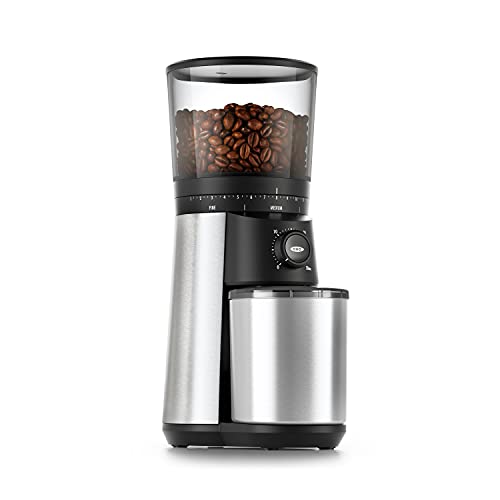
- 2. OXO Brew Conical Burr 12 oz: Best for a Full-Size Press
- 3. Hamilton Beach Electric Burr Grinder: Best Value Electric
- 4. 1Zpresso J: Best Premium Hand Grinder for Press Coffee
- 5. NewlukPro M6: Best Mid-Range Hand Grinder
- 6. HAMILADUO Manual Grinder: Best Budget Hand Grinder
- Also Consider
- How We Chose
- Buying Guide
- Step by Step: A French Press Routine That Uses the Grind Well
- Troubleshooting Your Press Coffee by Taste
- Keeping the Grinder Working: Care by Type
- Common Mistakes to Avoid
- Frequently Asked Questions
- Which One Should You Buy?
- Sources
“Coffee for French press grind” is really two questions: what grind size to use, and what you need to grind it. This guide answers both. First comes a short explanation of why coarse matters, with a grind-size and dose table, and then six grinders, three electric and three manual, that handle coarse settings well. Finally there is a short list of French presses to pair with them. We did not personally use these products. Everything is based on manufacturer specification pages and listing details, and anything a maker does not state is marked “not listed”.

Primos French Press Coffee - Medium Roast Arabica - Coarse Grind | Coarsely ground for balanced extraction; smooth, low acid, fruit & cacao notes; from our Nicaraguan farm & Texas roastery
Included for 'Coarse Coffee Grinders for French Press: Getting the Grind Right' because the listing specifies Medium Roast Arabica and Coarse Grind, details this guide uses to compare options.
View on Amazon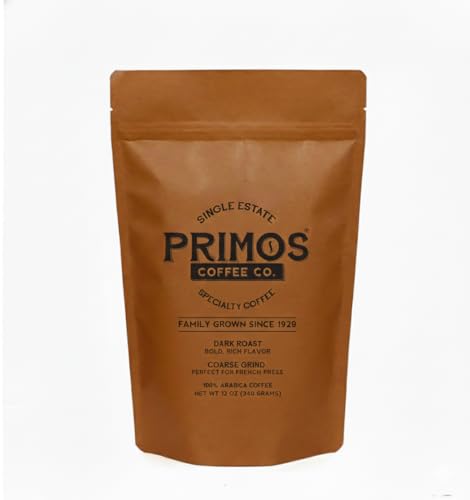
Primos French Press Coffee - Dark Roast Arabica - Coarse Grind | Coarsely ground for balanced extraction; bold, low acid, fruit & cacao notes; from our Nicaraguan farm & Texas roastery
Included for 'Coarse Coffee Grinders for French Press: Getting the Grind Right' because the listing specifies Dark Roast Arabica and Coarse Grind, details this guide uses to compare options.
View on AmazonPrimos French Press Coffee - Medium Roast Arabica - Coarse Grind - 2 Bags | Coarsely ground for balanced extraction; smooth, low acid, fruit & cacao notes; from our Nicaraguan farm & Texas roastery
Included for 'Coarse Coffee Grinders for French Press: Getting the Grind Right' because the listing specifies Medium Roast Arabica and Coarse Grind, details this guide uses to compare options.
View on AmazonTop Picks at a Glance
- Best Overall: Baratza Encore, 40 mm conical steel burrs.
- Best for Brewing a Full Press: OXO Brew Conical Burr 12 oz, 43 settings, listed for drip, French press and cold brew.
- Best Value Electric: Hamilton Beach Electric Burr Grinder, 16 oz hopper, 18 settings from espresso to French press.
- Best Premium Hand Grinder: 1Zpresso J, stainless conical burr, internal numerical adjustment.
- Best Mid-Range Hand Grinder: NewlukPro M6, all-metal body, 40 settings, 25 g capacity.
- Best Budget Hand Grinder: HAMILADUO Manual Grinder, stainless conical burr, double bearing positioning, 20 g capacity.
Grind Size and Dose for a French Press
A French press steeps coffee in hot water for several minutes and then separates the grounds with a metal mesh. Because the mesh is coarse and the steep is long, you need a coarse grind. Fine particles over-extract, slip through the mesh and leave sludge in the cup. The numbers below are standard starting points.
| Press size | Water | Coffee at 1:15 ratio | Coffee at 1:12 (stronger) | Steep time |
|---|---|---|---|---|
| 12 oz (small) | 350 ml | about 23 g | about 29 g | 4 minutes |
| 21 oz (0.6 L) | 600 ml | 40 g | 50 g | 4 minutes |
| 34 oz (1 L) | 1000 ml | about 67 g | about 83 g | 4 minutes |
As a worked example, a 34 oz press brewed at a 1:15 ratio needs about 67 grams of coffee. A 25 g hand grinder would need three batches, while a 12 oz hopper on an electric model takes it in a single run. That one calculation is often the real deciding factor between a manual and an electric grinder.
If the cup tastes sour or weak, grind slightly finer or steep a little longer. If it tastes bitter, muddy or heavy, grind coarser. Change one variable at a time.
Comparison Table
| Product | Type | Key specs (as listed) | Watch for | Price tier |
|---|---|---|---|---|
| Baratza Encore | Electric burr | 40 mm conical steel burrs, beginner-friendly | No dose timer | Premium |
| OXO Brew Conical Burr 12 oz | Electric burr | 43 settings, 12 oz hopper, stainless steel burrs | Large footprint | Mid-range |
| Hamilton Beach Burr 16 oz | Electric burr | 18 settings, 16 oz hopper, 2 to 14 cups | Burr material not listed | Budget |
| 1Zpresso J | Manual | Stainless steel conical burr, numbered internal dial | Capacity not listed in the title | Premium |
| NewlukPro M6 | Manual | Conical burr, 40 settings, all-metal body, 25 g | Small batch size | Mid-range |
| HAMILADUO Manual | Manual | Stainless conical burr, double bearing, 20 g | Smallest capacity | Budget |
1. Baratza Encore: Best Overall for a Consistent Coarse Grind
- 40 mm conical steel burrs.
- Powerful motor.
- Beginner-friendly design.
- 40 grind settings as published by the maker.
- Model ZCG485BLK, black.
Best for: a household that makes a French press a few times a week and wants a grinder that handles coarse and medium equally well. Skip if: you want to carry the grinder with you.
Coarse grinding is where a good burr set shows its worth. A blade chops beans into dust and boulders, and the dust is what clogs a press filter and turns the bottom of the cup into silt. Conical steel burrs set at a wide gap crush beans into a tighter range of sizes, so fewer fines make it into the carafe. The Encore’s burrs are larger than those in many entry-level models, which also helps it work quickly.
Forty steps give you room to creep up and down. A practical approach is to start at a setting near the coarse end, brew, and move one step at a time. When you find a setting that tastes good with your usual beans, write it on a sticker under the grinder.
The maker publishes cleaning and maintenance guidance and sells spare parts, so the grinder can be serviced instead of discarded. The trade-off is that it is a plug-in countertop machine without a timer or dosing feature, so you will weigh the beans or use a scoop.
Pros:
- Large conical steel burrs.
- Good coarse performance for presses.
- Serviceable design.
Cons:
- Premium price among these electrics.
- No dose timer.
2. OXO Brew Conical Burr 12 oz: Best for a Full-Size Press
- Stainless steel conical burrs.
- 43 grind settings, listed for drip, French press and cold brew.
- 12 oz bean hopper.
- One-touch automatic start.
Best for: someone who brews a 34 oz press for two or more people. Skip if: you have limited counter height.
The hopper means you can load enough beans for a full press and walk away. The listing specifically names French press and cold brew, which signals a usable coarse range. Cold brew needs an even coarser grind than a French press, so a grinder that serves both has headroom at the coarse end, and you can use the middle of the range for press coffee.
Forty-three settings also help if you brew with different beans. Lighter roasts are denser and often need a slightly finer press grind than a dark roast to extract well. Having small steps makes that adjustment easy.
The one-touch start is simple, but it is a tall unit and takes up space on a small counter.
Pros:
- Wide range including cold brew coarseness.
- 12 oz hopper for large batches.
- One-touch operation.
Cons:
- Large footprint.
- Priced above the budget electrics.
3. Hamilton Beach Electric Burr Grinder: Best Value Electric
- 16 oz hopper.
- 18 grind settings from espresso to French press.
- Makes 2 to 14 cups.
- Automatic shutoff and an easy-clean design.
- Stainless steel finish, model 80385.
Best for: a budget-conscious household that wants burr grinding for a press without a large spend. Skip if: you want precise adjustments.
With 18 settings spanning espresso to French press, the coarse end is explicitly part of its design. A press is forgiving, so 18 steps are enough to land on a good grind. The 16 oz hopper is large and suits bulk beans, though a half-full hopper is better for freshness.
The listing does not state the burr material or burr type, so there is less certainty about long-term wear. For a French press, which needs only a coarse setting, that matters less than for espresso.
Pros:
- Lowest price among the electrics.
- Coarse end designed for French press.
- Large hopper.
Cons:
- Burr details not listed.
- Fewer settings.
4. 1Zpresso J: Best Premium Hand Grinder for Press Coffee
- Stainless steel conical burr.
- Numerical internal adjustment.
- Listed for pour-over, French press and cold brew.
- Silver finish.
- Capacity: not listed in the title.
Best for: the French press drinker who wants to grind by hand, quietly, with a precise and repeatable dial. Skip if: you brew for four people at once.
An internal numbered dial lets you record the exact setting. If you find that setting 3 turns plus 4 clicks gives a clean press, you can return to it each time. The stainless steel conical burr is listed for coarse-range brewing, and hand grinders can offer quality close to far more expensive electrics because the cost goes into the burr and bearings rather than a motor.
Grinding 67 grams for a full 34 oz press by hand can take a few minutes. For a single mug, around 20 grams, it is a short task. If you routinely make big presses, consider the electric options.
Check the product page for capacity, since the title does not state it.
Pros:
- Precise, repeatable numbered dial.
- Stainless steel conical burr.
- Silent and cordless.
Cons:
- Premium price among the hand grinders.
- Slow for large batches.
- Capacity not listed.
5. NewlukPro M6: Best Mid-Range Hand Grinder
- Conical burr with 40 adjustable settings.
- All-metal body.
- 25 g capacity.
- Listed for espresso, pour-over, French press and moka.
- Portable for travel, camping, home and office.
Best for: someone who wants a sturdy hand grinder for a single mug or small press. Skip if: you brew a full liter at a time.
The all-metal body helps with rigidity: a stiff frame keeps the burrs aligned, which supports an even grind. Forty settings are plenty for French press, and the listing names the method directly. The 25 g capacity fits a 12 oz press at a standard ratio, which makes it a good match for a one-person morning routine.
It travels well, so it works for a camping French press, but it is not designed for batch grinding.
Pros:
- All-metal body.
- 40 settings.
- Right size for a single press.
Cons:
- 25 g capacity limits batch size.
- Less documented than premium brands.
6. HAMILADUO Manual Grinder: Best Budget Hand Grinder
- Stainless steel conical burr.
- Double bearing positioning.
- 20 g capacity.
- Adjustable setting; listed for French press, drip and espresso.
- Suitable for camping, office and gifts.
Best for: trying a hand grinder for the first time at the lowest tier. Skip if: you want confirmed step counts and heavy daily use.
Double bearing positioning steadies the burr shaft, which helps keep the burrs centered while you crank. That is a good feature at this price, because wobble is a common cause of uneven grind in cheap hand grinders. At 20 g you can grind a small press or one big mug.
The title does not list the number of settings, so confirm that on the product page.
Pros:
- Low cost.
- Stainless steel conical burr.
- Bearing support at the shaft.
Cons:
- Smallest capacity.
- Setting count not listed.
Also Consider
- Bodum Chambord 34 oz French press: borosilicate glass with a polished stainless steel frame, made in Portugal. A classic press to pair with any of the grinders above.
- Bodum Brazil 34 oz French press: high-heat borosilicate glass with a black frame, made in Portugal, at a lower tier.
- SHARDOR Electric Burr Coffee Grinder 2.0: 16 settings, listed for espresso and French press, a budget electric alternative.
- Cuisinart Supreme Grind DBM-8P1: 18 settings, 8 oz hopper and a 4 to 18 cup selector.
How We Chose
This guide is research-based and we did not personally use these products. We began with grinders and presses currently sold in the site’s store, then looked for models whose listings explicitly mention French press, a coarse range or a wide span from fine to coarse. We compared manufacturer specification pages and listing details for burr type, burr material, number of settings, capacity and body construction. We chose three electric and three manual grinders so the guide covers both routines, and we left blade grinders out because they cannot deliver an even coarse grind. Prices are shown as tiers because they change. Brewing ratios and times follow widely used guidance from specialty coffee organizations.
Buying Guide
Why burrs beat blades for a press
French press coffee has nowhere to hide: the metal filter lets oils and fine particles into the cup. If a grinder produces many fines, the cup tastes muddy. Burr grinders keep the particle range narrow. A blade grinder can work in an emergency if you pulse in very short bursts and sift out the dust, but results are unpredictable.
Number of settings and reading the dial
For French press you need a handful of coarse positions. More steps help only if you change beans often. A numbered dial, as on the 1Zpresso J, makes your preferred setting easy to repeat. A grinder with an unlabeled or very stiff dial makes it harder to return to a setting.
Capacity
Use the table above to match batch size. One person brewing a 12 oz press needs about 23 g of coffee, within the capacity of every grinder here. Two people sharing a 34 oz press need about 67 g, which is easiest with an electric grinder.
Cleaning
Coffee oils build up quickly in the burr chamber. Brush it out weekly. Many hand grinders let you remove the burr for cleaning without tools; check the manual. Avoid washing burrs unless the maker says it is safe.
Pairing with the right press
Choose a press with a fine, tight mesh and a snug plunger. Borosilicate glass models are widely sold and easy to see through; stainless steel presses hold heat longer. Preheat the press with hot water and discard before adding coffee.
Step by Step: A French Press Routine That Uses the Grind Well
- Heat the water. Bring water to a boil, then let it rest for about 30 seconds so it sits just below boiling. Very hot water extracts bitterness from darker roasts.
- Warm the press. Pour a little hot water into the empty carafe, swirl and discard. A warm glass or steel body keeps the temperature steady during the steep.
- Weigh and grind. Weigh the beans using the ratio table, then grind to a coarse setting. Grinding right before brewing preserves aroma, which fades quickly once the bean is broken.
- Add water in two stages. Pour about twice the weight of the coffee in water first, wait 30 seconds so the grounds can release trapped gas, then fill to the target volume.
- Stir gently and set the lid. One slow stir breaks the crust. Place the lid with the plunger raised and wait for the total steep time, usually four minutes.
- Press slowly. Lower the plunger over about 20 to 30 seconds. If it feels like a fight, your grind is too fine.
- Serve immediately. Pour all the coffee into cups or a thermal server, because grounds left in contact keep extracting.
Troubleshooting Your Press Coffee by Taste
| What you taste | Likely cause | Fix |
|---|---|---|
| Sour, thin, watery | Under-extracted: grind too coarse or steep too short | Go one step finer or add 30 seconds |
| Bitter, harsh, dry finish | Over-extracted: grind too fine or water too hot | Go one or two steps coarser or let the water cool a little |
| Silty, muddy bottom of the cup | Too many fines | Use a burr grinder, coarser setting, and pour slowly without shaking the last sip |
| Plunger very hard to press | Grind too fine or too much coffee | Coarser grind and recheck the dose |
| Weak but bitter | Uneven grind: both fines and chunks | Upgrade from a blade mill or a worn burr |
Change only one variable per brew. If you alter the grind, the steep time and the dose all at once, you will not know which one improved the cup. Keep notes on a card kept near the grinder, including the bean, the setting, the water amount and the verdict. After a few sessions you will have a personal map of your press.
Keeping the Grinder Working: Care by Type
Electric burr grinders should be unplugged before cleaning. Empty the hopper, brush the burrs and the exit chute, and wipe the bin with a dry cloth. Hand grinders usually come apart without tools: remove the handle, the adjustment ring and the burr, brush out the chamber, and reassemble in the same order, taking care to return the dial to its former setting. Whatever you own, avoid soaking the burrs or washing them with detergent unless the maker allows it, because water can lead to corrosion and trapped moisture can spoil the next grind. Finally, store the grinder away from the stove, where heat and grease can affect both plastic parts and the beans inside.
Common Mistakes to Avoid
- Grinding too fine. It clogs the filter and over-extracts, giving a bitter, silty cup.
- Pressing too hard. A hard plunge forces fines through the mesh.
- Letting coffee sit in the press after brewing. It keeps extracting. Pour it all out right away.
- Pre-grinding a week’s supply. Coarse grounds still go stale quickly.
- Guessing the dose. Weigh it at first, using the ratio table above.
Frequently Asked Questions
What grind is best for a French press?
Coarse, similar to sea salt. A coarse grind allows a four-minute steep without over-extracting and keeps fines out of the cup.
Can I use a blade grinder for French press coffee?
You can, but the result is uneven, with dust and chunks. A burr grinder gives a cleaner cup.
How much coffee do I need for a 34 oz French press?
About 67 grams at a 1:15 ratio, or about 83 grams for a stronger 1:12 ratio. Adjust to taste.
Is a hand grinder good enough for French press?
Yes. A hand grinder with a quality conical burr can produce a good coarse grind. The main limit is capacity and time for larger batches.
Why does my French press coffee taste muddy?
Usually because the grind is too fine or there are too many fines. Try a coarser setting and avoid pressing the plunger too hard.
How long should I steep French press coffee?
Around four minutes is the usual starting point. Steep a bit longer for a stronger cup or a bit shorter if it tastes bitter, adjusting the grind instead if possible.
Can pre-ground coffee be used for French press?
Yes, if it is labeled coarse. Fresh grinding gives better flavor because aroma fades quickly after grinding.
Which One Should You Buy?
Choose the Baratza Encore if you want the most dependable electric grinder for a press. Pick the OXO 12 oz if you brew large presses or cold brew, and the Hamilton Beach burr model for a lower-cost electric. If you prefer a manual routine, the 1Zpresso J is the premium choice, the NewlukPro M6 is a sturdy mid-range option, and the HAMILADUO is the lowest-cost way to start. Pair any of them with a 34 oz glass press such as the Bodum Chambord and set the grinder to a coarse, even setting.
Sources
- Baratza and OXO manufacturer product pages
- Hamilton Beach manufacturer page for model 80385
- 1Zpresso, NewlukPro and HAMILADUO manufacturer or store listings
- Bodum manufacturer pages for the Chambord and Brazil presses
- Specialty Coffee Association brewing ratio guidance
Last updated: October 2026






Write Your Review
No reviews yet. Be the first to share your experience!