
Our Short List of 3

- Best for: cooks buying their first serious Japanese vegetable knife.
- Blade length: 6.5 inches (165 mm)
- Steel: VG-10-class cobalt alloy core, 3-layer stainless clad
- Hardness: 60 HRC
- Edge angle: 9 to 12 degrees
- Best for: cooks trying the nakiri shape for the first time.
- Blade length: 7 inches
- Steel: forged high-carbon German stainless
- Handle: Santoprene, non-slip
- Construction: forged, full tang

- Best for: cooks who want one premium vegetable blade to keep for years.
- Blade length: 6.5 inches
- Steel: VG-MAX core, 68-layer Damascus cladding
- Edge: 16 degrees per side, plain
- Handle: D-shaped Pakkawood
All 5 Picks at a Glance
| Product | Specs | Action |
|---|---|---|
| Tojiro DP Nakiri 6.5-Inch (F-502) |
| Check price on Amazon |
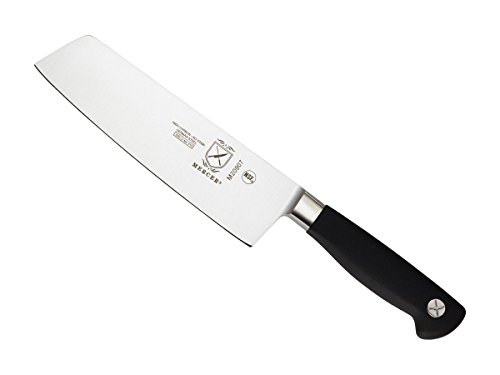
| Mercer Culinary Genesis 7-Inch Nakiri (M20907) |
| Check price on Amazon |
| Shun Classic 6.5-Inch Nakiri (DM0728) |
| Check price on Amazon |
 Wüsthof Classic 7-Inch Hollow Edge Nakiri (4193-7) |
| Check price on Amazon |
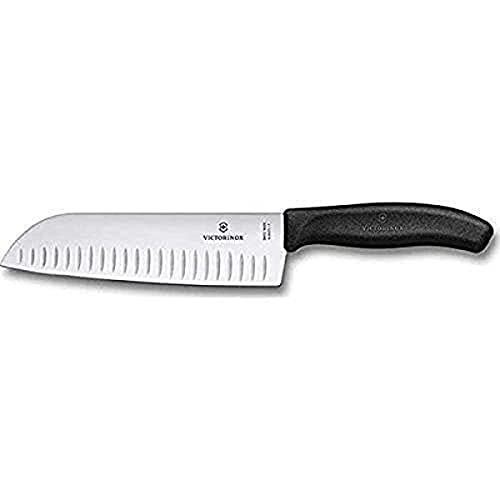 Victorinox Fibrox 7-Inch Granton Edge Santoku (6.8523.17) |
| Check price on Amazon |
A vegetable knife earns its place when the board is full of onions, carrots, and cabbage and a curved chef’s knife keeps rocking off the pile. The real decision is not which brand looks best on a block, but which blade shape fits the way you cut: a flat-edged nakiri push-cuts straight down through a head of cabbage in one stroke, while a santoku adds a gentle curve for cooks who still rock the blade now and then. Steel, weight, and edge angle decide how long that sharpness lasts and how much care the knife asks for.
This guide is for home cooks who prep vegetables most nights, for cooks adding a first Japanese-style blade to a Western set, and for anyone replacing a dull all-purpose knife with a dedicated cutter. Every knife below was chosen from the name and specifications on its Amazon product page, so you can compare blade length, steel, and handle on the same terms.
Quick Picks
As an Amazon Associate we earn from qualifying purchases
| Product | Best for | Key spec from title |
|---|---|---|
| Tojiro DP Nakiri 6.5-Inch (F-502) | First serious Japanese vegetable knife | 6.5-inch VG-10 core blade |
| Mercer Culinary Genesis 7-Inch Nakiri (M20907) | Trying the nakiri shape without a premium outlay | 7-inch high-carbon German steel blade |
| Shun Classic 6.5-Inch Nakiri (DM0728) | A premium Damascus blade to keep for years | 6.5-inch VG-MAX Damascus blade |
| Wüsthof Classic 7-Inch Hollow Edge Nakiri (4193-7) | A heavy German workhorse for dense vegetables | 7-inch hollow-edge forged blade |
| Victorinox Fibrox 7-Inch Granton Edge Santoku (6.8523.17) | A light all-rounder for vegetables and more | 7-inch Granton edge, Fibrox handle |
How to Choose
Blade shape: nakiri or santoku
A nakiri has a straight, flat edge and a tall rectangular blade, so the whole edge meets the board at once and push-cuts through onions, cabbage, and potatoes without the rocking motion a chef’s knife needs. A santoku keeps a similar tall profile but adds a slight curve toward the tip, which suits cooks who slice, dice, and mince in one session and still want a little rocking room. If your prep is mostly straight-down chopping of vegetables, the nakiri is the more direct tool. If you move between vegetables, herbs, and the occasional piece of fruit, the santoku covers more ground. Either way, pick the shape that matches your cutting motion, not the one that looks most traditional.
Steel and hardness
Steel decides how long an edge lasts and how easily it comes back. Japanese VG-10 and VG-MAX cores, hardened to around 60 HRC, hold a fine edge through a long prep session but can chip if the blade meets a bone or a frozen block. German high-carbon stainless, hardened to around 58 HRC, gives up a little edge life in exchange for toughness that forgives a knock on the board. A stamped blade is lighter and easier to handle; a forged blade is heavier and stiffer. None of these steels is maintenance-free, and all of them dull faster on glass or stone boards, so match the steel to how carefully you are willing to treat the knife.
Weight and balance
A vegetable knife lives in the hand for twenty or thirty minutes at a stretch, so weight matters more than it does on a knife used for a single cut. Light Japanese nakiri blades, around six or seven ounces, let the edge do the work and suit smaller hands or long prep sessions. Heavy German forged blades, closer to ten ounces, use their own weight to push through squash and sweet potatoes with less effort from the wrist. Hold the balance point in mind too: a blade-heavy knife feels different from one balanced at the handle. If you can, compare the listed weight and handle length against a knife you already own before choosing.
Edge style and care
The edge determines how food behaves on the blade. A plain edge slices cleanly and is the simplest to sharpen on a whetstone. A hollow or Granton edge has shallow dimples along the blade that create air pockets, so wet slices of cucumber and potato release instead of clinging. The trade-off is that dimpled edges take a little more care to sharpen evenly. Almost every knife in this guide asks for hand washing, because dishwasher heat and rattling dull edges and loosen handles over time. A blade guard or a magnetic strip keeps the edge safe between uses, and a honing rod or whetstone keeps it cutting true.
The 5 Best Options
Tojiro DP Nakiri 6.5-Inch (F-502)
- Best for: cooks buying their first serious Japanese vegetable knife.
- Blade length: 6.5 inches (165 mm)
- Steel: VG-10-class cobalt alloy core, 3-layer stainless clad
- Hardness: 60 HRC
- Edge angle: 9 to 12 degrees
cooks buying their first serious Japanese vegetable knife.
the hard steel can chip if the blade meets bone or frozen food, and availability sometimes runs through third-party sellers, so check the seller before ordering.
The Tojiro DP is the nakiri most cooks meet first when they step into Japanese steel, and it earns that place with a thin VG-10 core blade that push-cuts through carrots and onions without wedging. At 6.5 inches the blade is long enough to cross a head of cabbage in a stroke or two, yet compact enough for a small board. The Western-style laminated wood handle feels familiar to anyone coming from a German or American knife, so the switch is about the blade shape rather than learning a new grip.
Watch out for: the hard steel can chip if the blade meets bone or frozen food, and availability sometimes runs through third-party sellers, so check the seller before ordering.
Mercer Culinary Genesis 7-Inch Nakiri (M20907)
- Best for: cooks trying the nakiri shape for the first time.
- Blade length: 7 inches
- Steel: forged high-carbon German stainless
- Handle: Santoprene, non-slip
- Construction: forged, full tang
cooks trying the nakiri shape for the first time.
the plain edge needs regular honing to stay keen, and the seven-inch blade is longer than some small boards, so measure your board before choosing.
The Mercer Genesis nakiri is the culinary-school staple of this group, a forged blade that brings professional habits to a home kitchen at a modest outlay. Its seven-inch length gives a little more reach than the shorter Japanese blades, which helps when the board holds a full cabbage or a pile of potatoes. The Santoprene handle stays grippy when hands are wet, and the forged full tang keeps the knife balanced through long prep sessions. It is the safest way to find out whether the nakiri shape suits you before spending more.
Watch out for: the plain edge needs regular honing to stay keen, and the seven-inch blade is longer than some small boards, so measure your board before choosing.
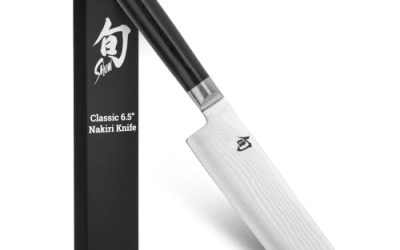
Shun Classic 6.5-Inch Nakiri (DM0728)
- Best for: cooks who want one premium vegetable blade to keep for years.
- Blade length: 6.5 inches
- Steel: VG-MAX core, 68-layer Damascus cladding
- Edge: 16 degrees per side, plain
- Handle: D-shaped Pakkawood
cooks who want one premium vegetable blade to keep for years.
the fine edge can chip if misused, and the handle runs slim, so cooks with large hands should check the grip before ordering.
The Shun Classic nakiri is the premium pick here, a handcrafted Japanese blade with a VG-MAX core wrapped in 68 layers of Damascus cladding. The 16-degree edge per side is finer than the German blades in this guide, so it glides through tomatoes and herbs with very little pressure. The D-shaped Pakkawood handle sits comfortably in the hand and suits smaller grips especially well. Shun backs the knife with free sharpening and honing service, which takes some of the maintenance worry out of owning a premium blade.
Watch out for: the fine edge can chip if misused, and the handle runs slim, so cooks with large hands should check the grip before ordering.
Wüsthof Classic 7-Inch Hollow Edge Nakiri (4193-7)
- Best for: owners of Wüsthof Classic knives and cooks who like a weighty, chip-resistant blade.
- Blade length: 7 inches
- Steel: high-carbon stainless, 58 HRC
- Edge: hollow (dimpled) edge, 10 degrees per listing
- Construction: forged, full tang, full bolster
owners of Wüsthof Classic knives and cooks who like a weighty, chip-resistant blade.
the full bolster complicates sharpening near the heel, and the dimples can catch on very dense vegetables, so expect a slightly different feel on the first few cuts.
The Wüsthof Classic nakiri is the heavy lifter of this group, a precision-forged German blade that uses its own weight to power through squash, sweet potatoes, and dense root vegetables. The hollow edge has shallow dimples that keep wet slices from clinging to the blade, which matters when you are cutting a pile of potatoes for a gratin. The full bolster and triple-riveted synthetic handle give a planted, familiar feel to anyone who already owns Wüsthof Classic knives, and the 58 HRC steel resists chips better than the harder Japanese blades here.
Watch out for: the full bolster complicates sharpening near the heel, and the dimples can catch on very dense vegetables, so expect a slightly different feel on the first few cuts.
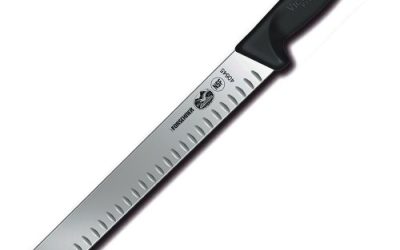
Victorinox Fibrox 7-Inch Granton Edge Santoku (6.8523.17)
- Best for: cooks who want a light, low-maintenance all-rounder.
- Blade length: 7 inches
- Steel: high-carbon stainless steel
- Edge: Granton edge
- Handle: Fibrox, non-slip
cooks who want a light, low-maintenance all-rounder.
the stamped blade is lighter and thinner than the forged knives here, so it suits slicing and dicing rather than forcing through very dense vegetables.
The Victorinox Fibrox santoku is the light all-rounder of this group, a stamped Swiss blade that covers vegetables, herbs, and fruit in one tool. The Granton edge keeps slices from sticking, the Fibrox handle stays secure with wet hands, and at just over three ounces the knife disappears in the hand during long prep. It is dishwasher safe and backed by a lifetime guarantee against defects in material and workmanship, which makes it the lowest-maintenance pick here. Cooks who want one knife for the whole board rather than a dedicated vegetable specialist will get the most from it.
Watch out for: the stamped blade is lighter and thinner than the forged knives here, so it suits slicing and dicing rather than forcing through very dense vegetables.
Which One Fits Your Situation
You chop vegetables every night
Pick the Tojiro DP or the Mercer Genesis. The Tojiro gives the sharpest out-of-box edge of the two and the most direct feel for push-cutting, while the Mercer gives a longer blade and a grip that stays secure when hands are wet. Either one handles a nightly pile of onions and carrots without asking for special care beyond hand washing.
You want one premium blade to keep for years
Pick the Shun Classic nakiri. The VG-MAX core and Damascus cladding hold a fine edge, the D-shaped handle suits long sessions, and the free sharpening service from the maker takes maintenance off your list. It asks for careful handling, but it rewards that care with the cleanest cuts in this group.
You already own German knives or prep dense vegetables
Pick the Wüsthof Classic nakiri. It matches a Wüsthof Classic set in steel, weight, and handle, and its heft powers through squash and sweet potatoes that stop lighter blades. The hollow edge keeps wet slices from sticking, which helps when the board is full of potatoes. If your set is German, this blade slots straight in.
You want a light knife that does more than vegetables
Pick the Victorinox Fibrox santoku. It is the lightest knife here by a wide margin, it moves between vegetables, herbs, and fruit without a second thought, and it is dishwasher safe. It is the right pick when one knife has to cover the whole board. The non-slip handle stays secure even with wet hands.
Common Mistakes
- Using a nakiri to cut through bones, frozen food, or hard squash rinds, which can chip a hard Japanese edge.
- Putting a hand-wash knife in the dishwasher, where heat and rattling dull the edge and loosen the handle.
- Choosing a blade by looks instead of checking blade length and weight against your hand and board.
- Rocking a flat-edged nakiri like a chef’s knife, which wastes the straight edge the shape is built for.
- Storing the knife loose in a drawer without a guard, where the edge knocks against other tools.
Frequently Asked Questions
What is a nakiri knife used for?
A nakiri is a Japanese vegetable knife with a straight, flat edge and a tall rectangular blade. It is built for push-cutting vegetables: slicing onions, dicing carrots, shredding cabbage, and mincing herbs. The flat edge meets the board along its full length, so cuts come out even without a rocking motion.
Is a santoku or a nakiri better for vegetables?
A nakiri is the more direct tool for straight-down vegetable chopping, because its flat edge cuts cleanly through a whole pile in one stroke. A santoku is the better all-rounder, because its slight curve also handles herbs, fruit, and the occasional piece of meat. Pick the nakiri for vegetable-heavy prep and the santoku for a mixed board.
Can I put these knives in the dishwasher?
Only the Victorinox Fibrox santoku in this guide is listed as dishwasher safe. The Tojiro, Mercer, Shun, and Wüsthof blades all ask for hand washing, because dishwasher heat and rattling dull edges and loosen handles over time. Wash by hand, dry at once, and store the blade in a guard or on a magnetic strip.
How do I keep a vegetable knife sharp?
Hone the edge with a rod or strop between sessions to keep it aligned, and sharpen on a whetstone when honing no longer brings the edge back. Use a wooden or plastic board rather than glass or stone, and keep the blade in a guard so the edge never knocks against other tools in a drawer.

Write Your Review
No reviews yet. Be the first to share your experience!