
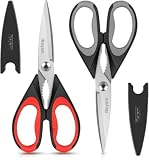
- Top Pick: KitchenAid All Purpose Kitchen Shears with Protective Sheath Durable Stainless Steel Scissors, Dishwasher Safe, Soft Grip Comfort Handle, 8.72 Inch, Black
- Best Value: iBayam Kitchen Scissors Shears All Purpose Heavy Duty, Protective Sheath
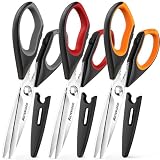
- Premium Choice: Astercook Kitchen Scissors, 3-Pack Heavy Duty Kitchen Shears with Stainless Steel Blades for Meat, Poultry, Herbs, Vegetables and Packaging, Dishwasher Safe
Disclosure: As an Amazon Associate we earn from qualifying purchases. We may receive a small commission when you buy through links on this page, at no extra cost to you. We only recommend products we genuinely believe offer value to home cooks.
As an Amazon Associate we earn from qualifying purchases at no extra cost to you.



A good pair of kitchen shears quietly does more work than half the knives in your drawer: spatchcocking a chicken, snipping herbs, opening packaging, trimming fat, and cutting pizza or parchment. The best kitchen scissors are sharp, comfortable, and come apart for cleaning. This guide compares top all-purpose and heavy-duty shears so you can find a pair that handles both delicate snipping and tougher poultry work.
Below you will find a quick comparison table, detailed picks with our take on each pair, and a buying guide covering the features that actually matter, from take-apart blades to micro-serration and pivot strength. Whether you want one do-everything pair or a heavier set just for breaking down chicken, there is an option here to match how you cook.
| Rank | Product | Best For | Buy |
|---|---|---|---|
| 1 | Joyce Chen Original Unlimited Kitchen Scissors | All-purpose everyday cutting | View on Amazon |
| 2 | Messermeister Take-Apart Kitchen Scissors (8-Inch) | Easy hygienic cleaning | View on Amazon |
| 3 | Messermeister 8.5-Inch Take-Apart Utility Shears | Heavy-duty multitasking | View on Amazon |
| 4 | KitchenAid All-Purpose Kitchen Shears | Budget micro-serrated grip | View on Amazon |
| 5 | Messermeister 8-Inch Take-Apart Scissors (Black) | Poultry and bones | View on Amazon |
Top Picks
1. Joyce Chen Original Unlimited Kitchen Scissors
A cult-favorite all-rounder. The torque-engineered blades cut through chicken bones, herbs, and packaging with surprisingly little effort, and the comfortable looped handles suit most hands. Many cooks who have tried pricier shears keep coming back to these.
2. Messermeister Take-Apart Kitchen Scissors (8-Inch)
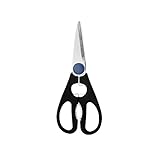
These pull fully apart so you can wash both blades thoroughly, which matters after cutting raw poultry. The handle also doubles as a screwdriver, nutcracker, jar opener, and bottle opener. Suitable for both left- and right-handed users.
3. Messermeister 8.5-Inch Take-Apart Utility Shears
A slightly larger, beefier take-apart pair built for heavier cutting jobs and bone work. Same easy-clean separation and multi-tool handle, with extra leverage for tougher tasks around the kitchen.
4. KitchenAid All-Purpose Kitchen Shears
An affordable everyday pair with micro-serrated blades that grip slippery foods and a soft, comfortable handle. The protective sheath keeps the edge safe in a drawer. A solid value choice for general kitchen use.
5. Messermeister 8-Inch Take-Apart Scissors (Black)
The same trusted take-apart design in a classic black finish. Strong enough for poultry joints and bones while still nimble for herbs, and the separating blades make sanitizing after raw meat simple.
What to Look For in Kitchen Shears
Three features separate great shears from frustrating ones. First, take-apart blades: scissors that separate let you clean every surface, which is essential after raw chicken. Second, blade material and micro-serration: stainless steel resists rust, and micro-serrations grip slick foods so they do not slide out. Third, handle comfort and leverage: a comfortable loop and a strong pivot point let you cut bones without straining. Extras like a built-in bottle opener or nutcracker are nice but secondary.
How to Choose: All-Purpose vs. Poultry Shears
All-purpose shears handle the widest range of tasks and are the right first pair for most kitchens. Dedicated poultry shears have a curved blade and a spring action built specifically for cutting through joints and small bones. If you break down whole chickens often, a heavier take-apart pair earns its place. For everyday snipping, an all-purpose pair is more versatile and easier to store.
Keeping Shears Sharp and Safe
Hand-wash and dry your shears rather than tossing them in the dishwasher, where they bump other items and dull faster. Take them apart to clean food from the pivot, and store them in a sheath or on a magnetic strip so the edges stay protected. A drop of food-safe oil on the pivot keeps the action smooth for years of reliable cutting.
Tasks Where Kitchen Shears Beat a Knife
Many cooks underuse their shears, reaching for a knife when scissors would be faster and safer. Spatchcocking a chicken by snipping out the backbone is far easier with shears than with a knife. Snipping fresh herbs like chives and dill directly over a dish keeps your hands clean and avoids bruising. Trimming fat and silver skin off meat, cutting bacon into pieces, opening tough plastic clamshell packaging, cutting pizza, dividing pita or naan, snipping kitchen twine, and trimming pie dough or parchment to size all go quicker with a good pair of scissors. Because the food is held between two blades, there is less chance of it slipping than when cutting against a board, which makes shears a genuinely safer tool for many small jobs. Keeping a dedicated pair within reach turns these everyday chores into one-second tasks.
Frequently Asked Questions
Why should kitchen shears come apart?
Separating blades let you wash both surfaces and the pivot completely, which is important for sanitation after cutting raw poultry or meat. It also makes drying easier so the blades do not rust.
Can kitchen shears cut through chicken bones?
Quality shears with strong pivots, like take-apart or poultry-specific pairs, cut through small joints and rib bones cleanly. For large bones, use a cleaver instead to avoid damaging the blades.
Are dishwasher-safe shears a good idea?
They are convenient, but repeated dishwasher cycles dull edges and trap moisture in the pivot. Hand-washing and drying keeps shears sharper and rust-free for longer.
What is the difference between kitchen shears and regular scissors?
Kitchen shears use heavier, often micro-serrated stainless blades, a stronger pivot for leverage, and frequently a take-apart design for sanitation. Regular scissors are not built for food or bone.
How do I sharpen kitchen shears?
Some take-apart shears can be honed on a fine sharpening stone or with a shears sharpener once separated. If they are inexpensive and badly dull, replacing them is often simpler than sharpening.




Write Your Review
No reviews yet. Be the first to share your experience!