
The Short Answer
For grating Parmesan, choose the fine-to-medium side of a box grater with holes about 1/16 to 1/8 inch wide (1.5 to 3 mm). This size produces a light, fluffy grate that melts quickly over pasta, soups, salads, and roasted vegetables.
Use holes closer to 1/16 inch (1.5 mm) for a powdery, almost snowlike texture. Choose holes around 1/8 inch (3 mm) when you want small shreds that remain more noticeable. The larger shredding side, commonly measuring about 1/4 inch (6 mm), is usually too coarse for finishing Parmesan, although it can work for very firm cheese when a rustic texture is acceptable.
As an Amazon Associate we earn from qualifying purchases at no extra cost to you.


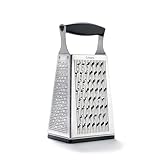
Most four-sided box graters include a fine grating surface, a medium shredding surface, a coarse shredding surface, and a slicing side. For Parmesan, start with the fine side and adjust based on the texture you prefer. A sturdy grater with a stable base, comfortable handle, and sharp stainless-steel teeth is more important than having the greatest number of sides.
Standard Sizes
Manufacturers do not use a universal hole-size standard, so the measurements below are practical size ranges rather than fixed industry categories. Tooth openings can also look smaller than the finished grate because the metal teeth lift and cut the cheese at an angle.
| Grater opening or feature | Approximate size in inches | Approximate size in centimeters | Best Parmesan result |
|---|---|---|---|
| Extra-fine zest or powder holes | 1/32–1/16 in. | 0.8–1.5 cm | Very fine powder for sauces and finishing |
| Fine Parmesan holes | 1/16–1/8 in. | 1.5–3 mm | Light, fluffy shreds; the best all-purpose range |
| Medium shredding holes | 1/8–3/16 in. | 3–5 mm | Small shreds with more bite and slower melting |
| Coarse shredding holes | 1/4–3/8 in. | 6–10 mm | Chunky shreds for gratins or a rustic topping |
| Typical four-sided grater height | 8–10 in. | 20–25 cm | Comfortable hand-grating capacity |
| Typical four-sided grater footprint | 3–4 in. wide by 2.5–3.5 in. deep | 7.5–10 by 6–9 cm | Counter and drawer planning |
When comparing models, look for wording such as “fine,” “zester,” or “hard cheese” rather than relying only on photographs. A fine side with closely spaced teeth should remove thin curls of Parmesan without forcing you to press hard. If the holes are too small and densely packed, the cheese can clog the surface. If they are too large, the cheese may break into thick, uneven pieces instead of a delicate grate.
A handheld rasp-style grater generally gives the finest result, but a box grater is more versatile and often easier to use with a large wedge. Current box graters commonly cost about $14 to $25. For example, a basic stainless-steel XL model may sell for about $13.99, while a four-sided OXO model with a container is around $24.71. Other models with containers or reinforced handles, including options from Svailse and Cuisipro, commonly fall near $17 to $24. Prices can change with finishes, bundles, and retailer promotions.
How to Measure Your Space
- Measure the storage location first. Use a tape measure to record the clear height, width, and depth inside the cabinet, drawer, or pantry area. A box grater that is 9 inches tall (23 cm) may not fit upright beneath a shelf.
- Allow room for your hand. If you plan to grate directly over a bowl, leave at least 2 inches (5 cm) of extra height above the grater for your grip and the Parmesan wedge. A narrow cabinet may hold the tool but still be inconvenient for use.
- Measure the grater body, not just the cutting panel. Include the handle, bottom rim, feet, and any attached container. A grater with a nominal 3-inch width may need closer to 4 inches of clearance at its widest point.
- Check the hole size with a ruler or caliper. Place a ruler beside the opening and estimate the widest part of the cutout. For greater accuracy, use a small digital caliper, but measure several holes because stamped metal can vary slightly from one opening to another.
- Measure the usable opening, not the raised tooth. The sharp metal flap above the hole is part of the cutting edge. Do not count its height as the opening size when deciding whether the surface is fine or coarse.
- Test a small piece of Parmesan. Grate one or two strokes and inspect the result. The finished pieces matter more than a listed measurement because tooth angles, spacing, and cheese hardness affect the texture.
By Room or Use Case
For Pasta and Table Finishing
Choose fine holes measuring about 1/16 to 1/8 inch (1.5 to 3 mm). This range creates airy shreds that distribute evenly across spaghetti, risotto, and soup. A grater around 8 to 10 inches tall is large enough for a comfortable grip without taking excessive counter space. A non-slip base is useful if you grate directly into a bowl.
For Cheese Boards and Salads
Use medium holes around 1/8 to 3/16 inch (3 to 5 mm) if you want Parmesan pieces that remain visible. These shreds add texture to Caesar salads, shaved vegetable salads, and cheese-board accompaniments. Select a box grater with a broad face if you expect to grate a large wedge, since a wider cutting area reduces the number of strokes.
For Sauces and Soups
Fine holes are usually the best choice because smaller particles dissolve or melt more quickly. For a smooth cheese sauce, grate Parmesan immediately before adding it to the pan. A fine rasp or fine box-grater side is preferable to coarse holes, which can leave larger pieces that melt unevenly.
For Baking and Chocolate
Medium or fine holes work for chocolate, cold butter, and firm ingredients, but use separate utensils if you want to avoid transferring savory flavors. A four-sided model is convenient when one tool must handle cheese, vegetables, ginger, and chocolate. Look for stainless steel, a comfortable handle, and dishwasher-safe construction if the manufacturer permits machine washing.
For Small Kitchens and Drawers
Choose a compact grater approximately 8 inches tall (20 cm) or shorter, or select a model that folds or stores flat. A removable container can catch Parmesan and may also serve as a storage box, but check its outside dimensions before buying. Allow at least 1/4 inch (6 mm) of clearance on each side so the tool does not scrape the drawer or become difficult to remove.
Common Sizing Mistakes
- Choosing the largest holes for speed. Coarse holes remove cheese quickly but create thick shreds that may not melt or spread evenly. For most Parmesan applications, fine or medium holes are more useful.
- Assuming every “fine” side is identical. One brand’s fine side may resemble another brand’s extra-fine side. Compare the actual openings and test a small piece when possible.
- Confusing slicer slots with grating holes. The broad, vertical openings on a box grater are often for slicing. They will not create Parmesan shreds.
- Ignoring the cheese temperature. Parmesan straight from the refrigerator is firm and easier to grate cleanly. A warm or damp piece can smear across fine teeth and make the holes appear less effective.
- Buying a grater that is too tall for storage. Measure the cabinet or drawer before choosing an XL model. Capacity is helpful, but an oversized grater can be awkward to store and handle.
- Skipping stability. Sharp teeth are not enough. Rubber feet, a broad base, and a secure top handle help keep the tool steady while you grate.
FAQ
What is the best hole size for grating Parmesan?
Use holes about 1/16 to 1/8 inch wide (1.5 to 3 mm). This fine-to-medium range creates light shreds that melt well and spread evenly. Choose the smaller end for a powdery finish and the larger end for more noticeable strands.
Can I use the coarse side of a box grater for Parmesan?
Yes, but the result will be chunky and less delicate. Coarse holes around 1/4 inch (6 mm) work for rustic toppings, baked dishes, and salads. They are not usually the best choice for a smooth sauce or evenly distributed pasta topping.
Are smaller Parmesan grater holes always better?
No. Extra-fine holes can produce a powderlike texture, but they may clog more easily and require slower strokes. Fine holes around 1/16 to 1/8 inch offer a useful balance between fluffy texture, speed, and easy cleanup.
How tall should a box grater be?
A height of 8 to 10 inches (20 to 25 cm) suits most home kitchens. Choose a shorter model for a small drawer or limited counter, and confirm that an XL grater fits your cabinet before buying. Also check the footprint, handle clearance, and whether an included container adds width or height.
Ready to decide? Our #1 pick for 2026 is the Extra-fine zest or powder holes.
Live price & availability on Amazon.





Write Your Review
No reviews yet. Be the first to share your experience!