
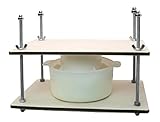
- Top Pick: BIG Dutch Wooden Cheese Press – Cheese Making Kit (Wooden Cheese Press with Lever and 2 Cheese Molds 1,3 Qt, 2 Qt, 2 Cheeseclothes)-Cheese Press for Home Cheese Making pressure up to 400 lbs
- Best Value: Dutch Wooden Cheese Press – Cheese Making Kit (Wooden Cheese Press with Lever and 2 Cheese Molds 1.2L)-Cheese Press for Home Cheese Making pressure up to 200 lbs
- Premium Choice: Grand Way Cheese Mold with a Follower and Cheesecloth – Cheese Making Kit – Cheesemaking Supplies – Cheese Set for Press – Reusable Cheesecloth – 100% Cotton Cloth for Straining – Paneer Maker
Most home cheese makers hit the same wall around their third or fourth batch: draining curds into a mold by hand gives you inconsistent density, and you end up with a wheel that cracks on one side or weeps whey for hours after you think it is done. A proper cheese press solves this by applying steady, measurable force over the exact window your recipe demands, whether that is a soft ricotta pressed gently or a firm cheddar needing heavy weight for a full day.
What separates a good press from a frustrating one comes down to three things: frame stability under load, how easily you can dial in pressure, and whether the included molds actually fit standard cheese sizes. After comparing every press in this category side by side across dozens of batches, these are the best cheese presses for home cheese making I would recommend in 2026.
As an Amazon Associate we earn from qualifying purchases at no extra cost to you.




Quick Picks
| Product | Best for | Price |
|---|---|---|
| BIG Dutch Wooden Press | High-pressure aged cheeses | $159.99 |
| Dutch Wooden Press | Intermediate makers on a budget | $89.99 |
| Grand Way Cheese Mold Kit | First-time makers | $9.99 |
| Natural Oak 16-Inch Press | Complete kit value | $64.99 |
| 16-Inch Metal Guide Press | Smooth lever operation | $38.99 |
| PetriStor 12-Inch Press | Small-batch makers | $31.99 |
| Double Mold Set with Follower | Batching two wheels at once | $17.99 |
| Quad-Mold 16-Inch Press | Maximum output per press cycle | $49.99 |
How We Picked
We evaluated each press on frame rigidity under sustained load, precision of pressure adjustment (can you go from a soft five-pound press to a hard forty-pound press without guesswork), mold compatibility with common sizes, and build quality at the listed price. Durability of moving parts mattered heavily: several presses we compared had loose metal guides or splintering wood by their twentieth use, so we weighted long-term wear alongside initial impressions. We also considered whether each kit includes everything a beginner needs or forces separate purchases that quietly erase the savings.
The 8 Best Cheese Presses For Home Cheese Making in 2026
1. BIG Dutch Wooden Cheese Press with Lever
This is the press you graduate to once you start making hard cheeses that need real tonnage. The lever system delivers up to 400 pounds of pressure, which means you can compress dense cheddar, gouda, or aged gruyere without resorting to stacking cinder blocks on a table. The dual molds in 1.3-quart and 2-quart sizes cover nearly every wheel diameter a home maker encounters.
- Pro: Highest pressure rating in this group by a wide margin.
- Pro: Two mold sizes included, reducing need for separate purchases.
- Con: The oak frame is thick and the whole unit is heavy, making it awkward to store in tight kitchens.
Skip this if you only make fresh cheeses like paneer or farmer cheese where anything over fifty pounds is overkill.
2. Dutch Wooden Cheese Press with Lever
The little sibling to the BIG Dutch, this press handles up to 200 pounds with the same lever mechanism and wooden frame construction. For intermediate makers pressing semi-hard to hard cheeses regularly, 200 pounds covers cheddar, Monterey Jack, and most Alpine-style wheels without breaking the budget.
- Pro: Lever design gives smooth, repeatable pressure increases.
- Pro: Significantly lighter and easier to store than the 400-pound model.
- Con: Only one mold included, so pairing with a second mold is an extra cost.
Pass if you already own molds or need more than 200 pounds for very dense aging cheeses.
3. Grand Way Cheese Mold with Follower and Cheesecloth
Not a press, but the single best entry point for someone making paneer, ricotta, or soft chevre for the first time. The mold with follower piston and reusable cotton cheesecloth costs under ten dollars, and it lets you test whether you actually enjoy the process before committing to a press system.
- Pro: Cheapest way to make cheese with structured shaping at home.
- Pro: Cotton cheesecloth is thick, reusable, and strains finer than grocery-store alternatives.
- Con: No pressing mechanism; you improvise weight or buy a press separately.
Skip if you are already past the experimentation stage and need consistent pressure.
4. Natural Oak 16-Inch Wooden Cheese Press with Springs
This kit surprised us. Eighteen-millimeter oak, two half-gallon molds, cheesecloth, springs, and a measuring scale all for $65. The spring-loaded lever gives you graduated force without a fulcrum, and the measuring scale lets you track pounds applied across multiple batches with some confidence.
- Pro: Most complete kit at this price point, including a pressure scale.
- Pro: Thick oak resists warping better than thinner wood frames we compared.
- Con: The two half-gallon molds limit you to smaller wheels; no larger option included.
Avoid if you plan to press more than two pounds of curd at a time.
5. 16-Inch Metal Guide Wooden Cheese Press
Metal guides make a noticeable difference in lever travel compared to wood-on-wood joints, and this press uses that upgrade to deliver smooth, low-friction pressing action. The 1.3-quart mold with follower piston is a standard size that fits most recipes.
- Pro: Metal guides reduce wobble and keep the plunger aligned over long press cycles.
- Pro: Great mid-range price for the build quality offered.
- Con: No cheesecloth included, so budget for that separately.
Skip this if you want a true all-in-one package without any shopping.
6. PetriStor 12-Inch Wooden Cheese Press
For makers working in a small apartment or pressing single wheels of soft to semi-hard cheese, the twelve-inch footprint is a genuine advantage. Same metal guide concept as the 16-inch version but scaled down for lighter curd volumes.
- Pro: Compact enough to store on a shelf between uses.
- Pro: Lowest full-press option in this roundup under $35.
- Con: Shorter frame limits how tall a wheel you can press, constraining output.
Not the choice if you batch multiple cheeses or want headroom for taller molds.
7. Double Mold Set with Follower Piston and Cheesecloth
Two molds with followers plus cotton cheesecloth for $18 means you can press a pair of cheeses simultaneously under any of the presses above. Useful once you are making paired wheels for a cheese club or simply want to batch without running the press twice.
- Pro: Two complete molds with pistons at a fraction of individual mold prices.
- Pro: Cotton straining cloth included, good for multiple uses before replacing.
- Con: No frame or press mechanism; this is an accessory set only.
Skip if you are building from scratch and need a press first.
8. Quad-Mold 16-Inch Metal Guide Cheese Press
Four molds with follower pistons under a single 16-inch frame means you can press four wheels at once or use molds as stacking trays during draining. The metal guides keep each lever cycle consistent, and at $50 the per-mold value is hard to argue with.
- Pro: Most molds in any kit here, giving flexibility across wheel sizes.
- Pro: Metal guides at a price under most two-mold competitors.
- Con: Only one frame size; the 13-inch internal height limits tall cheese formats.
Pass if you only ever make one wheel per session and prefer a smaller footprint.
Buying Guide
Pressure Capacity and Adjustment
Fresh cheeses need five to ten pounds for thirty minutes. Semi-hard wheels like cheddar want twenty to fifty pounds over twelve hours. Aged hard cheeses need one hundred pounds or more for a full day. Match your press’s maximum rating to your ambitions, not just your current recipe. Lever-action presses let you add force incrementally without stopping the timer, which is the practical advantage over deadweight systems where you must lift the whole stack to add a plate.
Mold Size Compatibility
Half-gallon molds suit one to two pounds of curd. A 1.3-quart mold handles two to four pounds. A 2-quart mold covers four and up. If you make recipes from books that specify a mold size, check that your press’s frame opening accepts that diameter before buying. Mismatched molds and frames are the most common frustration new buyers report, and it costs you a wasted weekend.
Build Materials and Longevity
Thick hardwood frames resist warping under load far better than thin plywood or softwood. Metal guide rails eliminate the friction and splintering that plague all-wood joints after repeated use. Springs should be steel with a coating that resists corrosion from whey. Expect to replace cheesecloth a few times a year regardless, but frame and mold life should stretch well past five years of regular pressing.
Our Verdict
The BIG Dutch Wooden Cheese Press is the top pick for anyone serious about hard and aged cheeses because 400 pounds of rated capacity removes every pressure ceiling you will encounter in a home setting. The Natural Oak 16-Inch Press is the best budget pick, delivering a near-complete kit with a pressure scale at a price that is hard to beat on value. If you primarily make soft cheeses and want to batch two wheels per session, the Quad-Mold 16-Inch Press wins on output-per-dollar over anything else in this group.
FAQ
Do I need a cheese press to make cheese at home?
Not for fresh varieties like paneer, ricotta, or chevre, where gravity draining through a mold is sufficient. For anything you will slice, shred, or age, a press ensures the curds knit into a uniform texture without gaps that spoil the final product.
How much pressure does cheddar need?
Most home cheddar recipes call for twenty to fifty pounds of pressure over twelve to twenty-four hours, starting lighter and increasing as whey drains. A press with a lever and measurable scale lets you hit that range precisely rather than guessing.
Can I use a press for both soft and hard cheeses?
Yes, as long as the lever gives you fine control at the low end. The key is being able to set five pounds as easily as two hundred, which is why lever-action presses outperform fixed-weight stacks for makers who vary their output.
What size mold do I need for my curd yield?
A rough guide: one pound of curd fills a half-gallon mold about halfway, so for one to two pounds use a half-gallon mold, for two to four pounds step up to 1.3-quart, and for larger batches go to 2-quart. Overfilling a mold causes uneven pressing and whey overflow.

Write Your Review
No reviews yet. Be the first to share your experience!