
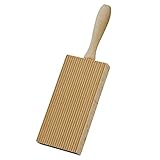
- Top Pick: Fante’s Gnocchi Board, Beechwood, Made In Italy, For Shaping Gnocchi, Adding Texture, Holding More Sauce, And Traditional Italian Cooking
- Best Value: NEYZIG Gnocchi Board Wood Pasta Board Paddle Homemade Gnocchi Maker
- Premium Choice: Gnocchi Board with One-Hand Operation Design, Large Gnocchi Maker Paddle for Homemaking Gnocchi Pasta
Rolling gnocchi and cavatelli by hand without a dedicated board is where good intentions fall apart. Dough sticks to the fork, ridges come out shallow or crushed, and the little grooves that are supposed to catch sauce barely show up after boiling. The result is gnocchi that go slick and slide sauce off instead of holding it, and cavatelli that lose their curl and turn gummy in the middle.
A good board fixes that with deep, sharp ridges, a smooth but not slippery wood surface, and a shape that lets you press and roll in one clean motion. The best boards feel stable under your palm or fingertips, release dough cleanly without flour caking in the grooves, and give you consistent texture every time. The worst ones feel wobbly, crack after a few washes, or have ridges so shallow they might as well be decorative.
As an Amazon Associate we earn from qualifying purchases at no extra cost to you.




Quick Picks
| Product | Best for | Price |
|---|---|---|
| Fante’s Gnocchi Board | Best for Traditional Texture | $10.99 |
| NEYZIG Gnocchi Board | Best Simple Paddle | $7.99 |
| One-Hand Operation Gnocchi Board | Best for One-Handed Use | $9.98 |
| Cuisinox Wooden Board | Best Budget Pick | $6.6 |
| Gnocchi Board Set 4 | Best Multi-Tool Kit | $13.99 |
| KneadEat Wood Set | Best for Butter and Dough Work | $12.99 |
| Curved 6.5 Inch Paddle | Best Curved Design | $8.99 |
| Yuanan 6 PCS Set | Best for Large Batches | $19.47 |
How We Picked
We focused on the details that actually change your results at the counter: how crisp and deep the ridges are and whether they create texture that survives boiling, the quality and finish of the wood and how it handles flour, moisture and repeated washing, the comfort and control of the shape in your hand whether you roll with fingertips or the heel of your palm, and how versatile and easy to clean the board is for both gnocchi and cavatelli as well as related small shapes.
The 8 Best Gnocchi Boards And Cavatelli Makers in 2026
1. Fante’s Gnocchi Board
This is the board for cooks who want the classic Italian approach without overthinking it. Made in Italy from beechwood, Fante’s hits the familiar paddle shape most nonnas still use, with well-cut ridges that press a defined pattern into soft potato dough and firmer cavatelli dough alike. It excels at adding texture that holds more sauce, so butter, pesto and ragu cling instead of pooling at the bottom of the bowl.
- Pro: Excellent ridge definition made for traditional sauce-holding texture
- Pro: Solid beechwood build with a comfortable, proven paddle profile
- Con: Single paddle only, so you will need separate tools if you want cutters or rollers
Skip it if you want a full kit with rollers and cutters in one purchase. This one is purposely simple and does one job very well.
2. NEYZIG Gnocchi Board
The NEYZIG is for anyone who wants an affordable, no-fuss wood paddle to learn on. The form is straightforward and lightweight, easy to hold at an angle on the counter and roll dough toward you with your thumb. It leaves a clean, even groove pattern and releases dough readily when lightly floured, which makes it forgiving for beginners still dialing in pressure.
- Pro: Simple and intuitive to use for homemade gnocchi
- Pro: Wood surface is easy to flour and wipe clean after shaping
- Con: Basic design offers less stability than wider, heavier boards
Skip it if you shape very large batches and prefer a broader board that stays planted with minimal hand pressure.
3. One-Hand Operation Gnocchi Board
Designed for cooks who want more control with less effort, this large paddle is shaped for one-hand operation. You can anchor it with your palm and roll with your thumb without needing to steady it with the other hand, which keeps flour off your fingers and speeds up repetitive rolling. The larger surface gives you a longer ridge run, so each piece gets full texture in one stroke.
- Pro: Ergonomic one-hand design frees the other hand for portioning dough
- Pro: Large surface helps produce consistent, well-textured pieces quickly
- Con: Bulkier profile takes more drawer space than compact paddles
Skip it if you have very limited storage or prefer a small, nimble board for delicate, bite-size shapes.
4. Cuisinox Wooden Gnocchi and Cavatelli Pasta Board
Cuisinox keeps it compact and budget friendly with an 8″ x 5″ beachwood board that covers both gnocchi and cavatelli. The board is light, easy to maneuver, and sized to sit flat without rocking, so you get stable contact on the counter. Ridges are cleanly milled and work well for pressing pillowy gnocchi as well as rolling cavatelli with a fingertip drag.
- Pro: Versatile for both gnocchi and cavatelli on one surface
- Pro: Very low price and compact footprint for small kitchens
- Con: Smaller working area means more repositioning during big batches
Skip it if you routinely make dough for a crowd and want a longer board that lets you roll multiple pieces in sequence.
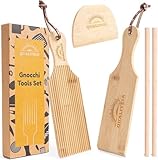
5. Gnocchi Board Set 4
This set is for the cook who wants the whole shaping station, not just a paddle. You get two paddles, two rollers and a cutter, all in bamboo, so you can roll garganelli, cavatelli and other small shapes, portion ropes evenly, and even use the paddles for butter work. The variety encourages experimentation and helps keep sizes uniform, which improves even cooking.
- Pro: Complete kit with paddles, rollers and cutter for multiple shapes
- Pro: Bamboo is lightweight and smooth, with easy cleanup
- Con: More pieces to store and keep organized between uses
Skip it if you want a single, minimal paddle and do not plan to make cut or rolled pasta beyond gnocchi.
6. KneadEat Gnocchi Board Wood Set
KneadEat bridges pasta making and general dough work with a wood set that pairs a cavatelli and gnocchi board with butter paddles. The board side handles ridging and curling, while the flat paddles help with portioning, lifting and shaping without warming the dough too much with your hands. It is a practical choice for cooks who alternate between pasta, pastry and butter shaping.
- Pro: Useful pairing of pasta board plus butter paddles for broader kitchen tasks
- Pro: Wood construction feels sturdy and balanced in the hand
- Con: As a set, it is less compact than a single-paddle board
Skip it if you only need one dedicated gnocchi board and want the smallest possible tool.
7. Curved 6.5 Inch Paddle
The curved 6.5 inch beech wood paddle is built for comfort and release. The gentle curve cradles your palm, the grooved surface bites into dough cleanly, and the compact length gives you fine control over pressure. It is notably easy to use and to clean because flour does not pack into the grooves and the board dries quickly after a rinse.
- Pro: Curved, ergonomic profile that improves control and reduces hand fatigue
- Pro: Grooved surface creates well-defined ridges while releasing easily
- Con: Shorter board requires a bit more repositioning for long dough ropes
Skip it if you prefer a flat, wide board that you can plant fully on the counter for maximum stability.
8. Yuanan 6 PCS Set
Yuanan is the batch-cooking option, with six pieces sized at 9.4 x 2.7 inches each. Having multiple identical wood boards means you can flour several at once, rotate as one gets tacky, or set up a small assembly line with family. The longer, narrower profile is well suited to rolling cavatelli and small gnocchi with a quick thumb flick.
- Pro: Six boards support high-volume shaping and sharing the work
- Pro: Long narrow shape gives a smooth, controlled roll for cavatelli
- Con: Highest price in this roundup and more items to store
Skip it if you cook for one or two and do not need a multi-board setup for volume.
Buying Guide
Ridge Depth and Pattern Matter More Than Looks
The point of the board is texture that survives the pot and grabs sauce. Look for ridges that feel crisp when you run a fingernail across them and that run straight and evenly edge to edge. Shallow or uneven milling will press a faint pattern that fades as dough relaxes and boils, leaving you with smooth, sauce-slick gnocchi. Before you buy, think about the sauce you serve most: chunky ragu and pesto cling best to deeper grooves, while delicate butter and sage still benefit from a fine, consistent texture.
Wood, Shape and How You Hold the Board
Beechwood and bamboo dominate for a reason. Both are hard enough to hold sharp ridges, light enough to handle for long sessions, and smooth enough to release dough with just a dusting of flour. Flat paddles give maximum counter stability, curved paddles reduce wrist strain and help thumb-rolled cavatelli curl naturally, and narrow boards favor fingertip control. If you work one-handed or like to portion with the other hand, favor a larger or curved paddle that stays put with palm pressure alone.
Size, Sets and Cleanup
Compact boards store easily and feel nimble for small, delicate pieces, while larger boards speed up batch work and keep your motion consistent. Sets with rollers and cutters add real value if you make garganelli, cavatelli and other rolled shapes, but they also need storage space and a quick maintenance routine. Whichever you choose, plan on light flouring during use, a gentle brush or rinse after, and thorough air drying. Avoid long soaking, which can raise grain and dull ridges over time.
Our Verdict
For most home cooks, the Fante’s Gnocchi Board is the top pick because its beechwood build and classic Italian ridge profile deliver reliable, sauce-holding texture without extra complexity. If price is the priority, the Cuisinox Wooden Gnocchi and Cavatelli Pasta Board at $6.6 is the clear budget pick and handles both gnocchi and cavatelli well in a compact form. If you want to cover multiple shapes or cook in volume, choose the Gnocchi Board Set 4 for its paddles, rollers and cutter, or the Yuanan 6 PCS Set when you need several boards for assembly-line production.
FAQ
Do I really need a gnocchi board if I have a fork?
A fork can make a pattern in a pinch, but a board gives deeper, more uniform grooves and a shape that rolls dough into a light curl. That texture holds sauce better and helps gnocchi cook more evenly than fork-pressed pieces.
Which wood is better for gnocchi boards, beechwood or bamboo?
Both work well when the finish is smooth and the ridges are well cut. Beechwood is the traditional choice with a dense, sturdy feel, while bamboo is lightweight and dries quickly. Pick based on comfort, weight and whether you prefer a single paddle or a bamboo-based set.
How do I keep dough from sticking to the board?
Use a light dusting of flour or semolina on the board and on the dough pieces, and keep pressure moderate. If dough starts to tack up, brush off excess flour, re-dust lightly, and let the board air dry for a moment before continuing.
Can one board make both gnocchi and cavatelli?
Yes. Most grooved paddles handle both: gnocchi are rolled to imprint ridges, cavatelli are rolled and dragged to curl slightly. A wider or longer grooved surface simply makes it easier to get consistent texture on either shape.
Write Your Review
No reviews yet. Be the first to share your experience!