
Choosing between synthetic rubber and wood for a meat cutting board is less about finding one universally “better” material and more about deciding what matters in your kitchen: grip, knife feel, cleanup, appearance, storage, and long-term cost. Synthetic rubber can be quiet, cushioned, and exceptionally stable on the counter. Wood offers a more traditional cutting surface, a warmer appearance, and a broad range of sizes and prices.
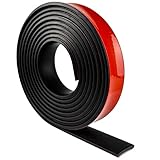
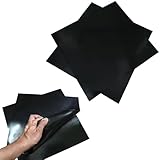
The important distinction is that not every rubber sheet or gasket material is suitable for direct food contact. Products such as LSGCQ Neoprene Rubber Strips with Adhesive Backing Rubber Sheets, priced at $12.99, and the $9.99 HTJZWG Neoprene Rubber Sheet, Rubber Gasket Material, may be useful for household projects, but a buyer should not automatically treat them as cutting boards. For meat preparation, choose a purpose-made, food-contact-rated synthetic rubber board or mat with clear care instructions.
As an Amazon Associate we earn from qualifying purchases at no extra cost to you. Product prices and availability are accurate as of the date shown and are subject to change.

Quick Verdict
Choose synthetic rubber if you prioritize a non-slip surface, quiet chopping, easy storage, and low-maintenance cleanup. It is particularly practical for small kitchens, cramped counters, and cooks who frequently portion meat or fish.
Choose wood if you want a substantial butcher-block feel, attractive presentation, and a board that can be sanded and refinished over time. A properly maintained hardwood board is often the more satisfying choice for a long-term home kitchen, especially when you regularly prepare large roasts, whole chickens, or multiple ingredients at once.
For either material, use separate boards or carefully managed zones for raw meat and ready-to-eat foods. Wash the surface promptly after raw poultry, beef, pork, or seafood, and follow the manufacturer’s sanitation instructions.
Side by Side
| Factor | Synthetic rubber | Wood |
|---|---|---|
| Comfort | Soft, quiet, and forgiving under the knife; helpful during extended prep | Firm, stable, and comfortable when thick enough; harder on the hands if thin or poorly finished |
| Durability | Resists cracking and moisture damage, but can develop cuts, gouges, or edge wear | Can last for many years and may be sanded; can split, warp, or stain if neglected |
| Price range | About $20–$100 for a food-safe board or professional-style mat | About $20–$150, with premium hardwood blocks costing more |
| Maintenance | Usually hand-wash, rinse, and dry; avoid unapproved chemicals and high heat | Hand-wash, dry promptly, and apply food-safe mineral oil periodically |
| Space needed | Often thinner and easier to roll or store; common sizes include 12 by 18 inches | Thicker and heavier; common butcher-block sizes range from 12 by 18 to 18 by 24 inches |
| Look | Functional, modern, and available in neutral colors | Natural grain, traditional warmth, and suitable for serving |
| Resale or reuse | Limited resale appeal; may be repurposed as a non-slip work mat | More attractive for resale or reuse if the wood remains sound and well maintained |
| Best for | Meat-heavy prep, apartments, shared kitchens, and low-noise cooking | Everyday cooking, carving, entertaining, and long-term kitchen use |
Where Synthetic Rubber Wins
The biggest advantage of synthetic rubber is control. A quality rubber cutting surface grips the counter better than many lightweight plastic boards and is less likely to slide when you are trimming a brisket or breaking down chicken. That stability can be especially useful on smooth quartz, laminate, or stainless-steel counters.
Rubber also reduces noise. The material absorbs some of the sound from chopping, cleaver work, and setting down a heavy pan. In an apartment or open-plan kitchen, that quieter performance can matter more than appearance. A rubber board is also less likely to chip or shatter if it is dropped.
Storage is another strength. A board approximately 12 by 18 inches and less than one inch thick can fit in a narrow cabinet, beside a refrigerator, or in a drawer designed for vertical storage. Some flexible mats can be rolled, although a permanently curled edge is a safety problem, so they should lie flat before use.
Cleanup can be straightforward because rubber does not require oiling. Still, “low maintenance” does not mean “maintenance free.” Meat juices can remain in knife marks, and rubber may retain odors if it is not washed promptly. Use hot water and dish soap when the product allows it, scrub both sides, and dry it fully. Never assume that a neoprene sheet, adhesive-backed rubber, or gasket material is safe for food contact. Adhesives and industrial fillers are not intended for a cutting surface.
Rubber is gentler in feel than a hard countertop, but it is not automatically kinder to knives than every wood board. A very soft or heavily textured surface may drag beneath the blade, while a deeply scarred board can become difficult to clean. Replace or retire a rubber board when cuts are deep, the material begins shedding, or the surface can no longer be cleaned effectively.
Where Wood Cutting Board for Meat Wins
Wood delivers the classic cutting-board experience: a solid surface, natural grain, and enough weight to stay put without relying entirely on rubberized traction. Dense hardwoods such as maple, walnut, and cherry are popular because they are durable and attractive. Bamboo is also common, though it is technically a grass and can feel harder under the knife than some traditional hardwoods.
A wood board is often the better choice for large-format meat preparation. A 16-by-22-inch board weighing roughly 8 to 15 pounds gives you room for a roast, trimming scraps, a chef’s knife, and a bowl without everything crowding the edges. A deep juice groove can help contain liquid from a steak or roast, but it also reduces the uninterrupted cutting area.
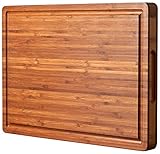
Wood is also more versatile visually. A reversible, thick board can move from raw-meat preparation to carving or serving, provided it is thoroughly washed and sanitized between uses. The $21.99 Allsum Extra Thick Wood Cutting Board for Kitchen, Reversible and Durable represents the lower-priced end of substantial wood-board shopping. At the more presentation-focused end, the $36.97 ROYAL CRAFT WOOD Wooden Cutting Boards for Kitchen Appliances set combines bamboo boards with features such as side handles and a deep juice groove.
The tradeoff is care. Do not put a wood board in the dishwasher or leave it submerged in a sink. Wash it by hand, wipe away standing water, and store it on edge or with airflow underneath. When the surface begins to look dry, apply food-safe mineral oil; board cream containing beeswax can add a moisture-resistant finish. Oiling frequency depends on use and climate, but a new board may need attention every few weeks before settling into a less frequent schedule.
Cost Over 5 Years
Initial price is only part of the comparison. A basic food-safe synthetic rubber board may cost $20–$40, while a thicker commercial-style model may cost $60–$100. If it lasts five years, that works out to approximately $4–$20 per year. Replacing a worn board once during that period could raise the total to $40–$200.
Wood offers a similar range. A useful entry-level board may cost $20–$40, a durable hardwood board $50–$100, and a large premium block $120–$150 or more. Add approximately $8–$15 for mineral oil and conditioner over five years, assuming one bottle or tin is enough for ordinary home use. A $60 board maintained properly may therefore cost about $70–$75 over five years, or $14–$15 per year.
These estimates exclude dishwasher damage, accidental cracking, and replacement knives. The least expensive option is usually the one that matches your cleaning habits. A low-cost wood board that is repeatedly soaked may have a shorter life than a pricier rubber board, while an inexpensive non-food-grade rubber sheet should not be used for meat preparation at all.
Which One for Your Home
Small apartment
Pick synthetic rubber if counter space and storage are limited. A 12-by-18-inch board provides enough room for everyday steak, chicken, and vegetable prep while remaining manageable at around 2–6 pounds, depending on thickness. Its lower noise level is also considerate in a compact building. If you prefer wood, choose a board no larger than 14 by 18 inches and look for a built-in grip or nonslip feet.
Family with kids or pets
Wood is a strong choice when you need a broad, heavy surface that is difficult to shift accidentally. A board around 16 by 20 inches can keep raw meat and trimmings contained. Synthetic rubber can work well too, particularly if children are nearby during cooking, because it is quieter and less likely to slide. In either case, store the board upright or in a secured cabinet and sanitize it after raw-meat use.
Rental
Synthetic rubber usually makes the most sense for renters. It protects the counter from knife marks, weighs less during a move, and does not require a dedicated storage stand. Confirm that the surface is food-contact rated and that cleaning products will not damage it. A modestly priced wood board is also practical if you want a serving piece that can move with you, but avoid leaving it wet on a rental countertop.
Long-term home
Choose wood if you want one central board that can serve as a prep surface, carving station, and entertaining piece for years. Spend more on adequate thickness—at least 1 to 1.5 inches for a substantial butcher-block feel—and maintain it consistently. Consider a separate synthetic rubber board for raw poultry or messy trimming, allowing the wood board to remain focused on general prep and serving.
FAQ
Is synthetic rubber safe for cutting meat?
Only when it is specifically made and labeled for food contact. Neoprene sheets, adhesive-backed strips, gasket material, and workshop mats are not automatically suitable. Look for a food-contact statement, intended-use instructions, and cleaning guidance from the manufacturer.
Does wood harbor more bacteria than rubber?
Neither material is safe if it is deeply cracked, heavily grooved, or poorly cleaned. A sound wood board and a sound food-safe rubber board can both be hygienic when washed promptly after meat preparation. Use separate boards for raw meat and ready-to-eat foods if possible.
Which material is better for knives?
Both can be knife-friendly when the surface is in good condition. Wood generally provides a familiar, firm cutting feel. Rubber is softer but may feel draggy if it is very flexible or textured. Avoid cutting directly on glass, stone, or ceramic, which are substantially harsher on edges.
Can I put either board in the dishwasher?
Assume no unless the manufacturer explicitly says otherwise. Dishwasher heat and prolonged moisture can warp wood and may degrade rubber, adhesives, or surface treatments. Hand-wash, rinse, and dry the board completely after preparing meat.
Ready to decide? Our #1 pick for 2026 is the Comfort.
Live price & availability on Amazon.






Write Your Review
No reviews yet. Be the first to share your experience!