
A plastic cutting board is easy to sanitize deeply, but only after it has been thoroughly cleaned. Food particles, grease, and juice can collect in knife grooves, along handles, and around the board’s edges. Spraying disinfectant onto that buildup may leave bacteria protected beneath the residue, while using too much heat or harsh chemicals can warp the plastic or leave an unwanted odor.
The safest method is a two-stage process: wash away visible soil first, then sanitize with either a dishwasher’s sanitizing cycle or a properly diluted, unscented chlorine-bleach solution. This guide explains how to sanitize a plastic cutting board deeply in 2026, including what to do when the board has deep knife marks or lingering stains.
As an Amazon Associate we earn from qualifying purchases at no extra cost to you. Product prices and availability are accurate as of the date shown and are subject to change.

Quick answer: Our top pick in 2026 is the Hot water — our #1 rated choice. See the full ranked comparison, alternatives and buying advice below.
What You Need
| Item | Why | Optional? |
|---|---|---|
| Hot water | Helps loosen grease and food residue during washing. | No |
| Dish soap | Breaks down oils and lifts food particles before sanitizing. | No |
| Nonabrasive scrub brush or clean sponge | Reaches knife grooves without unnecessarily damaging the surface. | No |
| Unscented liquid chlorine bleach | Provides a practical sanitizing option when used according to the label. | Yes, if using a dishwasher sanitizing cycle |
| Measuring spoon and clean container | Allow you to make a correctly diluted bleach solution. | Yes |
| Dishwasher | Provides high-temperature washing and, on some models, a sanitizing cycle. | Yes |
| Clean dish towel or drying rack | Lets the board dry completely after sanitation. | No |
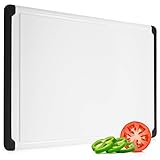
| Plastic cutting board | Examples include an 18-inch Belwares board, often priced around $20 to $21, or an 11-by-14-inch FARBERWARE board, often around $6 to $7. | No |
Always check the board’s care instructions before using a dishwasher or bleach. Use only regular, unscented liquid chlorine bleach intended for disinfection. Do not use splashless, scented, gel, or mixed cleaning products unless the product label specifically says they are suitable for sanitizing food-contact surfaces.
Step-by-Step
1. Separate the board from other dishes (1 minute)
Move the cutting board away from ready-to-eat foods, clean utensils, and clean dishes. If you used the board for raw poultry, meat, or seafood, handle it as a contaminated surface until the entire process is complete.
Wash your hands with soap and water for at least 20 seconds if they touched raw food. Do not place a visibly dirty board directly into a sink full of clean dishes, and do not wipe it with a towel used for drying hands or countertops.
2. Scrape off food debris (1 to 2 minutes)
Use a spatula, bench scraper, or the dull edge of a knife to remove stuck-on food. Work over the trash or compost bin rather than rinsing large scraps into the drain. Pay particular attention to the handle, rubber feet, perimeter, and any textured areas.
Avoid using the sharp edge of a knife as a scraper. New cuts make the board harder to clean and can create more places for food residue to collect.
3. Wash with hot, soapy water (2 to 4 minutes)
Wet the board with hot tap water, apply dish soap, and scrub both sides with a clean sponge or nonabrasive brush. Use firm, overlapping strokes across the entire surface. Spend extra time on visible knife grooves, corners, and the area around any handle opening.
Rinse until no soap, grease, or food particles remain. If the board still feels slippery, smells strongly of food, or has visible residue, repeat the wash. Sanitizing cannot reliably replace this cleaning step.
4. Choose a sanitizing method (1 minute)
For a dishwasher-safe board, the dishwasher is usually the simplest option. Place the board so water can reach both sides, and make sure it does not block the spray arms. Use the hottest cycle permitted by the manufacturer. If your machine has a sanitizing cycle, select it, but do not assume every dishwasher cycle sanitizes food-contact items.
If hand-sanitizing, prepare a bleach solution according to the bleach label. A commonly used dilution is 1 tablespoon of regular, unscented liquid chlorine bleach per gallon of water, but label directions take priority because bleach concentrations vary. For a smaller batch, use the exact proportion stated on the label rather than estimating.
5. Apply the sanitizer (1 to 2 minutes)
For the bleach method, place the washed board in a clean sink or basin and cover every surface with the solution. You can also apply it with a clean spray bottle reserved for that purpose. Keep the surface visibly wet for the contact time listed on the bleach label. If no food-contact direction is provided, do not guess; use a product specifically labeled for food-contact surface sanitizing.
Never mix bleach with vinegar, ammonia, alcohol, dish soap, or another cleaner. Mixing chemicals can create dangerous fumes. Open a window or run ventilation, keep children and pets away, and wear gloves if the label recommends them.
6. Rinse when the label requires it (1 minute)
Some sanitizing products for food-contact surfaces require a potable-water rinse; others specify that rinsing is not needed at the stated dilution. Follow the product label exactly. When rinsing is required, use clean running water and rinse both sides thoroughly.
Do not use a fragranced household disinfectant simply because it is convenient. Products made for floors, bathrooms, or general hard surfaces may not be appropriate for a surface that touches food.
7. Air-dry completely (several hours)
Stand the board upright in a clean dish rack or lean it so air can circulate around both sides. Allow it to dry completely before storing it. Air-drying reduces the chance that moisture will remain in grooves or underneath the board.
If you must dry it immediately, use a freshly laundered towel reserved for clean dishes. Do not stack a damp board in a cabinet or lay it flat on a wet countertop.
8. Inspect before putting it away (2 minutes)
Run your fingers over the surface only after it has cooled and dried. Look for deep grooves, raised plastic splinters, warping, black spots, mold-like growth, or a persistent odor. A few shallow marks are normal, but damage that prevents thorough scrubbing is a sanitation concern.
Mistakes to Avoid
- Sanitizing before cleaning: Grease and food debris can interfere with the sanitizer.
- Using boiling water on an unapproved board: Very hot water can warp some plastics. Use the dishwasher settings and care instructions recommended by the manufacturer.
- Making bleach “stronger”: Extra bleach does not automatically make a board safer and can leave residue or damage the plastic.
- Mixing cleaners: Never combine bleach with vinegar, ammonia, acids, or other disinfectants.
- Using steel wool: It can scratch the board and leave metal particles behind. Choose a clean nylon brush instead.
- Using one board for everything: If possible, designate separate boards for raw animal foods and produce or bread.
- Ignoring the underside: Bacteria and residue can remain on the bottom, especially around nonslip feet.
- Storing it while damp: Trapped moisture encourages odors and microbial growth.
How Often
Wash the board after every use. Sanitize it after cutting raw meat, poultry, seafood, or eggs; after preparing food for someone with a weakened immune system; and whenever the board has touched a potentially contaminated surface. A deep cleaning and sanitizing routine is also sensible after preparing especially messy foods or before switching from raw ingredients to ready-to-eat foods.
For a board used only for bread, fruit, or vegetables, regular washing may be sufficient most of the time, but sanitize it periodically and whenever it develops an odor or visible residue. Keep raw-food and produce boards separate when practical, and never rely on color alone to determine whether a board is clean.
When to Call a Pro or Replace
Most plastic cutting boards do not need professional cleaning. Replace the board if it is deeply scored, warped, cracked, peeling, shedding plastic, or impossible to scrub smooth. Replace it immediately if mold-like growth or a strong odor remains after repeated washing and sanitizing.
A board with shallow knife marks can remain usable if it still washes clean and dries fully. However, replacement is usually inexpensive: basic plastic boards commonly range from about $6 to $21, depending on size, thickness, handle design, and construction. A larger 18-inch board may provide more workspace, while an 11-by-14-inch board is easier to fit in many dishwashers.
FAQ
Can I sanitize a plastic cutting board with vinegar?
Vinegar can help with odors and some household cleaning tasks, but it should not be treated as a dependable substitute for a properly labeled sanitizer. Wash the board first, then use a dishwasher sanitizing cycle or an approved bleach-based food-contact sanitizer according to its instructions.
How long should bleach stay on a cutting board?
Follow the contact time printed on the bleach or sanitizer label. The surface must remain visibly wet for that entire period. If it dries early, reapply enough solution to keep it wet for the full required time. Do not extend the time or increase the concentration without label guidance.
Can a plastic cutting board go in the dishwasher?
Only if the manufacturer labels it dishwasher-safe. Place it securely so it cannot contact a heating element or block the spray arms. Remove it if you notice warping, softening, or cracking after dishwasher use.
Why does my cutting board still smell after sanitizing?
Odors can remain in deep knife grooves, around rubber feet, or in a board that has absorbed grease over time. Repeat the wash step, inspect the underside, and let the board air-dry completely. If the odor persists or the surface is heavily damaged, replacement is the safer and more practical choice.
Ready to decide? Our #1 pick for 2026 is the Hot water.
Live price & availability on Amazon.





Write Your Review
No reviews yet. Be the first to share your experience!