
- Top Pick: CONSDAN Butcher Block Counter Top, Walnut Solid Hardwood Countertop, Wood Slabs for Kitchen, Reversible, Both Side Polished, Prefinished with Food-safe Oil, 1.5" Thickness, 24"x25"
- Best Value: Thirteen Chefs Mineral Oil – 8 oz Food Grade Conditioner for Wood Cutting Board, Countertop & Butcher Block, Lubricant for Knife or Meat Grinder – Safe USP Finish on Marble, Soapstone
- Premium Choice: CONSDAN Butcher Block Countertop, 12 x 25 Inches, USA Grown Solid Hard Maple Hardwood, for Kitchen Island, Laundry Room, RV, Camper, Office Desk, Bar Table, Prefinished with Food-Safe Oil, 1.5" Thick
The Short Answer
For most kitchen countertops and islands, a standard butcher block is 1.5 inches thick, 25 inches deep, and 48 to 96 inches long. That size fits many base cabinets while providing a durable, workable surface. A common prefabricated section is 25 by 48 inches or 25 by 72 inches.
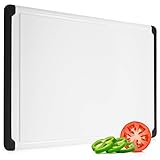
For a standalone cutting board, standard dimensions are smaller: approximately 12 by 18 inches, 15 by 20 inches, or 18 by 24 inches, with a thickness of 1.25 to 2 inches. Oversized boards designed to sit over a sink may measure 20 to 30 inches wide and 30 to 36 inches long.
As an Amazon Associate we earn from qualifying purchases at no extra cost to you. Product prices and availability are accurate as of the date shown and are subject to change.


The best answer to “what dimensions should a standard butcher block be” depends on whether you are buying a countertop, island top, workbench surface, or cutting board. Before ordering, measure the available space, account for overhang, and confirm the block’s actual thickness. In 2026, many ready-to-install hardwood countertop blanks still use the familiar 1.5-inch thickness and 25-inch countertop depth.
Standard Sizes
The table below covers the dimensions most commonly used for kitchen counters, islands, utility surfaces, and cutting boards. Measurements are listed in inches first, with approximate metric conversions.
| Common use | Typical dimensions in inches | Approximate dimensions in centimeters | Typical thickness |
|---|---|---|---|
| Small cutting board | 12 x 18 | 30.5 x 45.7 | 1 to 1.5 in (2.5 to 3.8 cm) |
| Everyday cutting board | 15 x 20 | 38.1 x 50.8 | 1.25 to 2 in (3.2 to 5.1 cm) |
| Large cutting board | 18 x 24 | 45.7 x 61 | 1.5 to 2 in (3.8 to 5.1 cm) |
| Over-sink or extra-large board | 20 x 30 to 24 x 36 | 50.8 x 76.2 to 61 x 91.4 | 1.5 to 2.5 in (3.8 to 6.4 cm) |
| Compact countertop blank | 12 x 25 | 30.5 x 63.5 | 1.5 in (3.8 cm) |
| Standard countertop section | 25 x 48 | 63.5 x 121.9 | 1.5 in (3.8 cm) |
| Long countertop section | 25 x 72 | 63.5 x 182.9 | 1.5 in (3.8 cm) |
| Large island top | 36 x 72 to 40 x 96 | 91.4 x 182.9 to 101.6 x 243.8 | 1.5 to 2 in (3.8 to 5.1 cm) |
| Workbench or desk top | 24 x 60 to 30 x 96 | 61 x 152.4 to 76.2 x 243.8 | 1.5 to 2 in (3.8 to 5.1 cm) |
A 25-inch-deep countertop is designed to cover a typical 24-inch-deep cabinet run while leaving a small installation allowance. Finished cabinet depth, backsplash thickness, and the desired front overhang can change that measurement. A 1.5-inch block is substantial enough for a countertop or island and is widely available in walnut, maple, bamboo, and other hardwoods.
Prices vary by species, size, edge treatment, and finish. A small or compact hardwood countertop section may cost about $70 to $100, while a 24-by-25-inch walnut section may be around $150 to $180. Large custom island slabs can cost several hundred dollars. Cutting-board conditioner or food-grade mineral oil generally costs about $8 to $15 for a small bottle.
How to Measure Your Space
- Measure the supporting cabinets or base. Measure the total width from one end of the cabinet run to the other. Take measurements at the front, middle, and back because walls and cabinets are not always perfectly square.
- Measure the finished depth. Start at the wall or backsplash and measure to the front edge of the cabinet. Add the overhang you want beyond the doors and drawers. A typical front overhang is 1 to 1.5 inches.
- Account for a backsplash. If the backsplash will sit behind the butcher block, include its thickness when determining the final countertop depth. A tile backsplash and a solid wood backsplash may require different allowances.
- Mark appliances and openings. Note the exact location of sinks, cooktops, outlets, faucets, and appliance clearances. Do not assume an opening is centered or square.
- Plan seams for long runs. A standard 48-inch block may be easier to handle than one long slab. For a run longer than the available stock length, plan where seams will fall and support both sides of each joint.
- Check support requirements. Wood is heavy, especially in thick island tops. Provide adequate cabinet, bracket, or leg support. Any overhang that is large enough for seating may need additional reinforcement.
- Confirm the finished size. Product dimensions can be nominal. A block advertised as 25 inches wide may measure slightly less or more after milling, sanding, or finishing. Verify the actual size before cutting cabinets.
By Room or Use Case
Kitchen Countertop
For a standard base-cabinet run, choose a block about 25 inches deep and 1.5 inches thick. Length depends on the run, but 48-, 72-, and 96-inch sections are common. Leave enough room for sink and cooktop cutouts, and keep the front edge flush or slightly proud of the cabinet doors.
Kitchen Island
Island tops are often 36 to 40 inches deep and 60 to 96 inches long. A 36-by-72-inch top provides useful prep space without overwhelming a medium-size kitchen. If the island includes seating, allow roughly 15 inches of countertop overhang per stool for comfortable knee room. A deeper 2-inch block can give a large island a more furniture-like appearance, but it also adds weight and cost.
Standalone Cutting Board
A 15-by-20-inch board is a versatile everyday size for chopping vegetables, herbs, and smaller cuts of meat. Choose 18 by 24 inches if you regularly prepare large meals, but check that you have room to lift and wash it safely. A juice groove can help contain liquids, although it reduces the completely flat cutting area.
Over-Sink Work Surface
An over-sink butcher block is commonly 20 to 24 inches wide and 30 to 36 inches long. Measure the sink rim rather than the basin, and make sure the board has stable support on both sides. Non-slip feet can prevent movement, but they also raise the work surface and may affect faucet clearance.
Laundry Room, Office, or Workshop
A 24- to 30-inch depth works well for a desk, folding counter, or light-duty workbench. Lengths from 60 to 96 inches provide useful workspace. For a workshop, select a 1.5- to 2-inch top and add a protective finish suited to the work. A food-safe finish is appropriate for food preparation, but it is not necessarily the most durable choice for solvents, paints, or heavy mechanical work.
Common Sizing Mistakes
- Confusing countertop and cutting-board dimensions: A 25-inch-deep slab is not a convenient everyday cutting board. Decide whether the item will be installed or moved before ordering.
- Ignoring overhang: Measuring only the cabinet box can leave the countertop too short at the front or sides. Include the planned overhang in the final dimensions.
- Forgetting door and drawer clearance: A thick edge or excessive front overhang can interfere with cabinet hardware. Check the swing of doors and the full travel of drawers.
- Choosing an oversized board: A very large cutting board may be difficult to wash, store, or lift when wet. Choose the largest size you can handle comfortably.
- Failing to allow for wood movement: Solid wood expands and contracts with changes in humidity. Follow the manufacturer’s installation instructions and avoid fastening the slab in a way that prevents natural movement.
- Buying by nominal size alone: Confirm actual length, width, thickness, corner radius, edge profile, and finish. Those details can affect whether the block fits your project.
- Underestimating support: A wide island overhang or long unsupported span can stress the wood and cabinets. Add brackets, legs, or other support where needed.
FAQ
What is the most common butcher block countertop size?
The most common ready-made countertop size is approximately 1.5 inches thick by 25 inches deep, with lengths of 48, 72, or 96 inches. Smaller 12-by-25-inch sections are useful for compact counters, carts, desks, and repair projects.
Is 1.5 inches thick enough for a butcher block?
Yes. A 1.5-inch thickness is standard for many countertops and islands and provides a sturdy appearance when properly supported. Choose 2 inches or more when you want a heavier visual profile, additional sanding allowance, or a substantial standalone work surface.
How much overhang should a butcher block countertop have?
Allow about 1 to 1.5 inches beyond the cabinet fronts for a typical countertop. For seating, plan approximately 15 inches of knee-space overhang per stool and add structural support according to the size and thickness of the top.
What size butcher block is best for a cutting board?
For most kitchens, 15 by 20 inches is a practical balance of workspace and portability. Choose 18 by 24 inches for large meal preparation, or 12 by 18 inches if storage and easy cleaning are priorities. The board should fit your sink, drying area, and available storage before you choose the largest option.
Ready to decide? Our #1 pick for 2026 is the Small cutting board.
Live price & availability on Amazon.





Write Your Review
No reviews yet. Be the first to share your experience!