
Choosing between a smooth edge vs traditional cut manual can opener is less about opening a can quickly and more about what happens afterward. A traditional opener cuts through the lid from the top, leaving a sharp metal rim that can snag fingers and make the lid awkward to handle. A smooth edge opener cuts along the can’s side, usually just below the rim, so the separated lid has a safer, less jagged edge.
That difference affects meal preparation, cleanup, storage, and safety. Smooth edge models generally cost more and can be slightly fussier with unusual cans. Traditional models are inexpensive, familiar, and easy to replace. For most homes, the right choice depends on whether safer edges or low upfront cost matters more.
As an Amazon Associate we earn from qualifying purchases at no extra cost to you.


Quick Verdict
Choose a smooth edge manual can opener if your household has children, pets, frequent canned-food use, or anyone with limited hand strength. It is the better option when you want to reduce sharp-lid hazards and handle opened cans with less caution.
Choose a traditional cut manual can opener if you want the lowest purchase price, a compact backup, and a tool that works with most standard cans without much adjustment. It remains a practical choice for occasional use, rentals, dorm rooms, and emergency storage.
For many households, a smooth edge model is worth the extra $10 to $20. However, it is not automatically more durable, faster, or easier to clean. A well-made traditional opener can last for years, while a poorly designed smooth edge model may struggle with dented or unusually shaped cans.
Side by Side
| Factor | Smooth Edge | Traditional Cut |
|---|---|---|
| Cut location | Along the side, usually below the top rim | Through the lid near its outer edge |
| Safety | Leaves a relatively smooth cut edge on the lid and can | Leaves a sharp metal rim that requires careful handling |
| Comfort | Often has a larger knob and soft-grip handle; typically needs steady pressure | Usually easy to turn, though small knobs can pinch or strain fingers |
| Durability | Good models can last 5 years or more; cutting-wheel alignment matters | Simple designs can last 5 to 10 years with dry storage and clean gears |
| Price range | About $15 to $30 | About $6 to $15 |
| Maintenance | Wipe after use; keep the wheel and gripping surfaces dry | Wipe or rinse as directed; exposed cutting wheels can rust if left wet |
| Space needed | Usually about 7 to 10 inches long and 2 to 4 inches wide | Usually about 6 to 9 inches long and 2 to 3 inches wide |
| Look | More modern, with enclosed mechanisms and ergonomic handles | Classic utilitarian appearance, often mostly metal or black plastic |
| Resale or replacement value | Better appeal when clean and from a recognized brand | Usually inexpensive enough that replacement is more practical than resale |
| Best for | Families, safety-conscious kitchens, and frequent use | Budget buyers, occasional use, rentals, and backup supplies |
Where Smooth Edge Wins
The main advantage is the reduced risk from the lid. Traditional can openers leave a rim that can cut a finger during emptying, recycling, or washing. A smooth edge opener is not completely risk-free—the metal can still be sharp if the cut is uneven—but it generally creates a safer surface to handle. The detached lid can also be easier to lift away without touching the cutting edge.
This matters most when several people use the kitchen. A child may not recognize that a discarded lid is dangerous, and a pet can be injured by a lid pulled from a trash can. Smooth edge technology does not make opened cans safe to leave unattended, but it removes one particularly sharp hazard from routine food preparation.
Smooth edge models are also useful for people with arthritis or reduced grip strength when they include a large, padded turning knob. Look for a knob at least about 1.5 inches across, broad handles, and a mechanism that grips the can without repeated repositioning. Ergonomics vary more by model than by cutting style, so a smooth edge opener with a tiny knob may be less comfortable than a traditional opener with generous handles.
The cut can produce a lid that is suitable for covering the can again in some designs, although it should not be treated as airtight. If leftovers will be stored, transfer them to a sealed container and refrigerate them promptly. Smooth edge openers may also leave the can’s original rim attached to the body, creating a cleaner-looking container for pouring ingredients.
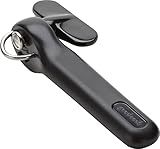
As a price reference, the OXO Good Grips Smooth Edge Manual Can Opener, No Sharp Edges, Soft Grip is listed at $24.69. That is near the upper end of common manual-opener pricing, but it illustrates what buyers pay for a recognized brand, soft-touch surfaces, and a safety-focused design. Avoid confusing kitchen products with unrelated search results: African Pride’s ANTI FIZZY CONDITIONING GEL SMOOTH EDGES FOR KIDS 6 Oz, listed at $7.85, is a hair-care product rather than a can opener.
Where Traditional Cut Manual Can Opener Wins
Traditional openers win on simplicity and price. Their cutting wheel sits on top of the lid and removes a circular section as you turn the knob. Because the design has been common for decades, replacement parts and familiar handling are easy to find. A basic model can cost less than $10, making it sensible for a first kitchen, vacation rental, office pantry, or disaster-supply kit.
They also tend to handle a broad range of standard cans reliably. A sturdy traditional opener can work with small 5-ounce cans, common 15-ounce vegetable cans, and large 28-ounce cans, provided the rim is not badly bent. The user can usually see and feel whether the wheel is engaged, which makes troubleshooting straightforward.
The drawbacks are concentrated around safety and cleanup. The exposed lid is sharp, and the loose metal disk should go directly into a recycling container or be wrapped before disposal. Traditional openers can also leave small food particles around the cutting wheel. Never submerge a model unless the manufacturer permits it; trapped water in the gear assembly can lead to rust or stiffness.
GoodCook’s Safe-Cut Can Opener with Easy Turn Knob, Black is listed at $8.09 and represents the budget end of the category. A lower price can be attractive, but check that the knob turns smoothly, the handles do not flex excessively, and the cutting wheel is made from corrosion-resistant metal.
Cost Over 5 Years
A simple five-year comparison makes the price difference easier to judge. Assume one smooth edge opener costs $25 and one traditional opener costs $9. If each lasts the full five years, the purchase cost works out to approximately $5 per year for smooth edge versus $1.80 per year for traditional.
Replacement changes the calculation. If a traditional opener is replaced once after three years, its five-year cost becomes about $18, or $3.60 per year. If a smooth edge opener is replaced once after three years, the total is about $50, or $10 per year. These are purchase-only estimates and do not include shipping, discounts, or the cost of a replacement caused by rust or damage.
In practice, a price premium may be worthwhile if it prevents a cut, is easier for someone in the household to operate, or gets used several times each week. For occasional use, the traditional design usually delivers the lower total cost. Neither manual style uses electricity, so wattage is not a factor; an electric opener would introduce a separate purchase and energy comparison.
Which One for Your Home
Small apartment
A traditional opener is usually the best value for a small apartment with limited canned-food use. Choose a compact model measuring roughly 6 to 8 inches long and store it in a utensil drawer. If the kitchen serves several roommates or has little counter space for cleanup, a smooth edge model may be worth considering because safer lids are easier to manage in a crowded sink and trash area.
Family with kids or pets
Choose smooth edge. The higher initial price is justified by reducing sharp lids around curious children and animals. Store the opener and cans out of reach, and dispose of every lid immediately; no opener eliminates supervision. A broad, soft-grip design is especially helpful when children are old enough to assist with cooking under adult guidance.
Rental
For a rental or temporary home, choose a traditional opener in the $6 to $12 range unless the property owner supplies a smooth edge model. It is inexpensive to replace and does not require a dedicated storage solution. If several tenants share the kitchen, a smooth edge design can reduce accidental injuries and make the tool more agreeable for everyone.
Long-term home
Choose based on use rather than price alone. Frequent cooks, older adults, and households that open cans several times a week will likely appreciate a smooth edge model with ergonomic handles. Occasional cooks can buy a durable traditional opener and spend the savings elsewhere. Whichever style you choose, replace it when the wheel slips, the handles bend, or the cut becomes ragged.
FAQ
Is a smooth edge can opener completely safe?
No. It is designed to reduce sharp edges, not eliminate every possibility of injury. A damaged can, uneven cut, or rough lid may still have sharp metal. Inspect the lid, keep it away from children and pets, and dispose of it promptly.
Do smooth edge openers work on every can?
They work best on standard cans with intact, even rims. Severely dented cans, pull-tab cans, very small cans, and some specialty containers may be difficult. Check the manufacturer’s instructions before forcing the mechanism.
Which type is easier to clean?
Neither is automatically easier. Smooth edge models often have more enclosed parts, while traditional models have exposed cutting wheels. Wipe either type after use, follow the care instructions, and dry it thoroughly to prevent corrosion.
Can I use a smooth edge opener to reseal leftovers?
Usually not securely. Some smooth edge cuts leave a lid that can rest on top of the can, but it is not an airtight seal. Move unused food to a covered container and refrigerate it according to safe food-handling practices.
Ready to decide? Our #1 pick for 2026 is the Cut location.
Live price & availability on Amazon.





Write Your Review
No reviews yet. Be the first to share your experience!