
Choose a pressure cooker if you want dinner in under an hour and a slow cooker if you want to leave food unattended for eight hours. That one line settles most slow cooker vs pressure cooker debates: pressure cookers trade attention at the start for speed, while slow cookers trade time for convenience. If you only want one machine, an electric pressure cooker with a slow-cook mode, such as the Instant Pot Duo 6 Qt, covers both, while a classic Crock-Pot 7-quart is still the better pure slow cooker.
- Top Picks at a Glance
- Quick Comparison
- 1. Instant Pot Duo 6 Qt 7-in-1: Best Overall Pick If You Want Both
- 2. Crock-Pot 7-Quart Manual Slow Cooker: Best Pure Slow Cooker for the Money
- 3. Ninja PossibleCooker PLUS 6-in-1: Best Multi-Function Slow Cooker
- 4. Crock-Pot 6-Quart Cook and Carry: Best for Potlucks and Travel
- 5. Ninja HyperHeat 9-in-1 Pressure Cooker, 6.5 Quart: Best Fast Pressure Cooker
- 6. Cosori 6QT 9-in-1 Pressure Cooker: Best Budget Pressure Cooker
- Also Consider
- How We Chose
- Buying Guide
- Decision Table: Which Appliance for Which Situation
- Worked Example: Dinner at 6 PM
- Converting a Recipe Between the Two
- Energy and Cost: A Quick Sense Check
- Frequently Asked Questions
- Which One Should You Buy?
- Sources
This guide is a head-to-head. We compare how the two appliances work, how long common foods take, what each does badly, and which real models are worth shortlisting. If you searched for pressure vs slow cooker, pressure cooker vs slow cooker or a slow cooker vs pressure comparison, you will find the timing chart, the decision table and six specific models below. It is research-based. We did not personally use these products. Specs come from listings and maker descriptions, and where a figure is missing we write “not listed.”

Instant Pot Duo 6 Qt 7-in-1 Electric Pressure Cooker, Stainless Steel | Slow cooks, makes rice and yogurt, steams, sautés, warms and sterilizes, with an app featuring 800+ recipes.
Included for 'Slow Cooker vs Pressure Cooker: Which One Fits Your Kitchen?' because the listing specifies Stainless Steel and Slow cooks, details this guide uses to compare options.
View on Amazon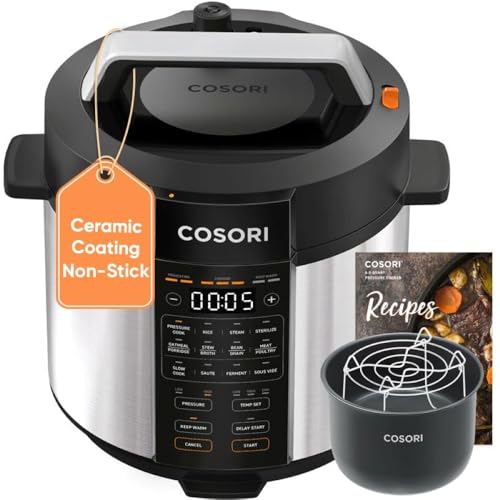
Cosori Pressure Cooker 6QT, 9-in-1, Ceramic Coating Pot, 12 Safety Features | Rice Cooker, Slow Cook, Sous Vide, Saute, Stainless Steel, 1100W, Silver
Included for 'Slow Cooker vs Pressure Cooker: Which One Fits Your Kitchen?' because the listing specifies 9-in-1 and Ceramic Coating Pot, details this guide uses to compare options.
View on Amazon
Ninja® HyperHeat™ 9-in-1 Pressure Cooker, 6.5-qt, Stone Purple, PC201SP | Cooks 2X faster, Sear, Sauté, Slow Cook, Steam & Sous Vide, 1200W, PFAS-free pot, removable SimpliServe™ pot for easy serving
Included for 'Slow Cooker vs Pressure Cooker: Which One Fits Your Kitchen?' because the listing specifies 6.5-qt and Stone Purple, details this guide uses to compare options.
View on Amazon
Sweetcrispy 16-in-1 Electric Pressure Cooker 8QT, 12-Preset Multi Cookers with Ceramic Pot, Slow Cook Rice Steamer Sauté Soup Yogurt Maker and More, Recipe Book
Included for 'Slow Cooker vs Pressure Cooker: Which One Fits Your Kitchen?' because the listing specifies 12-Preset Multi Cookers with Ceramic Pot and Slow Cook Rice Steamer Sauté Soup Yogurt Maker and More, details this guide uses to compare options.
View on AmazonOne honest caveat: the electric pressure cooker with a slow-cook button is not a perfect slow cooker. Lids, heating patterns and temperature ranges differ, so the same recipe may need adjusting. We explain how.
Top Picks at a Glance
- Best Overall (does both): Instant Pot Duo 6 Qt 7-in-1, with pressure cook and slow cook modes.
- Best Pure Slow Cooker Value: Crock-Pot 7-quart manual slow cooker, fits a 6 lb roast per the listing.
- Best Multi-Function Slow Cooker: Ninja PossibleCooker PLUS 6-in-1, 8.5 quart, with sous vide and proofing.
- Best for Potlucks: Crock-Pot 6-quart Cook and Carry programmable slow cooker with digital timer.
- Best Fast Pressure Cooker: Ninja HyperHeat 9-in-1, 6.5 quart, marketed as cooking twice as fast.
- Best Budget Pressure Cooker: Cosori 6 quart 9-in-1 with a ceramic-coated pot and 12 safety features.
Quick Comparison
| Product | Type | Key specs | Watch for | Price tier |
|---|---|---|---|---|
| Instant Pot Duo 6 Qt | Pressure + slow cook | 6 qt; 7-in-1; sauté, steam, rice, yogurt | Slow cook mode differs from a classic cooker | Mid-range |
| Crock-Pot 7-Quart Manual | Slow cooker | 7 qt; serves 8+; fits 6 lb roast; warm setting | No timer | Budget |
| Ninja PossibleCooker PLUS | Slow cooker / multi | 8.5 qt; 6-in-1; sous vide and proof; glass lid | Large footprint | Mid-range |
| Crock-Pot 6-Qt Cook and Carry | Slow cooker | 6 qt; digital timer; locking lid for travel | Weight with food | Mid-range |
| Ninja HyperHeat PC201 | Pressure cooker | 6.5 qt; 9-in-1; sear, sauté, slow cook | Learning curve | Mid-range |
| Cosori 6QT 9-in-1 | Pressure cooker | 6 qt; ceramic-coated pot; 12 safety features | Coating care | Budget |
1. Instant Pot Duo 6 Qt 7-in-1: Best Overall Pick If You Want Both
- Capacity: 6 quart
- Functions: pressure cook, slow cook, rice, steam, sauté, yogurt, warm
- Stainless steel inner pot per the listing
- Heat and watt ratings: not listed in the summary
- Programmable controls with preset buttons
Best for: Households that want fast weeknight meals and an occasional slow-cooked dish from one counter appliance.
Skip if: you want a true set-and-forget slow cooker with a big ceramic crock.
The Duo is the model most people picture when they say Instant Pot, and its 7-in-1 design is exactly why it settles the pressure vs slow cooker question for many kitchens. Switch to pressure cook and a pot roast that needs eight to ten hours in a slow cooker can be ready in about an hour and a half including pressure build and release. Switch to slow cook and it behaves like a basic slow cooker, though the lid and heating are different from a dedicated unit.
Because it cooks under pressure, steam is trapped and liquids do not evaporate. That means you need less liquid than in an oven recipe but still enough to build pressure, which is typically at least a cup in a 6 quart pot, per common maker guidance. Foods like dried beans and tough cuts benefit the most.
The Duo’s stainless steel inner pot is easy to clean but can stick without enough fat or liquid when sautéing. The trade-off for versatility is complexity. Spend an evening learning the buttons, the sealing ring and natural versus quick release.
Pros
- One appliance, many jobs
- Fast cooking for beans and tough meat
- Stainless steel pot
- Large user community and recipe base
Cons
- Slow cook mode is not identical to a dedicated slow cooker
- Sealing ring absorbs odors
- Learning curve
2. Crock-Pot 7-Quart Manual Slow Cooker: Best Pure Slow Cooker for the Money
- Capacity: 7 quart, serves 8+ people per the listing
- Fits a 6 lb roast per the listing
- Removable stoneware with warming setting
- Manual dial with low, high and warm
- Dishwasher-safe stoneware and lid per the listing family
Best for: Cooks who want the simplest possible machine for chili, pulled pork and big batches.
Skip if: you want a timer or to cook food quickly.
The manual Crock-Pot is the baseline that all slow cooker comparisons start from. A heavy stoneware crock holds heat, a heating element wraps around the sides and a dial gives you low, high and warm. There are no menus. You put food in, set the dial and walk away for eight hours.
At 7 quarts it has room for a 6 pound roast, which is the key spec for Sunday dinners. Because it has no timer, it does not shut off by itself. If you are gone for more than ten hours on low, food can overcook, so consider a programmable model or a smart plug with a timer. Slow cooking is gentle: Crock-Pot describes low as about 200 F and high as up to about 300 F, which makes it forgiving for stews and braises.
The downside is speed. You must plan the day ahead and cannot rescue a late dinner. Expect to lift the lid rarely, since each peek adds 15 to 30 minutes.
Pros
- Very low price tier
- Simple dial controls
- Large capacity
- Stoneware holds heat well
Cons
- No timer or auto shut-off
- Slow, requires planning
- Stoneware is heavy and can crack with temperature shock
3. Ninja PossibleCooker PLUS 6-in-1: Best Multi-Function Slow Cooker
- Capacity: 8.5 quart
- Functions include slow cook, sous vide, proof and more per the listing (6-in-1)
- Glass lid and nonstick pot per the listing
- Replaces multiple appliances per the maker
- Model: MC1010
Best for: Cooks who want a large slow cooker that can also sear, braise and proof bread dough.
Skip if: you have little counter space or want pressure cooking.
The PossibleCooker PLUS is a good example of the modern middle ground. It is not a pressure cooker, but it is not just a slow cooker either. Sous vide and proofing modes extend what you can do with one pot, and the 8.5 quart capacity makes it a good choice for large batches.
For people deciding between pressure and slow cookers, this is the best option if you value gentle, low-temperature cooking and do not need speed. A glass lid lets you see progress without lifting it, which helps with timing.
The nonstick pot is easy to clean, but avoid metal utensils. The large size is a strength for entertaining and a weakness for small kitchens.
Pros
- Large 8.5 quart capacity
- Multiple cooking modes
- Glass lid for monitoring
- Easy-clean nonstick pot
Cons
- Large footprint
- No pressure cooking
- Nonstick requires gentle care
4. Crock-Pot 6-Quart Cook and Carry: Best for Potlucks and Travel
- Capacity: 6 quart
- Programmable with a digital timer per the listing
- Locking lid designed for travel
- Stainless steel finish
- Stoneware crock: confirm in the manual
Best for: Potlucks, picnics, tailgates and busy weekdays when a timer helps.
Skip if: you never transport food and prefer a simple manual dial.
The Cook and Carry line adds clamps to the lid so you can take a hot dish to a party without spilling. It also has a digital timer that switches to a warm setting when cooking ends. That feature alone reduces the main risk of manual slow cookers, which is overcooking when you are gone longer than planned.
Compared with a pressure cooker, it is still slow, but it is much easier to transport. A pressure cooker’s sealed lid also locks, but pressurized pots should never be moved while hot.
If you host or cook for groups, this is the slow cooker to buy.
Pros
- Digital timer and warm setting
- Locking lid for transport
- Mid-size 6 quart capacity
- Familiar Crock-Pot design
Cons
- More expensive than manual models
- Heavy when full
- Clamps add bulk
5. Ninja HyperHeat 9-in-1 Pressure Cooker, 6.5 Quart: Best Fast Pressure Cooker
- Capacity: 6.5 quart
- Functions: pressure cook, sear, sauté, slow cook, steam and more (9-in-1)
- Marketed as cooking twice as fast
- Model: PC201
- Heat and pressure ratings: not listed in the summary
Best for: Cooks who want quick searing and pressure cooking in the same pot.
Skip if: you want the most common platform with the largest recipe community.
Ninja markets the HyperHeat as cooking up to twice as fast, which refers to its high-heat searing and pressure ramp. Treat that as a maker claim. In practice, the real time saving of pressure cooking comes from higher temperature and sealed steam, which most electric pressure cookers share.
The slow-cook function is a useful backup. With a 6.5 quart capacity, it fits a medium roast and about six servings.
As a pressure cooker it pairs well with recipes for beans, stews and braises. Its sear and sauté functions let you brown in the pot before sealing.
Pros
- Sear and sauté in one pot
- Slow cook function
- 6.5 quart size
- Pressure cooking speeds up long recipes
Cons
- Maker speed claim is marketing
- Fewer community recipes than Instant Pot
- Mid-range price tier
6. Cosori 6QT 9-in-1 Pressure Cooker: Best Budget Pressure Cooker
- Capacity: 6 quart
- 9-in-1: pressure cook, rice, slow cook, sous vide, sauté and more
- Ceramic-coated pot per the listing
- 12 safety features per the listing
- Lid and gasket details: not listed in the summary
Best for: Shoppers who want pressure and slow cooking at a lower price tier.
Skip if: you want a stainless steel pot with no coating.
Cosori’s 6 quart is a straightforward alternative to the Duo. It offers a similar set of functions and a ceramic-coated pot, which makes cleanup easy. The maker highlights 12 safety features, which typically include lid locking, pressure limiting and overheat protection.
Ceramic coatings are non-stick but need gentle care. Avoid metal utensils and abrasive pads. If you prefer to sear in stainless steel, a bare pot may suit you better.
For a first pressure cooker on a budget, it covers the basics.
Pros
- Lower price tier
- Ceramic-coated pot is easy to clean
- Multiple functions
- Safety features listed
Cons
- Coating needs care
- Smaller community
- Pot may scratch if misused
Also Consider
Instant Pot Pro 6 Qt 10-in-1
A step-up pressure cooker with a dual-sided rack and more controls; suits enthusiasts.
Instant Pot Rio Wide 7.5 Qt
A wider pot that is useful for larger cuts and big batches.
Crock-Pot 3-Quart Manual Slow Cooker
A small slow cooker for dips and side dishes or for one or two people.
Crock-Pot 8-Quart Manual Slow Cooker
An XL option for big families and holiday cooking.
How We Chose
We compared appliances on the things that actually differ: cooking temperature, time, attention required, capacity, cleanup and what each does badly. We used manufacturer descriptions, listings and the USDA’s food safety guidance as references. We also considered what cooks use each for: beans and tough meat favor pressure, while all-day stews and keep-warm duties favor slow cookers.
We selected real models across both categories, plus the multicookers that blur the line. We did not personally use any of them, and we do not assign scores. Where a spec is missing in the summary, we state it plainly.
We described prices only by tier. For safety instructions, always follow the manual for your specific model.
Buying Guide
How they cook: temperature and moisture
A slow cooker heats a ceramic or metal crock at a low temperature for hours. Crock-Pot describes low as about 200 F and high as up to about 300 F. The slow, wet heat breaks down collagen in tough cuts over time. A pressure cooker seals steam inside, raising the boiling point of water. Electric models operate around 10 to 12 psi, which gives a cooking temperature near 240 F, so food cooks faster.
Slow cookers lose little moisture and need less attention. Pressure cookers need a minimum amount of liquid to build pressure, usually at least one cup.
Timing comparison
As a rough guide, a 3 pound chuck roast takes 8 to 10 hours on low in a slow cooker and about 60 to 75 minutes under pressure, plus 10 to 20 minutes to come to pressure and release. Dried beans take 6 to 8 hours in a slow cooker after soaking, and 25 to 45 minutes under pressure. Chicken thighs take 4 to 6 hours on low or 10 to 12 minutes under pressure.
Remember that pressure cooking has hidden time: heating up, releasing and sometimes resting.
Safety notes
Red kidney beans must be boiled before slow cooking, because slow cookers may not reach a high enough temperature to neutralize a natural toxin. Pressure cooking at full pressure handles them safely. The USDA advises that slow cooker food should reach a safe temperature quickly, so avoid cooking from frozen. Never open a pressure cooker until the pressure has fully dropped, and follow the maker’s fill limits, commonly no more than two-thirds full and half for foods that foam.
Capacity and footprint
A 6 quart slow cooker serves about 6 people. A 7 to 8 quart model suits families who like leftovers. For pressure cookers, 6 quart is the most popular size, and a 3 or 4 quart is suitable for one or two people. Check the shelf where you will store it, because multicookers are bulky.
Cleanup and maintenance
Slow cooker stoneware is typically dishwasher safe but heavy. Electric pressure cookers have a sealing ring that can absorb odors and should be replaced periodically per the maker, and a lid that needs washing by hand. Nonstick or ceramic-coated pots need gentle care.
Decision Table: Which Appliance for Which Situation
| Situation | Better choice | Why |
|---|---|---|
| Home all evening, hungry now | Pressure cooker | Dinner in about an hour |
| Away at work 9 hours | Slow cooker with timer | Food is ready when you return |
| Dried beans, tough cuts | Pressure cooker | Fast and tender |
| Potluck or party keep-warm | Slow cooker | Holds food warm for hours |
| Only one counter spot | Electric pressure cooker with slow-cook mode | Covers both jobs |
| Delicate foods that overcook easily | Slow cooker or oven | More control in gentle heat |
Worked Example: Dinner at 6 PM
Say you want a pot roast on the table at 6:00 PM. With a slow cooker, you would sear and load it by 8:30 AM, set it to low for 9 to 10 hours, and it would be ready when you get home. With a pressure cooker, you could start at 4:15 PM: sear for 10 minutes, bring to pressure for about 15 minutes, cook for 70 minutes and release naturally for 15, finishing around 6:00 PM.
Both yield tender beef, but the slow cooker needs planning in the morning, while the pressure cooker needs a window of attention in the late afternoon. If your schedule changes often, the pressure cooker rescues a late decision. If it is fixed, the slow cooker is calmer.
Converting a Recipe Between the Two
To move a slow cooker recipe to a pressure cooker, cut the cooking time dramatically and reduce the liquid. A recipe that calls for 8 hours on low can often become about 45 to 75 minutes at high pressure for beef or pork, and 8 to 12 minutes for chicken pieces, but treat these as starting points and check your model’s manual. Keep at least the minimum liquid your pot requires, and thicken the sauce at the end by switching to sauté, since sealed cooking does not reduce liquid.
To go the other way, add liquid only as needed because slow cookers also trap moisture, extend the time to 6 to 8 hours on low or 3 to 4 on high, and add delicate ingredients such as dairy, fresh herbs and quick-cooking vegetables near the end. Do not substitute frozen meat in a slow cooker without thawing, as it can stay in the temperature danger zone too long.
Energy and Cost: A Quick Sense Check
Slow cookers commonly draw a few hundred watts and run for many hours, while electric pressure cookers commonly draw 700 to 1,200 watts but run for a short time once pressure is reached. The real difference in your bill is small for either appliance, and both use far less than a full-size oven for the same meal. The deciding factors are time and attention, not electricity. If you want exact figures for your model, check the wattage on the maker’s spec sheet, which was not listed in the summaries we reviewed.
Frequently Asked Questions
Is a slow cooker or pressure cooker better?
Neither is better in every case. Pressure cookers are faster and better for beans and tough cuts, while slow cookers are better for all-day, hands-off cooking and keeping food warm. If you must choose one, an electric pressure cooker with a slow-cook mode is more flexible.
Can a pressure cooker replace a slow cooker?
Often, yes. Many electric pressure cookers have a slow-cook mode. However, their lids and heating differ from dedicated slow cookers, so some recipes need adjustment.
Can I use a pressure cooker as a slow cooker?
If it has a slow-cook function, yes. Use the glass lid if one is provided, or the sealed lid with the vent open, as directed by your manual. Do not use the pressure setting for slow-cook recipes.
Which saves more electricity?
Pressure cookers use more power for a short time, while slow cookers use less power for many hours. In many cases total energy is similar or lower for the pressure cooker because cooking time is much shorter, but it varies by model.
Is a Crock-Pot the same as a slow cooker?
Crock-Pot is a brand name for slow cookers. Many people use it as a generic term, but other brands make slow cookers too.
Are electric pressure cookers safe?
Modern models include lid locks, pressure limits and safety valves. Follow the fill lines, keep the vent clear and let pressure drop before opening.
What size should I buy?
Six quarts suits most households of three to five people. Go to 8 quarts for large families or batch cooking, and choose 3 or 4 quarts for one or two people.
Which One Should You Buy?
If you want one machine and fast dinners, buy an electric pressure cooker with a slow-cook function such as the Instant Pot Duo 6 Qt, and consider the Cosori if budget matters. If you want an old-school, all-day slow cooker, buy the Crock-Pot 7-quart manual, or the 6-quart Cook and Carry if you need a timer or travel. If you want a large, flexible slow cooker, the Ninja PossibleCooker PLUS is the multi-function option.
Think about your schedule first. If your evenings are free, pressure. If your mornings are, slow cooker. If it varies, get the one that does both.
Sources
- USDA Food Safety and Inspection Service guidance on slow cookers and pressure cooking
- Crock-Pot product descriptions and manuals
- Instant Pot product pages and manuals
- Ninja PossibleCooker and HyperHeat product descriptions
- Cosori product description
Last updated: October 2026





Write Your Review
No reviews yet. Be the first to share your experience!