
The best coffee pot with grinder for most kitchens is the Breville Grind Control, a 12-cup machine with a built-in burr grinder and a thermal carafe that keeps coffee hot without a warming plate. If you want the same grind-and-brew idea for much less money, the Kenmore Elite 12-cup adds a conical burr grinder and an air-tight hopper in a mid-range package, and the Cuisinart DGB-400 is the familiar budget-friendly choice that uses a blade grinder instead. This guide compares six carafe-style grind-and-brew models using manufacturer specs and listing details, because the details that matter here (burr or blade, hopper size, cup range, carafe type) are not obvious from the box art.
- Top Picks at a Glance
- Quick Comparison Table
- 1. Breville Grind Control: Best Overall Coffee Pot With Grinder
- 2. Kenmore Elite 12-Cup: Best Value Burr Grind-and-Brew
- 3. Gevi 10-Cup Grind-and-Brew: Best Mid-Range Pick for Smaller Households
- 4. Cuisinart DGB-400: Best Known Budget-Friendly Choice
- 5. Elite Gourmet 12-Cup: Best Low-Cost 12-Cup Machine
- 6. BLACK+DECKER 12-Cup Grind and Brew: Best Entry-Level Option
- Also Consider
- How We Chose
- Buying Guide
- Common Mistakes
- Frequently Asked Questions
- Which One Should You Buy?
- Sources
A coffee pot with a grinder is a single machine that takes whole beans, grinds them just before brewing and drips the result into a carafe. It saves counter space and a step in the morning, and it makes fresh-ground coffee almost effortless on a timer. The cost is compromise: the grinder lives next to hot, steamy brewing parts, cleaning is more involved than with a separate grinder, and when something fails you replace the whole unit. Knowing those trade-offs up front is what separates a happy purchase from a regretted one.

Cuisinart Automatic Grind & Brew 12-Cup Coffee Maker with Blade Grinder, Programmable Coffee Machine Glass Carafe with 1-4 Cup Setting, Brew Pause, Grind-Off Option, DGB-400NAS, Black/Stainless Steel
Included for 'Best Coffee Pot With Grinder: Carafe Grind-and-Brew Models Compared' because the listing specifies Brew Pause and Grind-Off Option, details this guide uses to compare options.
View on Amazon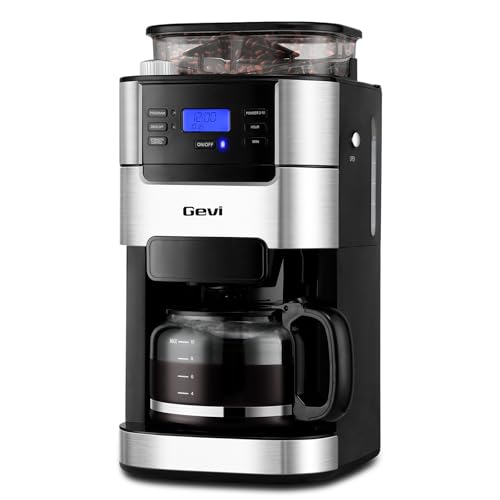
Gevi All In One 10-Cup Grind & Brew Coffee Maker with Built-In Burr Grinder | 24-Hour Programmable Timer, 1.5L Water Tank, Warm Plate, Reusable Filter & Glass Carafe for Daily Fresh Coffee Brewing
Included for 'Best Coffee Pot With Grinder: Carafe Grind-and-Brew Models Compared' because the listing specifies 24-Hour Programmable Timer and 1.5L Water Tank, details this guide uses to compare options.
View on Amazon
Breville BDC650BSS Grind Control Thermal Carafe, Brushed Stainless Steel | Grind and brew fresh coffee your way with drip coffee maker with built-in grinder and adjustable grind and strength settings
Included for 'Best Coffee Pot With Grinder: Carafe Grind-and-Brew Models Compared' because the listing specifies Brushed Stainless Steel, details this guide uses to compare options.
View on Amazon
Horavie Single Serve Coffee Maker with Built-in Grinder | 6-16oz Single Cup for Whole Beans, Grounds, K Pod, Grind and Brew Coffee Maker with 47oz Water Tank, Descaling Alert, Black
Included for 'Best Coffee Pot With Grinder: Carafe Grind-and-Brew Models Compared' because the listing specifies 6-16oz Single Cup for Whole Beans and Grounds, details this guide uses to compare options.
View on AmazonTop Picks at a Glance
- Best Overall: Breville Grind Control – burr grinder, 60 oz thermal carafe, strength and grind controls.
- Best Value Burr Model: Kenmore Elite 12-cup – conical burr grinder and an air-tight bean hopper.
- Best Mid-Range 10-Cup: Gevi 10-Cup Grind-and-Brew – built-in burr grinder, programmable timer and a 1.5 L tank.
- Best Known Budget Pick: Cuisinart DGB-400 – 12-cup glass carafe, 1 to 4 cup setting, blade grinder.
- Best Low-Cost 12-Cup: Elite Gourmet 12-cup – coarse and fine grind levels with 24-hour auto brew.
- Best Entry-Level: BLACK+DECKER 12-cup – basic grind and brew with a Sneak-A-Cup feature.
Quick Comparison Table
| Product | Best for | Key specs | Watch for | Price tier |
|---|---|---|---|---|
| Breville Grind Control | Best flavor and hot coffee for hours | Burr grinder, 60 oz thermal carafe, hopper about half a pound | Larger and heavier footprint | Premium |
| Kenmore Elite 12-cup | Burr grinding on a moderate budget | Conical burr, air-tight hopper about half a pound, 2 to 12 cups | Retailers disagree on grind step count | Mid-range |
| Gevi 10-Cup Grind-and-Brew | Smaller households | Burr grinder, 24-hour timer, 1.5 L tank, 2-hour keep-warm | 10-cup, not 12-cup, capacity | Mid-range |
| Cuisinart DGB-400 | Simple, familiar operation | Blade grinder, 12-cup glass carafe, 1 to 4 cup setting, Grind-Off | Blade grinding gives a less even particle size | Mid-range |
| Elite Gourmet 12-cup | Budget shoppers who want choices | Coarse/fine levels, 24-hour auto brew, keep warm, glass carafe | Grinder type not stated in the listing | Budget |
| BLACK+DECKER 12-cup | First-time grind-and-brew buyers | Built-in grinder, programmable timer, Sneak-A-Cup | Grinder type and settings not listed | Budget |
1. Breville Grind Control: Best Overall Coffee Pot With Grinder
- Stainless steel burr grinder with adjustable grind size and a calibration function
- 60 oz (12-cup) water tank and a dual-wall stainless steel thermal carafe
- Bean hopper holds about half a pound (roughly 220 g) with a locking system
- Eight strength options plus a pre-ground coffee option; brews roughly 5 to 60 oz
- Steep-and-release brewing for smaller batches, per the maker
- Power around 1,100 W; one-year limited warranty per retailer pages
Best for: people who drink several cups across the morning and want the best flavor control. Skip if: your counter is tight or you want the lowest price.
The Grind Control is the model other grind-and-brew machines are usually measured against. The decisive feature is a real burr grinder with an adjustable grind size, which gives a more even particle than a blade. Even grounds extract more evenly, and that tends to reduce the bitter-and-sour mix that blade-ground coffee can produce. The calibration function is a useful extra because it lets you correct the grinder if the dial setting drifts from what you want.
The thermal carafe matters more than people expect. A glass pot sits on a hot plate that slowly cooks the coffee, so the last cup can taste scorched. A dual-wall stainless carafe keeps the brew hot for hours without extra heating, which is ideal if you pour a cup, leave, and come back. Breville also describes a steep-and-release method for smaller brews, where grounds are immersed before the brew is released, and the machine offers pre-brew temperature control and a programmable auto-start.
It is a bigger machine. Retailers list a footprint of roughly 8.5 inches wide, 12.5 inches deep and over 16 inches tall, so check under your cabinets. The hopper sits on top and the filter basket is a reusable gold-tone one, so there are no paper filters to buy, though some people prefer paper for a cleaner cup. Plan on a weekly brush-out of the grinder and a regular descale cycle.
Pros:
- Burr grinder with adjustable size and calibration
- Thermal carafe keeps coffee hot without a hot plate
- Eight strength settings
- Pre-ground option for guests or decaf
Cons:
- Premium price tier
- Tall and deep footprint
2. Kenmore Elite 12-Cup: Best Value Burr Grind-and-Brew
- Conical burr grinder
- Air-tight bean hopper holding about half a pound
- Brews roughly 2 to 12 cups with mild, medium and strong settings
- Grind-Off option for pre-ground coffee
- Programmable timer; glass carafe; reusable basket filter
- Grind setting count: retailers list 9 or 10, so treat it as “about 10”
Best for: households that want burr grinding and a timer without paying for a thermal carafe. Skip if: you want a thermal carafe or a wide range of grind steps.
The Kenmore Elite pairs a conical burr with an air-tight hopper, two features that matter for stale beans. An air-tight lid slows the loss of aroma while beans sit in the machine, which is the main weakness of any grind-and-brew: you are storing beans inside a warm appliance. Even so, it is wise to load only a few days of beans at a time.
The strength selector tells the machine how much coffee to grind and how slowly to brew, which is a helpful way to avoid watery or too-strong results without needing to understand grind size. With a roughly 10-step grind range, you can move from fine to coarse, but you will not be fine-tuning at the level of a dedicated burr grinder. For a family that mainly makes drip coffee, that is enough.
Expect a glass carafe with a warming plate, so it will keep the pot warm but not preserve flavor for hours the way the Breville’s thermal carafe does. Retailer pages list a one-year to five-year warranty range depending on the seller, so confirm the warranty terms where you buy.
Pros:
- Conical burr grinder at a mid-range price
- Air-tight hopper
- Strength settings and a timer
- Bypass for pre-ground coffee
Cons:
- Glass carafe on a warming plate
- Specs vary between retailers
3. Gevi 10-Cup Grind-and-Brew: Best Mid-Range Pick for Smaller Households
- Built-in burr grinder
- 24-hour programmable timer
- 1.5 L water tank and a 10-cup glass carafe
- 2-hour automatic keep-warm
- Reusable permanent filter
Best for: two to four people who drink coffee at breakfast. Skip if: you regularly brew a full 12 cups.
Gevi sells several versions of its grind-and-brew machine, including a touch-screen model and an all-in-one model, and the one here is the straightforward 10-cup version with a timer and a permanent filter. The 1.5 L tank sets a ceiling of about 10 cups of coffee, and the two-hour automatic keep-warm shuts off the plate so the pot does not sit scorching all day.
A 10-cup machine is a sensible size for a household of two to four. A 12-cup is only helpful if you serve a crowd, and a half-full 12-cup machine can brew more weakly than expected if the strength setting is tuned for a full pot. The built-in burr grinder is the main attraction over cheaper blade models, and the permanent filter removes the ongoing cost of paper.
The unknowns are the grind setting count and the grinder burr material, which the listing title does not state. If those details matter to you, read the seller’s description before buying. Plan for the same weekly brush-out of the grinder that every grind-and-brew needs.
Pros:
- Burr grinder in a mid-range price class
- Right-sized 10-cup capacity
- Timer and automatic keep-warm
Cons:
- Fewer features than the premium models
- Grind setting count not listed
4. Cuisinart DGB-400: Best Known Budget-Friendly Choice
- Internal blade grinder with a Grind-Off feature for pre-ground coffee
- 12-cup glass carafe and a 1 to 4 cup setting
- 24-hour programmability, Brew Pause and auto shut-off
- Gold-tone permanent filter and a charcoal water filter, per retailer pages
- About 8 by 10 by 15.5 inches
Best for: people who want a familiar, simple machine. Skip if: grind evenness is a priority.
This Cuisinart has been a staple of grind-and-brew machines for years, and its appeal is simplicity. You pour beans in the top, set the cups and timer, and it grinds, brews and shuts off. The 1 to 4 cup setting is a thoughtful feature for small batches, and Brew Pause lets you take a cup before the cycle finishes.
The grinder is a blade, not a burr. A blade chops beans into uneven pieces, which can lead to a mix of fines that over-extract and chunks that under-extract. Many people drink blade-ground coffee every day and are perfectly happy; the difference is more noticeable if you like light roasts or taste carefully. A coarser grind setting can help reduce bitterness in a drip machine.
Retail sources disagree on whether it has a self-clean function, so do not count on it. Plan to clean the grinder chamber by hand with a brush and to descale periodically.
Pros:
- Simple controls
- 1 to 4 cup setting for small batches
- Brew Pause
Cons:
- Blade grinder gives uneven particle size
- Glass carafe on a hot plate
5. Elite Gourmet 12-Cup: Best Low-Cost 12-Cup Machine
- Built-in grinder with coarse and fine levels
- 12-cup glass carafe
- 24-hour auto brew and keep-warm
- Model EHC1250GD per the listing
- Grinder type: not listed
Best for: budget shoppers who want a timer and a built-in grinder. Skip if: you want multiple grind steps or burr grinding.
The Elite Gourmet offers a simple two-level choice, coarse or fine, which is easy to understand but limited. It is the lowest-friction way to get fresh grinding and a timer into a 12-cup coffee pot. Because the listing does not state whether the grinder is a burr or a blade, assume a blade-type mill at this price and expect a more uneven grind than a burr machine.
The coarse level is the one to use for most drip brewing. The fine level can produce over-extracted, bitter coffee in a basket-style drip machine and may clog the filter. A paper or permanent filter will both work, so use whichever the machine includes.
Pros:
- Low cost
- Timer and keep-warm
- Simple coarse/fine choice
Cons:
- Limited grind control
- Grinder details are thin
6. BLACK+DECKER 12-Cup Grind and Brew: Best Entry-Level Option
- Built-in grinder
- 12-cup capacity
- Programmable timer
- Sneak-A-Cup feature to pour mid-brew
- Burr or blade: not listed
Best for: first-time grind-and-brew buyers on a tight budget. Skip if: you want control over grind size.
The BLACK+DECKER aims to deliver the basics at the lowest price: whole beans in, a pot of coffee out, on a schedule. Sneak-A-Cup is a small convenience that pauses the flow so you can pour before the cycle ends. As with any machine at this level, the main compromise is the grinder, and it is worth reading the instruction manual for cleaning steps.
Because the listing does not state the grind settings or the grinder type, treat it as a convenience machine rather than a flavor machine. If you later decide that you care about grind quality, a separate burr grinder and a regular drip machine can be a better long-term setup.
Pros:
- Very accessible price
- Timer and Sneak-A-Cup
- Large 12-cup capacity
Cons:
- Limited control
- Specs thin in the listing
Also Consider
- Cuisinart DGB-800C Burr Grind and Brew: a fully automatic 12-cup machine with a burr grinder, a step up from the DGB-400 for people who want the Cuisinart style with better grinding.
- Havato 10-Cup Grind and Brew: a fully automatic 10-cup machine with programmable brew strength, a permanent filter and a 50 oz tank.
- Gevi 10-Cup with Touch Screen: a touch-control version with a four-hour warming plate and a permanent filter.
- Gevi All-in-One 10-Cup: another burr-equipped Gevi version with a 24-hour timer and 1.5 L tank.
How We Chose
This guide is research-based. We did not personally use these products. We compared each listing against the manufacturer’s specification pages, retailer product details and independent coffee-maker coverage. We prioritized the type of grinder (burr over blade), carafe type, hopper design and the range of cups the machine can brew, because those features change the coffee you actually drink. Where retailers disagreed, for example on the Kenmore’s number of grind settings or the Cuisinart’s self-clean function, we say so. Where a detail was not listed, we wrote “not listed”.
We limited the list to two products per brand, kept to carafe-style machines rather than single-serve or espresso combos, and used price tiers instead of exact prices because prices change often.
Buying Guide
Burr or blade grinder
This is the biggest quality decision. A burr grinder crushes beans between two surfaces and produces a more uniform grind, while a blade chops them unevenly. In a drip machine, uniformity affects how evenly the water extracts the coffee. A burr model costs more but is usually worth it if you drink coffee daily and can taste differences. A blade model is acceptable if you want convenience at the lowest price.
Carafe type
A glass carafe sits on a hot plate that keeps coffee warm but gradually degrades flavor, typically after 30 to 60 minutes. A thermal carafe keeps coffee hot without extra heat and is better if you do not drink the pot quickly. If you choose glass, look for an automatic keep-warm shutoff of two hours or less.
Capacity and cup range
A 10-cup machine is enough for most households. Remember that “cup” in coffee makers is usually about 5 oz, not 8 oz, so a 12-cup pot makes around 60 oz. Look for a low-batch setting, such as the 1 to 4 cup option on the Cuisinart or the 2 to 12 cup range on the Kenmore, so that small brews are not thin.
Hopper size and bean freshness
Hoppers that hold about half a pound are standard. An air-tight lid helps, but beans sitting in a warm appliance lose aroma faster than beans in a sealed container. Put in only three to five days of beans at a time.
Timer, strength and pre-ground bypass
A 24-hour timer lets you wake to fresh coffee, but remember that grinding at 6 a.m. is loud. A strength selector helps tune the coffee without learning grind sizes, and a pre-ground bypass lets you brew decaf or guest coffee without cleaning out the hopper.
Cleaning and maintenance
Brush out the grinder chamber weekly, empty the grounds basket after each pot and descale according to the maker’s instructions, especially if you have hard water. Coffee oils and ground dust combine into a paste that can clog the chute, which is the most common failure on these machines. Follow the manual for which parts are dishwasher safe.
Common Mistakes
- Leaving a full hopper of beans for weeks.
- Using the fine grind setting in a basket drip machine, which can lead to bitter coffee or overflow.
- Skipping descaling in hard-water areas.
- Expecting a blade-grinder machine to match the flavor of a burr model.
- Buying a 12-cup machine for a household that brews only two cups at a time.
Frequently Asked Questions
Is a coffee pot with a grinder worth it?
Yes, if you value convenience and fresh-ground coffee but have limited counter space. The trade-off is more cleaning and a single point of failure, so a separate burr grinder and drip machine remain the better setup for flavor purists.
Which is better, a burr or blade grinder in a grind-and-brew?
Burr grinders produce a more even grind and generally better-tasting coffee. Blade grinders are cheaper and fine for casual drinkers, especially on a coarser setting.
Can I use pre-ground coffee in a grind-and-brew machine?
Most machines have a bypass, often called Grind-Off, that lets you add ground coffee directly to the basket. The Breville, Kenmore and Cuisinart models in this guide all offer one.
How often should I clean the grinder?
Brush out the chamber about once a week, and do a deeper clean and descale every month or two, depending on use and water hardness. Follow your manual.
Does a thermal carafe make a difference?
It does for slow drinkers. Thermal carafes keep coffee hot without a heating plate, which avoids the cooked taste glass carafes can develop after an hour.
Why is my grind-and-brew coffee weak?
Common causes include a grind that is too coarse, too little coffee for the cup setting, a half-full brew on a full-batch strength setting, or an uncleaned machine. Try a finer setting or the strong option.
How long do these machines last?
It varies with cleaning and water quality. Grinders and heating elements are the typical wear points, so choose a model with a clear warranty and keep it clean.
Which One Should You Buy?
If you want the best coffee and a carafe that keeps it hot, buy the Breville Grind Control. If you want a burr grinder for less, choose the Kenmore Elite 12-cup or the Gevi 10-cup. If you need a simple, familiar machine on a budget, the Cuisinart DGB-400, Elite Gourmet or BLACK+DECKER will brew a pot on a timer. Whatever you choose, store only a few days of beans in the hopper and plan to brush the grinder every week.
Sources
- Breville product page for the Grind Control (BDC650)
- Cuisinart product information for the DGB-400 and DGB-800C
- Kenmore Elite grind-and-brew retailer specification pages
- Gevi, Elite Gourmet and BLACK+DECKER product listings
- Independent coffee-maker buying guides from consumer review publications
Last updated: October 2026



Write Your Review
No reviews yet. Be the first to share your experience!