
Steam extraction is a specific idea, and it is worth defining before spending anything, because the kitchen cleaning aisle blurs it badly. A true steam extraction cleaner does two jobs in the same pass: it applies steam to loosen grease and stuck food, and it extracts what it loosens, either by recovering dirty water into a tank or by vacuuming debris away as it steams. A plain steam mop does only the first half. The Bissell SteamShot, for example, is a capable handheld steamer, but it has no extraction at all, so it is deliberately not in this guide. The three machines below each combine steam with a real recovery method, yet they recover in different ways: one washes with water and vacuums the dirty solution back up, one captures wet and dry debris inside its nozzle while it scrubs and steams, and one vacuums dry debris into a dirt cup while steam pads work the surface. Those are different tools for different kitchen messes, and the guide treats them that way.
As an Amazon Associate, we earn from qualifying purchases.
Quick Picks
| Product | Best for | Key point |
|---|---|---|
| Bissell CrossWave HydroSteam, 35151 | Greasy kitchen floors | Vacuums, washes and steams at once with dirty water recovery |
| Shark Steam Pickup, SD201 | Crumbs plus stuck spills | Picks up debris, scrubs and steam sanitizes in one pass |
| Bissell Symphony Vac and Steam, 1132A | Everyday sealed hard floors | Vacuums dry debris while steam pads clean, with no dirty tank to rinse |
How to Choose
Begin by identifying the extraction method, because it decides what mess the machine handles best. Liquid recovery systems wash the floor with solution, use steam to help dissolve grease, and vacuum the dirty water into a separate tank. That is the strongest answer to cooking oil films and sauce spills, because the loosened mess leaves the floor instead of being spread around. Debris-capture systems scrub and steam while collecting wet and dry waste in a chamber in the nozzle, which suits crumb-and-spill mixtures. Pad-and-vacuum systems lift dry debris into a cup while steam works through a washable pad, which is simpler and lighter but leaves the pad, not a tank, holding the dirt.
Next, check which surfaces are in scope. These machines are floor tools for sealed hard surfaces such as tile, sealed wood, laminate, stone and vinyl, within each maker’s stated limits. They are not countertop extractors, and steam should never be assumed safe for unsealed grout, unsealed wood or heat-sensitive flooring.
Cord and tank logistics matter more than novelty features. All three machines here are corded, which removes runtime anxiety during a long degreasing session but adds cord management around islands. Compare water tank size against floor area, and ask how the dirty side empties, because an awkward chamber becomes a reason to postpone the job.
Finally, think about after cleaning: brush rolls, pads and filters all need washing, and a self-cleaning cycle or washable pads are not luxuries in a kitchen, where the machine handles greasy waste every time it is used.
Best Options
1. Bissell CrossWave HydroSteam, 35151

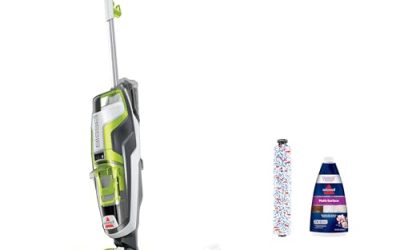
The CrossWave HydroSteam is the most complete steam extraction design in this guide. Bissell describes it as a three-in-one machine that vacuums, washes and steams floors at the same time, with HydroSteam technology combining water and steam to dissolve tough grease faster than steam-only cleaning. The extraction half is genuine liquid recovery: a dual-tank system keeps clean water and formula separate from the dirty water the machine vacuums back up, so a pass over a cooking-oil film in front of the hob removes the film instead of diluting it across the tiles. A tangle-free brush roll handles hair and fibre, and a one-touch self-cleaning cycle flushes the machine after use. For a household whose main complaint is the greasy zone around the cooker and sink, this is the machine designed most directly at the problem.
Specs
- Model 35151; corded wet dry vacuum that vacuums, washes and steams at once; HydroSteam technology; dual-tank system separating clean and dirty water; tangle-free brush roll; one-touch self-cleaning; multi-surface use on sealed hard floors and area rugs; sanitize formula included as listed
Best for: Greasy kitchen floors where dirty water recovery matters most
Watch out for: Tanks and the brush roll need rinsing after greasy sessions, and the corded design means planning a route around islands and appliances
2. Shark Steam Pickup, SD201

The Shark Steam Pickup takes a different route to the same promise. Shark describes it as a three-in-one machine that picks up debris, deep scrubs and steam sanitizes all at once, capturing and separating wet and dry debris within the nozzle so there is no need to sweep before steaming. That design suits the classic kitchen floor mixture: crumbs, dried sauce spots and a sticky patch under the table, handled in a single pass without a separate vacuum first. The honest distinction is in the extraction: waste is captured in the nozzle chamber rather than recovered as dirty water from a washing system, and there is no clean-water washing tank circuit like the CrossWave. Its listed water tank is small at 220 millilitres because water feeds the steam function rather than a wash cycle, and the machine is corded at 1,230 watts with a self-cleaning antimicrobial brush roll. Choose it when the floor’s problem is debris plus stuck spots rather than a whole-floor grease film, and when skipping the pre-sweep is the time saving you actually want.
Specs
- Model SD201; corded electric, 1,230 watts, 120 volts; picks up debris, scrubs and steam sanitizes in one pass; captures and separates wet and dry debris within the nozzle; water tank volume 220 millilitres; antimicrobial brush roll with storage tray and brush roll holder; for sealed hard floors including hardwood, tile and laminate as listed; dimensions 9.3 x 6.5 x 44.5 inches as listed
Best for: Mixed crumbs and stuck spills where no pre-sweeping is the priority
Watch out for: Debris capture is not the same as dirty water extraction, so heavy grease films are better matched to the CrossWave, and the small steam tank needs refilling on long sessions
3. Bissell Symphony Vac and Steam, 1132A

The Symphony is the oldest and simplest idea here, executed in one body: vacuum and steam at the same time. Its cyclonic vacuum lifts dry debris into a cup while steam cleans through a washable microfibre pad, with a soft pad and a scrubby pad covering everyday dirt and tougher spots. Extraction in this design means dry debris recovery, not liquid recovery, and the guide is explicit about that because it changes the use case: the Symphony keeps crumbs and dust from being pushed around by a steam mop, but a large liquid spill still needs soaking up first rather than being washed and extracted. Its numbers are practical: a 12.8-ounce water tank, an 11-inch cleaning path, a 25-foot cord and a heater warm-up of about thirty seconds. For everyday dust and light cooking splashes, it is a lighter, simpler machine than the CrossWave, with pads that go in the wash instead of tanks that need rinsing.
Specs
- Model 1132A; vacuum and steam mop in one for hardwood and tile floors; cyclonic vacuum action for dry debris; water tank capacity 12.8 ounces; cleaning path width 11 inches; power cord length 25 feet; heater warm-up time about 30 seconds; weight about 9.7 pounds as listed by secondary sources; includes microfibre soft pad and scrubby pad with detachable mop pad tray
Best for: Everyday sealed hard floors where dry debris plus light steam cleaning is the routine job
Watch out for: It does not recover dirty water, so greasy films and larger wet spills exceed its design, and pads need laundering to stay effective
Which One Fits
- A greasy film around the cooker and sink: the CrossWave HydroSteam, for washing plus steam plus dirty water recovery.
- Crumbs and stuck spots in one pass: the Shark Steam Pickup, for debris capture and scrubbing without a pre-sweep.
- Everyday dust and light splashes on sealed floors: the Bissell Symphony, for simple vacuum-and-steam cleaning with washable pads.
- A floor that is mostly dry dirt: any of the three works, so choose by how much wet mess you realistically face each week.
Common Mistakes
- Buying a steam-only mop or handheld steamer and expecting extraction that the machine does not have.
- Assuming steam is safe on every kitchen surface, including unsealed wood, unsealed grout and sensitive stone.
- Spreading grease with a pad system when the job really needs dirty water recovered into a tank.
- Ignoring the clean-up of the machine itself, leaving greasy tanks, chambers or pads to sit until the next use.
FAQ
What does extraction mean in a steam cleaner?
Extraction means the machine removes what the steam loosens instead of leaving it on the floor. Depending on the design, that removal is dirty water vacuumed into a recovery tank, debris captured in a nozzle chamber, or dry dirt lifted into a vacuum cup while a pad absorbs the residue.
Is a steam mop the same as a steam extraction cleaner?
No. A steam mop applies steam through a pad and the pad holds the dirt. It has no suction and no recovery tank. Steam extraction cleaners add a removal system to the steam, which is why this guide excluded steam-only models such as handheld steamers with no vacuum or recovery function.
Can steam extraction cleaners be used on kitchen worktops?
The machines in this guide are floor cleaners for sealed hard floors, not worktop tools. Their heads, tanks and extraction systems are designed around floor use. Worktops need a different, smaller tool and a method suited to the surface material and food contact.
Do these machines need cleaning solution?
It depends on the design. Washing systems such as the CrossWave are used with their maker’s floor formula in the clean tank. Steam-focused designs typically use plain water for steam. Follow the specific model’s instructions, because the wrong solution can damage seals, pads or the steam system.
Final Verdict
Choose the extraction method before the brand. The CrossWave HydroSteam is the strongest all-round kitchen pick because it washes, steams and recovers dirty water in one system. The Shark Steam Pickup is the better debris machine, and the Bissell Symphony is the simpler everyday option for dry dirt with light steam work. Any of the three beats a steam-only mop on a dirty kitchen floor, provided its recovery method matches the mess you actually make.

Write Your Review
No reviews yet. Be the first to share your experience!