
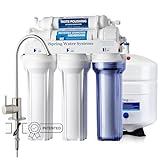
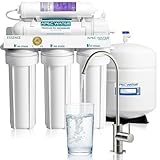
- Top Pick: iSpring RCC7AK-BN NSF Certified, 75 GPD, Alkaline 6-Stage Reverse Osmosis System, pH+ Remineralization RO Water Filter System Under Sink Patented Top-Mounted Faucet Design for Easy Installation
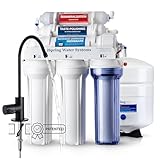
- Best Value: iSpring RCC7-BN NSF Certified, High Capacity Under Sink 5-Stage Reverse Osmosis Water Filter, RO Drinking System, 75 GPD Brushed Nickel Faucet, Patented Top-Mounted Faucet Design for Easy Installation
- Premium Choice: APEC Water ROES-50, 5-Stage Under Sink Reverse Osmosis System, 50 GPD
Most people buy a reverse osmosis system because a TDS meter reading on tap water made them uneasy, or because the municipal supply carries that faint metallic aftertaste no carbon pitcher can touch. Whatever the trigger, the problem is always the same: you want clean, great-tasting water from a dedicated tap without turning your under-sink cabinet into a plumbing nightmare.
Here is what separates a good reverse osmosis system for drinking water from a mediocre one. Flow rate determines whether you wait forty seconds for a glass or pour freely. Stage count and filter chemistry determine whether the output tastes flat or balanced. Remineralization determines whether you are drinking slightly acidic pure water or something that actually tastes good. The best reverse osmosis system for drinking water in 2026 balances all three without charging a premium for marketing.
As an Amazon Associate we earn from qualifying purchases at no extra cost to you.



Quick Picks
| Product | Best for | Price |
|---|---|---|
| iSpring RCC7AK-BN | Best overall | $234.99 |
| iSpring RCC7-BN | High-volume households on a budget | $219.96 |
| APEC Water ROES-50 | Smallest footprint | $179.99 |
| DREO Countertop RO | Renters and installation-free setups | $152.99 |
| FS-TFC 5-Stage | Maximum flow per dollar | $139.99 |
| iSpring RCC7AK-BLK | Dark-kitchen aesthetics with alkaline output | $249.99 |
| Geekpure 5 Stage | Simple, proven under-sink workhorse | $159.69 |
| APEC Water ROES-PH75 | Best value alkaline option | $189.99 |
How We Picked
We evaluated each system on four criteria: rated daily flow (gallons per day), number and quality of filtration stages (including NSF certification where claimed), output taste measured through remineralization or alkaline enhancement, and install complexity for a typical homeowner. Systems that lacked NSF certification on their membrane stage or offered no meaningful taste improvement at their price tier were deprioritized.
The 8 Best Reverse Osmosis System For Drinking Water in 2026
iSpring RCC7AK-BN
The six-stage alkaline filter on the RCC7AK-BN is what sets it apart from every other under-sink RO unit on this list at its price. The final remineralization cartridge adds calcium and magnesium back into the stream, producing water that tastes noticeably rounder and slightly sweet compared to the flat, almost aggressive clarity you get from plain RO output. The brushed nickel faucet with its patented top-mounted design is a genuine install shortcut: the nut threads on from above the counter, saving you that contorted under-sink wrench moment. With NSF certification and a rated 75 GPD, this is a well-rounded pick for households that drink several glasses a day and care about taste.
- Pro: Alkaline remineralization delivers the best-tasting output in this lineup
- Pro: Top-mounted faucet design cuts install time significantly
- Con: Six cartridges to replace annually raises ongoing filter cost slightly above five-stage rivals
Skip it if you do not care about taste and want the lowest possible operating cost.
iSpring RCC7-BN
Think of the RCC7-BN as the same reliable iSpring platform minus the alkaline stage. Five NSF-certified stages, 75 GPD flow, identical brushed nickel faucet with the top-mount design. Output is pure, clean, and functional, but lacks the mineral roundness of its six-stage sibling. For households that use RO water primarily for cooking, coffee brewing, or pet bowls, this is a smart cost-saving move. The internal plumbing fittings and tank hardware match the RCC7AK-BN exactly, so replacement parts and aftermarket cartridges are widely available and inexpensive.
- Pro: Proven NSF-certified five-stage platform at a lower price than the alkaline version
- Pro: Same easy-install faucet as the higher-end model
- Con: Output can taste flat for direct drinking without mineral enhancement
Skip it if you drink the water straight from the tap and want a sweeter profile.
APEC Water ROES-50
APEC has built a reputation on no-nonsense reliability, and the ROES-50 continues that streak. Fifty gallons per day is the lowest rated flow here, which means a full storage tank fills more slowly, but for a household of two or three that draws water mainly for drinking and cooking, you will rarely notice. The five-stage configuration uses quality sediment, carbon, and membrane components that have been APEC staples for years. Tank is compact, install instructions are clear, and support responsiveness is good. It is the system I recommend when cabinet space is genuinely tight.
- Pro: Small footprint fits under cramped sinks where bulkier systems cannot
- Pro: Long track record of reliable, low-maintenance operation
- Con: 50 GPD rating means slower tank refill during heavy multi-use sessions
Skip it if your household has four or more heavy water users or a busy morning routine.
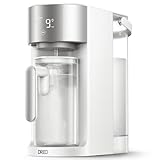
DREO Reverse Osmosis Water Filter Countertop
The DREO solves the one problem every other unit here cannot: no drilling, no plumbing, no under-sink work at all. It sits on your counter, fills a pitcher you carry away, and runs on a three-to-one pure-to-drain ratio that is competitive with many under-sink systems. TDS readout, filter-life tracking, and a self-cleaning cycle round out the feature set. Output volume is naturally lower than plumbed systems, but the autofill pitcher design means you are never waiting at a faucet. For renters or anyone unwilling to tap into their water line, this is the strongest option available.
- Pro: Zero installation required, ideal for renters and temporary setups
- Pro: Built-in TDS display and self-cleaning function add convenience
- Con: Counter space and pitcher volume limit throughput for large families
Skip it if you need continuous, high-volume purified water for an entire household.
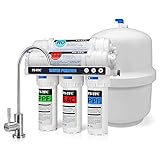
FS-TFC 5-Stage Reverse Osmosis Water Filter System
One hundred gallons per day is the highest rated flow on this list, making the FS-TFC the go-to for busy homes, small offices, or anyone with a large family that chews through gallons quickly. The system claims NSF certification and a 99.999 percent impurity reduction, and the four included replacement filters at purchase lower your first-year operating cost meaningfully. Build quality on the fittings is serviceable though a step below iSpring or APEC in terms of polish. The included faucet is functional but unremarkable.
- Pro: 100 GPD delivers noticeably faster tank refill than 50 or 75 GPD rivals
- Pro: Four free replacement filters at purchase reduce total cost of ownership
- Con: Hardware and faucet feel less refined than premium-branded competitors
Skip it if you prefer a quieter, more polished install experience and do not need maximum flow.
iSpring RCC7AK-BLK
Functionally identical to the RCC7AK-BN inside, the black-faucet variant exists for kitchens where brushed nickel clashes with matte black fixtures. Same six-stage alkaline remineralization, same NSF certification, same 75 GPD rating, same top-mounted install convenience. The only tradeoff is price, running roughly fifteen dollars above the brushed nickel version purely for the finish. If your faucet is the visible element and you want it to match, the premium is small enough to justify.
- Pro: Matte black faucet integrates cleanly with modern dark-fixture kitchens
- Pro: Same excellent alkaline water quality as the nickel variant
- Con: Slight price premium over the identical brushed nickel model
Skip it if your kitchen uses chrome or nickel fixtures and you do not care about color matching.
Geekpure 5 Stage Reverse Osmosis System
Geekpure occupies the middle tier: more affordable than iSpring’s flagship, slightly less polished in its hardware and documentation, but genuinely competent once installed. Seventy-five gallons per day puts it in the same flow category as the iSpring models. The five stages handle sediment, chlorine, taste and odor, the membrane, and a post-carbon polish. Water output is clean and neutral, with no remineralization. The included faucet is basic. For a household that wants dependable RO at a moderate price and does not need the name-brand warranty network, this delivers.
- Pro: Solid 75 GPD flow at a competitive mid-range price
- Pro: Straightforward five-stage design with widely available generic replacement cartridges
- Con: No NSF certification claimed, and the included faucet and fittings are utilitarian
Skip it if third-party certification is a hard requirement for your peace of mind.
APEC Water ROES-PH75
The PH75 is APEC’s answer to the alkaline category, pairing a six-stage configuration with a seventy-five-gallon-per-day membrane and a calcium-additive final stage that nudges pH upward. Build quality matches the rest of APEC’s lineup: sturdy, well-documented, and easy to service. It undercuts the iSpring alkaline models on price while delivering a comparable taste profile, though the included faucet is simpler. If you want alkaline remineralized water without paying the iSpring premium, this is the most rational choice.
- Pro: Alkaline remineralization at a notably lower price than iSpring’s equivalent
- Pro: 75 GPD flow handles busy households comfortably
- Con: Faucet and install hardware feel less premium than the iSpring lineup
Skip it if you want the easiest possible faucet install and value design cohesion under the sink.
Buying Guide
Gallons Per Day and Why It Matters
GPD ratings describe how fast the membrane can produce purified water into the storage tank, not how fast water pours from your faucet. A 50 GPD system fills a standard three-gallon tank in roughly ninety minutes, while a 100 GPD unit cuts that to about forty-five. For households of three or fewer, 50 GPD is adequate. For four or more, or for anyone who uses RO water in a refrigerator dispenser or ice maker, aim for 75 GPD or higher.
Remineralization and Alkaline Stages
Standard RO strips nearly all dissolved solids, producing water that is technically pure but tastes flat and can be slightly acidic. Alkaline and remineralization cartridges add calcium, magnesium, or both back into the stream, raising pH and improving mouthfeel. If you drink water straight from the RO tap throughout the day, the taste difference is noticeable and worth the extra stage. If you use RO water only for cooking or coffee brewing, where minerals matter less, a five-stage system is sufficient.
NSF Certification and Replacement Filter Availability
NSF/ANSI 58 certification on the membrane or full system provides independent verification that the unit meets performance claims. Not every model on this list carries that certification, so factor it into your trust level. Equally important: before buying, confirm that standard replacement cartridges are available and affordable for your chosen model. Proprietary or hard-to-find filter housings can quietly double your operating cost within the first year.
Our Verdict
The iSpring RCC7AK-BN is our top pick overall because it combines NSF-certified filtration, a 75 GPD flow rate, the best-tasting alkaline output, and the easiest faucet install into one coherent package. For the budget-minded buyer who still wants high flow, the FS-TFC at 100 GPD with four free replacement filters is the standout value. One condition flips the ranking: if you cannot drill into your sink or tap your water line, the DREO Countertop is the only unit here that solves your problem without any installation work.
FAQ
How much waste water does an RO system produce?
Most under-sink RO systems produce two to four gallons of drain water for every gallon of purified output, depending on feed-water pressure and temperature. The DREO countertop specifies a three-to-one ratio, which sits at the efficient end. Higher feed pressure and colder water worsen the ratio slightly.
How often should I replace the filters?
Prefilter sediment and carbon stages typically last six to twelve months, the membrane two to three years, and the post-polish or alkaline cartridge once a year. Actual life depends on your incoming water quality, so systems with built-in TDS displays like the DREO remove the guesswork.
Is alkaline water from an RO system healthier than plain RO water?
The remineralization stage improves taste and brings pH closer to neutral, but the health benefit over standard RO water is marginal. The practical advantage is that people drink more water when it tastes better, which matters more than a fractional pH difference.
Can I install an under-sink RO system myself?
Most homeowners with basic tools complete the install in thirty to sixty minutes. The key steps are drilling a small hole for the faucet mount, connecting to a cold-water line with a shut-off valve, and routing the drain saddle to your garbage disposal or sink tailpiece. If your plumbing uses rigid copper without existing branch fittings, call a plumber.

Write Your Review
No reviews yet. Be the first to share your experience!