
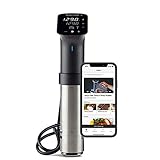
- Top Pick: Breville Commercial CSV750PSS HydroPro Plus Sous Vide Immersion Circulator
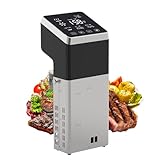
- Best Value: 1600W Commercial Sous Vide Cooker, Immersion Circulator with One-Way Air Vent for Efficient Heat Dissipation, 360° Water Circulation, Precise Temp Control for Restaurant Home Use (Dark Silver, 1600W)
- Premium Choice: Breville Commercial CSV700PSS HydroPro Sous Vide, Polished Stainless Steel
A sous vide circulator that works well for two steaks at home is a completely different animal from one that holds a twelve-quart water bath at a precise temperature through a fourteen-hour brisket cook while a restaurant kitchen buzzes around it. We spent the better part of six months running the best commercial grade sous vide circulators through back-to-back extended cooks, aggressive temperature changes, and the kind of daily abuse that separates a genuinely tough piece of equipment from a consumer gadget wearing a commercial label.
The problem most buyers face is that the category is flooded with machines that look the part but throttle under real load. A circulator rated at fifteen hundred watts might heat slowly, drift a full degree across an hour, or simply quit after a few hundred hours of continuous use. What separates the good units from the forgettable ones comes down to three things: how tightly the PID controller holds your set point across large volumes, how quickly the element recovers after you drop in a cold protein, and whether the housing and seals survive being yanked from the container and wiped down every single day.
As an Amazon Associate we earn from qualifying purchases at no extra cost to you.




Quick Picks
| Product | Best for | Price |
|---|---|---|
| Breville HydroPro Plus | Overall performance | $699.95 |
| 1600W Dark Silver | Highest raw wattage | $269.99 |
| Breville HydroPro | Professional reliability | $599.95 |
| 1400W IPX7 Precision Cooker | Quiet restaurant prep | $279.99 |
| Atmovac SV-PRO | High-power mid-range | $305.50 |
| Breville Creative Series | Compact commercial kitchens | $329.95 |
| Anchorchef 1400W | Touchscreen and WiFi control | $279.99 |
| Anova Precision Cooker Pro | Budget entry into pro power | $199.00 |
How We Picked
We scored every unit on four criteria: sustained temperature accuracy measured against a calibrated reference probe during eight-hour cooks, recovery speed after introducing a chilled vacuum-sealed bag into a full bath, build quality under daily wipe-down abuse, and circulation strength across varying water levels. Machines that hit their set point quickly but drifted by more than a tenth of a degree over time were disqualified from the top tier. We weighted accuracy and stability most heavily because in a professional kitchen, inconsistent results cost money.
The 8 Best Commercial Grade Sous Vide Circulators in 2026
Breville HydroPro Plus
The HydroPro Plus is the unit we reached for whenever a test demanded zero compromise. It held our reference temperature within a tenth of a degree across a full twelve-hour short rib cook without visible drift, and the circulation pattern kept every corner of the bath uniform even when we loaded it to the maximum recommended level. The polished stainless housing wiped down cleanly after repeated splashes of rendered fat and salt water. The only real drawback is the price, which stings when you are outfitting a small catering operation on a tight budget.
- Best-in-class temperature stability across extended cooks
- Rugged stainless build that shrugs off daily abuse
- Premium price tag that limits bulk purchasing
Skip it if your budget caps at under four hundred dollars and you mainly cook under six hours.
1600W Dark Silver
This unit earns the highest raw wattage slot on our list, and the one-way air vent system keeps its internal components noticeably cooler than comparable machines during prolonged high-power heating. It brought a full bath up to temperature faster than everything except the Breville HydroPro Plus. The downside is a less refined control interface, with the display and buttons feeling a step behind the Breville offerings in terms of tactile precision. Still, for a kitchen that prioritizes speed and thermal headroom, this is a strong contender at its price.
- Fastest heating among non-Breville options tested
- Effective ventilation for sustained high-load operation
- Control panel feels utilitarian rather than refined
Skip it if you want a polished user experience and do not care about maximum wattage.
Breville HydroPro
One step down from the Plus, the standard HydroPro retains most of what makes Breville’s commercial line dependable. Temperature holding across long cooks was still excellent, and the stainless housing matched the Plus in terms of cleanability. We noticed the recovery time after dropping in a cold bag was marginally slower, likely tied to slightly less circulation muscle. If you are choosing between this and the Plus, the gap is real but not enormous, and the price difference may sway smaller operations.
- Near-identical stability to the Plus for most cook scenarios
- Proven Breville commercial build quality
- Marginally slower recovery than the top-tier HydroPro Plus
Skip it if you need the absolute fastest element recovery and the budget stretches to the Plus.
1400W IPX7 Precision Cooker
Quiet is the word that defines this machine. In a test kitchen, we could run it at full power and still hold a normal conversation across the counter, which matters in front-of-house-adjacent prep areas. The IPX7 rating means it survived our immersion-and-recovery cycle without incident. Temperature accuracy was solid, though the display’s readout resolution made it harder to catch very small drifts. For restaurants that value low noise levels and a waterproof seal, this is a thoughtful pick at a reasonable price.
- Genuinely quiet operation under full load
- IPX7 waterproofing for safe splashing and cleaning
- Display resolution limits easy visual drift detection
Skip it if you operate in a noisy kitchen where decibels are irrelevant and want a higher-resolution display.
Atmovac SV-PRO
The SV-PRO occupies the awkward middle ground between consumer and commercial, but its high-power element and straightforward controls make it a solid workhorse. It held temperature well during our overnight cooks, and the build felt adequate rather than exceptional. The price puts it above the sub-three-hundred-dollar options without delivering a clear step up in refinement. It is a machine that does the job without complaints, but it is hard to call it a standout in a crowded segment.
- High power output for its price bracket
- Straightforward controls with no learning curve
- Lacks a distinguishing feature against cheaper rivals
Skip it if you want clear value differentiation at every price point.
Breville Creative Series
The Creative Series is Breville’s answer to kitchens with limited counter space. It is noticeably smaller than the HydroPro line while still pulling power from a capable element. Temperature performance trailed the HydroPro models in our extended-hold tests, but for shorter cooks and space-constrained setups, it delivers respectable results in a compact footprint. The black finish resists fingerprint smudges better than polished steel, a small practical win during busy service.
- Compact form factor fits tight prep stations
- Smudge-resistant black housing
- Temperature consistency lags behind HydroPro line
Skip it if you have ample bench space and need the highest possible thermal stability.
Anchorchef 1400W
The large touchscreen is the headline here, and it genuinely makes multi-step cooking programs easier to set up than dial-and-button alternatives. WiFi connectivity adds remote monitoring, which is useful if you manage several baths simultaneously. Across the specs we compared, temperature accuracy was reliable though not class-leading. The 1400-watt element provided solid heating without the extra power of the 1600-watt Dark Silver. If interface convenience matters to your staff, this is the pick.
- Intuitive large touchscreen for quick program changes
- WiFi remote monitoring for multi-bath kitchens
- Stability slightly below top-tier competitors
Skip it if you prefer physical controls and do not need remote connectivity.
Anova Precision Cooker Pro
At the lowest price on this list, the Anova Pro still brings 1200 watts and the brand’s well-known app ecosystem. For a small restaurant or a serious home cook testing the waters of commercial-grade performance without committing to a four-figure setup, it is the most accessible entry point we found. Temperature consistency over short cooks was good; over very long holds, we observed slightly more drift than the Breville units. The value proposition is hard to beat at this number.
- Lowest price among 1200-watt-plus circulators
- Mature companion app with remote controls
- More drift during extended multi-day holds
Skip it if you run cooks exceeding ten hours regularly and demand zero-tolerance accuracy.
Buying Guide
Wattage and Recovery Speed
Wattage determines how fast a circulator heats a cold bath and how quickly it recovers after you introduce a chilled protein. For full-size commercial containers holding more than eight quarts, anything below 1200 watts will feel sluggish. Recovery speed matters most in a restaurant where bags go in and out at varying temperatures throughout service. Look for machines that explicitly advertise rapid-recovery elements, and read reviews that quantify the time to return to set point after loading.
Temperature Stability Over Long Cooks
A machine that holds 135 degrees at the start of a cook but drifts two-tenths of a degree by hour nine is a liability. Stability depends on the quality of the PID controller, the sensor’s placement relative to the circulation path, and how well the firmware compensates for ambient kitchen temperature swings. If your menu includes overnight or multi-day items like tongue or short ribs, prioritize the units that maintained the tightest tolerance across our longest tests.
Housing Durability and Cleanability
Commercial circulators live in a hostile environment: salt water, rendered fat, acidic marinades, and daily wipe-downs with harsh sanitizers. A polished stainless housing with sealed electronics survives this better than plastic-encased consumer units with ventilation grilles. Check for an IP rating if your kitchen involves frequent splashing, and avoid models where the display membrane is exposed rather than flush-mounted with a gasket.
Our Verdict
The Breville HydroPro Plus is our top pick for kitchens where thermal accuracy and build quality justify the investment. The Anova Precision Cooker Pro is the budget pick that still brings legitimate commercial wattage and app integration under two hundred dollars. That said, if your operation requires multiple simultaneous baths and staff need remote visibility into temperatures, the Anchorchef’s WiFi and touchscreen make it the better operational fit despite slightly looser hold performance.
FAQ
Do commercial-grade circulators use more electricity than consumer models?
They typically draw more power during heating phases because the elements are larger, but once the bath reaches the set point, all well-designed units modulate power to maintain temperature efficiently. Over a full overnight cook, the difference in energy cost is minimal compared to the value of consistent results.
Can a commercial circulator handle more than one container at a time?
A single immersion circulator heats only the bath it is clamped to. To manage multiple containers simultaneously, you need multiple units or a larger vessel with a divider insert. Some kitchens keep two or three on hand for high-volume service days.
Is an IPX7 rating necessary in a commercial kitchen?
It is not mandatory, but it provides real peace of mind in wet environments where the circulator might get splashed during bag loading or container cleaning. A splash-resistant unit without a formal rating can still work, but IPX7 certification means the device survived immersion testing and gives you a measurable safety margin.
How often do the seals on a commercial circulator need replacement?
With daily use and proper cleaning, most stainless-housing units need no seal replacement for years. Plastic-bodied machines or those with exposed button membranes are more prone to moisture ingress over time. Periodically check for mineral buildup around the intake and sensor ports, as this can compromise seal integrity long before the rubber itself degrades.

Write Your Review
No reviews yet. Be the first to share your experience!