
Our Short List of 3

- Thrust: 55 lb
- Voltage: 12 volts
- Shaft length: 30 inches
- Speeds: 5 forward, 3 reverse
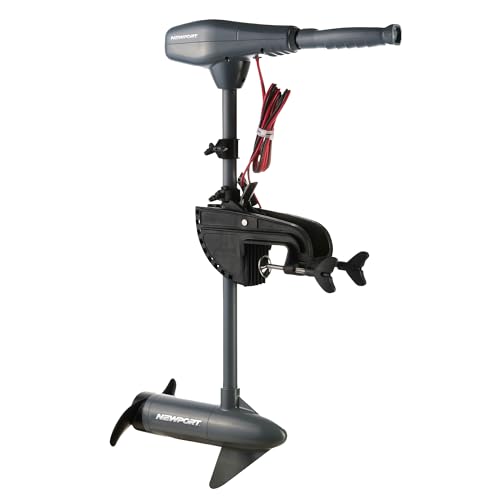
- Thrust: 55 lb (0.83 HP equivalent)
- Voltage: 12 volts
- Shaft length: 24 inches, height adjustable
- Speeds: 5 forward, 3 reverse

- Engine: 4-stroke, single cylinder
- Displacement: 140cc
- Maximum output: 3.75 kW (6HP)
- Full throttle range: 4500-5500 rpm
All 4 Picks at a Glance
| Product | Specs | Action |
|---|---|---|
| Newport NV-Series 55lb Thrust Saltwater Transom Mounted Trolling Motor (23M1000203) |
| Check price on Amazon |
| Newport Kayak Series 55lb Thrust Transom Mounted Saltwater Trolling Motor (23M1000403) |
| Check price on Amazon |
| HANGKAI 4-Stroke 6HP Outboard Motor, Short Shaft (GrfceVue) |
| Check price on Amazon |
 DUIBAII HANGKAI 2-Stroke 18HP Outboard Motor, Short Shaft |
| Check price on Amazon |
Shopping for an outboard motor online works a little differently than shopping at a marina. The big legacy brands sell their outboards almost entirely through dealer networks, so the motors a buyer can actually order from Amazon fall into a clear, portable class: electric transom-mount motors in the trolling class, and compact gasoline outboards from high-volume makers such as Hangkai. That is the class this roundup covers. Every motor below is a complete, ready-to-mount outboard sold as a single unit, with published thrust or horsepower figures, shaft dimensions and weights taken from the maker’s own listing data.
The four picks split neatly into two pairs. The two Newport motors are 12-volt electrics that clamp onto a transom and run from a separate deep cycle battery, which suits quiet water, small fishing boats, kayaks and inflatables. The two Hangkai gasoline motors are self-contained engines with their own fuel supply, manual pull starting and tiller steering, which suits owners who want more push and longer running time without carrying a heavy battery bank. Between the two pairs, most small-boat jobs are covered: silent trolling and dock-to-dock tender work at one end, and planing power for a loaded fishing boat at the other.
One point worth settling before the details: an electric trolling-class motor and a gasoline outboard are not interchangeable answers to the same question. Thrust in pounds and horsepower describe different things, and the buying guide after the product sections explains how to compare them, how to match shaft length to a transom, and what else each type needs before it can push a boat. Read the picks with your own hull in mind, because the right motor for a kayak and the right motor for a 14-foot aluminum fishing boat are very different machines.
Disclosure: As an Amazon Associate, we earn from qualifying purchases made through links on this page, at no extra cost to you.
The Picks
Newport NV-Series 55lb Thrust Saltwater Transom Mounted Trolling Motor (23M1000203)
- Thrust: 55 lb
- Voltage: 12 volts
- Shaft length: 30 inches
- Speeds: 5 forward, 3 reverse
The NV-Series is Newport’s core electric line, and the 55-pound thrust version is the largest of the smaller sizes in the range. It is a 12-volt transom-mount motor with a 30-inch shaft, designed to work as the main propulsion on small fishing boats, inflatables and tenders, or as a trolling motor alongside a larger engine. The maker publishes a maximum draw of 52 amps and recommends a single 12-volt deep cycle battery of 50 amp-hours or more, in either lead-acid or lithium chemistry. A 50-amp circuit breaker is included and the maker recommends keeping it wired in at all times to protect the motor from voltage surges when the propeller fouls.
Control is through a 6-inch telescoping tiller handle with eight speed settings in total, five forward and three reverse, and a five-LED battery meter on the head shows the remaining charge at a glance. The three-blade propeller is shaped for low-end torque, which is what gets a loaded boat moving from a standstill. The mount, shaft height and steering direction all adjust and lock in place, so the motor can be trimmed to sit at the right depth behind different transoms. At 23.2 pounds it is light enough to carry from a car to a launch ramp in one hand, and because the head and hardware are built for saltwater as well as fresh water, it does not need to be treated as a freshwater-only tool. For anglers who fish electric-only lakes, or tender owners who shuttle between a moored boat and the shore, this is the straightforward pick of the two electrics here.
Newport Kayak Series 55lb Thrust Transom Mounted Saltwater Trolling Motor (23M1000403)
- Thrust: 55 lb (0.83 HP equivalent)
- Voltage: 12 volts
- Shaft length: 24 inches, height adjustable
- Speeds: 5 forward, 3 reverse
The Kayak Series takes the same electrical layout as the NV-Series and shrinks the package for low, narrow boats. The shaft is a height-adjustable 24-inch fiberglass unit, six inches shorter than the NV motor above, so the propeller sits at the correct depth behind a kayak or canoe transom without the shaft towering over the paddler. Thrust is the same 55 pounds, which Newport publishes as a 0.83 horsepower equivalent, and the motor keeps the same eight-speed layout of five forward and three reverse settings, the same LED battery indicator and the same telescoping handle concept.
Because a kayak has limited room for wiring runs, the details that matter here are the compact head, the adjustable shaft depth and the 60-amp circuit breaker sized for this model’s 52-amp maximum draw. The motor weighs 23 pounds, which is a meaningful figure on a kayak where every added pound changes how the hull sits and paddles when the battery runs down. It is built for saltwater and freshwater alike, with corrosion-resistant hardware, so it can move between a coastal flat and an inland lake without a change of equipment. Anglers who motor out to a spot and then paddle or pedal quietly will find the short shaft and light weight easier to live with than a full-size transom motor, and owners of small canoes and compact inflatables get the same benefit in hulls that sit low on the water.
HANGKAI 4-Stroke 6HP Outboard Motor, Short Shaft (GrfceVue)
- Engine: 4-stroke, single cylinder
- Displacement: 140cc
- Maximum output: 3.75 kW (6HP)
- Full throttle range: 4500-5500 rpm
The first of the two gasoline picks is a single-cylinder 140cc four-stroke rated at 6 horsepower, with a maximum output of 3.75 kilowatts across a 4500 to 5500 rpm working range. Four-stroke running is the draw here: the engine burns straight gasoline with separate engine oil, so there is no fuel-and-oil mixing before a trip, and the maker publishes fuel consumption of about one liter per hour. A built-in 0.32-gallon fuel tank keeps the package self-contained for short runs, and the TCI ignition system is there to make the manual pull start predictable on cold mornings.
The motor uses air cooling rather than a water pump, which removes one maintenance item and suits shallow, weedy water where a water intake can clog. The short shaft is sized for transom plate heights up to 44 centimeters (17.32 inches), and the gear set offers forward and neutral. At 46.19 pounds it is a two-handed lift, but still a one-person job to clamp onto a small aluminum boat, a rubber boat or a tender. Published figures put its working speed range at roughly 4 to 15 kilometers per hour depending on the hull and load, which is planing territory for a light dinghy and a steady push for a loaded one. For owners who want gasoline range and pace without stepping up to a heavy engine, this is the balanced pick of the two fuel-burning motors in this roundup.
DUIBAII HANGKAI 2-Stroke 18HP Outboard Motor, Short Shaft
- Engine: 2-stroke, 2 cylinders
- Displacement: 246cc
- Maximum output: 13.2 kW (18HP)
- Full throttle range: 4500-5500 rpm
The largest motor in this roundup is the 18-horsepower Hangkai two-stroke, sold here under the DUIBAII store brand. Its 246cc twin-cylinder engine publishes a maximum output of 13.2 kilowatts in a 4500 to 5500 rpm range, with water cooling, CDI ignition and a 2.08 (27:13) gear ratio driving a three-blade propeller. Unlike the 6HP motor above, this one has a full forward, neutral and reverse gear set, tiller control and manual tilt, and it feeds from a separate 24-liter (6.34 gallon) external fuel tank that is included in the box along with an oil-pumping pipe, a flameout safety rope, a tool kit and a manual.
Two-stroke running means the fuel and oil are pre-mixed, at a published 50:1 ratio after the running-in period, and the maker notes the engine ships without gear oil, which must be filled before the first start. Net weight is published at 38.6 kilograms, so this is a motor that lives on the boat for the season rather than one that comes off after every trip. The maker positions it for fishing boats, wooden boats, rubber boats and other craft with a stern height of 17.32 inches or less. Buyers who need to move a heavier hull, carry several passengers or cover longer distances between spots are the audience for this pick; it is the power option of the four, and the one that asks the most setup care in return.
Buying Guide: Matching a Portable Outboard to Your Boat
Start with the power source, because it decides everything else. An electric transom motor is quiet, starts with a twist of the handle and needs no fuel handling, which is why electric-only waters and short fishing sessions suit it so well. Its limits are set by the battery: thrust figures in pounds describe pulling force at the propeller, and a 55-pound thrust motor on a 12-volt system is a small-boat tool, not a substitute for a mid-size gasoline engine. A gasoline outboard carries its energy with it, refuels in minutes and pushes bigger hulls faster, in exchange for noise, exhaust, pull starting and routine engine care.
Thrust and horsepower cannot be compared number for number. Newport publishes a 0.83 horsepower equivalent for its 55-pound thrust motors, which gives a sense of scale: the electrics here sit below one horsepower, the 6HP four-stroke is a genuine small outboard, and the 18HP two-stroke is in a different class again. Match the motor to the hull’s size, typical load and the water it runs on. Wind, current and a full load of passengers and gear all eat into what any of these motors can do, so buyers at the top of a motor’s comfortable range on a calm day should consider stepping up a size.
Shaft length is the fitment detail that matters most. The shaft has to put the propeller fully under water while keeping the motor head clear, and it is chosen against the height of the boat’s transom. The gasoline motors here are short shaft models for transoms up to about 17.32 inches, the NV-Series electric uses a 30-inch shaft and the Kayak Series a 24-inch adjustable shaft for low hulls. A shaft that is too short ventilates and loses grip; one that is too long drags and can strike the bottom in shallow water.
Plan the supporting gear before ordering. The electrics need a 12-volt deep cycle battery, ideally 50 amp-hours or more for the 55-pound models, plus the included circuit breaker wired in line. The two-stroke needs its oil measured and mixed, a supply of the correct fuel and gear oil in the lower unit before the first start, and a freshwater flush after saltwater use. The four-stroke needs its engine oil checked and changed on schedule instead. In many places a boat also has to be registered once a motor of any kind is fitted, and some waters restrict gasoline engines or two-strokes in particular, so local rules are worth checking before the first launch rather than after.
Frequently Asked Questions
Can an electric trolling motor be the only motor on a small boat?
Yes, on small and light hulls. A 55-pound thrust transom motor is published for exactly that job on fishing boats, inflatables, canoes and kayaks, and it will move a tender or a small aluminum boat at low speed for hours on a suitable deep cycle battery. It is not a planing motor, so boats that need to travel fast or far are better served by one of the gasoline picks.
What battery do the Newport motors need?
Both Newport picks run on a single 12-volt deep cycle battery, with 50 amp-hours or more recommended, in lead-acid or lithium form. The battery is not included. A larger battery runs the motor longer rather than harder, and the included circuit breaker should stay wired in to protect the motor if the propeller jams.
Does the 18HP two-stroke need anything before its first start?
Yes. The maker states the engine ships without gear oil, so the gearbox has to be filled first, and the fuel must be pre-mixed with two-stroke oil at the published ratio, using a leaner oil mix only during the running-in period as the manual directs. Skipping the gear oil step is the fastest way to damage this class of engine.
How do I choose between the 6HP four-stroke and the 18HP two-stroke?
Choose by hull and load. The 6HP four-stroke, at about 46 pounds with a small built-in tank, suits light dinghies, rubber boats and tenders and burns straight gasoline with no mixing. The 18HP two-stroke, at 38.6 kilograms with a 24-liter external tank, suits heavier fishing boats and longer runs, and adds a reverse gear, in exchange for fuel mixing and more setup care.
Conclusion
The portable outboard class that Amazon actually sells is narrower than the full outboard market, but it covers small-boat needs well. The Newport NV-Series 55lb is the general-purpose electric for small fishing boats and tenders, the Newport Kayak Series 55lb adapts the same thrust to kayaks and canoes with a shorter adjustable shaft, the Hangkai 6HP four-stroke adds gasoline range and planing pace in a 46-pound package, and the Hangkai 18HP two-stroke is the heavy lifter for bigger hulls and longer days. Match the shaft to the transom, size the battery or fuel supply to the trip, and any of the four will do the job it is published to do.


Write Your Review
No reviews yet. Be the first to share your experience!