
For lemons and limes, a hand-operated lever press is the best citrus juicer for most kitchens, and the stainless-steel presses from Zulay Kitchen and Bagrox are the sturdiest-looking options on this list. They take a drawer’s worth of space, rinse under the tap, and reach into the half-fruit with real leverage. If your household squeezes a dozen fruits at a time, the Elite Gourmet ETS623 electric juicer is the one exception in this group, and it solves a different problem entirely.
This guide covers eight listings: seven manual presses and one electric model. We work from published titles, manufacturer documentation and buyer feedback, so where a listing does not state something, we say “check the listing” rather than guess. Prices are shown as relative tiers because they move around. Along the way you will find a worked limeade calculation, a bowl-size cheat sheet, and a short seed-and-pulp checklist you can use in the store aisle or on a product page.
Side-by-side: all eight juicers

Zulay Kitchen Metal 2-in-1 Lemon Lime Squeezer, Juicer Handheld - Yellow | Citrus Juicer, Lemon Press Manual, Stainless Steel, Max Extraction Hand Juicer Gets Every Last Drop, Easy to Clean & Use
Included for 'Best Citrus Juicers for Lemons and Limes: 8 Picks Compared' as a representative product in this roundup; selection reflects the product set returned for this topic.
View on Amazon
Lemon Squeezer, Stainless Steel Lemon Juicer, Manual Juicer | Manual Juicer for Lemon Citrus Lime Orange, Handheld citrus Squeezer, Heavy Duty, Exprimidor De Limones
Included for 'Best Citrus Juicers for Lemons and Limes: 8 Picks Compared' as a representative product in this roundup; selection reflects the product set returned for this topic.
View on Amazon
Elite Gourmet ETS623 Electric Citrus Juicer, 24 oz, Black/Stainless Steel | BPA-Free 40-Watt motor, compact large-volume pulp control - juices oranges, lemons, limes & grapefruits, easy-pour spout
Included for 'Best Citrus Juicers for Lemons and Limes: 8 Picks Compared' as a representative product in this roundup; selection reflects the product set returned for this topic.
View on Amazon
TEZZ Premium Lemon Squeezer, Large Heavy Duty Handhelp Juicer for Lemon, Metal Hand Press Citrus Juicer, Lime Squeezer Bar Tool, Manual Citrus Press
Included for 'Best Citrus Juicers for Lemons and Limes: 8 Picks Compared' as a representative product in this roundup; selection reflects the product set returned for this topic.
View on Amazon
IMUSA Lemon or Lime Manual Squeezer, Citrus Juicer for Max Extraction, Green
Included for 'Best Citrus Juicers for Lemons and Limes: 8 Picks Compared' as a representative product in this roundup; selection reflects the product set returned for this topic.
View on Amazon
Lemon Squeezer Stainless Steel with Premium Quality Heavy Duty Solid Metal Squeezer Bowl - Large Manual Citrus Press Juicer and Lime Squeezer Stainless Steel - by Zulay Kitchen
Included for 'Best Citrus Juicers for Lemons and Limes: 8 Picks Compared' as a representative product in this roundup; selection reflects the product set returned for this topic.
View on Amazon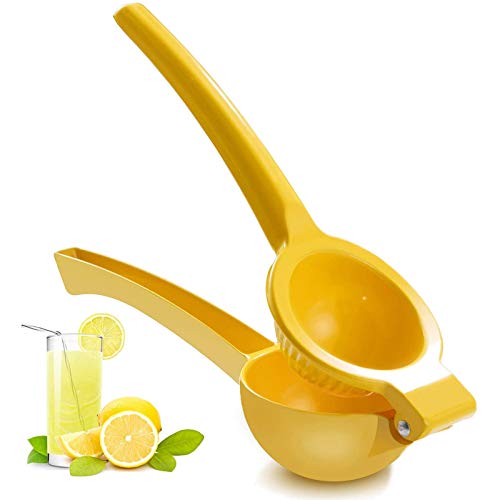
Y-ME Manual Juicer Citrus Lemon Squeezer, Fruit Juicer Lime Press Metal, Professional Hand Juicer Kitchen Tool(Yellow)
Included for 'Best Citrus Juicers for Lemons and Limes: 8 Picks Compared' as a representative product in this roundup; selection reflects the product set returned for this topic.
View on Amazon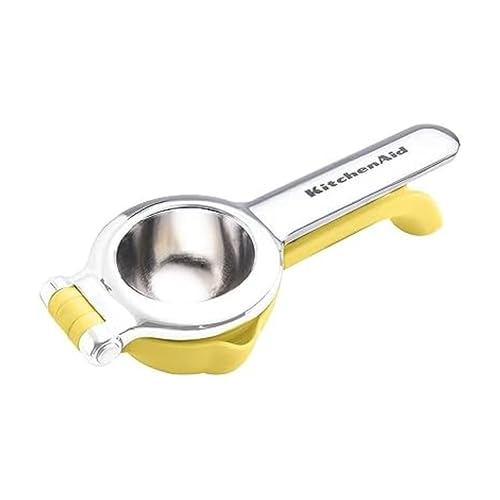
KitchenAid Citrus Juice Press Squeezer for Lemons and Limes with Seed Catcher and Pour Spout, Lemon, 8 Inch
Included for 'Best Citrus Juicers for Lemons and Limes: 8 Picks Compared' as a representative product in this roundup; selection reflects the product set returned for this topic.
View on AmazonThe “Price tier” column compares each product to the rest of this set only. With every item in a fairly narrow band, even “Premium” here means a modest outlay for a kitchen tool.
| Model | Type and build (from the title) | Price tier | Best for |
|---|---|---|---|
| Zulay Kitchen Metal 2-in-1 Lemon Lime Squeezer (yellow) | Manual press, metal, stainless steel | Mid-range | All-round daily lemons and limes |
| Bagrox Stainless Steel Lemon Juicer | Manual handheld, stainless steel, heavy duty | Mid-range | Shoppers who want steel and a larger bowl |
| Elite Gourmet ETS623 Electric Citrus Juicer | Electric, 40-watt motor, 24 oz, pulp control | Mid-range | Batches and mixed citrus |
| TEZZ Premium Lemon Squeezer | Manual metal hand press, “bar tool” | Budget | Bartending and occasional use |
| IMUSA Lemon or Lime Manual Squeezer (green) | Manual squeezer, lemon or lime | Budget | First juicer or backup |
| Zulay Kitchen Lemon Squeezer Stainless Steel (solid metal bowl) | Large manual citrus press, stainless steel | Premium | Larger lemons and heavy use |
| Y-ME Manual Juicer Citrus Lemon Squeezer (yellow) | Manual metal press, “professional” | Budget | Low-cost metal press |
| KitchenAid Citrus Juice Press (8 inch) | Manual press with seed catcher and pour spout | Premium | Mess-averse cooks |
The eight juicers, one at a time
Zulay Kitchen Metal 2-in-1 Lemon Lime Squeezer: the sensible default
This yellow press is named for lemons and limes in its title and describes itself as metal and stainless steel, with claims about maximum extraction and easy cleaning. Those are marketing phrases, so read them as the maker’s intent rather than a measured result. The “2-in-1” label most likely points to two bowl sizes or two fruit uses, but the title does not spell it out, so confirm on the product page which fruits the two halves are meant for.
The appeal of this format is simple physics. Two handles act as a lever, the bowl flips the fruit half inside out, and perforations let juice pass while holding back most seeds. A lever of this kind multiplies your grip force, so a soft-handed cook can squeeze a stiff, cold lime without wrestling it. Rinse promptly, because dried citrus sugars cling to the holes.
What you cannot know from the title is the weight, the handle coating, or how closely the two halves line up under pressure. If the hinge pin has play, the halves can twist and fruit can squirt out the sides. Buyer questions on the listing page are the best place to look for that kind of detail.
Pros
- Described as stainless steel and metal, a good sign for a tool that sees acidic juice daily
- Named for both lemons and limes, so the target use matches this guide’s keyword
- Lever design gives leverage for firm or cold fruit
- Stores flat in a drawer with no cord or motor
Cons
- “2-in-1” is not defined in the title, so check what the second function is
- Painted or colored finishes can wear over time, so hand washing is the safer routine
- Sized for halves, so a large grapefruit will not fit; check the listing for fruit limits
Who it’s for: anyone who wants one reliable press for cocktails, dressings and weeknight cooking without spending much.
Bagrox Stainless Steel Lemon Juicer: the heavy-duty steel press
Bagrox’s listing describes a stainless steel manual juicer for lemon, lime and orange, calling it handheld and heavy duty. Oranges appear in the title, which hints at a larger bowl than a purely lemon-and-lime press, but the title does not give a diameter, so check the product page if you plan to juice anything beyond limes and small lemons.
Steel presses of this style usually feel more rigid than plastic-handled designs, and rigidity matters when you are pressing a dense half-orange. Because the listing says nothing specific about coatings, assume nothing about how the finish resists scratches or color transfer from pulp, and look for photos from buyers after a few months of use.
It also helps to think about what you are juicing. If most of your fruit is limes, a larger bowl can leave a gap around the half, letting juice escape sideways or letting the rind fold unevenly. If you are mixing lemons and limes, a mid-sized bowl is a reasonable compromise. The best way to tell is to compare the product photos against a lime you have at home.
A useful sanity check is to line up the listing photos with a real orange half. If the bowl looks barely larger than a lime, the orange mention is optimistic, and a roomier press from this list would suit big fruit better.
Pros
- Stainless steel construction stated in the title
- Named for lemon, lime and orange, so it targets more than one fruit
- “Heavy duty” positioning suggests it is meant for frequent use
- No electricity, so it works at a campsite, boat galley or kitchen alike
Cons
- Dimensions and weight are not in the title, so fit with small limes is unconfirmed
- May feel heavier in the hand than lighter alloy presses
- Some buyers prefer a built-in cup or catch bowl, which a plain press does not provide
Who it’s for: cooks who juice a mix of lemons, limes and the occasional orange and want a rigid steel tool.
Elite Gourmet ETS623 Electric Citrus Juicer: the odd one out
This is not a squeezer in the same sense as the rest of the list. The title calls it an electric citrus juicer with a 24 oz capacity and a 40-watt motor, finished in black and stainless steel, with pulp control, an easy-pour spout, and BPA-free parts. It says it juices oranges, lemons, limes and grapefruits, which fits the reamer-cone style: you press a halved fruit onto a spinning cone and the juice collects in a pitcher.
Its job is volume. If a recipe asks for the juice of ten limes, or you make a pitcher of lemonade every weekend, a motor saves your hands. The trade-off is more parts to wash and more counter space. The listing does not tell you about noise, cone sizes, or which parts are dishwasher safe, so verify those before buying.
It is also the right answer when someone in the household has sore wrists. Pressing fruit onto a cone needs gentle downward pressure rather than a hard squeeze, which can make daily juicing more comfortable than a lever press. That said, the pulp control and spout details are the maker’s claims, and you should read the manual that ships with the unit for assembly, cleaning and cord-safety guidance.
Pros
- 24 oz container (per the title) holds a decent batch
- Motor does the squeezing, helpful for large volumes or limited grip strength
- Handles a range of citrus, including grapefruit
- Pulp control and a pour spout are listed features
Cons
- Takes more storage space than any press here
- More pieces to rinse, and the base should never be submerged
- Needs an outlet, so no outdoor or travel use without power
Who it’s for: households that juice in batches and want to hand the work to a motor.
TEZZ Premium Lemon Squeezer: the bar-tool pick
TEZZ labels this a large, heavy-duty handheld juicer in metal, positioned as a “bar tool” for lemon and lime. The word “premium” in the name is a brand choice rather than a measured grade, and it does not indicate a higher price tier here; within this group it sits near the bottom.
The bartender angle is a useful frame. Cocktails typically ask for small amounts of juice, such as half an ounce to an ounce, squeezed fresh per drink. A press that stays near the cutting board and rinses in one pass is ideal for that rhythm, and a metal build holds up to being tossed in a bar sink. For service use, a press that does not need much cleaning between drinks is more valuable than one that squeezes the last drop.
The listing does not describe the finish or hinge, so we cannot say how it holds up. Lower prices often come with thinner stock metal, so scan buyer photos for bent handles. If you notice complaints about halves misaligning, that is a signal to look elsewhere.
If you do buy it for a home bar, keep a small towel beside it, because wet metal presses slide on a bare counter, and a quick wipe between drinks keeps the hinge from gumming up with sugar.
Pros
- Metal construction named in the title
- “Large” and “heavy duty” in the listing language suggest a roomy bowl, though dimensions are not stated
- Budget-tier pricing within this set
- Fits a home bar or a camping kit
Cons
- Exact alloy and coating are not stated; check before assuming stainless
- Misalignment under heavy squeezing is a common risk for budget presses
- No seed catcher or pour spout is mentioned
Who it’s for: home bartenders and casual cooks who want a low-cost metal press.
IMUSA Lemon or Lime Manual Squeezer: the bare-bones starter
IMUSA’s green squeezer is the cheapest in this group, and the title keeps its claims modest: a manual squeezer for lemon or lime, aimed at maximum extraction. The “or” in the name matters. It suggests one bowl size, which is perfectly fine if your fruit is uniformly small.
This is the kind of tool that earns its drawer space on a simple premise. You buy it, you squeeze limes for tacos and drinks, and you stop thinking about it. The tradeoff is that budget presses sometimes feel flimsy, and the title does not say whether the green is a painted finish, a coating, or a color applied to bare metal. For daily heavy squeezing, that could shorten its life.
It also works well as a second juicer. Many kitchens keep a nicer press for lemons and keep a cheap one near the bar cart or grill for limes. A backup juicer is easy to justify at this tier, because replacing it costs less than a takeout side dish. Inspect it on arrival, test the hinge, and return it if the halves do not align.
When it arrives, squeeze one lime over a measuring cup and look at how much pulp and how many seeds make it through. That thirty-second check tells you more about the perforations than the title can.
Pros
- Lowest price tier in this set
- Simple design, easy to rinse
- Good for lemon or lime wedges and small halves
- A sensible second press for the grill or bar cart
Cons
- Material is not stated in the title; do not assume stainless steel
- Probably sized for small fruit, so large lemons may not fit well
- Painted finishes can chip with heavy use
Who it’s for: first-time buyers, students and anyone who wants a backup press for occasional use.
Zulay Kitchen Stainless Steel Lemon Squeezer with solid metal bowl: the large-format option
Zulay’s second listing here is a different design from the yellow 2-in-1. This one is described as premium quality, heavy-duty, a solid metal squeezer bowl, a large manual citrus press that also works as a lime squeezer, all in stainless steel. The word “large” is the key detail. A bigger bowl suits big lemons and halved small oranges, but may leave a small lime floating inside it.
It is also the second most expensive item in this set, which suggests that you are paying for heft. Heft is a double-edged feature. A heavy press stays put on the counter and resists flexing, but it can tire a small hand if you press through twenty fruits. If you hold the press with the bowl’s edge against the counter, the weight does more of the work.
Because the two Zulay listings sit side by side, it is worth comparing them directly. The yellow press positions itself as a two-in-one all-rounder, while this one emphasizes size and material. If your primary fruit is the standard supermarket lemon, the larger bowl is probably more than you need. If you juice grapefruit halves or very large lemons, it could be the better match.
Pros
- Stainless steel and a “solid metal” bowl, per the title
- Large format for big lemons
- Appears built for repeated daily squeezing
- Same brand as the lower-priced Zulay, so you can compare directly
Cons
- Premium tier for a manual press, and a cheaper option may do the same job for limes
- A large bowl can be a loose fit for small limes
- Weight and dimensions are not in the title, so check the listing before you commit
Who it’s for: cooks who regularly juice big lemons or halved oranges and want a bowl that matches.
Y-ME Manual Juicer Citrus Lemon Squeezer: a budget metal press
The yellow Y-ME press describes itself as a metal citrus press and a “professional” hand juicer for lemon, lime and fruit. Titles that use “professional” are describing aspirations, not certifications, and we have no way to verify a professional rating from the listing. What the title does tell you is that this is metal, manual, yellow, and low in price.
In practice, it competes head-on with the TEZZ and the yellow Zulay, so the decision comes down to small differences. Is the bowl a good fit for the fruit you buy? Does the coating look durable in buyer photos? Does the seller offer an easy return? With so many near-identical presses on the market, the return policy can be as important as the product.
One way to settle it is a quick size check. Measure the diameter of the lemons and limes you usually buy, then compare with any bowl dimension shown on the listing or in the images. A half-lime that sits snugly in the bowl, with the rind just touching the edges, is the sweet spot for clean extraction.
Because the listing shares so much with the other yellow presses, a cheap tiebreaker is the return window and whether the seller shows the underside of the bowl, where the perforation pattern is visible.
Pros
- Budget tier among the metal presses here
- Named for lemon and lime use
- Simple lever action with no electricity
- Easy to stash in a drawer or a picnic basket
Cons
- The “professional” label is unverified, so treat it as marketing
- Material grade and coating are not stated; check the listing
- May be near-identical to cheaper clones, which makes buyer photos important
Who it’s for: shoppers who want a metal press at a low price and are comfortable inspecting it on arrival.
KitchenAid Citrus Juice Press: the tidy one with a catch
KitchenAid’s press is the only listing here that calls out a seed catcher and a pour spout. The title names lemons and limes, gives the size as 8 inch, and describes the finish as “Lemon,” which is a color name, not a feature. The catcher and spout are the real selling points.
If you have ever fished a seed out of a glass of lemonade, you know why. A press with a seed catcher keeps most seeds out of the juice, and a spout lets you pour into a measuring cup or onto a salad without it running down the handle. These features add small parts, so cleaning needs a quick rinse in two places instead of one.
It is the most expensive manual press in this set, which means you are paying for the brand and the details. The title does not say what the body is made from, and we would not assume stainless. Read the product description for material and care guidance before paying the premium. A tidy tool can pay for itself in saved paper towels, but only if it holds up to daily squeezing.
Rinse the catcher area right after use. Its small crevices are where sticky pulp collects first, and a soft brush clears them faster than a sponge.
Storage is simple, but check whether the handles lock closed, since a press that springs open in a crowded drawer snags on other tools.
Pros
- Seed catcher and pour spout are named in the title
- 8 inch length gives a decent lever
- Targets lemons and limes directly
- Well-known brand with a broad accessory range
Cons
- Highest price tier among the manual presses
- Material is not stated in the title
- Extra parts may collect pulp and need careful rinsing
Who it’s for: cooks who hate seeds and sticky counters and will pay a little more for a tidier squeeze.
How we picked these
Nobody on the team used or measured these units. The author line for this site is “Editorial team,” and our testbench is published specifications, manufacturer documentation and buyer reviews. That means every product statement above comes from the product title in the listing, and anything the title does not say is flagged as “check the listing.”
The selection logic was simple. We looked for products that name lemons or limes in the title, accepted a mix of manual and electric formats because the keyword is about the fruit, not the mechanism, and flagged anything that is a different type from the others. The electric Elite Gourmet is one such case. The two Zulay presses are another kind of overlap: same brand, different bowl positioning. Where listings look near-identical, we say so rather than pretending each has a unique story.
We also avoided buyer scores and tallies on purpose. Those numbers shift daily and can be inflated or dated, so they make poor anchors for a guide that should stay accurate for months. Instead, we encourage you to read recent buyer comments for the details that matter for a juicer: hinge wobble, coating wear, seed leakage and ease of rinsing.
Price tiers are relative to this set only. If the set contained a luxury cast-iron press, every tier here would shift down. Think of the tiers as a ranking aid, not a statement about value.
Worked example: juice for a pitcher of limeade
Let us run the numbers for a realistic household task, using clearly labeled estimates. Assumption one: a typical lime yields about one to two tablespoons of juice (estimate; ripeness and storage change it). Assumption two: a classic limeade recipe uses a one-to-one-to-four ratio, one part lime juice, one part sugar syrup, four parts water, and we want a two-quart pitcher, which is 64 fluid ounces.
One-sixth of 64 ounces is about 10.7 ounces of lime juice. One tablespoon is half a fluid ounce, so 10.7 ounces is about 21 tablespoons. At one to two tablespoons per lime, that is roughly 11 to 21 limes. For lemons, at two to three tablespoons each, you would need about 7 to 11 lemons for the same volume.
| Task | Fruit needed (estimate) | Hand press time (estimate) | Better tool |
|---|---|---|---|
| Two margaritas | 2 to 3 limes | About 1 minute | Any manual press |
| Taco night garnish and dressing | 4 to 6 limes | 2 to 3 minutes | Manual press |
| Two-quart limeade | 11 to 21 limes | 8 to 12 minutes | Electric if you do this weekly |
| Lemonade for a party (1 gallon) | 14 to 22 lemons | 12 to 18 minutes | Electric or a team of presses |
The time column assumes about 30 to 40 seconds per fruit including loading and tossing the rind, which is our assumption for an unhurried cook. If you squeeze two fruits at a time with a second press, you cut the time roughly in half. This is why some kitchens keep one budget press next to a nicer one.
The takeaway: a manual press is plenty for fewer than eight fruits. Beyond about a dozen, a motor starts to pay for itself in comfort, not speed. If a batch like the two-quart limeade is a weekly habit, the electric Elite Gourmet becomes a reasonable choice.
Reading a press: size, leverage and bowl shape
Match the bowl to the fruit
A half-lime is much smaller than a half-lemon, and the bowl diameter should sit within a few millimeters of the fruit for the cleanest squeeze. If you mostly buy limes, a bowl made for lemons can let the rind fold the wrong way, leaving juice trapped in the half. If you buy big lemons, a lime-sized bowl will not hold them and you may end up squeezing in two passes.
A quick shopping habit: look for product photos with a fruit half visible in the bowl. Compare its fit to the fruit you buy at home. If no photo shows a fit, that is a sign to read buyer comments or contact the seller.
Why leverage matters more than force
The lever handles do the work. The farther your grip is from the hinge, the more leverage you get, so longer handles squeeze more easily. Metal handles do not flex under load like thin plastic, which is why many shoppers prefer them. Still, if a hinge is loose, the leverage is wasted on twisting.
Seeds and pulp
Most presses hold back large seeds but let some pulp through. If you dislike pulp, strain through a fine sieve. A seed catcher, like the one in the KitchenAid listing, is a convenience, not a necessity. The same goes for the pulp control on the electric Elite Gourmet. Decide whether pulp in your drinks is something you care about, and use that to rank your options.
A short in-store checklist
- Does the title or description state the metal? Stainless steel is the safest assumption only if stated.
- Is a bowl diameter or fruit size mentioned?
- Can you see how the hinge is built in the photos?
- Is there a return window long enough to try it on real fruit?
- Does it clean by hand quickly? Look for perforation size and any crevices.
Zest first, then squeeze
If a recipe calls for both zest and juice, zest the fruit before cutting it. A whole lime or lemon is far easier to grate than a squeezed shell. Our guide to box graters versus microplanes for zesting citrus explains which tool leaves the bitter white pith behind and which grates it away.
A good routine is to wash the fruit, zest what you need, roll the fruit under your palm, cut it across the equator, and squeeze. Rolling softens the fruit slightly, and a room-temperature lime generally yields more than a cold one straight from the fridge. These are general kitchen practices, not measured results.
If you want to compare more squeezers beyond this list, our roundups of handheld citrus juicers and squeezers and manual citrus juicers for fresh juice at home cover other designs, such as reamers and countertop presses.
Care, cleaning and storage
Citrus juice contains sugar and acid. Left to dry, it forms a sticky film that clogs perforations and attracts fruit flies. Rinse immediately under warm running water, then scrub the holes with a small brush if pulp remains. A dish brush or an old toothbrush works.
For metal presses, dry thoroughly after washing, especially the hinge area, to prevent water spots or corrosion on lower-grade alloys. For painted presses such as the yellow and green ones, avoid abrasive pads that can scratch the finish. For the electric Elite Gourmet, unplug before cleaning, never submerge the motor base, and follow the manual for which parts can go in the dishwasher.
Store presses open or loosely closed in a drawer, not clamped under heavy items that could bend the hinge. If a press ever loses its alignment, stop using it rather than forcing it, as bent metal can pinch fingers.
Mistakes buyers make with citrus juicers
Buying by color or brand alone
Several presses look alike, and the same body shape appears in many colors. A brand name is no guarantee of a tighter hinge. Compare materials, bowl size and return policy, not only the shade of yellow or green.
Ignoring fruit size
The most common regret with a press is a bowl that does not suit the fruit you buy. Measure a typical half-lemon and half-lime at home before ordering, then look for a listing that matches.
Buying an electric juicer for two limes
A motor makes sense for volume. For a couple of fruits, setting up and washing an electric unit takes longer than squeezing by hand. Be honest about how often you juice more than a dozen fruits.
Assuming “stainless” without checking
Several titles here say stainless steel or metal, but a few do not state the material. Metal is not the same as stainless. If the material is not stated, ask the seller or choose a model that says it.
Skipping the rinse
Letting a press sit overnight dries sugar into a crust. Rinse right away and a quick brush is enough. Wait, and you will scrub for minutes.
Forgetting a strainer
Even the best press lets some pulp and the odd seed through. Keep a small fine-mesh strainer by the sink if clear juice matters for cocktails or syrups.
Verdict
For most readers, the yellow Zulay Kitchen Metal 2-in-1 is the all-round pick: lemon and lime named in the title, stainless steel described, and a mid-tier cost. The Bagrox is a good alternative if you want a steel press that mentions oranges as well.
For budget buyers, the IMUSA, Y-ME and TEZZ presses all sit at the low tier. Check buyer photos for hinge alignment before settling on one. For those who value neatness, the KitchenAid press brings a seed catcher and pour spout at a premium price within this set, and the larger Zulay stainless press suits big lemons.
If you routinely juice by the dozen, the Elite Gourmet ETS623 is the electric option, with its 24 oz capacity described in the title. Whichever you choose, confirm the details marked “check the listing” before ordering.
Frequently asked questions
Is a lever press or an electric juicer better for lemons and limes?
For a few fruits at a time, a hand-operated lever press is usually the better fit. It stores in a drawer, rinses in seconds and gives you plenty of juice for a recipe or a cocktail. An electric reamer-style juicer makes more sense when you squeeze a dozen or more fruits at once, for lemonade pitchers, batch cocktails or a household that juices daily. Check each listing for capacity, cord length and part dimensions before choosing either type.
Should I cut the fruit cut-side up or cut-side down in a hand press?
Most lever presses work best with the cut half facing down, so the dome of the rind is pushed inside out against the perforated bowl and the juice squeezes through the holes. Some people flip the fruit when the squeeze is stubborn, but flipping can send juice and seeds sideways. Follow the instruction card or listing photos for your specific press, because bowl shape and hinge geometry differ between brands and sizes.
Does a metal squeezer react with citrus juice?
Stainless steel is generally considered non-reactive with citrus, which is why it is common in kitchen tools. Bare aluminum or coated metals can behave differently, and a worn coating can chip. The listings here describe their metal, but the exact alloy and any coating are details to confirm on the product page. If the squeezer has a painted or powder-coated finish, wash it by hand and avoid soaking it for hours in acidic juice.
How many limes or lemons do I need for one cup of juice?
As a rough planning estimate, a lemon yields around two to three tablespoons and a lime around one to two tablespoons, though ripeness, size and storage change this a lot. For one cup, which is sixteen tablespoons, plan on roughly six to eight lemons or eight to twelve limes. Warm fruit juices more easily than cold, so rolling it on the counter or microwaving it briefly can help. Treat all of these numbers as estimates, not measurements.
Can I put these juicers in the dishwasher?
Dishwasher suitability varies by model, finish and the maker’s guidance, and it is not stated for every product in this list. Hand washing right after use is the safest default, because dried citrus pulp and sugars cling to perforations. For the electric unit, never submerge the motor base. Look at the care section of the listing or the manual that ships with the unit, and follow it over any general advice from an article.





Write Your Review
No reviews yet. Be the first to share your experience!