
The best coffee grinder for cold brew is an electric burr grinder with a roomy hopper and grounds bin, and the OXO Brew Conical Burr Grinder is our pick for most gadget-minded kitchens because it holds 12 oz of beans and offers 43 settings with a one-touch start. The Breville Smart Grinder Pro is the runner-up for people who also pull espresso and want a larger range, 60 settings, and a dosing timer.
- Top Picks at a Glance
- Comparison Table
- 1. OXO Brew Conical Burr Grinder: Best Overall for Cold Brew Batches
- 2. Breville Smart Grinder Pro: Best for Fine Control and Large Hopper
- 3. Baratza Encore: Best for Long-Term Ownership
- 4. Hamilton Beach Electric Burr Grinder: Best Budget for Big Batches
- 5. Cuisinart Supreme Grind: Best Simple Countertop Grinder
- 6. Ollygrin Conical Burr Grinder: Best Value Conical
- Also Consider
- How We Chose
- Buying Guide
- Common Mistakes to Avoid
- Frequently Asked Questions
- Which One Should You Buy?
- Sources
Cold brew changes what you need from a grinder. The coffee steeps in cold water for 12 to 18 hours, so the grind must be coarse enough to avoid cloudiness and bitterness, and the batch is large. A 64 oz pitcher at a typical 1:8 ratio calls for around 235 g of beans, which is several times what a single cup of drip coffee needs. A small grounds bin or a slow hand crank turns that into a chore.
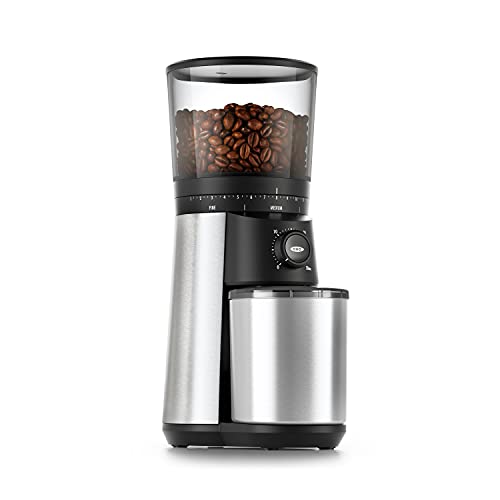
OXO Brew Conical Burr Electric Coffee Bean Grinder - 12 Oz, Silver | Stainless Steel Burrs, One-Touch Automatic, 43 Grind Settings For Drip Coffee, French Press, Cold Brew
Included for 'Coffee Grinder for Cold Brew: Coarse Grind, Big Batches, Less Mess' because the listing specifies 12 Oz and Silver, details this guide uses to compare options.
View on Amazon
OXO Brew Compact Conical Burr Electric Coffee Bean Grinder - 50g Capacity | Countertop Coffee Grinder, Consistent Grind Size, Multiple Settings, Home Brew, Stainless Steel
Included for 'Coffee Grinder for Cold Brew: Coarse Grind, Big Batches, Less Mess' because the listing specifies 50g Capacity and Countertop Coffee Grinder, details this guide uses to compare options.
View on Amazon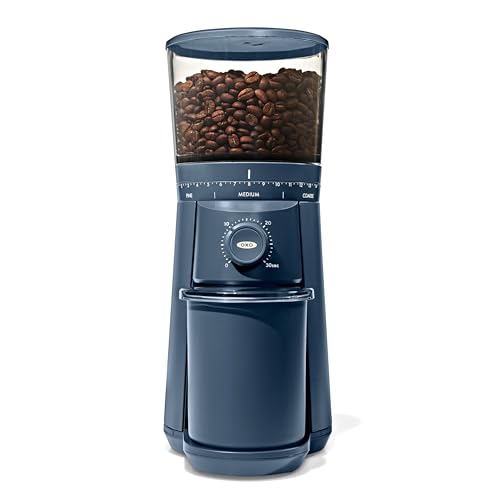
OXO Brew Conical Burr Electric Coffee Bean Grinder - 12 Oz, Storm Blue | OXO Brew Conical Burr Coffee Grinder, Coffee Bean Grinder
Included for 'Coffee Grinder for Cold Brew: Coarse Grind, Big Batches, Less Mess' because the listing specifies 12 Oz and Storm Blue, details this guide uses to compare options.
View on AmazonThis guide compares six electric burr grinders and four alternatives for people who brew cold brew at home, and it is built around the numbers that matter: coarse range, hopper size, bin size and how long a batch takes. It is a research-based guide, so we did not personally use these products. Specs come from maker pages and listings, and anything we could not confirm is marked as not listed. Tier words replace prices because they change often.
Top Picks at a Glance
- Best Overall: OXO Brew Conical Burr Grinder: 12 oz hopper, 43 settings, stainless steel burrs
- Best for Dial Control: Breville Smart Grinder Pro: 60 settings, 40 mm conical burrs, timed dose, 18 oz hopper
- Best Long-Term Pick: Baratza Encore: 40 settings, 40 mm conical steel burrs, parts available
- Best Budget for Batches: Hamilton Beach Electric Burr Grinder: 16 oz hopper, 18 settings
- Best Simple Countertop: Cuisinart Supreme Grind: 18 settings from drip to French press
- Best Value Conical: Ollygrin Conical Burr Grinder: 30 settings, sized for up to 12 cups
Comparison Table
| Product | Best for | Key specs | Watch for | Price tier |
|---|---|---|---|---|
| OXO Brew Conical Burr | Weekly cold brew batches | 43 settings; 12 oz hopper; stainless conical burrs | Bin may need emptying for a big batch | Mid-range |
| Breville Smart Grinder Pro | Cold brew plus espresso | 60 settings; 40 mm conical; 18 oz hopper; 12 oz grounds container | Plastic parts | Mid-range |
| Baratza Encore | Long-term ownership | 40 settings; 40 mm conical steel; grounds bin about 120 g per the sheet | Small bin for large batches | Premium |
| Hamilton Beach Electric Burr | Large batches on a budget | 18 settings; 16 oz hopper | Fewer coarse steps | Budget |
| Cuisinart Supreme Grind | Simple use | 18 settings; labeled brew methods | Hopper size not listed | Mid-range |
| Ollygrin Conical Burr | Value conical | 30 settings; 2 to 12 cups | Limited coverage | Mid-range |
The grounds bin deserves as much attention as the hopper. A cold brew batch can exceed the bin size on several grinders here, which means you grind in two rounds. That is easy to manage, but it is a good reason to prefer a model whose bin matches your pitcher size.
Also keep in mind that cold brew is forgiving of roast and bean choice, so you do not need premium beans, but you do need a consistent grind. Medium and dark roasts are the usual picks because they give a chocolatey, low-acid concentrate, while light roasts can taste thin or grassy when brewed cold. Whichever roast you choose, grind just before steeping, because coarse grounds still lose aroma quickly once exposed to air.
1. OXO Brew Conical Burr Grinder: Best Overall for Cold Brew Batches
- Settings: 43, including micro-adjustments (listing)
- Burrs: stainless steel conical
- Hopper: 12 oz of beans
- One-touch automatic grinding with a timer
- Mid-range tier
Best for: Home cold brewers who make a pitcher or two a week and want a no-fuss routine.
Skip if: You want the smallest possible footprint or a hand-cranked grinder.
Cold brew needs a coarse, even grind, and the OXO delivers on both. The 43 settings give you room at the coarse end, so you can start with a setting slightly coarser than French press and adjust. Because cold brew steeps for many hours, fines extract bitterly and make a cloudy concentrate, so an even grind matters more than in a quick brew.
The 12 oz hopper is large enough to hold a full batch of beans. At about 340 g, it can cover a 64 oz pitcher at the 1:8 ratio with some left over. The timer lets you set a dose by time, so once you find the number of seconds that produces 235 g, you can repeat it. Weigh the first few batches to calibrate.
Clean it as you would any grinder. Coarse grinds leave chaff and oils, so brush the burrs every couple of weeks. Anti-static tricks, like a tiny spritz on the beans, help the grounds drop cleanly into the container.
Pros
- 43 settings with a usable coarse range
- Large hopper fits a full batch of beans
- One-touch operation with a timer
- Stainless steel conical burrs
Cons
- Takes counter space
- Static can make a mess with dry beans
- Bin may need emptying for the largest batches
2. Breville Smart Grinder Pro: Best for Fine Control and Large Hopper
- Burrs: 40 mm stainless steel conical
- Settings: 60, from espresso to coarse French press
- Dosing timer in 0.2-second steps
- Hopper: about 18 oz (one retailer lists 16 oz)
- Grounds container: about 12 oz
- Mid-range tier
Best for: Households that grind for cold brew and also pull espresso shots or brew pour-over.
Skip if: You only make cold brew and want the simplest possible grinder.
The Smart Grinder Pro covers the widest range here. For cold brew, the key is the coarse end, which Breville describes as reaching French press. A 12 oz grounds container holds roughly 340 g of grounds, comfortably enough for a big pitcher. The 18 oz hopper means you can grind a batch without refilling.
The dosing timer is helpful for repeatability. If you find that 22 seconds gives you 235 g with your usual beans, you can set it and forget it. The LCD shows the time, which makes it easy to adjust when you change roasts.
Because it can do espresso, it is more grinder than a cold brew drinker may need. If cold brew is your only use, the OXO costs less. If you want one grinder for everything, the Breville is a strong option.
Pros
- 60 settings
- Timed dosing
- Large hopper and grounds container
- Includes cradles for espresso portafilters
Cons
- More grinder than a cold brew drinker may need
- Plastic parts
- Not stepless
3. Baratza Encore: Best for Long-Term Ownership
- Settings: 40, adjusted by twisting the hopper
- Burrs: 40 mm conical steel
- Grind range quoted by one source: roughly 250 to 1200 microns
- Grounds bin: 120 g per the official sheet (a retailer lists 5 oz)
- Hopper: 300 g per the sheet, other retailers list 8 oz
- Premium tier
Best for: Buyers who want a serviceable grinder from a brand that sells parts.
Skip if: You often grind more than about 120 g at once and dislike emptying the bin.
The Encore’s coarse range, up to roughly 1200 microns according to one source, is suited to cold brew. It is the grinder many specialty roasters recommend for beginners, and the design has been around for years.
The bin is the limit for cold brew. If the official sheet’s 120 g figure is right, a 235 g batch needs at least two rounds. That is easy to do, but you must pour the first batch into a container before the second. Sources conflict on hopper and bin sizes, so check the sheet if you plan large batches.
There is no timer, so you start and stop by eye or by weighing the beans. For many people, that is no problem. For others, the OXO or Breville is more convenient.
Pros
- Wide settings range
- 40 mm conical steel burrs
- Replacement parts available
Cons
- Small grounds bin for large batches
- No timer
- Premium tier
4. Hamilton Beach Electric Burr Grinder: Best Budget for Big Batches
- Settings: 18, espresso to French press (listing)
- Hopper: 16 oz
- Electric burr design
- Budget tier
Best for: Cold brewers on a budget who want a large hopper and a burr grinder.
Skip if: You need very even particles or fine control over the coarse end.
A 16 oz hopper and 18 settings make this a practical choice for batch brewing at a low cost. The French press setting at the coarse end is a good starting point for cold brew.
With only 18 settings, you cannot fine-tune as much as with the OXO or Breville. Expect some fines, so strain your concentrate through a paper filter if you want it clear.
If you brew a pitcher a week and do not care about perfect particle size, it will serve you well. If you notice a muddy cold brew, step up to a grinder with a more even coarse grind.
Pros
- Lowest tier burr grinder
- 16 oz hopper
- Simple controls
Cons
- Only 18 settings
- More fines
- Burr details not listed
5. Cuisinart Supreme Grind: Best Simple Countertop Grinder
- Settings: 18, covering drip, espresso and French press (listing)
- Model DBM-8P1
- Hopper size: not listed in the snippet
- Mid-range tier
Best for: Cooks who like a familiar brand and plan to grind for cold brew along with drip coffee.
Skip if: You need a large hopper or fine control.
The Supreme Grind has a long history as a basic burr grinder. The coarse end suits cold brew, though the listing does not state the hopper size or bin size.
Because hopper and bin figures are not listed in what we reviewed, confirm them if you plan a 64 oz batch. A smaller bin means grinding in rounds.
As with all grinders, brush out the burr chamber regularly to avoid stale oils.
Pros
- Familiar brand
- Labeled brew-method settings
- Simple controls
Cons
- Only 18 settings
- Hopper size not listed
- Not for fine tuning
6. Ollygrin Conical Burr Grinder: Best Value Conical
- Settings: 30 (listing)
- Designed for 2 to 12 cups
- Electric conical burr
- Mid-range tier
Best for: Buyers who want a conical burr at a lower tier than the OXO or Baratza.
Skip if: You need an established brand with parts support.
The Ollygrin offers 30 settings and a conical burr. For cold brew, test the coarse end on your first batch: spread a spoonful on a white plate and check for dust.
As a newer brand, it has limited independent coverage. Make sure you can return it if the coarse grind is not even.
The 2 to 12 cup rating suggests it can handle a decent batch, but check the bin size on the listing.
Pros
- 30 settings
- Conical burr
- Value tier
Cons
- Limited coverage
- Bin size not listed
- Unknown durability
Also Consider
OXO Brew Compact Conical Burr Grinder
A smaller 50 g capacity model. It is fine for a single serving, but too small for a pitcher batch without repeated refills.
TIMEMORE Chestnut C3S Pro
A hand grinder with a stainless S2C conical burr. Excellent for small cold brew bottles, but a 235 g batch takes effort.
KINGrinder K6
A premium manual grinder with a stainless burr. Better suited to small batches than a big pitcher.
CEVING Manual Coffee Grinder (60 g)
A large-capacity manual grinder with 40 external settings per the listing. A low-cost way to try cold brew in small amounts.
How We Chose
We started by calculating what a cold brew batch needs. A 64 oz pitcher at a 1:8 ratio needs about 235 g of beans, so we looked first at hopper and bin sizes, then at coarse range and burr type. We read maker pages and listing details, and compared them with independent coverage.
Where a spec was missing, such as the Cuisinart’s hopper size, we marked it as not listed. Where sources conflicted, as with the Baratza’s bin size, we describe the conflict. We chose electric burr grinders for the main picks and mentioned manual grinders in the extras because large batches are hard by hand.
This guide is research-based, and we did not personally use these products. We left out blade grinders, which create fines that cloud cold brew, and we do not quote prices.
Buying Guide
How coarse should cold brew grounds be?
Cold brew works best with a coarse grind, slightly coarser than French press, so the water extracts slowly over 12 to 18 hours. Fine grounds over-extract, taste bitter and clog filters. A good target is coarse sea salt to peppercorn size.
If your concentrate is cloudy, go coarser. If it tastes weak even after 18 hours, go slightly finer or increase the dose.
Do the batch math before you buy
A typical concentrate ratio is 1 part coffee to 5 to 8 parts water by weight. For a 64 oz (1.9 L) pitcher at 1:8, you need about 235 g of coffee. At 1:5, you would need around 380 g. Compare that with the grounds bin size of the grinder you are considering.
If the bin holds only 120 g, you will need two or three rounds. That is manageable, but it is worth knowing in advance.
Hopper, bin and speed
A 12 to 18 oz hopper holds a full batch of beans. The grounds bin or container determines how often you need to empty. Grinding speed matters too: an electric grinder can finish 235 g in 15 to 60 seconds, depending on the model and setting, while a hand grinder may take several minutes.
If you brew once a week, a slower grinder is fine. If you brew daily, speed matters.
Cleaning, static and chaff
Coarse grinds produce chaff and oils that can build up in the burr chamber. Brush it out every couple of weeks. A small spritz of water on dry beans reduces static. Wipe the grounds bin after each use, and never put electric parts in water.
Match your batch size to a grinder
If you brew a 32 oz jar for yourself, you need about 118 g of coffee at 1:8. Any grinder on this list handles that in a single round, and even a manual grinder with a 60 g chamber needs only two fills. If you brew a 64 oz pitcher weekly, an electric grinder with a 12 oz hopper keeps the process under a minute of active work. If you brew a gallon for a family or office, plan on grinding in three or four rounds regardless of the grinder, and choose the one with the biggest bin and the fastest feed.
As a rule of thumb, divide your batch weight by the grounds bin weight to find the number of rounds. A 235 g batch with a 340 g container is one round. The same batch with a 120 g bin is two rounds. It sounds trivial, but it decides whether the process feels easy or annoying in week three.
A worked example of cost per batch
Suppose a 12 oz bag of beans yields about 340 g. At 235 g per 64 oz pitcher, one bag makes roughly one and a half pitchers. A pitcher yields concentrate that you dilute one to one with water or milk, so the pitcher makes about eight to ten servings. That means each bag gives about a dozen or more glasses, and the grinder you choose spreads its cost over hundreds of glasses over its life.
Compared with buying iced coffee out, even a mid-range tier grinder pays for itself within a few months for a daily drinker. The point is not to chase the lowest tier, but to buy a grinder that makes the weekly routine pleasant enough that you keep doing it.
Manual or electric for cold brew?
Hand grinders have a real place in cold brew, but mostly for small batches. A stainless steel conical hand grinder such as the TIMEMORE Chestnut C3S Pro or the KINGrinder K6 can produce a very even coarse grind, and they are quiet and need no outlet. The catch is effort: a coarse setting grinds faster than a fine one, yet 235 g still takes several minutes of cranking, and most hand grinders hold only 25 to 60 g in the chamber, so you refill repeatedly.
Electric burr grinders trade some precision for speed and convenience. For a weekly pitcher, the time saved is the main benefit. For a single bottle of cold brew a few times a week, a manual grinder is a pleasant, low-cost alternative and avoids another appliance on the counter. If you are undecided, start with the batch size you actually brew and pick the grinder type that makes that size painless.
Strain well
Even a good grinder leaves some fines. Strain your cold brew through a fine mesh and then a paper filter if you want it clear. Store concentrate in the fridge and use it within about a week to two weeks.
Common Mistakes to Avoid
- Grinding too fine, which leads to cloudy, bitter cold brew
- Buying a grinder with a tiny bin for a large pitcher
- Using a blade grinder, which produces dust
- Not weighing doses, so batches vary week to week
- Letting oils build up in the burr chamber
- Storing grounds for days before steeping
Frequently Asked Questions
What is the best coffee grinder for cold brew?
The OXO Brew Conical Burr Grinder is the best all-round pick for home cold brew thanks to its 12 oz hopper and 43 settings. The Breville Smart Grinder Pro is better if you also make espresso.
What is the best coffee grinder for cold brew on a budget?
The Hamilton Beach Electric Burr Grinder has a 16 oz hopper and 18 settings at the budget tier. Expect more fines and strain your concentrate.
How coarse should I grind coffee for cold brew?
Aim for coarse sea salt, slightly coarser than French press. If the result is cloudy or bitter, move coarser.
How much coffee do I need for a 64 oz cold brew pitcher?
At a 1:8 ratio, about 235 g. At a stronger 1:5 concentrate ratio, about 380 g. Adjust to taste.
Can I use a manual grinder for cold brew?
Yes, but a big batch takes a lot of effort. Manual grinders suit small batches of cold brew.
Can I use pre-ground coffee for cold brew?
You can, if you buy a coarse grind, but freshly ground beans give a better flavor. Pre-ground coffee is often finer than ideal.
How long should cold brew steep?
Most recipes steep for 12 to 18 hours in the fridge or at room temperature. Longer can increase bitterness.
Which One Should You Buy?
For most home cold brewers, the OXO Brew Conical Burr Grinder is the best fit, thanks to its large hopper and coarse range. Pick the Breville Smart Grinder Pro if you want one grinder for espresso and cold brew, the Baratza Encore for long-term ownership, and the Hamilton Beach for a budget batch grinder.
Check the bin size against your pitcher, weigh your doses and strain well.
Sources
- OXO Brew conical burr grinder product page
- Breville Smart Grinder Pro product page and retailer specifications
- Baratza Encore product sheet
- Hamilton Beach and Cuisinart grinder listings
- Specialty coffee guides on cold brew ratios
Last updated: October 2026




Write Your Review
No reviews yet. Be the first to share your experience!