
To clean a kitchen sink, rinse out debris, scrub the basin with dish soap and a baking soda paste, rinse, then sanitize, dry and finish with a material-specific polish. That is how to clean a kitchen sink of almost any type in about 10 minutes; the details that change are which cleaners your sink material can tolerate and how you deal with the drain, which is usually the real source of smells.
- What You Need
- Which Cleaners Are Safe on Your Sink?
- How to Clean a Kitchen Sink Every Day: The 2-Minute Routine
- How to Clean a Stainless Steel Sink
- How to Clean a Granite Composite Sink
- Porcelain, Enamel and Fireclay Sinks
- How to Deodorize a Kitchen Sink Drain
- Sanitizing the Sink
- Cleaning Schedule
- Don’t Forget the Faucet
- Gear That Helps
- Frequently Asked Questions
This guide covers a daily routine, a weekly deep clean for stainless steel and granite composite sinks, porcelain and fireclay notes, and a step-by-step method to deodorize a kitchen sink drain and garbage disposal.
![Bastion Garbage Disposal Cleaner and Deodorizer Drops- [[50-Count]] Lemon Zest Scented Kitchen Sink Freshener Pods & Drain Odor Eliminator Disposer Care Balls](https://m.media-amazon.com/images/I/41LDQnbcmqL._SL500_.jpg)
Bastion Garbage Disposal Cleaner and Deodorizer Drops- [[50-Count]] Lemon Zest Scented Kitchen Sink Freshener Pods & Drain Odor Eliminator Disposer Care Balls
Included for 'How to Clean a Kitchen Sink: Stainless, Granite and Drain' as a relevant option in this category; details come from the product listing.
View on Amazon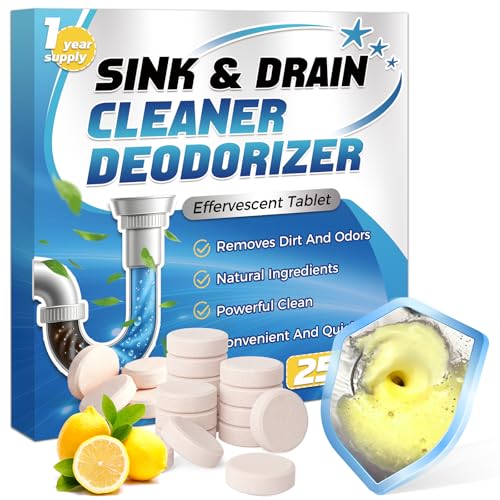
Garbage Disposal Cleaner And Deodorizer, Powerful Sink Drain Cleaner Tablets 25 Packs, 1 Year Supply Kitchen & Bathroom Drain Cleaner for Sink, Shower, Toilet, Home Cleaning Essentials
Included for 'How to Clean a Kitchen Sink: Stainless, Granite and Drain' because the listing specifies Powerful Sink Drain Cleaner Tablets 25 Packs and 1 Year Supply Kitchen & Bathroom Drain Cleaner for Sink, details this guide uses to compare options.
View on Amazon
Garbage Disposal Cleaning Tablets, XL Foaming Deodorizer Kitchen Sink Drain
Included for 'How to Clean a Kitchen Sink: Stainless, Granite and Drain' because the listing specifies XL Foaming Deodorizer Kitchen Sink Drain, details this guide uses to compare options.
View on Amazon
Walex Premium RV/Marine Kitchen & Bath Cleaner - Cleans Counters, Sinks, and Surfaces, Naturally Derived Formula, Refreshing Citrus Fragrance, Ideal for RV, Boat, & Camper Use, Septic Safe, 32 oz
Included for 'How to Clean a Kitchen Sink: Stainless, Granite and Drain' because the listing specifies Cleans Counters and Sinks, details this guide uses to compare options.
View on AmazonKey takeaways
- Baking soda plus dish soap is safe on nearly every sink material and handles most weekly cleaning.
- On stainless steel, scrub with the grain and avoid steel wool and leaving bleach to sit; both can mark or pit the surface.
- Granite composite sinks need non-abrasive cleaners; mineral film is removed with diluted vinegar, not scouring powder.
- Drain smells come from the trap, stopper and disposal, so clean those, not just the basin.
- Never mix bleach with vinegar or ammonia-based cleaners; the combination releases toxic gas.
Quick answer: Our top pick in 2026 is the Stainless steel — our #1 rated choice. See the full ranked comparison, alternatives and buying advice below.
What You Need
- Liquid dish soap
- Baking soda
- White vinegar (diluted for composite and stone)
- Non-scratch sponge and a soft nylon brush or old toothbrush
- Microfiber cloths
- Optional: oxalic-acid cleanser such as Bar Keepers Friend for stainless steel, a composite sink cleaner for granite sinks, unscented bleach for sanitizing
Which Cleaners Are Safe on Your Sink?
| Sink material | Safe for routine use | Use with care | Avoid |
|---|---|---|---|
| Stainless steel | Dish soap, baking soda paste, diluted vinegar | Oxalic-acid cleanser (rinse within 1 minute), diluted bleach then rinse | Steel wool, chlorine bleach left standing, salty cleaners left to dry |
| Granite composite (quartz/resin) | Dish soap, baking soda, composite sink cleaner | Vinegar diluted 1:1 for mineral film; bleach only if the maker allows it | Scouring powder, abrasive pads, drain cleaner on the surface |
| Porcelain enamel / cast iron | Dish soap, baking soda paste | Mild cream cleanser | Abrasive powder, steel wool, strong acids that dull glaze |
| Fireclay | Dish soap, baking soda, cream cleanser | Diluted bleach for stains, then rinse | Wire brushes, harsh drain chemicals left on glaze |
| Copper | Mild soap and water | Copper-specific polish only if you want shine | Acids, bleach, abrasives (they strip the patina) |
How to Clean a Kitchen Sink Every Day: The 2-Minute Routine
- Empty and scrape. Clear dishes and food scraps; empty the strainer basket into the trash.
- Squirt and swirl. Add a few drops of dish soap to a damp sponge and wipe the basin, sides and faucet base.
- Rinse. Run warm water around the bowl to flush suds into the drain.
- Dry. Wipe with a microfiber cloth. Drying is the step that prevents water spots on stainless steel and mineral film on composite.
How to Clean a Stainless Steel Sink
Stainless steel is tough but shows water spots, fingerprints and scratches. The aim is to remove film without dulling the brushed finish.
- Rinse the basin to remove loose debris; take out the strainer and any sink grid.
- Sprinkle baking soda over the wet surface. It is mildly abrasive and lifts grease and light stains without scratching.
- Scrub with the grain. Look closely: brushed stainless has fine parallel lines. Rub along them with a non-scratch sponge; scrubbing across them leaves visible swirls.
- Treat stubborn spots. For rust marks, tea stains or dark pan marks, use an oxalic-acid cleanser such as Bar Keepers Friend Soft Cleanser. Apply, rub along the grain and rinse within about a minute so the acid does not sit on the steel.
- Remove water spots. Spray or wipe white vinegar on hazy areas; it dissolves calcium deposits. Let it sit 2-3 minutes, then rinse. Do not combine with bleach.
- Rinse thoroughly with warm water, including the corners and the area under the faucet.
- Dry completely with a microfiber cloth.
- Polish (optional). A drop of mineral oil or a stainless steel polish such as Weiman Stainless Steel Sink cleaner on a dry cloth, buffed along the grain, restores sheen and helps water bead off.
Why not steel wool? It scratches the surface and can leave tiny carbon-steel particles that later rust, creating orange specks that look like the sink is corroding.
How to Clean a Granite Composite Sink
Granite composite sinks (quartz or granite particles bound in acrylic resin, such as BLANCO SILGRANIT and similar products) resist scratches and heat, but they show white mineral film and can stain if dark liquids sit on light colors.
- Rinse and wipe with warm water and dish soap on a soft sponge.
- Make a paste of baking soda and a little water. Spread it over stained areas and leave for 10-15 minutes.
- Scrub gently with a soft brush in small circles; composite is textured, so a brush reaches the pores better than a flat sponge.
- Dissolve mineral film. Wipe or spray a 1:1 mix of white vinegar and water on cloudy areas, leave 5-10 minutes, then rinse well. Hard-water film is the main reason dark composite sinks look gray.
- Use a dedicated cleaner for deep stains. Composite-specific products such as BLANCO BlancoClean Daily+ or Hope’s Perfect Sink are formulated not to strip the surface. Some manufacturers allow a short diluted bleach soak on light-colored sinks for stubborn stains; check your sink maker’s care guide before trying it.
- Rinse and dry thoroughly. Water left to evaporate is what creates the white rings.
- Restore color (optional). On dark sinks, some makers recommend a light wipe of a sink conditioner or a small amount of mineral oil to even out the finish. Buff off the excess.
Porcelain, Enamel and Fireclay Sinks
Glazed sinks show gray marks from pots and utensils and can yellow over time. Use baking soda paste or a mild cream cleanser and a soft sponge. For metal marks, a gentle cream cleanser usually lifts them. Avoid gritty scouring powder and steel wool, which scratch the glaze and make future stains harder to remove. Fireclay is tougher than enamel on cast iron, but the same gentle approach keeps the glaze glossy.
How to Deodorize a Kitchen Sink Drain
If the sink smells even after the basin is clean, the odor is coming from the drain, stopper, overflow or garbage disposal. Work through these steps.
- Clean the stopper and strainer basket. Remove them and scrub the underside and rubber seal with dish soap and a brush. A slimy film here is a common source of smells.
- Scrub the drain throat. Use a bottle brush or old toothbrush to clean the first few inches inside the drain opening, where grease collects.
- Baking soda and vinegar flush. Pour about 1/2 cup of baking soda into the drain, follow with 1 cup of white vinegar, cover for 10-15 minutes, then flush with hot tap water for a minute. The fizz loosens soft buildup; the hot water carries it away.
- Use hot, not boiling, water for plastic pipes. Most home drains have PVC traps under the sink. Very hot tap water is effective; repeated boiling water can soften PVC joints.
- Clean the garbage disposal. With the switch off, wipe the rubber splash guard on both sides. Then drop in a handful of ice cubes and a tablespoon of coarse salt, run cold water and turn the disposal on until the grinding stops. Finish with a few citrus peels for scent. Never put your hand inside the unit.
- Check the trap. If smells persist, the P-trap under the sink may hold old debris. Place a bucket underneath, unscrew the slip nuts by hand, empty and rinse the trap, and reassemble hand-tight.
- Prevent repeats. Never pour fat or grease down the drain; wipe greasy pans with a paper towel before washing.
Sanitizing the Sink
A kitchen sink can carry more bacteria than many people expect, especially after rinsing raw meat or poultry (food-safety agencies advise against washing raw chicken at all). After a meat-prep session, wash the basin with soap, rinse, then apply a sanitizing solution. A common household option is 1 tablespoon of unscented chlorine bleach per gallon of water, left for a few minutes, then rinsed. On stainless steel, rinse promptly so chlorine does not sit on the metal. Do not use bleach on copper sinks.
Sponges deserve the same attention. Swap them frequently, and between swaps microwave a fully wet, non-metallic sponge for about one minute or run it through a hot dishwasher cycle; USDA research found both approaches cut bacteria sharply.
Cleaning Schedule
| Task | Frequency | Time |
|---|---|---|
| Soap wipe, rinse and dry | Daily | 2 minutes |
| Baking soda scrub of basin | Weekly | 10 minutes |
| Sanitize basin | After raw meat, or weekly | 5 minutes |
| Drain flush and stopper scrub | Weekly | 15 minutes (mostly waiting) |
| Disposal ice and salt clean | Every 1-2 weeks | 3 minutes |
| Faucet aerator vinegar soak | Every 2-3 months | 30 minutes soak |
| P-trap check | When odors persist | 15 minutes |
Don’t Forget the Faucet
Hard-water crust on the faucet spout and aerator slows the flow and looks dull. Wrap a plastic bag filled with white vinegar around the spout, secure it with a rubber band, and leave it for 30 minutes to an hour. Remove, scrub the aerator holes with a toothbrush and rinse. Wipe handles with soapy water daily; they are touched with raw-meat hands more often than any other surface in the kitchen.
Gear That Helps
- Bar Keepers Friend Soft Cleanser (liquid · oxalic acid · stainless steel and porcelain): the go-to for rust specks and pan marks on stainless.
- BLANCO BlancoClean Daily+ SILGRANIT Cleaner (spray · formulated for granite composite): a maker-approved routine cleaner for composite sinks.
- HOPE’S Perfect Sink Cleaner and Polish (cream · composite, cast iron, Corian, acrylic): lifts stains and leaves a light protective finish.
- Serene Valley Sink Protector Grid (304 stainless · sized to the bowl): keeps pots off the basin to cut down on scratches and metal marks.
Frequently Asked Questions
What is the best homemade kitchen sink cleaner?
A paste of baking soda and a little dish soap cleans almost every sink material safely. Follow with diluted white vinegar for water spots, rinse, and dry.
Can I use bleach to clean a stainless steel sink?
Diluted bleach can sanitize stainless steel if you rinse it off within a few minutes. Leaving bleach or chlorine cleaners to sit can cause pitting and discoloration.
How do I get white film off a black granite composite sink?
The white film is usually mineral deposits from hard water. Wipe on a 1:1 vinegar and water solution, leave 5-10 minutes, scrub gently with a soft brush, rinse and dry fully.
Why does my kitchen sink smell even after cleaning?
The odor usually comes from the stopper seal, the disposal splash guard or debris in the P-trap. Clean those parts and flush the drain with baking soda, vinegar and hot water.
Is it safe to mix vinegar and baking soda in a drain?
Yes. The reaction produces water, salt and carbon dioxide, which is harmless. Just never combine vinegar with bleach.
How often should I clean my kitchen sink?
Wipe and dry it daily, scrub it weekly, and sanitize after preparing raw meat. Drain and disposal cleaning every week or two prevents most odors.
Ready to decide? Our #1 pick for 2026 is the Stainless steel.
Live price & availability on Amazon.










Write Your Review
No reviews yet. Be the first to share your experience!