
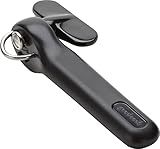
Quick answer: Our top pick in 2026 is the GoodCook Safe-Cut Can Opener with Easy Turn Knob — our #1 rated choice. See the full ranked comparison, alternatives and buying advice below.
The Short Answer
Yes, a smooth edge manual can opener is worth buying if you regularly open cans and want safer, more comfortable rims than a traditional opener produces. The one condition: you must be willing to pay a little more for a model with a comfortable grip and a reliable cutting mechanism.
“Smooth edge” means the opener cuts around the side of the lid rather than slicing through the top. The lid usually comes off with a relatively dull edge, while the can itself keeps its original rim. That can reduce the chance of cuts when you empty, wash, or recycle the can.
As an Amazon Associate we earn from qualifying purchases at no extra cost to you.

The trade-off is that these openers are not magic. They can cost more than basic manual openers, may require more turns, and can struggle with dented cans or very thin metal. For most kitchens, however, the safety improvement is meaningful—especially if children, older adults, or anyone with reduced hand strength uses the opener.
What You Actually Get
A smooth edge manual can opener generally includes a side-cutting wheel, a turning knob, a clamp or gripping mechanism, and handles covered with plastic or rubber. Instead of puncturing the lid from above, the cutting wheel travels around the can just below the lid’s rolled rim.
When it works correctly, the cut edge is less exposed than the sharp, jagged edge produced by a conventional top-cut opener. The removed lid may still have a sharp underside, so it should not be handled casually. “Smooth edge” describes the can and lid after opening; it does not make every part of the tool or lid completely incapable of causing injury.
Most manual models are compact enough for a standard kitchen drawer. Expect a footprint roughly in the range of 7 to 10 inches long and 2 to 3 inches wide, although designs vary. Many weigh about 5 to 10 ounces. Those numbers are more relevant than they may seem: a lightweight opener is easy to store, but an extremely light model can feel flimsy when the gear slips or the handles flex.
The main buying decision is not simply smooth edge versus sharp edge. It is whether the mechanism turns easily and stays attached to the can. A good opener should clamp securely, advance without repeated repositioning, and release without forcing the lid or squeezing the handles excessively.
For a premium example, the OXO Good Grips Smooth Edge Manual Can Opener is listed at about $24.95. Its appeal is the soft-grip design and emphasis on easier handling. A basic safe-cut model such as the GoodCook Safe-Cut Can Opener with Easy Turn Knob is listed at about $8.09. Prices can vary by retailer, color, and promotions, but those examples illustrate the usual gap: roughly $8 to $10 for a budget option versus $20 to $30 for a more polished one.
Pros
- Safer can rims: Side-cutting usually leaves a less jagged edge than a traditional top-cut opener. That is useful when pouring beans, tomatoes, pet food, or soup directly from the can.
- More comfortable handling: Soft grips and a larger turning knob can make a noticeable difference for people with arthritis, limited grip strength, or small hands.
- Less contact with the food: Because the cutter works around the side, it does not drag a sharp blade across the top surface of the lid as a conventional opener does.
- Better for frequent use: If you open several cans each week, paying more for smoother operation can be easier to justify than buying the cheapest tool and replacing it repeatedly.
- Compact and quiet: A manual opener takes no counter space, uses no electricity, and is generally quieter than an electric can opener.
- Useful during outages: Unlike an electric model, it works without an outlet, batteries, or a charged appliance.
- Often easier to clean: Many smooth edge openers have fewer exposed cutting surfaces than traditional models, though the exact cleaning instructions depend on the design.
Cons
- Higher upfront cost: A good smooth edge opener can cost two or three times as much as a basic manual model. At around $25, a premium option is a considered purchase for a tool used only occasionally.
- Not always effortless: Side-cutting mechanisms can require several full turns around the can. A stiff gear, dull wheel, or poorly aligned lid can make the process frustrating.
- Performance varies widely: Some inexpensive models clamp securely, while others slip, leave part of the lid attached, or require the user to start over.
- Dented cans can be difficult: A heavy dent near the rim may prevent the cutting wheel from tracking evenly. Do not force the opener; a damaged can may also be unsafe to open or use.
- The lid still needs care: The underside of a removed lid can remain sharp. Use a utensil or tongs if you need to retrieve it from the can.
- More parts to maintain: Gears and cutting wheels can collect food residue. If the opener is not dishwasher-safe, it should be wiped and dried promptly to reduce buildup and corrosion.
- Not ideal for every user: Someone with very limited hand or wrist movement may find an electric opener easier, even if it takes more storage space.
Who Should Buy It
Buy a smooth edge manual can opener if you open cans regularly and have ever cut yourself on a lid. It is also a sensible choice for households with children who help prepare food, although children should still use it only with appropriate supervision.
It makes particular sense for older adults and anyone with arthritis or reduced hand strength. Look for broad, non-slip handles and a turning knob that is large enough to grip without pinching. A tool with a clamping action that holds the can in place is usually easier than one that requires constant downward pressure.
It is also a good fit for small kitchens, renters, campers, emergency kits, and anyone who does not want to depend on electricity. If you open five or more cans a week, the comfort and safer rim may justify spending roughly $20 to $30. For occasional use, an $8 to $12 option can provide much of the same basic benefit if its mechanism operates smoothly.
Who Should Skip It
Skip a smooth edge manual model if you almost never open cans or already own a dependable opener that causes no problems. There is little value in replacing a perfectly functional tool solely because “smooth edge” sounds more modern.
You may also want an electric opener if turning a knob is painful, your grip is weak, or you routinely open large numbers of cans. Electric models take more room and may cost approximately $20 to $50 or more, but they remove most of the hand effort.
Finally, avoid the cheapest option available if it feels loose in the package, has a tiny knob, or has handles that flex noticeably. A smooth edge label cannot compensate for poor alignment or a cutter that slips.
Cheaper Alternatives
| Option | Cost | Trade-off |
|---|---|---|
| GoodCook Safe-Cut Can Opener with Easy Turn Knob | About $8.09 | Much cheaper than a premium model, but the grip, durability, and smoothness may be less refined. |
| Basic top-cut manual can opener | About $5–$12 | Lowest price and widely available, but it leaves a sharp, exposed rim and may require more force. |
| Midrange smooth edge manual opener | About $12–$20 | Can offer safer cutting without a $25 price tag, though materials and long-term reliability vary. |
| Electric countertop can opener | About $20–$50 | Requires counter or cabinet space and electricity, but greatly reduces manual turning. |
The best value depends on how often you use the tool. A budget smooth edge model is the practical choice for occasional users. A more expensive design, such as the $24.95 OXO, is easier to defend when grip comfort, dependable clamping, and frequent use matter more than the lowest price.
FAQ
Does a smooth edge can opener really make the can safe?
It makes the rim safer than a conventional top-cut opener, but it does not make the can or lid completely harmless. The underside of the lid may still be sharp, and the cutting wheel itself can cause injury. Handle the lid carefully and keep the opener away from children when it is not in use.
Is a smooth edge opener harder to use?
It can take more rotations, but a well-designed model should not require significant force. The key is correct placement: attach it firmly below the can’s rim, then turn the knob steadily. If it repeatedly slips or needs heavy squeezing, the design may be poorly made, the can may be dented, or the opener may need replacement.
Are smooth edge can openers dishwasher-safe?
Some are, but you should check the manufacturer’s care instructions for the specific model. Even when a tool is labeled dishwasher-safe, hand-wiping the cutting area after use can help remove residue. Dry it thoroughly, especially around gears and joints, to limit rust and sticking.
What should I look for when buying one in 2026?
Prioritize a comfortable, non-slip grip, a large easy-turn knob, secure clamping, and a cutting mechanism that releases cleanly. Check the opener’s dimensions if drawer space is limited, and consider a model around 5 to 10 ounces if you want something portable without feeling flimsy. Most importantly, buy from a retailer with a straightforward return policy in case the opener slips, struggles with standard cans, or feels uncomfortable after several uses.
Ready to decide? Our #1 pick for 2026 is the GoodCook Safe-Cut Can Opener with Easy Turn Knob.
Live price & availability on Amazon.





Write Your Review
No reviews yet. Be the first to share your experience!