
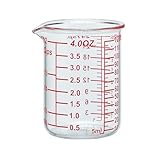
- Top Pick: 500ML 2 CUP Glass Liquid Measuring Cup With Handle, High Borosilicate Glass Three Scales (OZ, Cup, ML/CC) for Kitchen or Restaurant, V-Shaped Spout Glass Measuring Beaker, Easy To Read
- Best Value: Pyrex Essentials (2-Pack) Glass Measuring Cups Set (1 & 2 Cup)
- Premium Choice: Pyrex 4 Cup Glass Measuring Cup For Baking and Cooking
Buying a glass measuring cup can look straightforward: choose a familiar brand, check the capacity, and add it to your cart. In practice, shoppers often focus on the printed price while missing the details that affect daily use. A cup may have attractive markings that fade in the dishwasher, a spout that drips down the side, or a handle that feels unstable when the vessel is filled with hot liquid.
The right choice depends on how you cook, how much you measure, and where the cup will be used. A small 60- to 250-milliliter set is useful for sauces and baking ingredients, while a 4-cup vessel is more practical for soups, batters, and batch recipes. Use this guide to compare liquid glass measuring cups in 2026 without paying for features you will not use.
As an Amazon Associate we earn from qualifying purchases at no extra cost to you. Product prices and availability are accurate as of the date shown and are subject to change.


Decide These 3 Things First
- Your usual batch size: Decide whether you mainly measure a few tablespoons, 1 to 2 cups, or larger quantities. A cup that is too small creates extra transfers and spills.
- Your heat and cleaning routine: If you pour boiling water, melted butter, stock, or hot oil, prioritize heat-resistant borosilicate glass or a clearly labeled tempered-glass design. Confirm dishwasher guidance before buying.
- How precisely you need to read it: For everyday cooking, clear cup, ounce, and milliliter markings may be enough. For baking, look for fine graduations, high contrast, and measurements that remain readable from above.
Choose the Right Size
Capacity is the most important practical decision. A 1-cup measuring cup holds 8 fluid ounces, or about 237 milliliters. A 2-cup model holds 16 fluid ounces, or about 473 milliliters. A 4-cup version holds 32 fluid ounces, or approximately 946 milliliters.
Small cups, generally 60 to 250 milliliters, are convenient for dressings, extracts, yeast mixtures, gravy, and small baking jobs. A 1-cup cup is a versatile choice for most kitchens, while a 2-cup model offers more headroom for whisking and pouring. Choose a 4-cup vessel if you regularly prepare soup, pancake batter, marinades, or recipes calling for several cups of liquid.
Do not fill a measuring cup to its rim. Leave roughly 1 to 2 inches of clearance for stirring and safe movement, especially with hot liquids. If cabinet space is limited, compare the overall height and width. A 4-cup cup may stand about 6 to 8 inches tall and occupy a footprint near 5 by 7 inches, while smaller cups may nest inside one another.
Compare Glass Materials
Most quality glass measuring cups use either borosilicate glass or tempered soda-lime glass. Borosilicate glass is valued for its lower thermal expansion and is commonly selected for products designed to handle temperature changes. Tempered glass can also be durable, but the manufacturer’s heat-use instructions matter more than the marketing label alone.
Look for a stated temperature range or clear guidance about microwave, oven, freezer, and stovetop use. “Heat resistant” does not automatically mean safe for direct burner use. Never place a glass measuring cup on a stovetop unless the manufacturer specifically permits it. Avoid thermal shock: do not pour boiling liquid into a frozen cup, set a hot cup on a wet or cold stone surface, or move a hot cup directly into cold water.
Glass should be free of visible bubbles, chips, sharp rim imperfections, and cloudy patches. Borosilicate models often cost only a few dollars more than basic glass. A 500-milliliter borosilicate cup with ounce, cup, and milliliter scales may sell for around $8 to $12, making the material upgrade relatively affordable.
Inspect Construction and Markings
Construction determines whether a cup remains useful after months of pouring and washing. A thick, smoothly finished rim is more comfortable and less vulnerable to small edge damage than a thin, rough rim. Check the point where the handle joins the body: it should look substantial, with no visible gap or sharp transition.
The spout should form a controlled V or channel rather than a shallow notch. A good spout helps liquid leave the cup in a narrow stream and reduces dribbling down the exterior. A broad, stable base is also helpful, particularly for tall 2- and 4-cup models.
Markings deserve close attention. The most useful cups show at least milliliters and fluid ounces; cup markings are helpful for American recipes. Graduations should be easy to distinguish at a glance, with smaller intervals of approximately 25 to 50 milliliters on medium and large cups. On a 1-cup model, tablespoon or 15-milliliter increments can be useful, but do not assume every line is exact without checking the product specifications.
Printed markings are generally easier to produce, while molded or raised markings may last longer. If the product listing does not explain whether the markings are printed, etched, or molded, treat long-term durability as uncertain.
Evaluate Handle Comfort and Pouring Performance
A handle should provide enough room for three or four fingers without forcing your knuckles against the glass. For a 2- or 4-cup cup, look for a handle opening roughly 3 to 4 inches tall and a grip that connects near the upper and lower portions of the vessel. A narrow attachment can flex or feel unbalanced when the cup is full.
Consider the total weight as well as capacity. Small glass cups may weigh about 5 to 10 ounces empty, 1- to 2-cup cups often fall near 10 to 20 ounces, and larger 4-cup models may weigh 1.5 to 2.5 pounds before adding liquid. Exact weights vary, but the practical point is simple: a large glass cup filled with 32 fluid ounces can weigh more than 4 pounds. A strong handle and stable base become increasingly important.
For left- or right-handed use, markings on both sides are preferable. A cup that requires you to turn the handle away from your hand can be awkward when pouring. A transparent body also lets you check the bottom for unmixed ingredients, though glare can make pale markings difficult to read.
Understand the Price Tiers
Budget glass measuring cups generally cost about $7 to $12 for a single cup or $9 to $18 for a small set. At this level, expect basic glass construction, printed measurements, and limited size choices. A 500-milliliter three-scale cup priced near $8.99 can be a good value if the markings are clear and the handle is secure.
Midrange options usually cost $13 to $25. This tier includes established-brand 1- and 2-cup sets, such as a two-piece set priced around $15.99, as well as sturdier single cups. You may gain better spouts, more readable markings, and more consistent finishing rather than dramatically different measuring accuracy.
Premium cups and larger branded vessels commonly cost $25 to $45, although a single 4-cup glass cup may be available for about $13.99. Premium pricing makes the most sense when you need a larger capacity, specialized heat guidance, molded markings, or a long manufacturer warranty. Do not pay extra solely for a brand name if the dimensions and features match a less expensive alternative.
Check Warranty and Replacement Support
Glass can break even when used correctly, so warranty terms are worth reading. Many measuring cups have no meaningful long-term warranty, while better-supported products may offer coverage ranging from 30 days to one year for manufacturing defects. Some companies provide replacement parts or individual replacement cups; others require you to replace an entire set.
A warranty typically does not cover thermal shock, impact, chips, misuse, or normal wear to printed markings. Save the receipt and inspect the cup as soon as it arrives. Confirm whether the warranty applies to the glass body, handle, printed measurements, and shipping damage. A clear replacement policy can be more useful than a longer warranty period if you use the cup frequently.
Review Delivery and Assembly Details
Glass measuring cups do not require assembly, but packaging and delivery still matter. Look for a listing that states the cup will be individually boxed or protected with molded padding. Check the return window, which commonly ranges from 30 to 90 days, and photograph damage before opening the package fully if the exterior box is crushed.
Verify the dimensions before ordering. A cup measuring 7 inches tall may not fit beneath a low shelf, and a wide handle can prevent two cups from nesting. Sets with 60-, 120-, and 250-milliliter cups are space-efficient, but they may not replace a standard 1- or 2-cup vessel. There is usually no assembly, but lids, silicone covers, or removable handles should be listed as included rather than assumed.
Spec Checklist
| Spec | Budget | Mid | Premium |
|---|---|---|---|
| Typical price | $7–$12 | $13–$25 | $25–$45 |
| Useful capacity | 250–500 ml | 1–2 cups | 2–4 cups or multi-size set |
| Glass type | Glass; confirm heat guidance | Borosilicate or tempered glass | Specified heat-resistant glass with detailed instructions |
| Markings | Two scales, usually ml and ounces | ml, ounces, and cups | Multiple scales with fine, durable graduations |
| Spout and handle | Basic V-shaped spout and fixed handle | Controlled pour and larger grip | Highly stable base, balanced handle, low-drip spout |
| Warranty or support | 30 days or limited defect coverage | 30 days to 1 year | One year or stronger replacement support |
Red Flags
- No stated capacity in cups, ounces, or milliliters.
- Vague claims such as “thermal proof” without microwave, oven, freezer, or temperature guidance.
- Markings shown in product photos but omitted from the written specifications.
- A handle that appears thin, detached, or too small for the listed capacity.
- A sharp, uneven, or visibly chipped rim.
- Instructions that recommend direct stovetop use without explaining the glass construction.
- Reviews mentioning fading markings, leaks around a lid, dribbling spouts, or sudden cracking after temperature changes.
- Set pricing that looks low but excludes the size you actually need.
FAQ
Is borosilicate glass better for a measuring cup?
It can be a sensible choice for frequent hot-liquid use because borosilicate glass is designed with lower thermal expansion than ordinary glass. However, it is not unbreakable. Follow the manufacturer’s temperature instructions and avoid sudden temperature changes.
What size glass measuring cup should most kitchens buy?
A 2-cup cup is the most versatile single choice for many kitchens. It handles sauces, batters, stock, and melted ingredients without being as bulky as a 4-cup model. Add a 1-cup cup for everyday convenience or a 4-cup cup for large batches.
Are glass measuring cups dishwasher safe?
Many are, but the markings and handles may have different care requirements. Confirm the product’s instructions before using a dishwasher. Place the cup where it will not strike other cookware, and avoid abrasive cleaners that can dull printed graduations.
Can a glass measuring cup go in the microwave?
Only if the manufacturer specifically says it is microwave safe. Remove any metal accents or lids, leave room for expansion, and use oven mitts because the handle and contents can become hot. Never microwave a cup with a crack, chip, or damaged rim.
Ready to decide? Our #1 pick for 2026 is the Typical price.
Live price & availability on Amazon.





Write Your Review
No reviews yet. Be the first to share your experience!