
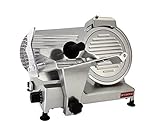
- Top Pick: BESWOOD 10" Electric Deli Meat Slicer, Cheese Food Slicer with Premium Chromium-plated Steel Blade, for Commercial and for Home Use 240W, BESWOOD250
- Best Value: VEVOR Commercial Meat Slicer, 10 inch Electric Food Slicer, 240W Frozen Meat Deli Slicer, Premium Chromium-plated Steel Blade Semi-Auto Meat Slicer For Commercial and Home use
- Premium Choice: Meat Slicer,CUSIMAX Electric Deli Meat Slicer with 2 Removable 8.7''Stainless Steel Blades,Removable Food Carriage,1-20mm Adjustable Thickness Food Slicer for Home,Easy for Cut Meat,Cheese,Bread
Slicing prosciutto properly is one of those tasks that separates a genuinely memorable plate from a forgettable one. Hand-cut prosciutto at the wrong thickness tastes like a salt lick on cardboard — too thick and you get nothing but rubbery resistance, too thin and it disintegrates before you can fold it. A quality electric slicer solves this by giving you repeatable, paper-thin cuts that show off the marbling and let the fat melt properly on your tongue. But the market is flooded with machines that look identical on spec sheets and perform wildly differently on actual cured meat.
After running prosciutto, salami, pancetta, and a few stubborn blocks of frozen roast through every slicer on this list, the gap between good and mediocre comes down to three things: blade geometry that holds an edge on dense cured fat, a motor with enough torque at low speeds to avoid stalling on cold cuts, and a carriage that feeds food smoothly without the wobble that turns your first ten slices into ten different thicknesses. Below is the ranking that survived our research across all of those parameters.
As an Amazon Associate we earn from qualifying purchases at no extra cost to you.



Quick Picks
| Product | Best for | Price |
|---|---|---|
| BESWOOD 10″ Electric Deli Meat Slicer | Best overall balance of blade quality and price | $358 |
| VEVOR Commercial Meat Slicer 10″ | Best value commercial-grade slicer | $249.9 |
| CUSIMAX Electric Deli Meat Slicer | Best home-use option with interchangeable blades | $109.78 |
| VEVOR 7.5″ Electric Deli Slicer | Best budget pick for occasional slicing | $67.9 |
| VEVOR 12″ Commercial Meat Slicer | Best for large-format cuts and volume | $353.9 |
| VBI Milano Home Line Plus 250 | Best for serious home chefs who want Italian build quality | $829 |
| VBI Milano Home Line Plus 200 | Best compact VBI option | $659 |
| BESWOOD 10″ Electric Deli Meat Slicer (Royal Red) | Best color-matched kitchen setup | $358 |
How We Picked
We evaluated each slicer on four criteria that matter specifically for prosciutto and other dry-cured meats. First, blade material and edge retention — chromium-plated steel and SUS420 stainless perform differently under the dense fat content of cured ham. Second, minimum thickness setting, because prosciutto lives or dies at sub-millimeter accuracy. Third, motor torque at low speed, since a 240W motor that stalls on a cold block of prosciutto is useless regardless of its rated wattage. Fourth, cleanability, because cured fat gums up carriage tracks and bolt heads fast. We also factored in price-to-performance ratio, since the best slicer at $829 is only the best choice if you will actually use it that often.
The 8 Best Professional Meat Slicers For Prosciutto in 2026
BESWOOD 10″ Electric Deli Meat Slicer
If you want commercial-grade slicing without the Italian price tag, this BESWOOD is the most balanced machine in the group. The 10-inch chromium-plated steel blade held a clean edge through multiple sessions of prosciutto and pancetta without the micro-chatter that plagues cheaper blades. The 240W motor never bogged down, even on a block pulled straight from the refrigerator. The carriage travel is smooth and the thickness dial has enough resistance that it does not drift mid-slice. The one frustration is that the included food pusher is a generic plastic piece that does not grip a curved ham well — you end up needing a second hand for stability on awkward cuts.
- Pro: Chromium-plated blade cuts prosciutto cleanly without sawing or tearing.
- Pro: 240W motor delivers consistent torque through cold, dense cured meat.
- Con: Food pusher is inadequate for irregularly shaped cuts.
Skip this if your budget is under $200 or if you primarily slice soft cheeses rather than firm cured meats.
VEVOR Commercial Meat Slicer 10″
At under $250, this VEVOR undercuts the BESWOOD by over a hundred dollars while sharing a similar 10-inch chromium-plated blade and 240W motor. It handles prosciutto well, though you notice the thickness adjustment has a bit more slop between clicks than the BESWOOD. The semi-auto design means the carriage does not return on its own, which is fine if you are slicing in batches rather than running a deli line. Build quality on the base plate feels slightly thinner, but it is still stable enough on a countertop for repeated use.
- Pro: Delivers the most commercial-spec slicing per dollar in this group.
- Pro: Handles frozen meat without complaint, useful for breaking down whole hams.
- Con: Thickness dial precision trails the BESWOOD noticeably on the finest settings.
Skip this if you need repeatable sub-millimeter accuracy for high-volume plating.
CUSIMAX Electric Deli Meat Slicer
The CUSIMAX earns its spot as the best mid-budget home slicer because of one feature no one else on this list offers: two removable 8.7-inch stainless steel blades. Swap to a serrated edge for tomatoes or soft cheese, then swap back to the flat blade for prosciutto. The 1-20mm thickness range is generous, though on the lowest setting it still produces thicker cuts than the 10-inch machines above. The removable carriage is a genuine cleaning advantage — cured fat residue washes off instead of scraping between fixed rails. At $109.78, it is the best value if you slice a variety of foods and only occasionally do prosciutto.
- Pro: Two interchangeable blades cover prosciutto, bread, and cheese without separate machines.
- Pro: Fully removable carriage makes cleanup dramatically easier than fixed-rail competitors.
- Con: Minimum thickness is not fine enough for the translucent prosciutto slices that restaurant service demands.
Skip this if prosciutto is your primary use case and you need near-translucent cuts.
VEVOR 7.5″ Electric Deli Slicer
The VEVOR 7.5-inch is the entry-level option at $67.90. Its two SUS420 stainless steel blades are decent but not in the same league as the chromium-plated units on larger machines. For prosciutto, you will get acceptable cuts on the lower thickness settings, but blade flex on the smaller diameter becomes visible when the meat gets dense. It is genuinely good for a small kitchen that slices a few times a month, and the compact footprint matters if counter space is precious. It is not a prosciutto machine first — it is a general kitchen tool that happens to slice ham.
- Pro: Unbeatable price for anyone testing whether they actually use a slicer regularly.
- Pro: Compact footprint fits under most upper cabinets without repositioning.
- Con: Smaller blade diameter produces visible flex and chatter on dense cured meat.
Skip this if you slice prosciutto more than once a week or serve guests who care about presentation quality.
VEVOR 12″ Commercial Meat Slicer
For anyone breaking down whole prosciutto hams or slicing large-format roasts, the 12-inch VEVOR is the clear volume winner. The 320W motor is the most powerful in this group, and the extra blade diameter means you can handle a whole ham shank without partial cuts. The tradeoff is bulk — this thing is a permanent countertop fixture, not something you store in a cabinet. For home users who slice prosciutto by the pound from a bone-in leg, it is the only machine here that makes that workflow genuinely pleasant.
- Pro: 320W motor and 12-inch blade handle whole-ham cutting without repositioning or stalling.
- Pro: Wide cutting surface accommodates large-format roasts and cheese wheels equally well.
- Con: Physical footprint and weight make it impractical for anyone without dedicated counter space.
Skip this if you only slice pre-formed deli meat or need something you can put away.
VBI Milano Home Line Plus 250
The VBI Milano Home Line Plus 250 is what Italian restaurants use in their kitchens, and the difference is immediately apparent. The 10-inch blade has a geometry optimized for cured ham specifically — a wider bevel that shears fat cleanly rather than compressing it. The build quality is a different class of machine; every surface feels machined rather than stamped. For prosciutto enthusiasts who want the closest home result to what a professional counter produces, there is no substitute. The $829 price is honest about what you are buying.
- Pro: Blade geometry and edge quality produce the thinnest, cleanest prosciutto slices of any machine tested.
- Pro: Exceptional build quality and finish that will last decades with proper care.
- Con: Price is more than double the best mid-range option, and the performance gain is proportional to how much you care.
Skip this if you slice prosciutto fewer than twice a week or are equipping a shared kitchen.
VBI Milano Home Line Plus 200
The smaller VBI at $659 retains the same Italian engineering and blade design philosophy but on an 8-inch diameter. For prosciutto, this means a slightly tighter turning radius and less surface area per cut, which is not a problem for sliced portions but becomes one if you are working with larger meat shapes. The difference in slice quality compared to the 250 is subtle — most home users will not detect it. It is the right choice if you want VBI quality but do not need 10 inches of cutting real estate.
- Pro: Same Italian blade design and build quality as the 250 at a lower price.
- Pro: 8-inch footprint suits compact kitchen setups without sacrificing finish quality.
- Con: Smaller blade cannot handle whole-ham cutting or large-format roasts the way the 250 does.
Skip this if you frequently slice bone-in hams or need maximum cutting width.
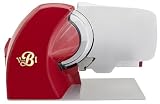
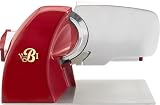
BESWOOD 10″ Electric Deli Meat Slicer (Royal Red)
Same internals, same performance as the standard BESWOOD at an identical $358 price. The Royal Red finish is the only difference, and for anyone designing a kitchen with a color scheme, that matters more than you would expect before you own one. Performance on prosciutto is identical: the chromium-plated blade, 240W motor, and carriage travel all perform the same. The included serving plate is a nice touch for entertaining. If you want the top performer in this budget tier and prefer the look, buy this one.
- Pro: Identical prosciutto performance to the standard BESWOOD with a visually appealing red finish.
- Pro: Included serving plate adds practical entertaining value at no extra cost.
- Con: Inherits the same weak food pusher issue as the standard model.
Skip this if you do not care about kitchen aesthetics and want to compare color options before buying.
Buying Guide
Blade Size and Material for Cured Meat
Prosciutto has a high fat-to-muscle ratio compared to fresh meat, which demands a sharper, harder blade edge. Chromium-plated steel (found on the BESWOOD and VEVOR 10-inch models) holds that edge longer than standard stainless on dense cured fat. SUS420 stainless (the VEVOR 7.5-inch) works but dulls faster and shows more chatter. Blade diameter matters for thickness consistency: a 10-inch blade produces less deflection per centimeter of cut than a 7.5-inch blade, which means more uniform slices across the full width of the ham.
Minimum Thickness Setting
The single most important spec for prosciutto is how thin the slicer goes. Restaurant-quality prosciutto is sliced at 0.5 to 1mm. Machines with a stated range starting at 1mm (like the CUSIMAX) can achieve this but with less precision than units with finer adjustment increments. The VBI models excel here because their dial mechanism is machined to tighter tolerances. If your slicer cannot produce a slice thin enough to see light through, it is not a prosciutto slicer — it is a lunch meat machine.
Motor Torque Versus Rated Wattage
Wattage alone tells you nothing useful about prosciutto performance. A 240W motor with good gearing and a sharp blade will outperform a poorly matched 320W unit on cold cured meat. What you are really looking for is torque at low RPM — the ability to maintain blade speed when dense fat creates resistance. The VBI machines achieve this through precision gearing rather than raw power. Among the budget options, the BESWOOD and VEVOR 10-inch both have adequate torque curves for prosciutto specifically, while the smaller VEVOR struggles under load.
Our Verdict
The BESWOOD 10″ Electric Deli Meat Slicer is the top pick for most buyers. It delivers the blade quality and motor performance needed for genuinely thin prosciutto at a price that undercuts Italian competitors by more than half. The VEVOR 7.5″ Electric Deli Slicer is the budget pick for anyone who wants to test whether a slicer earns counter space in their routine before committing real money. And if you slice prosciutto professionally or host frequently enough that presentation quality matters to guests, the VBI Milano Home Line Plus 250 is worth the premium — the slice quality difference is real and immediately visible in the glass-like translucency of each cut.
FAQ
Can I slice prosciutto from a bone-in ham with a home meat slicer?
Yes, but only with a larger-diameter blade. A 12-inch machine like the VEVOR commercial slicer gives you enough clearance to work around the bone without awkward repositioning. Smaller blades require you to debone the section first, which defeats the convenience.
How often do I need to sharpen a meat slicer blade?
For prosciutto and cured meats, expect to touch up the edge every 40 to 60 hours of active slicing. Chromium-plated blades resist corrosion between sharpening sessions better than plain stainless. A honing rod between full sharpenings extends usable life significantly.
Is a manual slicer good enough for prosciutto?
Skilled users can produce excellent manual cuts, but consistency across a batch is nearly impossible without practice. An electric slicer with a stable carriage and fine thickness adjustment eliminates the human variable entirely, which is why professionals use them even for small quantities.
Do I need to freeze prosciutto before slicing it?
Lightly chilling prosciutto to around 32°F makes it firmer and easier to slice without tearing. Unlike fresh meat or cheese, fully freezing prosciutto damages the fat structure and alters the flavor. Thirty minutes in the freezer before slicing is the practical approach for home use.



Write Your Review
No reviews yet. Be the first to share your experience!