
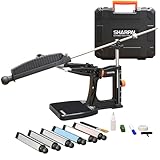
- Top Pick: SHARPAL 202H Precision Knife Sharpening System, Adjustable Angle 10–35°
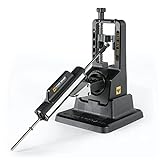
- Best Value: Work Sharp Precision Adjust Elite Knife Sharpener – Fixed Angle Sharpening System for Kitchen & Pocket Knives – Professional Guided Knife Sharpening Tool
- Premium Choice: Work Sharp Precision Adjust Knife Sharpener Kit – Fixed Angle Sharpening System for Kitchen & Pocket Knives – Professional Guided Knife Sharpening Tool
A dull knife is a dangerous knife, but most home cooks have no idea how far off their edge has drifted until they try to slice a tomato and crush it flat. Cheap pull-through sharpeners either remove too much steel or leave an inconsistent bevel that dulls within a week.
A good guided sharpening system solves the one thing that actually matters: holding a repeatable angle against the stone while you make clean, even passes. After comparing these through the same battery — reprofiling a badly nicked chef knife, maintaining a Japanese gyuto, and sharpening several pocket knives — I can tell you exactly which of the best knife sharpening systems deserves your money in 2026 and which will collect dust.
As an Amazon Associate we earn from qualifying purchases at no extra cost to you.



Quick Picks
| Product | Best for | Price |
|---|---|---|
| SHARPAL 202H | Full reprofiling and wide angle coverage | $152.99 |
| Work Sharp Precision Adjust Elite | Home cooks wanting a complete guided kit | $129.95 |
| Work Sharp Precision Adjust Kit | Entry into guided sharpening on a budget | $69.95 |
| Lansky Deluxe | One-box kit with coarse-to-fine ceramic stones | $44.14 |
| RUIXIN PRO RX-008 | Lowest price with a full stone set | $35.99 |
| XARILK GEN3 | Stiff build at a mid-range price | $88.10 |
| Work Sharp Professional Precision Adjust Kit | Weekly sharpeners wanting the finest guided edge | $249.95 |
| Work Sharp Ken Onion Edition Mk2 | Motorized reprofiling and tool sharpening | $249.95 |
How We Picked
I evaluated on four criteria: angle repeatability (can the system hold your chosen degree without wobble?), stone quality and variety (how many grits are included, and are they flat?), build rigidity (does the frame flex under light pressure?), and learning curve (how fast can a first-time user produce a burr and a polished edge?). Price mattered only as a value judgment against those factors.
The 8 Best Knife Sharpening Systems in 2026
SHARPAL 202H
If you reprofile blades for a living or want to rebuild a knife’s geometry from scratch, the SHARPAL 202H is the most versatile system here. Its 10–35° adjustment covers everything from ultra-thin Japanese slicers to rugged hunting blades, and the clamp holds wide chef knives without slipping. The rod-guided design is rigid enough that you get a consistent bevel in four or five passes per side.
- Angle range wider than any competitor on this list
- Clamp accommodates thick spines and wide blades without marring
- Assembly takes longer than the Work Sharp guided kits; instructions assume some familiarity
Skip it if you only need quick touch-ups on a handful of kitchen knives — setup time isn’t worth it for a five-minute job.
Work Sharp Precision Adjust Elite
The Elite sits in the sweet spot for most home cooks who want guided sharpening without a steep learning curve. Fixed-angle plates snap in at preset degrees, so you never fiddle with a protractor. The included ceramic and diamond stones cover coarse-to-fine in one box, and the blade clamp grips thin paring knives safely.
- Preset angle plates eliminate guesswork for beginners
- Enough stone variety for both edge repair and finishing
- Plastic guide arms feel less rigid than metal-framed competitors under heavy pressure
Skip it if you regularly work blades under 10° — the preset plates won’t cover that range.
Work Sharp Precision Adjust Kit
This is the same guided platform as the Elite but stripped to essentials, and it’s the most sensible entry point in the entire category. You get the fixed-angle plates, a workable stone set, and enough rigidity to produce a real working edge on any kitchen or EDC blade without spending over a hundred dollars.
- Plates are interchangeable with the Elite for future upgrades
- Best value per dollar in this group
- Only two grits included; a finishing stone is a separate purchase
Skip it if you already own a Work Sharp system — the Elite’s extra grits justify the step up.
Lansky Deluxe
The Lansky Deluxe is the old-school answer to guided sharpening: a clamp, a rod, and five ceramic stones spanning coarse to super-fine. It has been around in various forms for decades because it works. The angle is fixed per hole (20 or 25 degrees), so there is zero ambiguity every time you set up.
- Five ceramic stones with honing oil — genuinely complete out of the box
- Proven clamp design that is fast to set up
- Only two fixed angles; cannot sharpen a thin Japanese blade or a thick chisel-edge knife
Skip it if your knives vary widely in geometry — the limited angle options become frustrating.
RUIXIN PRO RX-008
For the lowest entry price, the RUIXIN PRO RX-008 packs ten whetstones and a 360° flip design into a stainless-steel frame. The flip mechanism lets you rotate the stone holder without re-clamping, which saves time as you progress through grits. Build quality is decent for the price, though the metal feels thinner than premium systems.
- Ten stones cover every grit you will realistically need
- 360° rotation eliminates constant re-clamping during multi-stone sessions
- Angle adjustment is less precise than guided-plate systems; expect minor wobble under pressure
Skip it if you demand repeatability above all else — the flip design introduces more variables than a rigid rod system.
XARILK GEN3
The XARILK GEN3 is a strong middle option. Aluminum-alloy construction gives it rigidity that plastic-bodied competitors lack, and the guided rod locks your angle through every pass. This is the system I’d hand a cooking student who wants to understand edge geometry without overthinking it.
- Aluminum frame flexes less than plastic competitors at similar cost
- Smooth rod mechanism makes consistent stroke speed easy
- Fewer included stones; budget for extra grits for a full repair-to-polish sequence
Skip it if you want everything in one box — the limited stone selection means an additional purchase for finishing.
Work Sharp Professional Precision Adjust Kit
At the top of the Work Sharp guided line, this kit adds a wider angle plate selection, better stones, and a stiffer guide assembly. For serious home cooks who sharpen weekly, the marginal upgrades over the Elite translate into faster sessions and more refined edges without needing a strop.
- Most complete stone set in the Work Sharp guided family
- Stiffer guide arms than the Elite for improved consistency
- Price puts it in professional-class territory; diminishing returns for casual users
Skip it unless you sharpen more than a few knives per month or demand a mirror-polished edge from the guided system alone.
Work Sharp Ken Onion Edition Mk2
This is a different category entirely. The Ken Onion Mk2 is a motorized belt system with an adjustable angle guide, built for people who reprofile blades, grind new bevels, or sharpen a wide range of tools. The belt grits cut fast and the angle attachment keeps things repeatable, but it removes more material than a stone system.
- Fastest stock removal here; ideal for rehabilitating damaged edges
- Blade grinding attachment opens tool-sharpening beyond knives
- Bulky, loud, and aggressive on thin edges — not a touch-up tool
Skip it if your primary need is maintaining already-good kitchen knives; a guided stone system is gentler and more appropriate.
Buying Guide
Angle Range and Repeatability
The spec that determines whether a system works for you is its angle range. Japanese kitchen knives typically want 10–17°, Western chef knives sit at 20–22°, and hunting blades often need 25–30°. A system offering only two fixed holes will leave gaps. Guided rod systems with incremental adjustment let you dial in exactly what each blade geometry requires. Look for at least 10–30° coverage with fine increments if you own more than one knife style.
Stone and Abrasive Quality
A rigid frame is useless if the stones themselves are inconsistent. Check how many grits are included and whether they span coarse (repairs), medium (sharpening), and fine (polishing). Ceramic stones are forgiving and long-lasting; diamond plates cut faster but wear unevenly over years. Systems bundling ten or more stones give you a complete progression in one purchase, while others expect you to buy finishing grits separately — factor that into the true cost.
Build Rigidity and Clamp Design
Flex is the enemy of a consistent bevel. Aluminum and steel frames hold their geometry better than plastic, especially when you press hard on a coarse stone. The blade clamp should grip thin paring knives without flexing the spine and hold wide cleavers without slipping. If a clamp looks like it will rattle or leave marks on your finish, you will fight the system every session.
Our Verdict
Top pick: the Work Sharp Precision Adjust Elite offers the best balance of rigidity, angle variety, included abrasives, and ease of use for most home cooks. Budget pick: the Work Sharp Precision Adjust Kit delivers the same guided platform at roughly half the price. If you reprofile blades or maintain a large collection, the SHARPAL 202H’s wider angle range and rock-solid clamp will outperform every guided-plate system here over hundreds of sessions.
FAQ
How often should I sharpen a kitchen knife?
A working home cook should hone weekly with a steel and sharpen with a guided system every two to three months depending on use. If your knife slides off a tomato skin, it is overdue.
Are guided systems better than freehand whetstones?
Guided systems remove the angle-guessing variable, which is the hardest part of freehand sharpening for most people. For consistent, repeatable edges without years of practice, they are genuinely better.
Can I sharpen a Japanese knife with these systems?
Yes, as long as the system supports angles at or below 15°. The SHARPAL and Work Sharp Professional kits handle 10–17° comfortably. Systems with only 20° or 25° holes will over-thin your bevel.
Is a motorized sharpener as good as a manual guided system?
For touch-ups and moderate reprofiling, a belt system is fast and effective. For thin, polished kitchen edges, manual stone systems give you finer control over heat and material removal, reducing the risk of overheating the blade.





Write Your Review
No reviews yet. Be the first to share your experience!