
Disclosure: As an Amazon Associate we earn from qualifying purchases. We may receive a small commission when you buy through links on this page, at no extra cost to you. We only recommend products we genuinely believe offer value to home cooks.
As an Amazon Associate we earn from qualifying purchases at no extra cost to you.


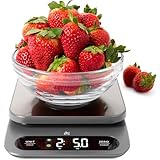


If your baking is inconsistent, a digital kitchen scale is the upgrade that fixes it. Weighing flour and sugar in grams is far more accurate than scooping cups, so your cookies, breads, and cakes come out the same every time. A good scale also simplifies portioning, coffee brewing, and meal prep. Here are five reliable scales for baking, followed by what to look for before you buy.
| Rank | Product | Best For | Buy |
|---|---|---|---|
| 1 | OXO Good Grips 11-lb Stainless Scale | Pull-out display & readability | View on Amazon |
| 2 | Escali Primo Digital Scale | Best value & simplicity | View on Amazon |
| 3 | Etekcity 0.1g Precision Scale | Fine 0.1g resolution | View on Amazon |
| 4 | Etekcity Stainless Food Scale | Everyday baking budget pick | View on Amazon |
| 5 | Etekcity USB-Rechargeable Scale | Rechargeable, no batteries | View on Amazon |
Top Picks
1. OXO Good Grips 11-Pound Stainless Steel Scale
The standout feature is a pull-out display that slides forward so a large bowl never blocks your view of the numbers. The stainless platform wipes clean, the tare button is easy to reach, and it reads in grams and ounces. It is a polished choice for serious home bakers.
2. Escali Primo Digital Scale
A longtime favorite for its two-button simplicity and dependable accuracy. It has an 11-pound capacity, a tare function, and automatic shutoff, all in a compact footprint. If you want a fuss-free scale that just works, the Primo is hard to beat for the price.
3. Etekcity 0.1g Precision Scale
This model resolves down to 0.1 gram, which matters when weighing yeast, salt, espresso, or small additions where a gram makes a difference. The stainless surface and backlit display are easy to use. It is the pick for precision bakers and coffee enthusiasts.
4. Etekcity Stainless Food Scale
An affordable everyday scale with a clear LCD, multiple units, and a clean stainless platform. It covers all the basics of weighing ingredients for baking and portioning meals without extra complexity. A great first scale that will not strain the budget.
5. Etekcity USB-Rechargeable Scale
This scale recharges over USB, so you never hunt for batteries mid-recipe. It is water resistant for easy cleanup, has a higher capacity, and offers fine graduation. If you bake frequently and dislike disposable batteries, this is a convenient, modern option.
Why Weighing Beats Measuring Cups
A cup of flour can vary by 20 percent or more depending on how you scoop and how settled the flour is. That swing is enough to make bread dense or cookies dry. Weighing removes the variable entirely: 120 grams of flour is always 120 grams. The tare function lets you zero out a bowl, add the first ingredient, zero again, and add the next, so you weigh everything into one container with almost no cleanup. Once you bake by weight, going back to cups feels imprecise.
What to Look For in a Kitchen Scale
Capacity and resolution: Most home bakers want at least 11 pounds (5 kg) capacity and 1-gram resolution; for coffee or precise additions, 0.1-gram resolution helps. Tare function: Essential for weighing multiple ingredients in one bowl. Units: Grams, ounces, pounds, and milliliters cover almost any recipe. Display: A backlight and a pull-out or raised display prevent large bowls from hiding the numbers. Power: Decide between replaceable batteries and USB rechargeable. Cleanup: A flat stainless platform with no seams is easiest to wipe down.
Getting Accurate Results Every Time
Place the scale on a flat, stable surface, not a soft trivet that can flex. Let it auto-zero before adding anything, and use the tare button between ingredients. Avoid overloading past the rated capacity, and replace batteries when readings drift. Calibrate or sanity-check accuracy with a known weight if your scale supports it. With a little care, a digital scale stays accurate for years and pays for itself in consistent results.
Beyond Baking: Other Ways a Scale Earns Its Keep
A kitchen scale is not just a baking tool; once it lives on your counter you will find dozens of uses. It makes portion control effortless for meal prep, letting you weigh proteins and grains to a target without measuring cups. Coffee enthusiasts use it to dial in a precise coffee-to-water ratio for pour-over and espresso, which is the single biggest factor in a consistent cup. It simplifies scaling recipes up or down, since doubling 250 grams is far easier and more reliable than juggling fractional cups. You can also weigh ingredients for homemade spice blends, portion dough for even rolls, divide cake batter equally between pans for level layers, and even use it as a light-duty postal scale. Few inexpensive tools touch so many tasks.
Common Gram Weights Worth Knowing
Once you bake by weight, a few reference points become second nature. A cup of all-purpose flour is roughly 120 to 125 grams when spooned and leveled, granulated sugar is about 200 grams per cup, and brown sugar packed runs near 220 grams. A cup of water or milk is close to 240 grams, since a milliliter of water weighs about a gram. A large egg out of the shell is approximately 50 grams. These figures vary slightly by source, which is exactly why weighing beats volume: your scale measures the real amount in the bowl rather than relying on how tightly you packed a cup. Keep a printed conversion chart nearby at first, and soon you will weigh by instinct.
Frequently Asked Questions
Do I really need a scale for baking?
If you want consistent results, yes. Weighing flour and sugar removes the variability of scooping cups, which is the most common cause of dry or dense baked goods.
What capacity and resolution should I choose?
For general baking, 11 pounds (5 kg) capacity with 1-gram resolution is plenty. If you also brew coffee or weigh small amounts, look for 0.1-gram resolution.
Grams or ounces for baking?
Grams are more precise because they are a smaller unit, and most modern baking recipes list gram weights. A good scale switches between units with one button.
How do I use the tare function?
Place your empty bowl on the scale, press tare to zero it, add the first ingredient, press tare again, then add the next. Everything weighs into one container.
Are rechargeable scales better than battery models?
They are more convenient if you bake often and dislike buying batteries. Battery models are simpler and fine for occasional use; both can be equally accurate.
Related Reading
Build a precise baking kit with our guides to converting measuring cups to grams, the best dry measuring cups for accurate baking, and the top whisks for whipping and mixing. See also the best rolling pins for baking and best egg separators for clean yolks. New bakers can start with essential kitchen tools for beginner cooks and kitchen tool essentials every cook needs.


Write Your Review
No reviews yet. Be the first to share your experience!