
A brisket slicer is a long, thin knife built for one job: cutting clean, even slices through smoked meat without tearing the bark or shredding the fibres. A 12-inch blade covers the width of a brisket in a single stroke, a Granton edge or a wavy edge keeps slices from sticking, and a grippy handle keeps the cut steady when the meat is hot and the board is slick. This guide compares two 12-inch slicers that do that job well.
Both knives below have 12-inch high-carbon steel blades, both are built for slicing rather than chopping, and both cost far less than a custom knife. The Victorinox Fibrox Pro has a Granton edge with hollowed-out grooves, an NSF-rated non-slip handle, and a Swiss build, while the Mercer Culinary Millennia has a wavy edge, a Santoprene handle, and a one-piece Japanese steel blade. The guide covers edges and handles. Read the guide, compare the edges side by side, and pick the knife that fits your smoker and your hand.
Quick Picks
As an Amazon Associate we earn from qualifying purchases
| Product | Best for | Key spec from title |
|---|---|---|
| Victorinox Fibrox Pro 12-Inch Slicing Knife | Clean slices with a Granton edge | 12-inch Granton blade, Fibrox Pro handle, NSF |
| Mercer Culinary Millennia 12-Inch Slicer | A wavy edge for smooth slicing | 12-inch wavy edge, Japanese steel, Santoprene handle |
How to Choose
Blade length and why 12 inches works
A brisket is wide, and the blade must cover it in a single stroke, because sawing back and forth tears the bark and shreds the meat. A 12-inch blade spans a full brisket flat, so one smooth pull cuts a clean slice from end to end, while a shorter blade forces extra strokes that rag the edges. Both knives in this guide have 12-inch blades, which is the standard length for a brisket slicer. Judge the length against the briskets you cook, because a blade that is too short will always fight the meat, and a blade that is too long will feel clumsy on the board.
Granton edge versus a plain edge
A Granton edge has shallow grooves ground into the blade, which create air pockets that stop thin slices from sticking. The Victorinox knife has a true Granton edge, so slices fall away cleanly, while the Mercer knife has a wavy edge instead, which is not a Granton edge and should not be confused with one. A wavy edge still cuts smoothly through bark and fat, and it holds its edge well, but it works differently from a Granton edge. Choose the edge that suits your cutting style, and remember that a sharp plain edge with good technique beats a dull Granton edge every time. Technique matters more than grooves.
Handle grip and balance
A slicing knife must stay steady when the meat is hot, the board is slick, and the hands are greasy, so the handle matters as much as the blade. The Victorinox Fibrox Pro handle is made from TPE, a non-slip material that grips even when wet, and it carries an NSF rating for food safety. The Mercer handle is made from Santoprene, a soft rubber-like material that also grips well and resists slipping. Hold the idea of the knife before you buy it: a handle that fits your hand will keep the cut straight, while a handle that slips will send the blade where you do not want it.
Steel, care and sharpening
A slicing knife lives or dies by its steel and its edge, so look at both before you order. The Victorinox blade is high-carbon stainless steel, stamped rather than forged, with a round tip that is safe around the board, while the Mercer blade is one-piece high-carbon Japanese steel. Both steels hold an edge well and sharpen easily on a whetstone or a honing rod, and both should be hand washed and dried at once, never put in a dishwasher. A sharp knife is a safe knife, because it cuts where you aim it, while a dull knife slips and needs force. Keep the edge honed.
The 2 Best Options
Victorinox Fibrox Pro 12-Inch Slicing Knife

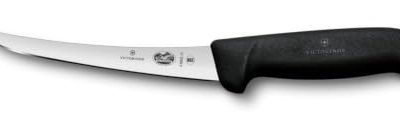
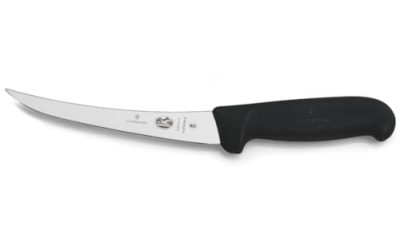
The Victorinox Fibrox Pro suits buyers who want a Granton edge and a non-slip handle from a Swiss maker. Its 12-inch high-carbon stainless blade cuts a brisket flat in a single stroke, the Granton grooves keep thin slices from sticking, and the round tip is safe around the board. The Fibrox Pro handle is made from non-slip TPE, carries an NSF rating, and grips well even when wet, while the stamped blade keeps the knife light at 0.44 lb. A lifetime warranty backs the build, and the knife is made in Switzerland. This is the knife to buy when a Granton edge and a sure grip matter most.
Specs
- 12-inch blade length
- High-carbon stainless steel
- Granton edge with grooves
- Fibrox Pro handle
- TPE non-slip handle material
- NSF rated
- Stamped blade construction
- Round tip
- Made in Switzerland
- Lifetime warranty
- 0.44 lb weight
- No sheath included
- Slicing knife for brisket and roasts
- Thin blade for clean slices
- Slices fall away from the blade
- Hand wash and dry at once
- Suitable for smoked meats
- Single-stroke slicing
- Professional kitchen use
- Granton grooves stop slices sticking
- TPE handle grips when wet
- Round tip for safe handling
- Lifetime warranty included
Best for: Clean slices with a Granton edge and a non-slip grip for smoked brisket.
Watch out for: The knife comes with no sheath, so store it in a block or a blade guard.
Mercer Culinary Millennia 12-Inch Slicer
The Mercer Culinary Millennia suits buyers who want a wavy edge and a one-piece Japanese steel blade. Its 12-inch blade cuts through bark and fat in smooth strokes, the wavy edge keeps the cut moving without catching, and the one-piece high-carbon Japanese steel holds its edge well. The Santoprene handle grips firmly even when wet, the knife is light in the hand, and the blade sharpens easily on a whetstone or a honing rod. This is not a Granton edge, so buyers who want grooves should pick the Victorinox. This is the knife to buy when a wavy edge and Japanese steel matter most.
Specs
- 12-inch blade length
- One-piece high-carbon Japanese steel
- Wavy edge
- Santoprene handle
- Not a Granton edge
- Smooth slicing through bark and fat
- Holds its edge well
- Light in the hand
- Sharpens easily on a whetstone
- Sharpens easily on a honing rod
- Hand wash and dry at once
- Slicing knife for brisket and roasts
- Thin blade for clean slices
- Single-stroke slicing
- Professional kitchen use
- Comfortable grip when wet
- Durable steel construction
- Suitable for smoked meats
- Wavy edge cuts smoothly
- Japanese steel holds an edge
- Santoprene grip for wet hands
- Lightweight and easy to handle
Best for: A wavy edge and one-piece Japanese steel for smooth slicing through brisket.
Watch out for: The edge is wavy, not Granton, so slices may cling more than on the Victorinox.
Which One Fits Your Situation
A smoker who slices brisket every weekend
Pick the Victorinox Fibrox Pro when the smoker runs every weekend and the brisket must slice cleanly. Its 12-inch Granton blade cuts the flat in a single stroke, the grooves keep thin slices from sticking, and the non-slip TPE handle grips well when the meat is hot and the board is slick. The lifetime warranty backs years of weekend cooks, and the Swiss build holds up to daily use.
A home cook slicing roasts
Pick the Mercer Culinary Millennia when the knife slices Sunday roasts as well as brisket. Its 12-inch wavy edge cuts through roast beef, turkey, and ham in smooth strokes, the Santoprene handle grips firmly, and the one-piece Japanese steel holds its edge between sharpenings. The blade is light in the hand, which suits longer slicing sessions, and it sharpens easily on a whetstone. A home knife should cover every roast, and the Mercer does.
A first slicing knife
Pick the Victorinox Fibrox Pro when this is the first slicing knife and the aim is to learn the stroke. Its Granton edge forgives a less-than-perfect cut by keeping slices from sticking, the round tip is safe around the board, and the non-slip handle keeps the knife steady while you learn. The stamped blade is light at 0.44 lb, which suits a new hand, and the lifetime warranty covers the learning period.
A gift for a barbecue cook
Pick the Mercer Culinary Millennia when the knife is a gift for someone who runs a smoker. Its 12-inch blade, wavy edge, and one-piece Japanese steel look and feel like a serious tool, the Santoprene handle grips well, and the knife arrives ready to slice. A gift knife should impress on the first use, and the Mercer does, with clean slices through bark and fat from the first cut.
Common Mistakes
- Buying a short knife for brisket, then sawing back and forth and tearing the bark off the meat with every stroke.
- Choosing a knife with a slippery handle, then watching the blade wander when the meat is hot and the board is slick, and the cut going wide.
- Putting a slicing knife in the dishwasher, then finding the edge dulled and the handle loosened after a single cycle.
- Cutting with a dull blade, then forcing the cut and shredding the brisket instead of slicing it, and the bark coming off in strips.
- Storing a slicer loose in a drawer, then finding the edge nicked and the tip bent the next time you need it, when the guests are already seated.
Frequently Asked Questions
What length slicing knife is best for brisket?
A 12-inch blade is the standard length for brisket, because it spans a full brisket flat in a single stroke and cuts a clean slice from end to end. A shorter blade forces extra strokes that tear the bark and shred the meat, while a longer blade feels clumsy on the board.
What is a Granton edge?
A Granton edge has shallow grooves ground into the sides of the blade, which create air pockets that stop thin slices from sticking to the steel. The Victorinox knife in this guide has a true Granton edge, while the Mercer knife has a wavy edge instead, which is not a Granton edge.
How do I keep a slicing knife sharp?
Hone the blade with a rod before each use, sharpen it on a whetstone when honing no longer brings the edge back, and hand wash and dry it at once after cooking. Never put the knife in a dishwasher, never store it loose in a drawer, and never cut on glass or stone, which dulls the edge fast.
Should I slice brisket hot or cold?
Slice brisket warm, after resting it for at least 30 minutes, because the juices settle during the rest and the meat holds together under the blade. A hot brisket straight off the smoker will fall apart, while a cold brisket slices cleanly but loses warmth. Rest the meat, slice with a single smooth stroke, and serve at once for the best result.


Write Your Review
No reviews yet. Be the first to share your experience!