
A plant based kitchen runs on produce. Kale, spinach, celery, carrots, beets, apples, lemons, ginger and cucumber move through the kitchen in large amounts, and a vertical masticating juicer turns that produce into juice. The upright design is the reason this style works so well in a busy plant based home. The auger stands upright, gravity helps feed produce downward, and the footprint stays narrow enough to sit beside a cutting board, a blender or a stack of storage containers.
How to Choose a Vertical Masticating Juicer for a Plant Based Kitchen
Start with the produce you juice most often. A kitchen built around kale, spinach, chard and wheatgrass needs a juicer that grips leafy material and presses it firmly. A kitchen built around celery and carrots needs a strong auger and a feed path that does not jam on long stalks. A kitchen that leans toward apples, oranges, beets and ginger needs a machine that handles hard and soft produce in the same session without constant stopping.
Look at the hopper and feed chute next. A wide self-feeding hopper lets a household load a whole recipe and step away while the machine works. That design saves time on busy mornings and suits batch juicing for the week. A narrower chute needs more chopping, but it can give more control over the order in which produce enters the machine. Many plant based cooks alternate leafy greens with a hard piece of carrot or apple to help push greens through, and a chute that accepts that rhythm matters.
Cleaning decides whether a juicer becomes a daily habit or a weekend project. Look for a design with a small number of parts, a cleaning brush in the box, and parts that rinse clean under running water. Some models use a strainer-free chamber that rinses in moments. Others use a fine mesh strainer that needs a brush and a little more attention after greens. If a household juices every day, a faster rinse matters more than an extra attachment.
Top Picks
Nama J2 Cold Press Juicer

The Nama J2 is built around a self-feeding hopper that takes a whole recipe at once. Load kale, celery, apple and ginger, close the lid, and the machine cuts and presses the produce while the cook moves on to another task. That hands-free pattern suits a plant based household that juices in batches and wants the morning routine to run itself.
- Self-feeding hopper for whole recipe loading
- 200 watt motor running at 50 RPM
- Capacity of 30 fluid ounces as listed
- Two strainers for different pulp levels
- 15-year warranty as listed
Best for: Hands-free batch juicing for a plant based household that juices most days.
View the Nama J2 Cold Press Juicer on Amazon
Hurom H400 Easy Clean Slow Juicer
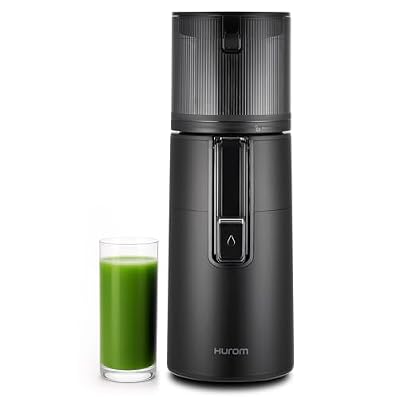
The Hurom H400 is designed for cooks who want the cleanup to be as simple as the juicing. Its wide mouth hopper fits whole produce, and the chamber is made to rinse clean without scrubbing a fine mesh screen. That matters after a greens-heavy session, when pulp can cling to every surface.
- Wide mouth hopper that fits whole produce
- Hands-free self-feeding design
- Easy clean chamber with no fine mesh strainer to scrub
- Quiet motor for early morning use
- BPA free parts and simple assembly
Best for: Daily green juice with the fastest cleanup in this group.
View the Hurom H400 Easy Clean Slow Juicer on Amazon
Kuvings REVO830 Whole Slow Juicer

The Kuvings REVO830 uses two feed chutes instead of one. A wide 88 mm chute takes whole apples and other round produce, while a narrower 48 mm chute takes carrots, celery and other long pieces and cuts them automatically. That dual path reduces chopping and keeps a mixed plant based recipe moving.
- Dual feed chutes at 88 mm and 48 mm
- 240 watt motor
- Auto-cutting chute for long produce
- Smoothie and sorbet attachments included as listed
- Matte black finish with stainless steel parts
Best for: Mixed produce batches with little chopping and a wide range of recipes.
View the Kuvings REVO830 Whole Slow Juicer on Amazon
Omega VSJ843QS Vertical Slow Juicer

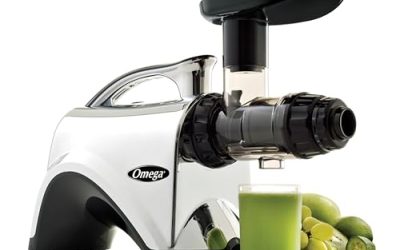
The Omega VSJ843QS is the compact vertical pick in this group. It runs at 43 RPM, slower than most upright models, and uses a dual-edge auger with a tighter fit to press more juice from greens and hard produce. A no-drip tap, automatic pulp ejection and an auto-cleaning system help keep a daily routine simple.
- 43 RPM slow pressing speed
- 150 watt motor with a dual-edge auger
- No-drip tap with a mixing function
- Automatic pulp ejection
- Auto-cleaning system for rinsing between recipes
Best for: Small counters and greens-heavy juicing at a slow, quiet pace.
View the Omega VSJ843QS Vertical Slow Juicer on Amazon
Ninja NeverClog Cold Press Juicer JC151

The Ninja NeverClog JC151 is the practical pick for a plant based kitchen that wants pulp control and dishwasher safe parts. Two pulp filters let the cook choose less pulp or lots of pulp, and the anti-drip lever keeps the counter clean when pouring. A reverse function helps clear a jam without stopping the session.
- 150 watt motor with a slow turning auger
- Two pulp filters for less pulp or lots of pulp
- 24 oz juice jug and 36 oz pulp container
- Dishwasher safe juice-contact parts as listed
- Anti-drip lever and reverse function
Best for: Families who want pulp choice, simple cleanup and a compact upright shape.
View the Ninja NeverClog Cold Press Juicer JC151 on Amazon
| Product | Key Feature | Best For |
|---|---|---|
| Nama J2 Cold Press Juicer | Self-feeding hopper for a whole recipe | Hands-free batch juicing |
| Hurom H400 Easy Clean Slow Juicer | Wide hopper and easy clean chamber | Daily green juice with fast cleanup |
| Kuvings REVO830 Whole Slow Juicer | Dual 88 mm and 48 mm feed chutes | Mixed produce with little chopping |
| Omega VSJ843QS Vertical Slow Juicer | 43 RPM dual-edge auger | Compact counters and greens |
| Ninja NeverClog Cold Press Juicer JC151 | Two pulp filters and dishwasher safe parts | Pulp control for families |
Buying Guide for Plant Based Kitchens
A plant based kitchen asks more of a juicer than a kitchen that juices once a week. Greens are light and fibrous, roots are hard, and soft fruit can turn to mush if the auger cannot grip it. The best way to plan is to write down a typical week of juice recipes, then match the machine to that list. A household that drinks celery juice every morning needs a different machine from a household that makes a large batch of mixed green juice on Sunday and stores it for the week.
Batch size shapes the choice. A self-feeding hopper suits large batches because the cook can load produce, start the machine and prepare breakfast while it works. A smaller upright juicer suits one or two glasses at a time and fits a kitchen where counter space is limited. Check the juice jug size on the listing and think about whether the household drinks juice straight away or stores it in bottles. A larger jug helps with batch work, while a smaller jug is easier to pour and clean.
Produce preparation is part of the routine. Even a wide hopper needs some cutting for long celery stalks, large beets and whole pineapples. A good habit is to cut produce into pieces that fit the chute, alternate leafy greens with hard produce, and feed slowly rather than forcing a large amount in at once. That rhythm reduces jams, keeps the pulp drier and gives a smoother juice. A reverse function is useful when a piece catches, and a pusher should be used gently rather than as a ram.
Frequently Asked Questions
Are vertical masticating juicers good for leafy greens?
Yes, vertical masticating juicers suit leafy greens well when the produce is fed slowly and alternated with hard produce such as carrot or apple. The slow auger presses greens firmly, and the upright path uses gravity to keep material moving downward. Cutting long leaves into shorter pieces and feeding a small handful at a time helps prevent tangling.
What is the difference between a vertical and a horizontal masticating juicer?
A vertical juicer stands upright with the auger on a vertical axis, so it takes less counter length and uses gravity to feed produce. A horizontal juicer lies flat with the auger on a horizontal axis, so it takes more counter length but can be stronger for wheatgrass and very fibrous greens. Vertical models suit most plant based kitchens because they are compact, easy to load and simple to store.
How do I keep pulp dry and juice yield high?
Feed produce slowly, alternate soft leaves with hard pieces, and avoid overloading the hopper. Cut long stalks into shorter lengths, remove large pits and thick rinds, and let the auger work at its own pace. A drier pulp usually means the machine pressed firmly, while wet pulp can mean the feed was too fast or the produce was too soft for the setting used.
How should I clean a vertical masticating juicer?
Rinse parts straight after juicing, before pulp dries. Take the machine apart as shown in the manual, rinse the auger and chamber under running water, brush the strainer gently, and dry parts fully before storage. Some parts are dishwasher safe, as stated on the listing, while others need hand washing. A quick rinse after each use keeps the routine short.
Conclusion
For a plant based kitchen, a vertical masticating juicer earns its place by handling greens, roots and fruit in one compact machine. Choose the Nama J2 for hands-free batch juicing, the Hurom H400 for the easiest cleanup, the Kuvings REVO830 for mixed produce with little chopping, the Omega VSJ843QS for a compact counter and slow pressing, and the Ninja NeverClog JC151 for pulp control and simple washing. Match the hopper, the cleaning routine and the counter height to the way the household actually juices, and the machine will stay in daily use rather than gathering dust.
Disclosure: As an Amazon Associate, we earn from qualifying purchases.


Write Your Review
No reviews yet. Be the first to share your experience!