
If your sourdough spreads sideways in the bowl instead of rising up, the problem is rarely your starter — it is the vessel your dough proofs in. Proofing baskets, also called bannetons or brotforms, support shaped dough during its final rise, wick away just enough surface moisture to help the crust set, and leave that classic spiral pattern bakers love. The right basket turns a slack, sticky dough into a loaf that holds its shape, scores cleanly, and springs well in the oven.
As an Amazon Associate, I earn from qualifying purchases made through links in this guide, at no extra cost to you.
In this roundup we compare five well-regarded options, from a single handwoven rattan basket for purists to a bulk oval set for bakers running small batches. Whether you bake one boule on weekends or a row of batards every morning, one of these proofing baskets will fit your routine.
How to Choose the Right Proofing Basket
Shape first. Round baskets suit boules, the round loaves most home bakers start with. Oval baskets shape batards, which slice more evenly for sandwiches and fit better in many Dutch ovens and loaf pans. If you bake both styles, a mixed set saves you buying twice.
Size and dough weight. Match the basket to your usual dough mass. An 8.5 to 9 inch round basket comfortably handles roughly 500 g to 750 g of dough, while a 10 inch basket suits larger 750 g to 1 kg loaves. Dough that is too small for its basket spreads flat; dough that overflows a small basket proofs unevenly and sticks to the rim.
Material matters. Traditional rattan cane is the benchmark: it breathes, absorbs a little surface moisture, and imprints the signature rings. Cotton rope baskets are a newer alternative that feel softer, stack neatly, and wash more easily, though they give a subtler pattern. Silicone versions exist too and release dough effortlessly, but they trap more moisture against the crust.
Liners or bare rattan? A cloth liner gives a smooth loaf surface and helps very wet doughs release, while proofing directly in a well-floured basket produces the bold spiral finish. Many bakers keep both options and choose per recipe. Whichever you pick, dust generously with rice flour — it resists absorbing moisture far better than wheat flour and is the single best trick against sticking.
Extras and care. Kits that add a dough whisk, scraper, lame, or sling can be good value if you are building a sourdough toolkit from scratch. For care, let baskets dry fully between bakes, brush out excess flour, and never soak rattan; a dry, airy shelf keeps mould away.
The 5 Best Proofing Baskets
1. Vollum Banneton Bread Proofing Basket, 8.5 Inch Round

Specs
- Handwoven natural rattan cane; 8.5 x 3 inch round basket; sized for about a 1-pound loaf; smooth, splinter-checked finish; works with or without a liner cloth.
The Vollum is the classic single banneton for bakers who want the traditional tool and nothing else. Its tight handwoven spiral wicks moisture evenly and leaves crisp flour rings on the finished boule, and the smaller 8.5 inch diameter gives compact doughs the side support they need to rise tall rather than wide. It is a dependable first basket for 500 g recipes and small Dutch ovens.
Pros:
– Genuine handwoven rattan with a smooth, even weave
– Compact size ideal for smaller loaves and beginners
– Produces a pronounced spiral pattern on the crust
Cons:
– Single basket only — no liner or tools included
– Too small for large 1 kg doughs
2. PITCH PULSE Bread Proofing Basket Set, 9 Inch Round and 10 Inch Oval

Specs
- Natural Indonesian rattan; one 9 inch round basket plus one 10 inch oval basket; includes two linen liners, dough whisk, dough scraper, bread lame with spare blades, brushes, and a baking sling.
This set covers both loaf shapes in one purchase and bundles the supporting tools most new sourdough bakers end up buying separately. The round basket handles roughly a 2-pound boule while the oval suits a 1-pound batard, so you can proof two different loaves at once. The included sling makes transferring dough into a screaming-hot Dutch oven noticeably less stressful.
Pros:
– Round and oval baskets cover boules and batards
– Generous tool bundle for building a starter kit
– Natural rattan with good airflow for even proofing
Cons:
– More pieces to store than a single-basket setup
– Liners need a wash before first use
3. AmiKrafty Banneton Proofing Basket Set, Round and Oval

Specs
- 100 percent natural rattan; 9 inch round and 10 inch oval baskets; includes two cloth liners, Danish whisk, dough scraper, and bread lame with five blades.
AmiKrafty leans into the handmade angle, with baskets woven from natural rattan chosen for durability and moisture wicking. The two-basket, two-shape format mirrors the PITCH PULSE approach but keeps the accessory list focused on the essentials: mixing, shaping, and scoring. It is a tidy middle ground for bakers who want both shapes without a drawer full of extras.
Pros:
– Both essential shapes in one box
– Eco-friendly, dye-free natural rattan
– Sensible tool selection without clutter
Cons:
– No baking sling included
– Oval basket best suited to smaller batards
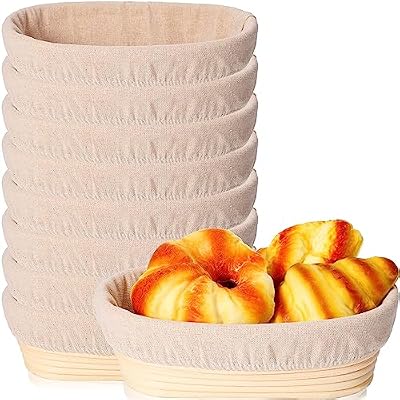
4. Gejoy Oval Banneton Proofing Basket Set of 8, 10 Inch
Specs
- Natural rattan; eight 10 inch oval baskets, each about 10 x 6 x 3 inches; includes eight cloth liners and eight plastic dough scrapers.
Most home bakers need one or two baskets — but if you bake for a market stall, a big family, or a weekend bread club, buying ovals one at a time gets tedious. This eight-pack of 10 inch oval bannetons lets you proof a full batch of batards simultaneously, each with its own liner and scraper. The baskets retain warmth well during proofing and stack for storage when the bake is done.
Pros:
– Eight matching baskets for batch baking
– Liners and scrapers included for every basket
– Consistent size across the whole set
Cons:
– Oval only — no round baskets in the pack
– Overkill for single-loaf households
5. KneadAce Sourdough Starter Kit with Cotton Rope Proofing Baskets

Specs
- Two cotton rope baskets (9 inch round and 10 inch oval); 24 oz glass starter jar included; magnetic bread lame for scoring; breathable cotton construction.
KneadAce swaps rattan for woven cotton rope, and the difference is practical: the baskets feel soft, flex slightly, store flat-ish in a drawer, and shrug off the splinter concerns some bakers have with cane. The kit pairs them with a proper starter jar and a magnetic lame, making it a thoughtful all-in-one gift for someone starting sourdough from zero. Expect a gentler surface pattern than rattan, with the same reliable dough support.
Pros:
– Cotton rope is soft, flexible, and easy to store
– Includes starter jar and lame for a complete kit
– No splinters and simple upkeep
Cons:
– Subtler crust pattern than rattan baskets
– Rope absorbs flour and needs regular brushing out
Frequently Asked Questions
Do I really need a proofing basket, or can I use a bowl?
A bowl lined with a floured tea towel works in a pinch, but it lacks the banneton’s breathability and structure. Proofing baskets hold the dough’s shape better, manage surface moisture for a crisper crust, and release shaped loaves more reliably.
How do I stop dough sticking to the basket?
Dust the basket generously with rice flour before every use, working it into the grooves. Rice flour absorbs far less moisture than wheat flour. For very high-hydration doughs, use the liner and flour that too.
What size basket should I buy for a standard sourdough recipe?
For the common 500 g flour-weight recipe (roughly 900 g to 1 kg total dough), a 9 or 10 inch round basket is the sweet spot. Halve the recipe and an 8.5 inch basket gives better support.
How do I clean and store a rattan banneton?
Knock out loose flour, brush the grooves with a stiff dry brush, and let the basket air-dry completely — some bakers rest it in the cooling oven after a bake. Never soak rattan, and store baskets somewhere dry and airy to prevent mould.
Conclusion
For a single traditional basket, the Vollum 8.5 inch round is hard to beat. Bakers who want both loaf shapes plus the tools to use them should look at the PITCH PULSE or AmiKrafty sets, while batch bakers will appreciate the Gejoy eight-pack of ovals. If you prefer low-maintenance gear or are gifting a complete starter setup, the KneadAce cotton rope kit is the friendliest entry point. Whichever proofing basket you choose, pair it with rice flour and a full dry between bakes, and your loaves will reward you with better shape, cleaner scores, and that bakery-style spiral crust.
Write Your Review
No reviews yet. Be the first to share your experience!