
Wood cutting boards are durable, knife-friendly, and attractive, but they need a little more care than plastic. If a board is cleaned poorly, food residue can collect in knife grooves, odors can linger, and excess moisture can cause warping, splitting, or mildew. Applying the wrong oil can also leave a sticky, rancid-smelling surface that is difficult to restore.
The good news is that proper care is straightforward. Wash the board after each use, sanitize it when handling higher-risk foods, dry it promptly, and replenish its protective oil before the wood looks pale or feels rough. This guide explains how to oil and sanitize wood cutting boards properly in 2026, including what to use, how long each step takes, and when a board has reached the end of its useful life.
As an Amazon Associate we earn from qualifying purchases at no extra cost to you. Product prices and availability are accurate as of the date shown and are subject to change.

Quick answer: Our top pick in 2026 is the Dish soap and warm water — our #1 rated choice. See the full ranked comparison, alternatives and buying advice below.
What You Need
| Item | Why | Optional? |
|---|---|---|
| Dish soap and warm water | Removes food particles, grease, and everyday residue. | No |
| Soft scrub brush or nonabrasive sponge | Reaches knife marks without aggressively removing wood. | No |
| Clean towel and drying rack | Removes surface moisture and allows air to circulate around the board. | No |
| Food-grade mineral oil | Penetrates the wood, slows moisture absorption, and helps reduce drying and cracking. | No for routine oiling |
| Unscented liquid chlorine bleach | Provides an inexpensive sanitizing option after raw meat, poultry, or seafood contact. | Yes; use when needed |
| Measuring spoon and clean spray bottle or bowl | Helps you make a properly diluted sanitizing solution. | Yes |
| Board cream or beeswax-based conditioner | Adds a water-resistant surface layer after mineral oiling. | Yes |
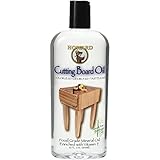
Two readily available food-grade mineral oil options are Kate Naturals Mineral Oil for Wood Cutting Board, Food Grade, Odorless, 8 oz, typically around $8 to $10, and Howard Products Food Grade Mineral Oil for Wood Cutting Board, 12 oz, Pack of 1, typically around $8 to $11. Prices vary by retailer and availability. Do not substitute olive, vegetable, coconut, walnut, or other cooking oils; many can oxidize and become sticky or rancid.
Step-by-Step
1. Clear and inspect the board (2 minutes)
Remove crumbs and food scraps, then inspect both sides. Look for deep grooves, raised splinters, loose pieces, black or green spots, and cracks that extend through the board. A board with minor knife marks can usually be cleaned and maintained. Set aside severely damaged boards for the replacement guidance below.
2. Wash with hot water and dish soap (2 to 3 minutes)
Wet the board briefly, apply a small amount of dish soap, and scrub the entire surface, edges, and underside with a soft brush or sponge. Pay special attention to deep knife marks and areas that touched raw proteins. Use warm or hot tap water, but do not leave the board submerged.
Rinse away all soap. Never put a wooden board in a dishwasher unless the manufacturer specifically says it is dishwasher-safe; prolonged heat and water can warp, split, or loosen glued joints.
3. Sanitize when appropriate (3 to 5 minutes)
Sanitizing is especially sensible after preparing raw meat, poultry, seafood, or eggs, and whenever the board has contacted food that may carry harmful microorganisms. Cleaning comes first: bleach or another sanitizer cannot work properly through a layer of grease or food residue.
For a common household solution, mix 1 tablespoon of unscented liquid chlorine bleach with 1 gallon of water. Apply enough solution to wet the board’s surface, or spread it evenly with a clean cloth. Follow the bleach label if it specifies a different dilution or contact time. Keep the surface visibly wet for the label-directed time, commonly about 1 minute for a diluted surface sanitizer.
Because this is a food-contact surface, rinse the board thoroughly with clean water afterward unless the product label specifically states that rinsing is unnecessary. Do not mix bleach with vinegar, ammonia, dish soap, or any other cleaner. Use fresh solution rather than storing a diluted mixture, and keep bleach away from children, pets, and colored fabrics.
Distilled white vinegar, lemon juice, salt, and baking soda can help with odor or visible grime, but they should not be treated as dependable substitutes for a labeled sanitizer.
4. Dry the board completely (at least 30 minutes)
Wipe off excess water with a clean towel, then stand the board on its edge in a well-ventilated area. Allow air to reach both broad faces. Depending on the board’s thickness and room humidity, complete drying may take 30 minutes to several hours.
Do not oil a board that feels cool, damp, or visibly wet. Trapping moisture beneath oil can contribute to discoloration, odors, or cracking. For best results, oil the board after it has dried overnight.
5. Warm the mineral oil if desired (5 minutes)
Food-grade mineral oil spreads more easily when slightly warm. Set the closed bottle in a bowl of warm water for a few minutes. Do not microwave the bottle or heat the oil directly on a stove. Warming is optional, not essential.
6. Apply a generous coat of mineral oil (5 to 10 minutes)
Pour a small amount of food-grade mineral oil onto the board and spread it with a clean lint-free cloth or paper towel. Cover the top, bottom, edges, and especially the end grain. For a typical 12-by-18-inch board, begin with 1 to 2 tablespoons and add more as needed; the wood should look evenly damp, not flooded.
Let the oil soak in for at least 4 hours. Very dry or thick boards may benefit from an overnight soak. If the surface looks dry after 15 to 20 minutes, apply another thin coat.
7. Wipe away excess oil (2 minutes)
After the soaking period, buff the entire board with a clean cloth. Remove every glossy or greasy patch. Excess oil left on the surface can feel tacky and attract dust. Place oil-soaked cloths flat to dry before disposal, and follow local fire-safety guidance; bunched oily rags can pose a fire hazard.
8. Add board conditioner, if wanted (5 minutes)
Once the mineral oil has absorbed, apply a thin layer of food-safe board cream made with mineral oil and beeswax. Rub it in, wait according to the product directions—often 15 to 30 minutes—and buff until smooth. Conditioner is optional, but it can improve water resistance on frequently used boards.
Mistakes to Avoid
- Using cooking oil: Olive, canola, sunflower, and similar oils can turn rancid. Choose food-grade mineral oil labeled for cutting boards.
- Soaking the board: A sink full of water can swell wood unevenly and cause warping or split seams.
- Oiling while damp: Always wash, sanitize if needed, and dry first.
- Skipping the edges: End grain and board edges absorb water readily and need oil too.
- Using undiluted bleach: Stronger is not automatically safer. Measure the solution and follow the product label.
- Mixing cleaners: Combining bleach with acids or ammonia can release dangerous gases.
- Relying on salt and lemon as sanitizers: They may deodorize or scrub, but they are not a reliable replacement for an appropriate sanitizer.
- Leaving the board flat while wet: Airflow around both sides helps prevent uneven drying.
How Often
Wash the board after every use. Sanitize it after raw meat, poultry, seafood, or other potentially contaminated foods, and whenever you are concerned about cross-contamination. Oil a board about once a month with regular use, or whenever the wood looks lighter, feels dry, or absorbs a drop of water immediately. A well-used board may need oil every one to two weeks; an occasional-use board may need it only every two to three months.
Keep separate boards for raw proteins and ready-to-eat foods when possible. A board approximately 12 by 18 inches gives most home cooks enough working space, while a smaller 8-by-12-inch board is convenient for fruit, bread, and quick prep.
When to Call a Pro or Replace
Most routine board care is a do-it-yourself job. Consult a professional woodworker if the board has a valuable finish, complicated inlay, loose laminated sections, or a major split that you want repaired. Replacement is the safer choice when cracks are deep enough to catch a fingernail, the board rocks on the counter, pieces are separating, or mold remains after thorough cleaning and sanding.
Replace a board that has developed deep, difficult-to-clean grooves or persistent odors that return after washing and drying. Do not continue using one with loose splinters or a crack that could trap food and moisture.
FAQ
Can I sanitize a wood cutting board with vinegar?
Vinegar can help reduce odors and loosen some residue, but it should not be your only sanitizing method after raw meat or seafood. Clean first, then use a properly diluted, label-approved sanitizer when appropriate.
How long should mineral oil stay on a cutting board?
Leave the first coat on for at least 4 hours, or overnight for a very dry board. Then wipe away all excess. The board should feel smooth and dry, not greasy.
Can I use beeswax without mineral oil?
Beeswax alone is difficult to spread and does not penetrate wood as effectively. Use a food-safe conditioner formulated with mineral oil, or apply mineral oil first and add a thin wax-based coat afterward.
Why does my board keep cracking after oiling?
Cracking can result from repeated soaking, dishwasher cycles, extreme dryness, or an existing structural defect. Keep the board away from prolonged water and heat, oil all sides, and replace it if a crack becomes deep, wide, or unstable.
Ready to decide? Our #1 pick for 2026 is the Dish soap and warm water.
Live price & availability on Amazon.





Write Your Review
No reviews yet. Be the first to share your experience!