
When comparing digital scale vs measuring cups for sourdough baking, the real decision is not simply whether one tool is more modern. It is whether you want repeatable dough, a faster low-tech routine, or a setup that fits the way your household actually bakes. A scale measures ingredients by weight, while cups measure volume. Because flour can be packed, scooped, or loosely spooned, the same “1 cup” can represent noticeably different amounts.
That difference matters in sourdough, where the balance of flour, water, starter, and salt affects hydration, fermentation speed, shaping, and crumb. A digital kitchen scale usually takes less counter space than a full measuring-cup set and can help you reproduce a successful loaf. Measuring cups remain useful for casual baking, quick starter feeding, and anyone who prefers familiar tools without batteries. The best choice for your home depends on precision, comfort, storage, cleanup, and how often you bake.
As an Amazon Associate we earn from qualifying purchases at no extra cost to you. Product prices and availability are accurate as of the date shown and are subject to change.



Quick Verdict
Choose a digital kitchen scale if you bake sourdough weekly, follow recipes written in grams, or want consistent hydration and loaf size. A model with a 5- to 11-pound capacity, 1-gram increments, a tare button, and a flat platform is generally sufficient for home baking. Expect to spend about $15 to $40 for a basic model and $40 to $80 for a more feature-rich version.
Choose measuring cups if you bake occasionally, already own a reliable set, or value speed and simplicity over precision. They typically cost $5 to $25, take no batteries, and are easy for children to use. However, cup-based sourdough recipes are more dependent on technique, especially when measuring flour.
For most serious home bakers, a scale is the better primary tool. Measuring cups can still complement it for liquids, add-ins, and starter maintenance.
Side by Side
| Consideration | Digital kitchen scale | Measuring cups |
|---|---|---|
| Comfort | Minimal scooping; tare lets you weigh directly in one bowl | Familiar and tactile, but repeated scooping can be tiring |
| Precision | Usually measures in 1-gram increments | Depends on leveling and how ingredients are packed |
| Durability | Often lasts years if protected from flour and water | Plastic, glass, or stainless steel sets can last for years |
| Price range | About $15-$80 | About $5-$25 for common sets |
| Maintenance | Wipe the platform; do not immerse unless rated washable | Usually dishwasher-safe, depending on material and markings |
| Space needed | Typically about 7-9 inches wide and 1-2 inches high | Nested sets need cabinet or drawer space |
| Look | Streamlined, contemporary countertop appearance | Traditional kitchen-tool appearance |
| Resale | Limited resale value; electronics age quickly | Simple, durable sets may be easier to donate or resell |
| Best for | Repeatable sourdough formulas and baker’s percentages | Casual baking, starter feeding, and no-battery convenience |
Where Digital Scale Wins
The biggest advantage is consistency. If a recipe calls for 500 grams of flour and 350 grams of water, the ratio is clear. With cups, flour may vary substantially depending on whether you scoop directly from the bag or fluff it first. Even a small difference can make a wet dough feel stiff or a manageable dough feel sticky.
A scale also makes baker’s percentages easier to understand. Sourdough formulas commonly express water, salt, and starter in relation to the flour’s weight. Once you start adjusting hydration or batch size, multiplying a recipe by 1.5 or doubling it is straightforward. You can make two small loaves, one large loaf, or a smaller test batch without relying on partial cup measurements.
The tare function reduces both mess and dishwashing. Place your mixing bowl on the platform, press tare, add flour, press tare again, and continue with water, starter, and salt. One bowl can hold the entire formula. This is especially useful when feeding starter, since you can weigh the jar, add flour, reset, and add water without dirtying several measuring tools.
Scales are also more compact than they appear. Many are roughly the size of a paperback book and weigh less than 2 pounds. Look for a clear display, buttons that remain usable with flour-dusted fingers, an auto-off setting that does not shut down too quickly, and a capacity of at least 5 pounds. A USB-rechargeable model avoids disposable batteries, while a battery-operated model may be less expensive and easier to replace.
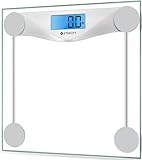
Do not confuse a kitchen scale with a bathroom scale. For example, the Vitafit Bathroom Scale for Body Weight Accuracy 0.1lb, Weight Scale 400lb is listed at $13.59, and the Etekcity Digital Body Weight Bathroom Scale with 6mm tempered glass and a 400-pound capacity is listed at $16.87. Those products are designed for people, not gram-level ingredient measurements, and their large platforms and measurement ranges are not substitutes for a kitchen scale.
Where Measuring Cups for Sourdough Baking Wins
Measuring cups are appealing because they are immediate. There is no display to read, battery to charge, or surface to protect from spills. For a quick feeding or a relaxed weekend loaf, many bakers appreciate grabbing a cup and moving on.
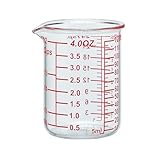
They are particularly convenient for water and other liquids when a recipe is already written by volume. Small glass cups with spouts can make pouring easier and reduce drips. A compact option such as the Ackers BORO3.3 2-ounce Glass Measuring Cups with V-shaped spout, sold as a two-pack for $7.51, can be useful for small quantities of liquid, salt solutions, or starter ingredients.
Measuring cups can also be friendlier in a family kitchen. Children can help scoop and level ingredients without handling a small electronic device near wet dough. They are easy to recognize, simple to replace, and generally unaffected by a power outage. Plastic versions are lightweight and less concerning around young children, while glass and stainless steel offer a more substantial feel.
There is one important technique rule: do not compress flour into a cup unless the recipe specifically tells you to. Stir the flour, spoon it into the cup, and level the top with a straight edge. Even then, volume measurement will usually be less repeatable than weight. For starter, a cup can work well when you use the same jar and method every time, but discard amounts may vary.
Some specialized containers combine volume markings with fermentation-friendly designs. The GENICOOK Sourdough Starter Jar Glass with Triple Spouts, a two-pack of borosilicate containers in 16.9-ounce and 33.8-ounce sizes, is listed at $24.29. Products in this category can be helpful for measuring and handling starter, but they do not replace a scale when you need exact flour-to-water ratios.
Cost Over 5 Years
The cheapest path is using measuring cups you already own. A new basic set may cost $5 to $15, with a replacement every few years if plastic markings fade, handles crack, or pieces disappear. A sturdy glass or stainless-steel set may cost $15 to $30 and last longer, making the five-year cost roughly $3 to $30 before considering replacement.
A basic digital scale costing $15 to $40 may last five years with ordinary care, putting the annual cost at about $3 to $8. If batteries cost $2 to $6 per year, add approximately $10 to $30 over five years. A rechargeable scale avoids that recurring expense but may cost more upfront. Premium models priced at $40 to $80 can make sense for frequent bakers, though their extra features are not essential for sourdough.
The scale may also reduce ingredient waste. Accurate weighing helps prevent failed doughs, overfeeding starter, and oversized batches. Those savings are difficult to guarantee, but they can matter more than the initial price difference.
Which One for Your Home
Small apartment
Choose a slim digital scale if cabinet and counter space are limited. It can live in a drawer beside the mixing bowls and lets you work in one vessel. If your kitchen has little storage and you bake only a few times each season, use a compact nested measuring-cup set instead. A scale is the stronger choice when every failed loaf feels expensive in a small household.
Family with kids or pets
A measuring-cup set is easy for children to understand, but a scale can create less mess because ingredients go directly into the bowl. Keep the scale on a stable, dry surface away from curious pets, and choose a model with a wipe-clean platform. Families that bake frequently will benefit from the repeatability of weighing larger batches.
Rental home
Prioritize portable, low-commitment tools. A digital scale takes no installation and is easy to move between kitchens. Measuring cups are equally renter-friendly, but a scale may help when the oven, humidity, or flour brand changes and your dough needs consistent adjustment. Avoid bulky equipment unless it serves several baking projects.
Long-term home
If sourdough is becoming a regular hobby, buy a dependable digital scale and keep measuring cups as backup tools. The scale supports recipe experimentation, baker’s percentages, and batch scaling for years. A glass measuring cup can remain useful for pouring water, while small starter containers help with fermentation and feeding routines.
FAQ
Can I make sourdough with measuring cups instead of a scale?
Yes. Use the spoon-and-level method for flour, measure liquids at eye level, and follow the recipe consistently. Expect more variation than with weight measurements, particularly if the recipe uses a high percentage of water or a large amount of flour.
What accuracy should a sourdough scale have?
One-gram increments are adequate for most home loaves. A scale that reads to 0.1 gram can be useful for tiny yeast or salt quantities, but it is not necessary for typical sourdough formulas. Choose a capacity of at least 5 pounds so the bowl and ingredients fit comfortably.
Should I weigh sourdough starter?
Weighing starter is the most consistent method, especially when following a feeding ratio such as 1:2:2. It lets you add precise amounts of flour and water and makes it easier to track discard. Measuring cups can work if you repeat the same process, but the starter’s thickness and air pockets can affect volume.
Do I need both a digital scale and measuring cups?
Not necessarily, but the combination is practical. Use the scale for flour, water, starter, and salt, then use cups for quick liquid pours or ingredients measured by volume. If your budget allows only one purchase for sourdough, choose a digital kitchen scale.
Ready to decide? Our #1 pick for 2026 is the Comfort.
Live price & availability on Amazon.





Write Your Review
No reviews yet. Be the first to share your experience!